Artwork
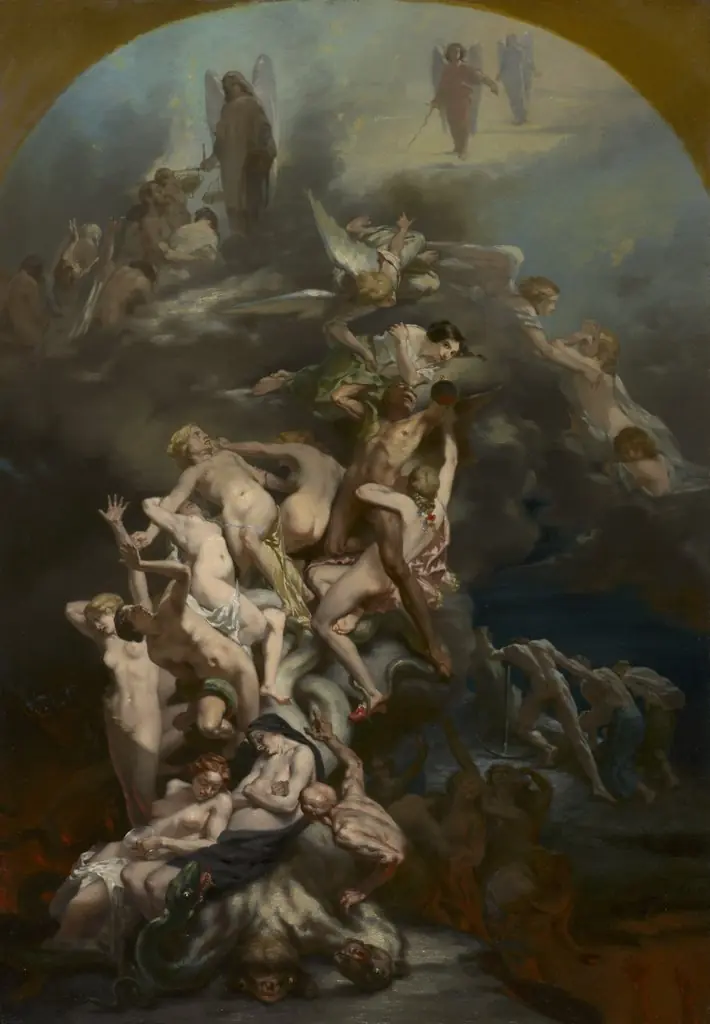
Funérailles et apothéose de Thiers, la France pleurant devant son corps.
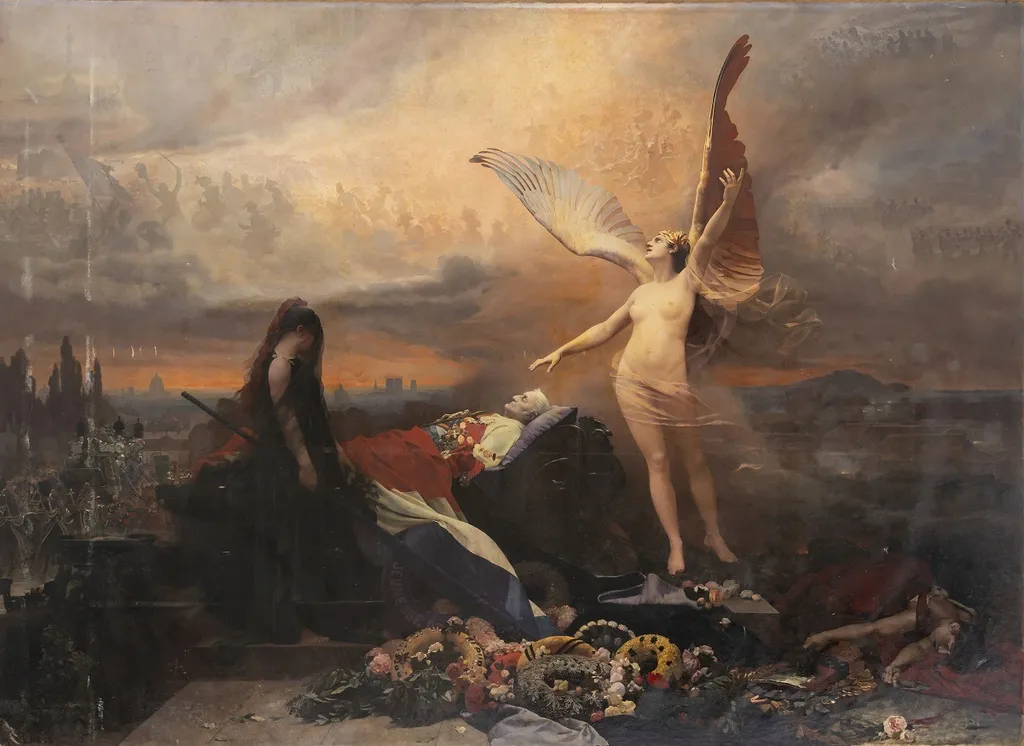
Funérailles et apothéose de Thiers, la France pleurant devant son corps. is an oil painting by the Impressionist artist Unknown. It dates from 1877 and is held in the collection of the Palace of Versailles. This oil painting captures a symbolic funeral scene for Adolphe Thiers, former president of France, blending realism with allegory.
About this work
Overview
This oil painting captures a symbolic funeral scene for Adolphe Thiers, former president of France, blending realism with allegory.
This oil painting captures a symbolic funeral scene for Adolphe Thiers, former president of France, blending realism with allegory. A reclining male figure lies beneath a red-and-white blanket, surrounded by mournful figures. A woman in black, holding a sword, stands beside him, while a winged figure extends her arms above. The backdrop suggests a cityscape under a somber sky, enhancing the gravity of the moment.
Subject & Meaning
The central figure represents Thiers, laid to rest as the nation grieves. The woman in black symbolizes France itself, clutching a sword to signify its sovereignty and resilience. The winged figure above may allude to victory or the soul’s ascent, bridging earthly loss and national legacy. The composition frames death not as an end, but as a transition marked by civic solemnity.
Technique & Style
Chiaroscuro is employed to model the figures with strong contrasts of light and shadow, directing focus to the recumbent body and the mourners. The textures of fabric—velvety blankets, flowing wings—are rendered with careful brushwork. The city skyline recedes into muted tones, reinforcing the emotional weight of the foreground. The palette is restrained, dominated by deep blacks, rich reds, and cool purples.
History & Provenance
Commissioned to commemorate Thiers’ death in 1877, the painting was intended for public display as part of a national mourning ritual. It was exhibited in the Salon of 1878 and later entered a public collection, likely under state auspices. Its creation coincided with efforts to stabilize the Third Republic through symbolic acts of unity.
Context
Thiers, a key architect of the Third Republic, was a polarizing figure whose leadership during the Franco-Prussian War and suppression of the Paris Commune left deep divisions. This painting sought to transcend political conflict by portraying him as a unifying national figure. The allegorical style echoed 19th-century traditions of state commemoration, merging history with mythic representation.
Legacy
The painting remains a rare example of state-sponsored allegorical funerary art from the early Third Republic. While not widely reproduced today, it reflects the era’s attempt to craft collective memory through visual symbolism. Its preservation underscores the role of art in mediating political grief and national identity during a fragile period of French history.
Artist & collection

 Domestic Scene
 Giacomo and Cardinal Marco, investing Andrea, Abbot of San Zeno, with his Benefice
 The Nymph of Fontainebleau
 Portrait of a Woman
 Madonna and Child with Saints in the Enclosed Garden
 Venus and Minerva
 Family Group of Four on Sofa
 Wall painting from Room H of the Villa of P. Fannius Synistor at Boscoreale
 Sphinx and a woman phantom
 The Flight into Egypt
 The vision of Fray Martín
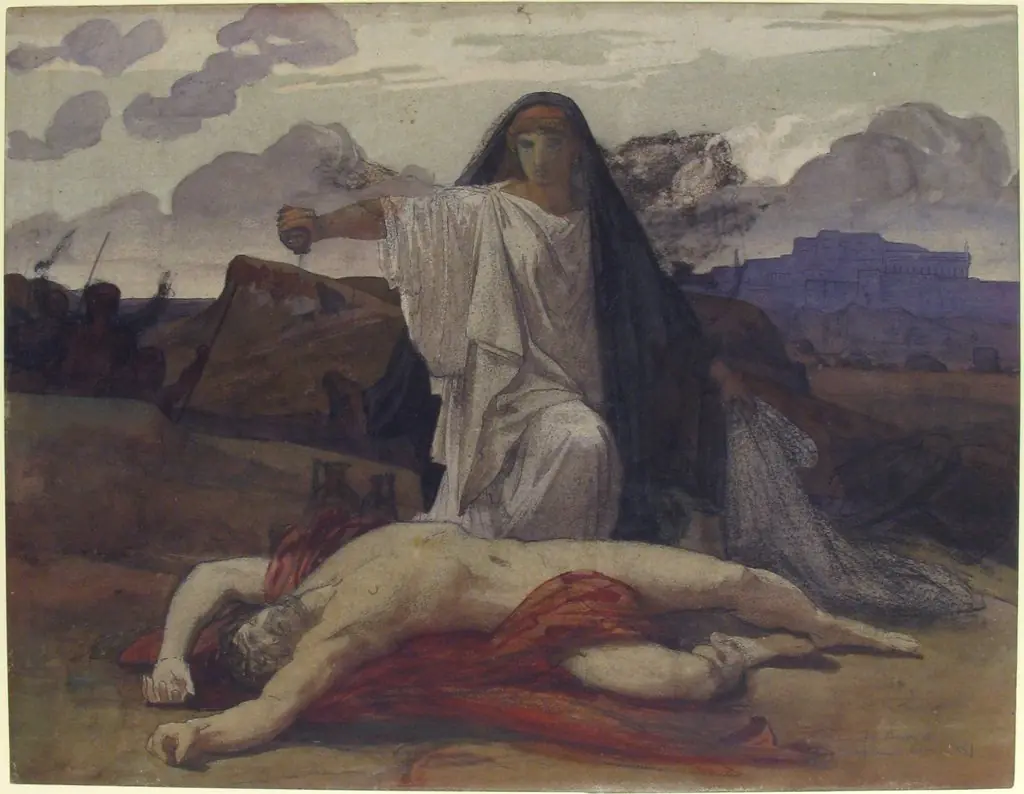 Antigone Gives Token Burial to the Body of Her Brother Polynices
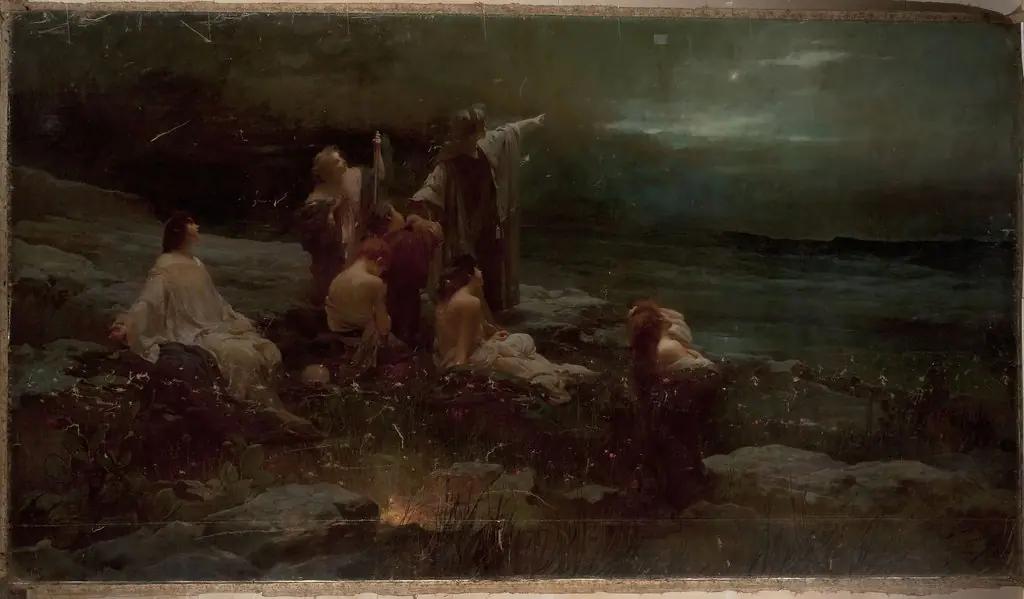 Morning star
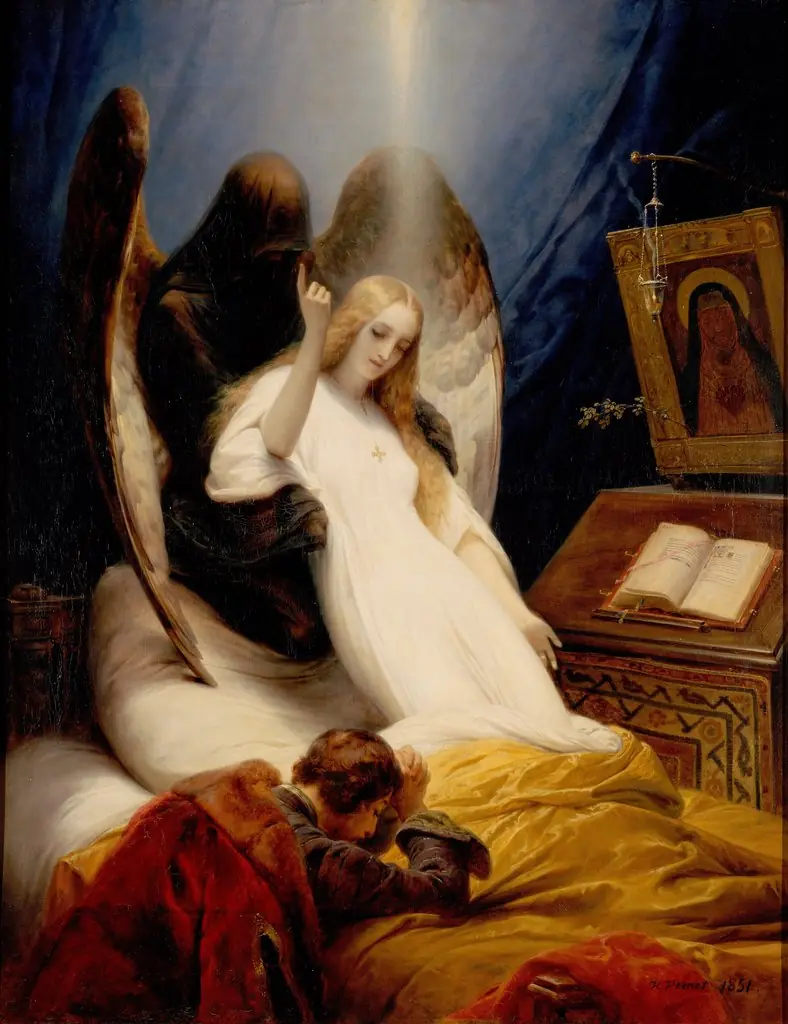 Angel of the Death
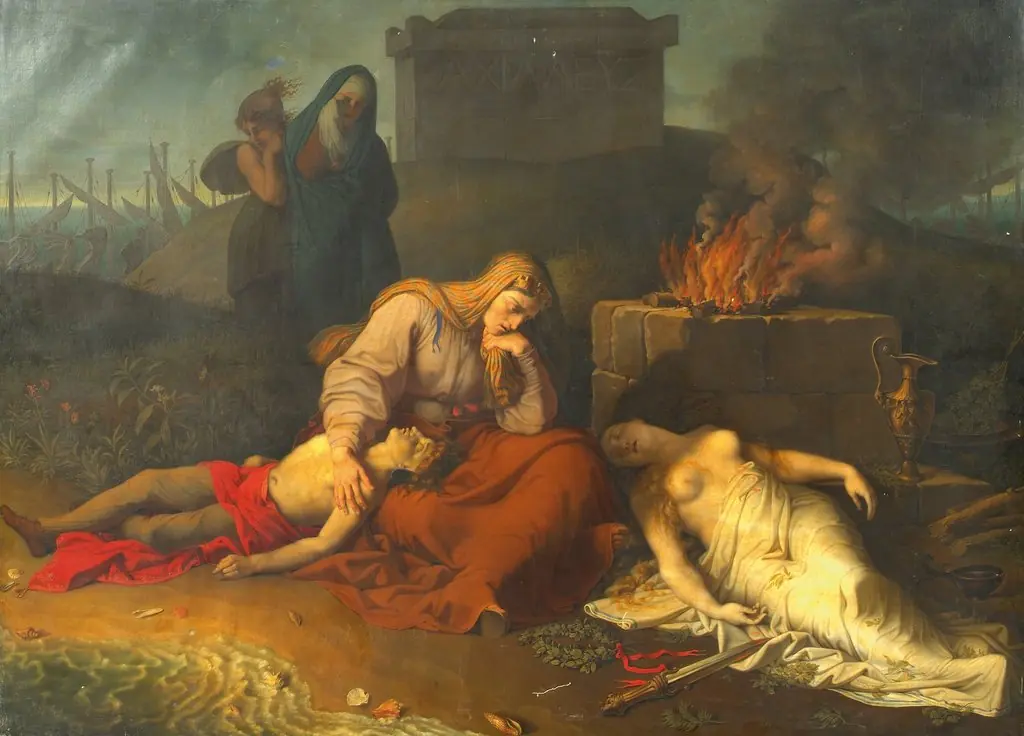 Hecabe mit den Leichnamen ihrer Kinder Polyxena und Polydoros am Grab des Achill
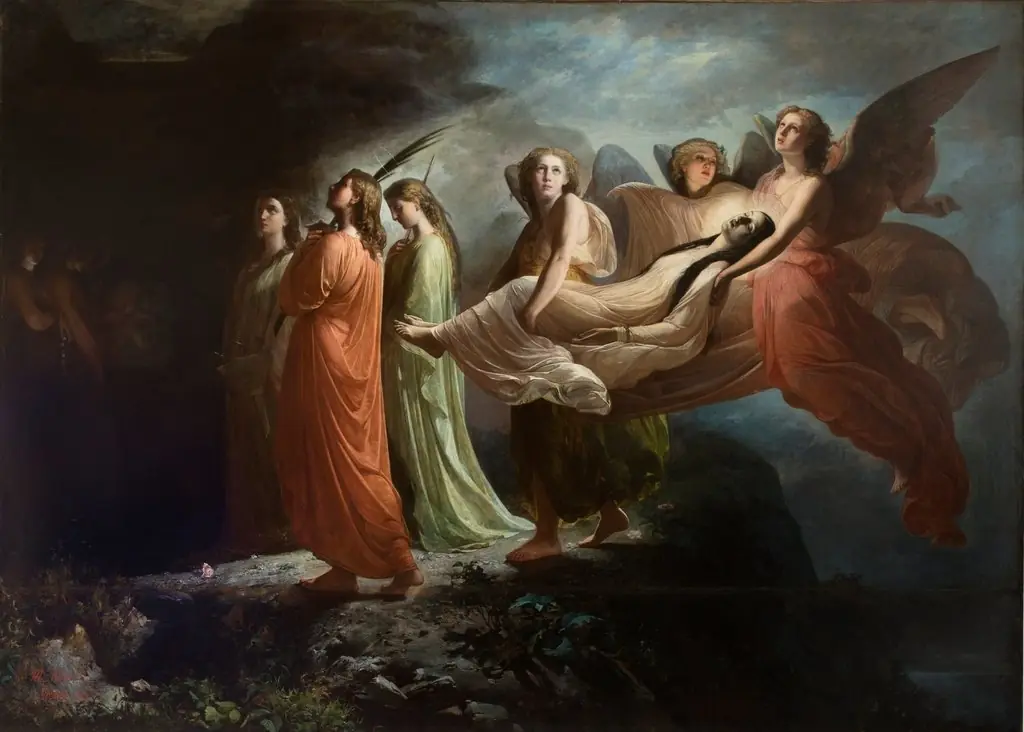 Santa Catalina transportada por los ángeles
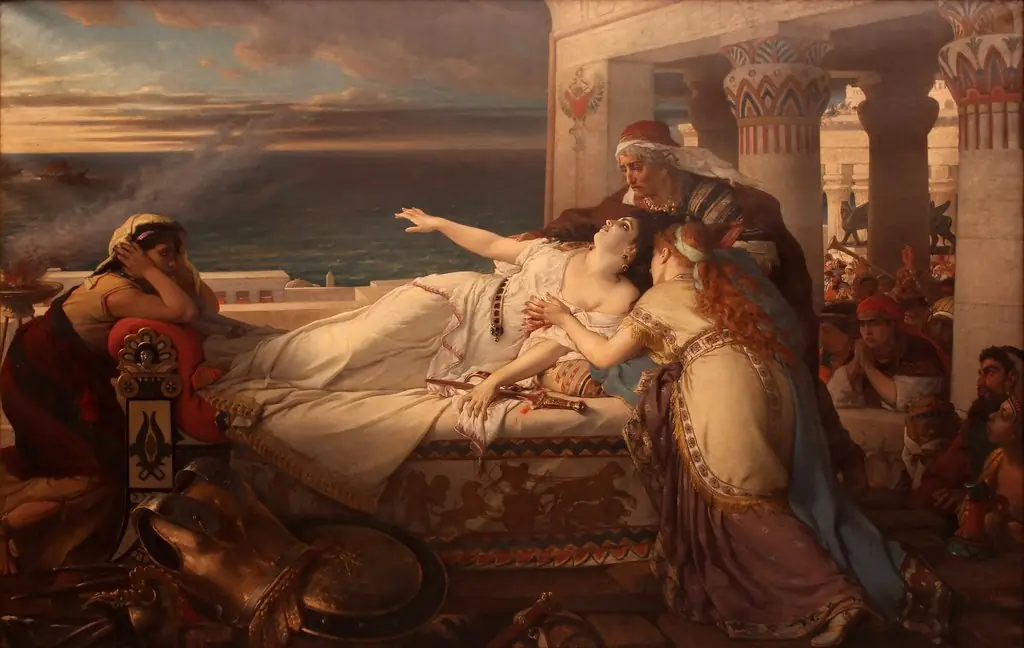 Death of Dido
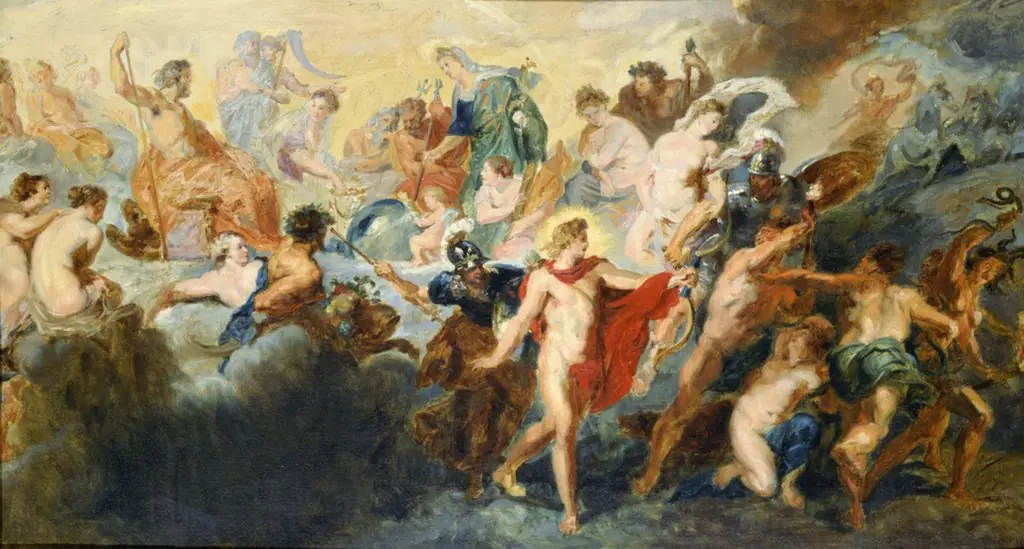 Copy after the Painting by Rubens "The Council of Gods"
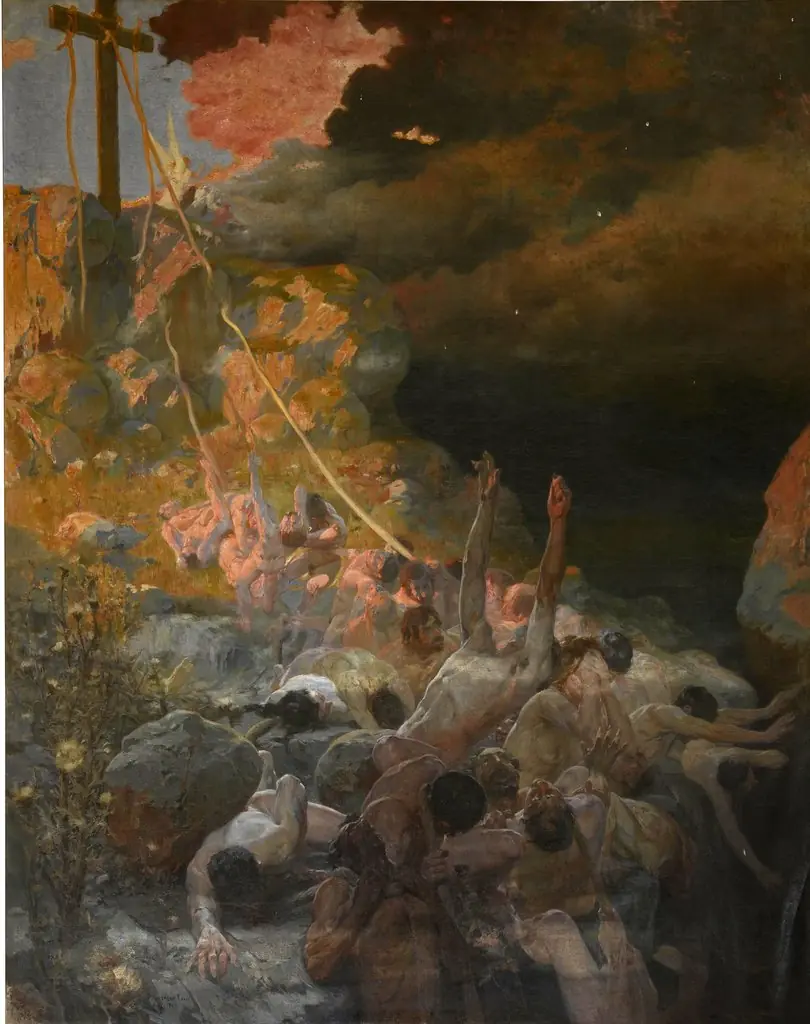 Al abismo
 Heaven and Hell