Artwork
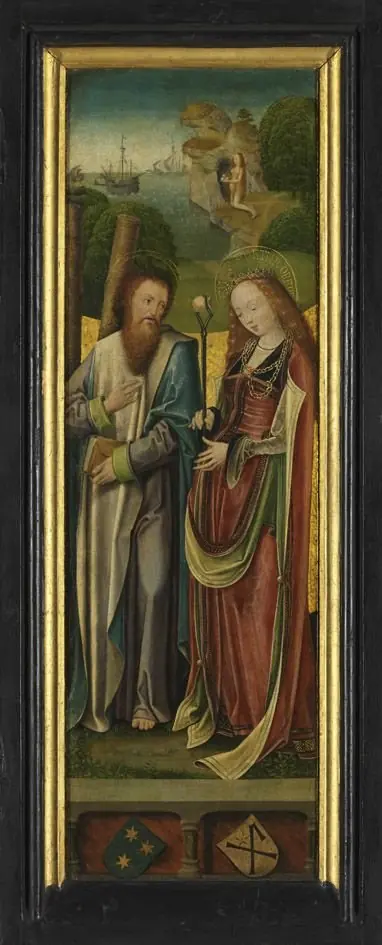
Flügelpaar: Die hll. Johannes der Täufer und Katharina (Außenseite: Engel der Verkündigung)
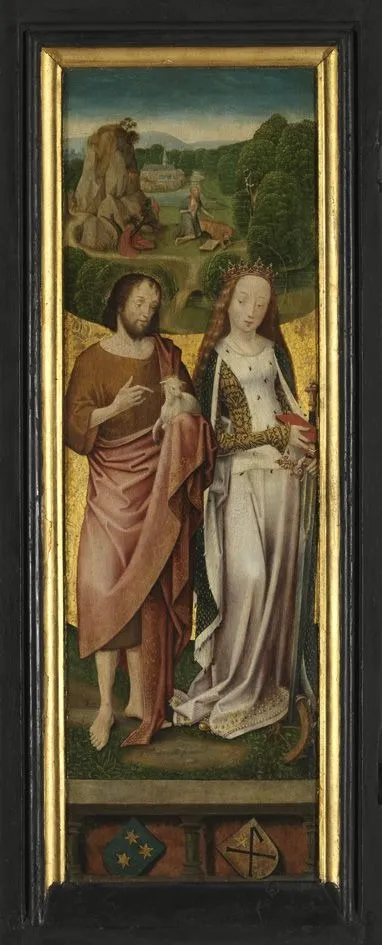
Flügelpaar: Die hll. Johannes der Täufer und Katharina (Außenseite: Engel der Verkündigung) is an unspecified painting by the High Renaissance artist Unknown. It dates from 1517 and is held in the collection of the Bavarian State Painting Collections. The work, titled *Flügelpaar: Die hll.
About this work
Overview
A male figure in a plain brown habit cradles a white lamb, while a female figure in elaborate attire, crowned and holding a red book, stands beside him.
The work, titled *Flügelpaar: Die hll. Johannes der Täufer und Katharina* (with the reverse side depicting an Angel of the Annunciation), presents a paired portrait of two saints. A male figure in a plain brown habit cradles a white lamb, while a female figure in elaborate attire, crowned and holding a red book, stands beside him. Behind the pair a stark rocky terrain stretches toward a distant castle, punctuated by figures engaged in labor.
Subject & Meaning
The male saint is identified as John the Baptist, symbolized by the lamb that alludes to his role as the forerunner of Christ. Opposite him, the crowned woman represents Saint Catherine, the red book suggesting her scholarly or martyrdom narrative. Their juxtaposition underscores themes of prophetic witness and learned piety, inviting contemplation of their complementary virtues within Christian tradition.
Technique & Style
The composition relies on bold, unmodulated color fields rather than gradual shading, giving the figures a flattened appearance. A luminous gold plane behind the female saint heightens the visual impact of her garments and crown. The overall handling reflects a departure from chiaroscuro, favoring stark contrasts and decorative surface treatment typical of certain late medieval or early Renaissance devotional panels.
Context
Created as a hinged pair (flügelpaar), the panel was likely intended for a private chapel or personal devotion, with the reverse side showing an Angel announcing the Incarnation. The inclusion of a landscape with a castle and laboring figures situates the saints within a broader worldly setting, a common practice in Northern European religious art to link the sacred with everyday life.
Artist & collection

 Domestic Scene
 Giacomo and Cardinal Marco, investing Andrea, Abbot of San Zeno, with his Benefice
 The Nymph of Fontainebleau
 Portrait of a Woman
 Madonna and Child with Saints in the Enclosed Garden
 Venus and Minerva
 Family Group of Four on Sofa
 Wall painting from Room H of the Villa of P. Fannius Synistor at Boscoreale
 Christ appearing before Mary
 Triptych of Jean de Witte and Maria Hoose
 Saint Catherine of Alexandria Preaching to the Emperor
 Teil eines Diptychons: Abschied Christi von Maria
 Christ Appearing to His Mother
 Redemption Triptych: Adam and Eve Expulsed from Paradise
 Johannes der Täufer und Maria mit dem Jesuskind
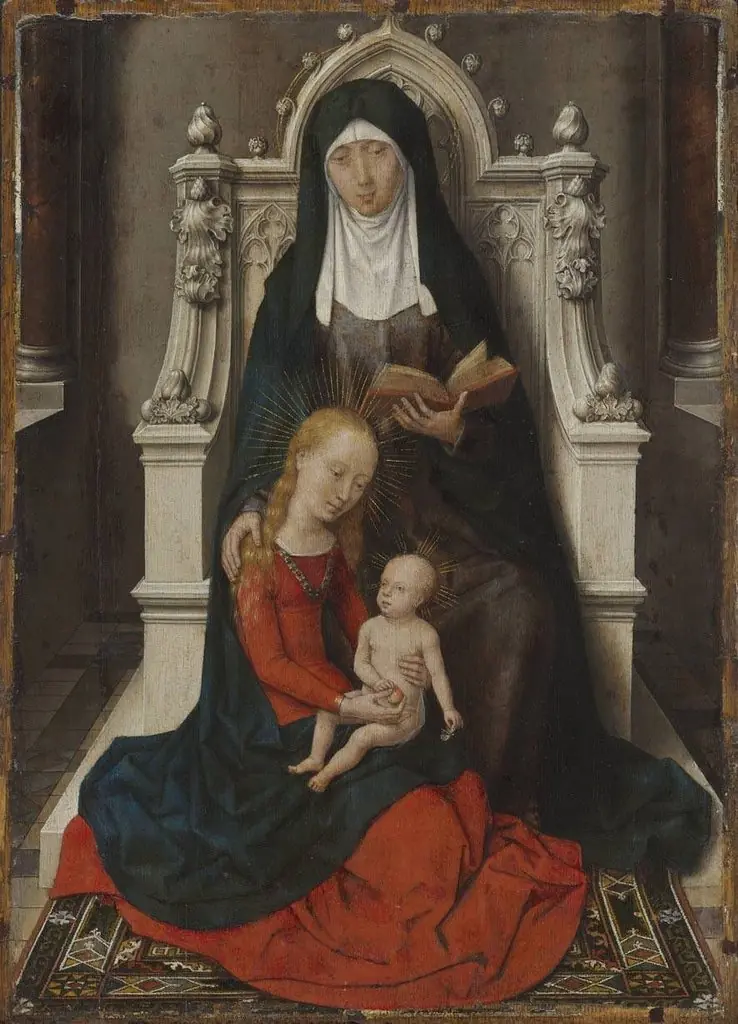 Madonna and Child with St. Anne.
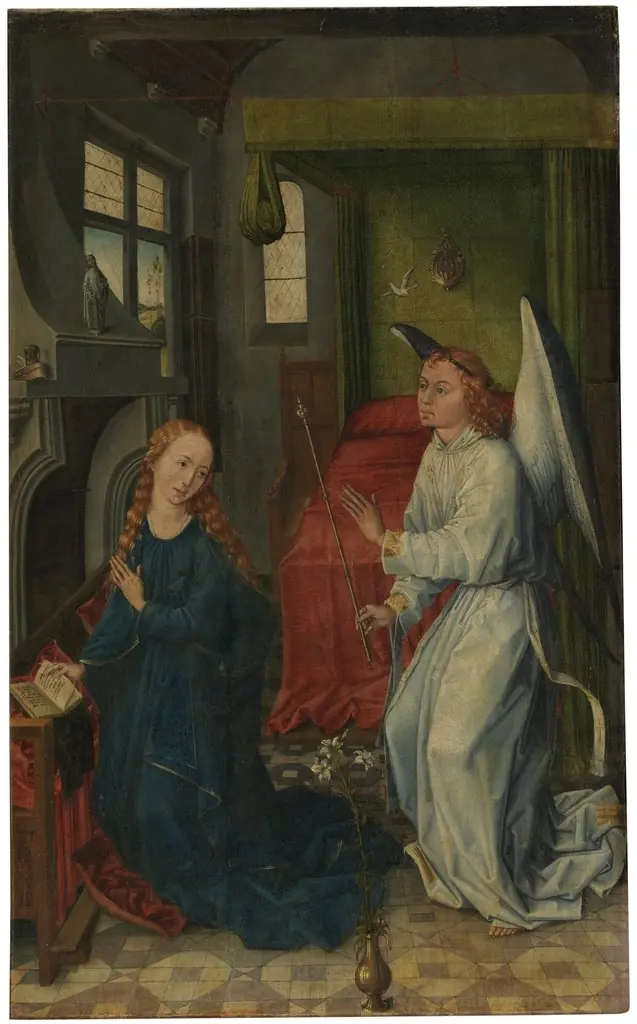 The Annunciation
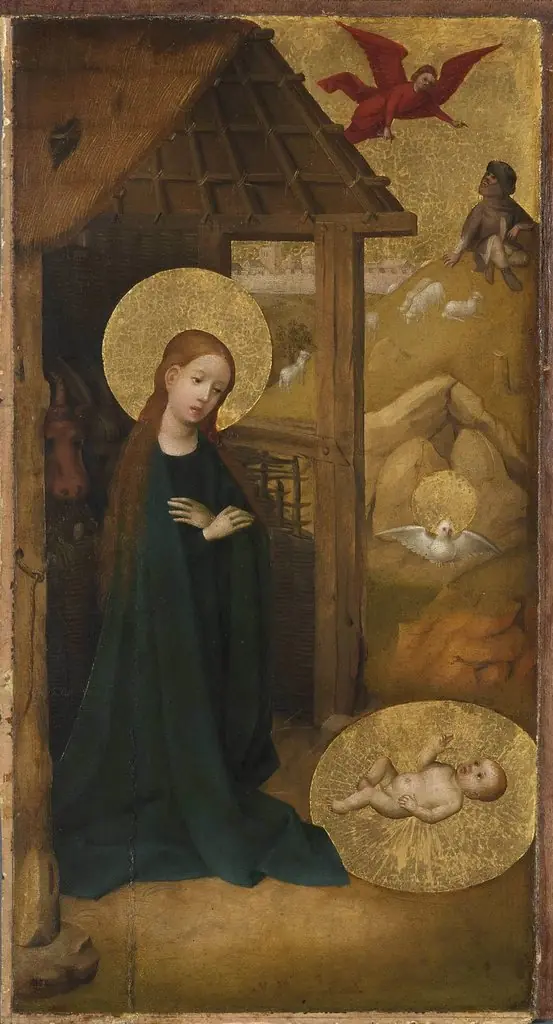 Nativiti (altar piece, with the Cucifixion op Saint Peter and a martyr as outer parts)
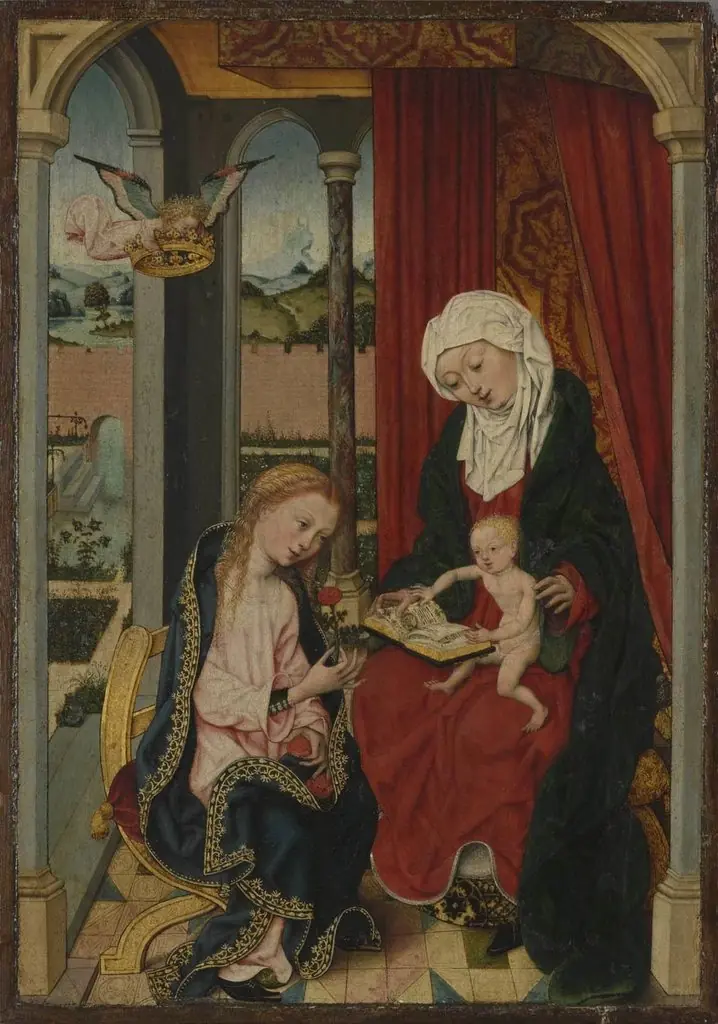 Virgin and Child with Saint Anne
 Flügelpaar: Die hll. Andreas und Agatha Außenseite: Maria der Verkündigung