Artwork
Triptych of Jean de Witte and Maria Hoose
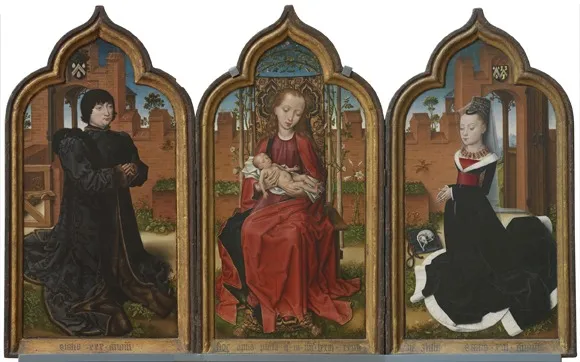
Triptych of Jean de Witte and Maria Hoose is an oil painting by the Northern Renaissance artist Bruges Master of 1473. It dates from 1473 and is held in the collection of the Royal Museums of Fine Arts of Belgium.
About this work
Overview
This three-panel oil painting, dated 1473, was created by an anonymous artist known as the Bruges Master of 1473. It depicts a donor couple, Jean de Witte and Maria Hoose, in devotional poses flanking a central image of the Virgin and Child. The work is housed in the Royal Museums of Fine Arts of Belgium and exemplifies the intimate, devotional style common in late 15th-century Flemish art.
Subject & Meaning
Together, the panels form a spiritual narrative: earthly patrons seeking heavenly protection through prayer and remembrance.
The left panel shows Jean de Witte kneeling in prayer, while the right panel portrays Maria Hoose seated with a small portrait of her husband, suggesting her ongoing devotion to him. The central panel presents the Virgin Mary with the Christ Child, symbolizing divine intercession. Together, the panels form a spiritual narrative: earthly patrons seeking heavenly protection through prayer and remembrance.
Technique & Style
The artist employed fine glazing techniques to achieve luminous skin tones and rich fabric textures. Each panel is set within a walled garden, rendered with meticulous detail in flora and stonework, creating a serene, enclosed sacred space. The balanced composition and restrained palette—dominated by black, red, and gold—enhance the painting’s quiet solemnity and focus on spiritual contemplation.
History & Provenance
Commissioned around 1473, the triptych likely served as a private devotional object for the Witte-Hoose family. It remained in private hands in Flanders before entering the collection of the Royal Museums of Fine Arts of Belgium. Its survival intact, with original frames and pigments largely preserved, offers rare insight into the devotional practices of Bruges’ merchant class during the late Middle Ages.
Context
Created in Bruges, a wealthy commercial center, the triptych reflects the rising piety among urban elites who commissioned religious art for personal worship. The inclusion of donor portraits alongside sacred figures aligns with a broader Flemish tradition of blending secular identity with spiritual aspiration. Gardens in such works symbolized the Virgin’s purity and the soul’s paradise.
Legacy
Though the artist’s identity remains unknown, this triptych stands as a representative example of mid-Flemish panel painting. Its preservation allows scholars to study donor portraiture, devotional iconography, and technical methods like glazing. It continues to inform understanding of how private faith was visually articulated in the late medieval Low Countries.
Artist & collection
Artist
This painter made a three-panel wooden altarpiece in 1473 for a couple named Jean de Witte and Maria Hoose.

Museum
Royal Museums of Fine Arts of Belgium
Continue through works from the same source collection.
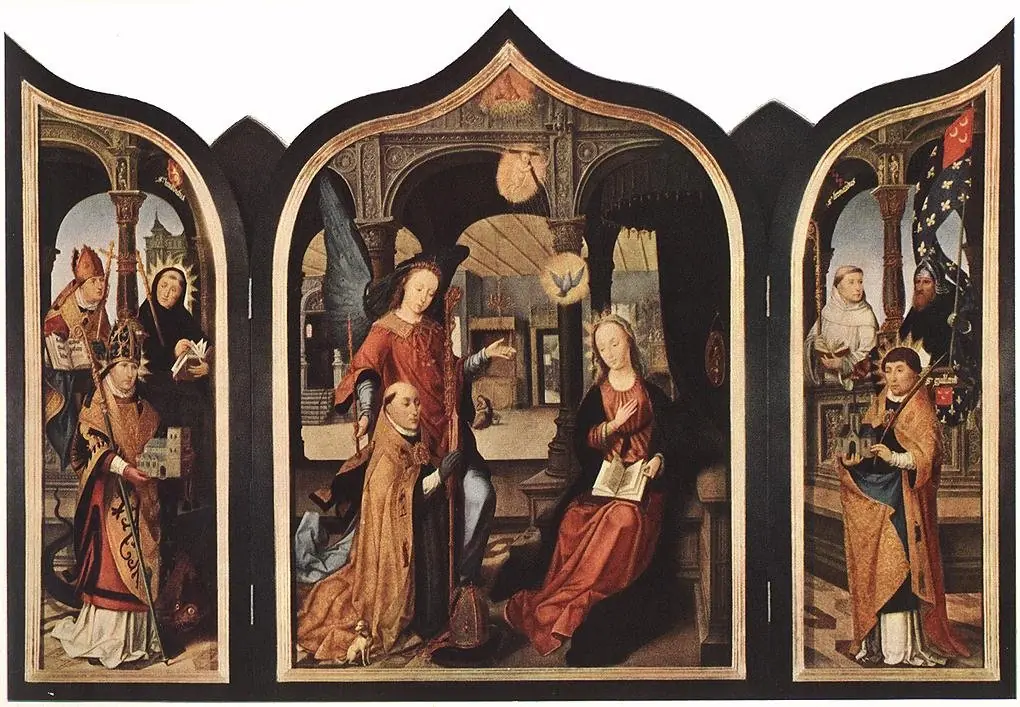 Annunciation
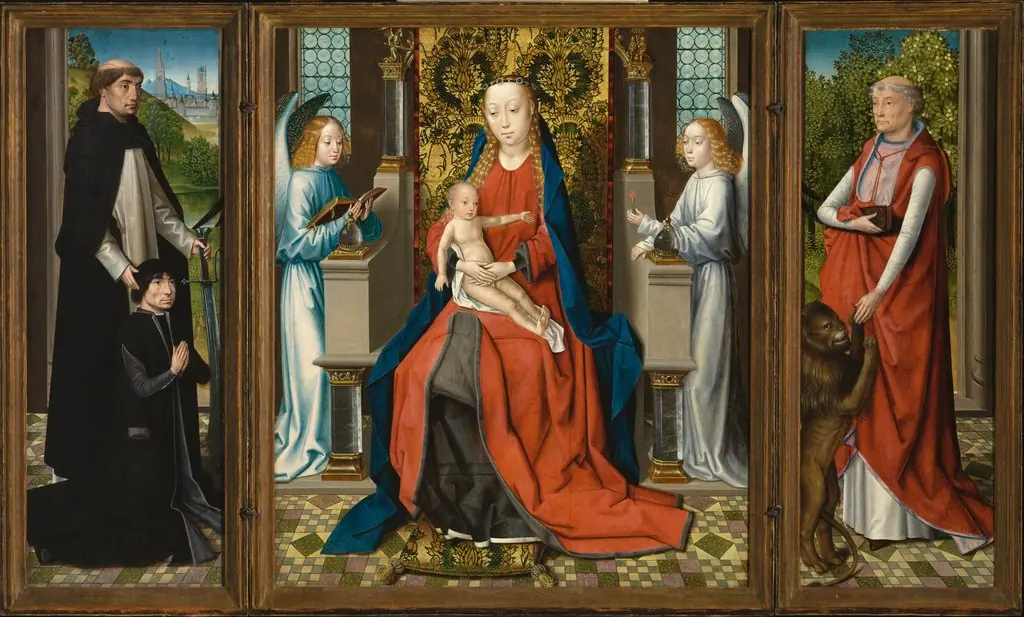 Triptych of Madonna and Child with Angels; Donor and His Patron Saint Peter Martyr; and Saint Jerome and His Lion
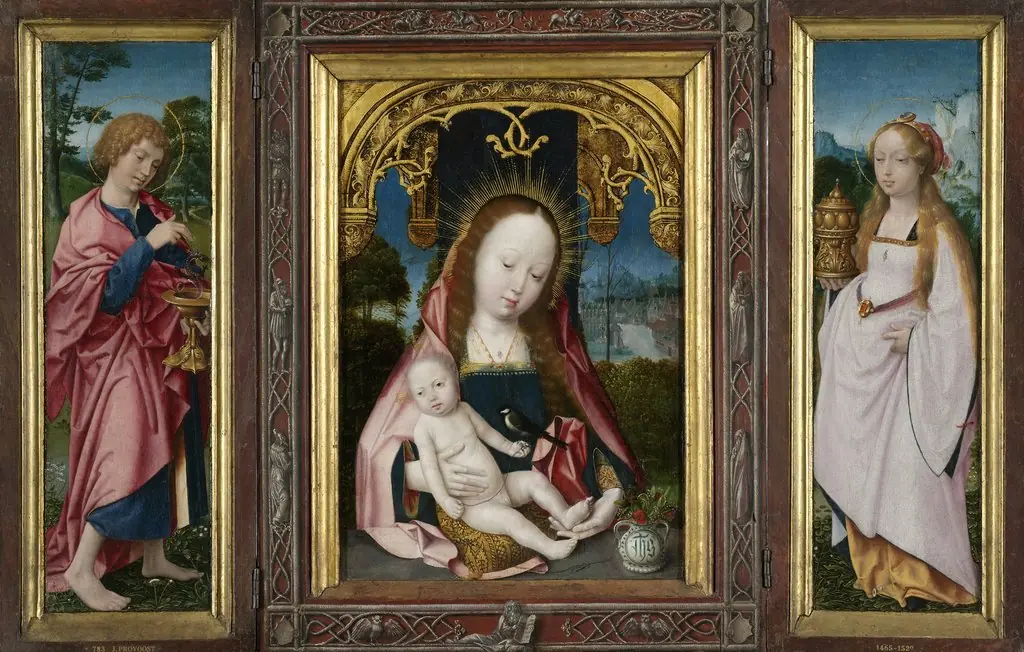 Triptych with the Virgin and Child (centre panel), St John the Evangelist (inner left wing) and Mary Magdalen (inner right wing)
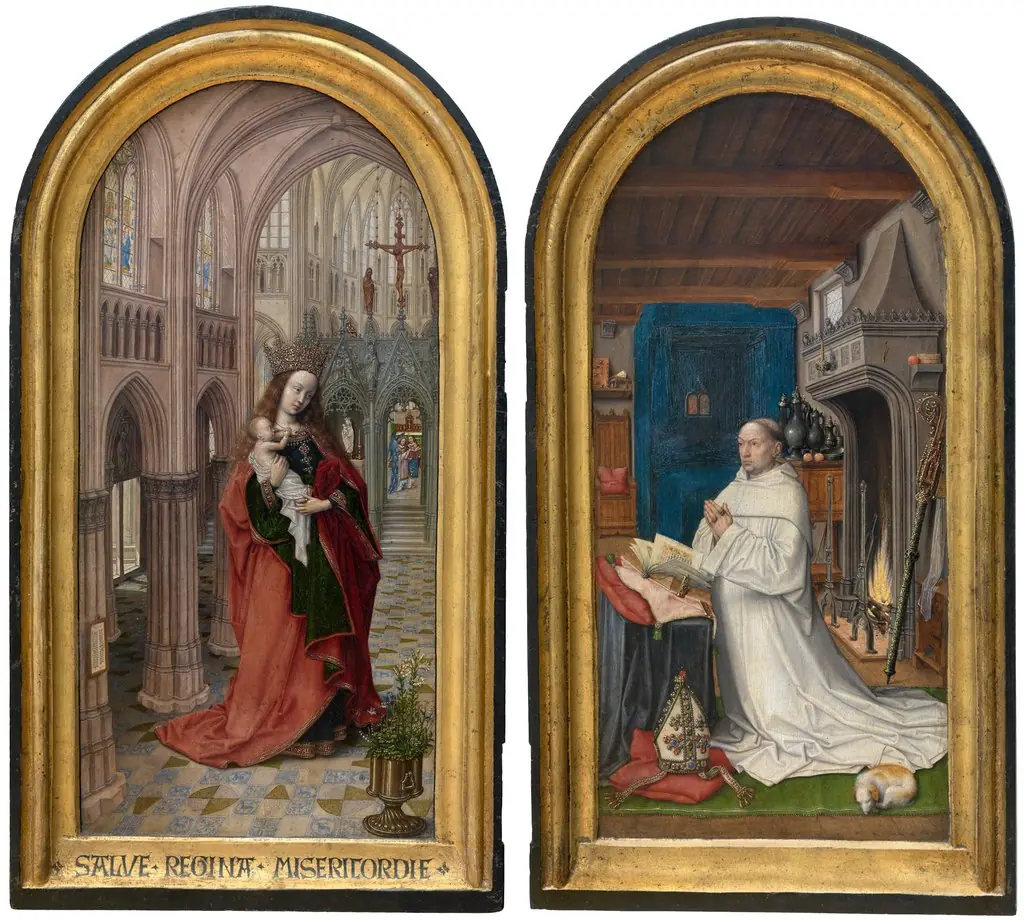 Diptych of Christiaan de Hondt, abbott at Ter Duinen
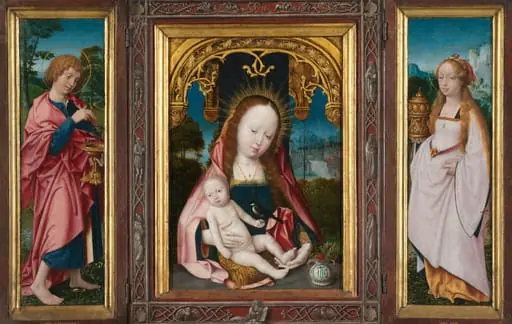 Triptych with Virgin and Child, Saint John the Evangelist (left wing) and Mary Magdalene (right wing)
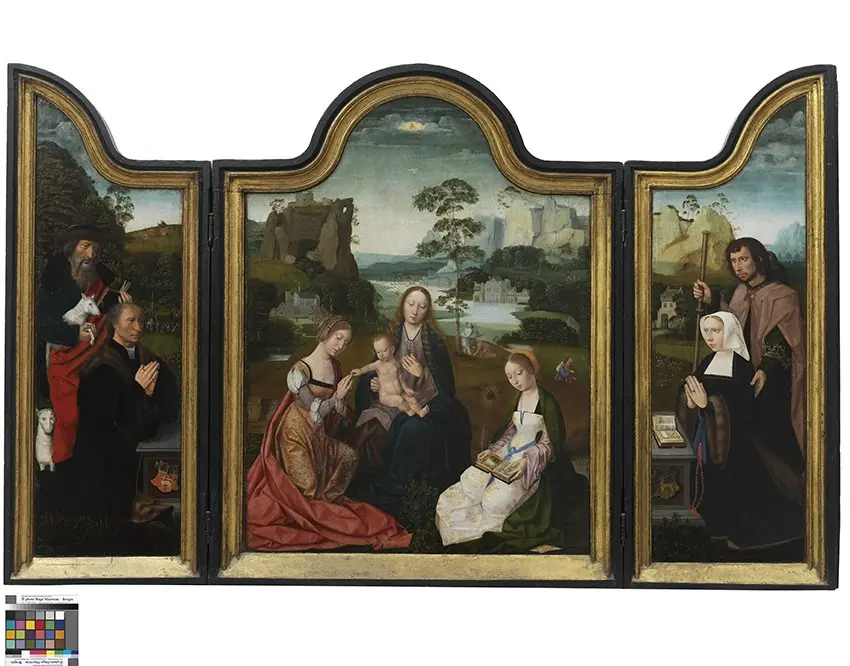 Madonna with the Saints Catherine and Barbara
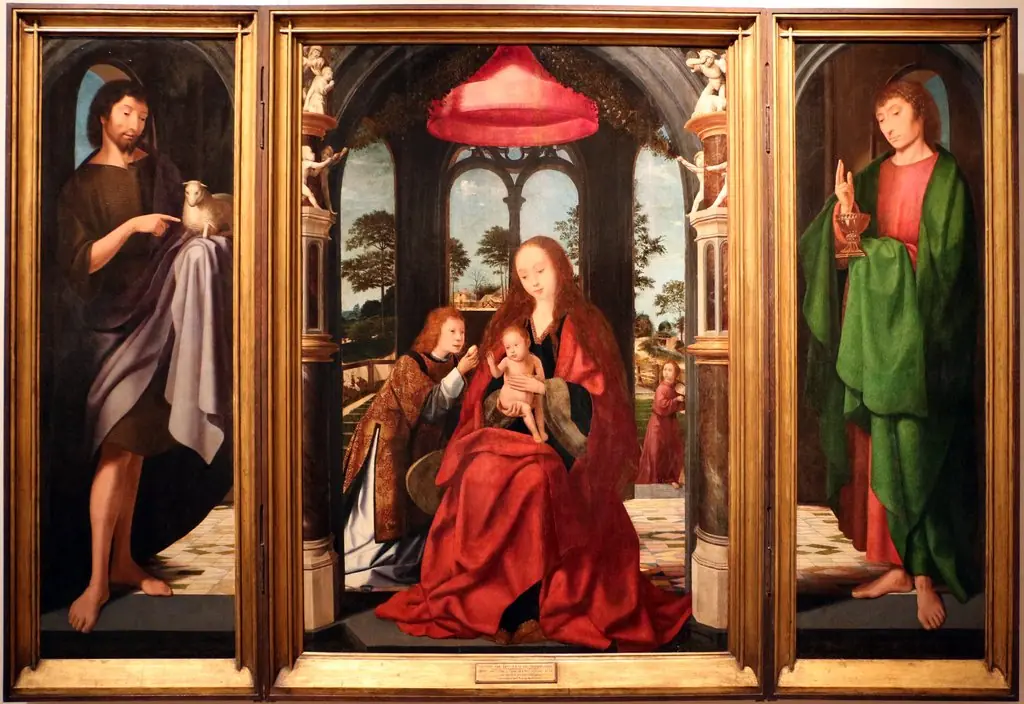 Triptych of the Virgin with the Child and Angels, St. John the Baptist and St. John the Evangelist
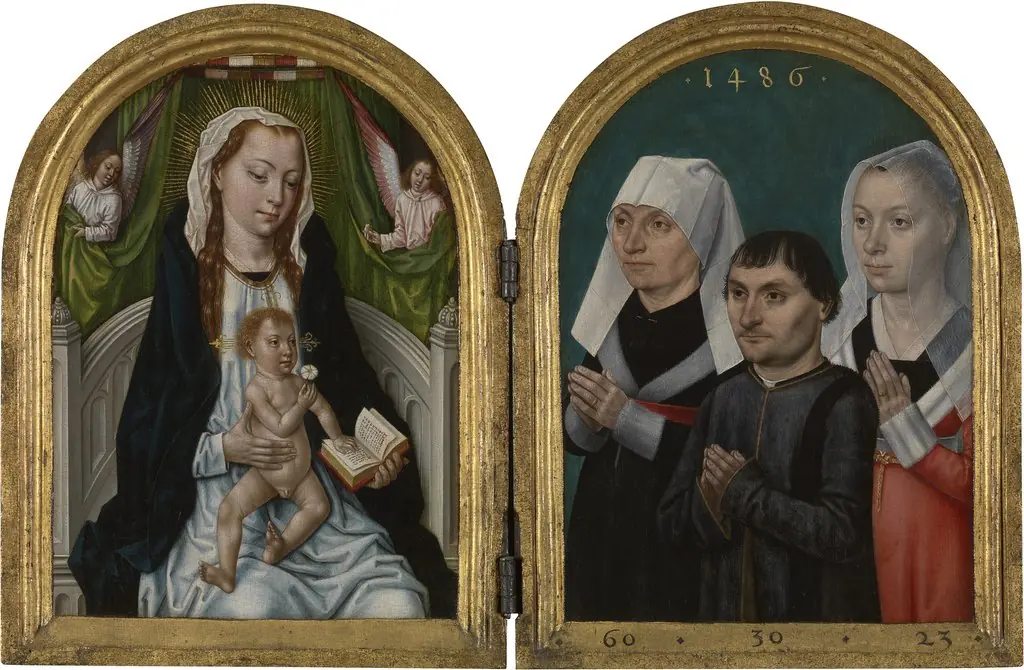 Diptych with the Virgin and Child and Three Donors
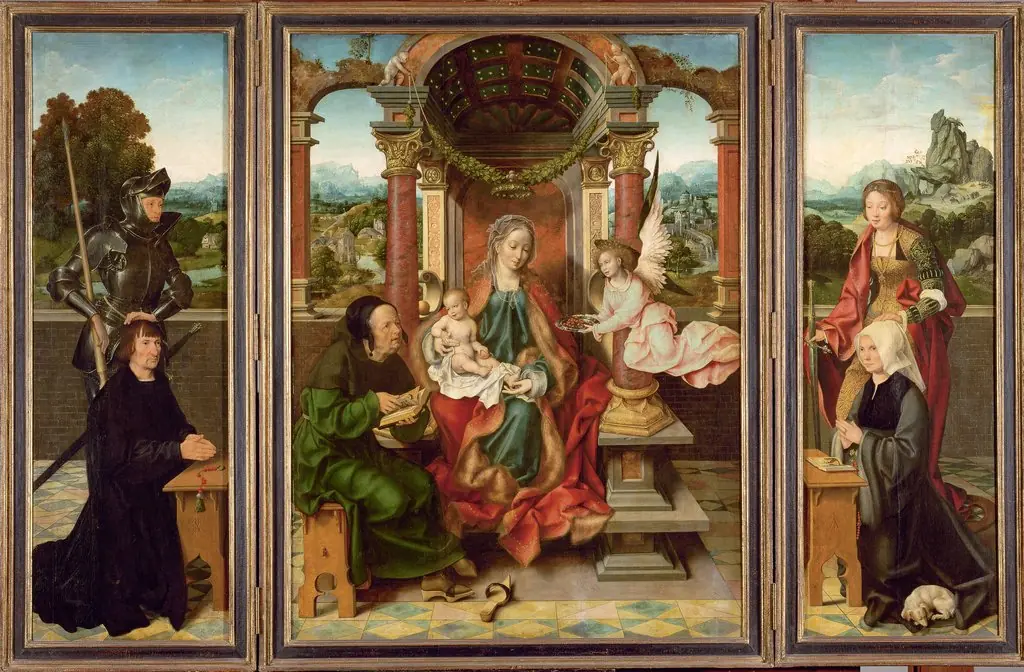 Winged Altar
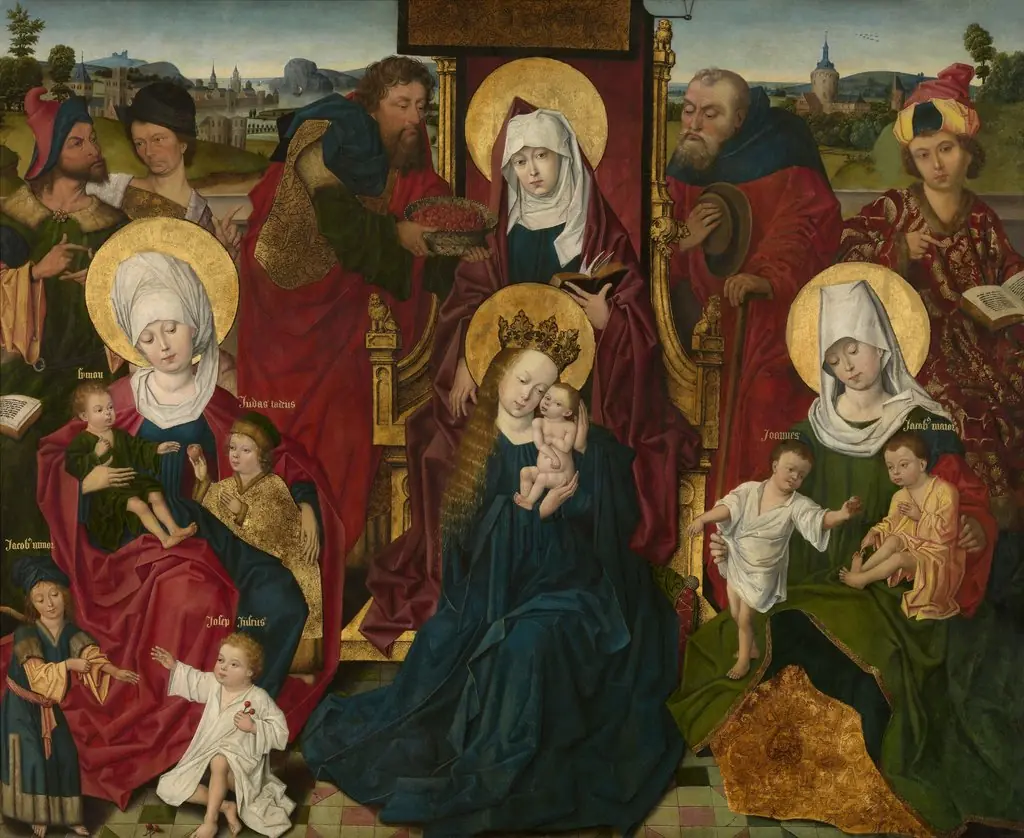 Holy Kinship
 Madonna and Child with Saints in the Enclosed Garden
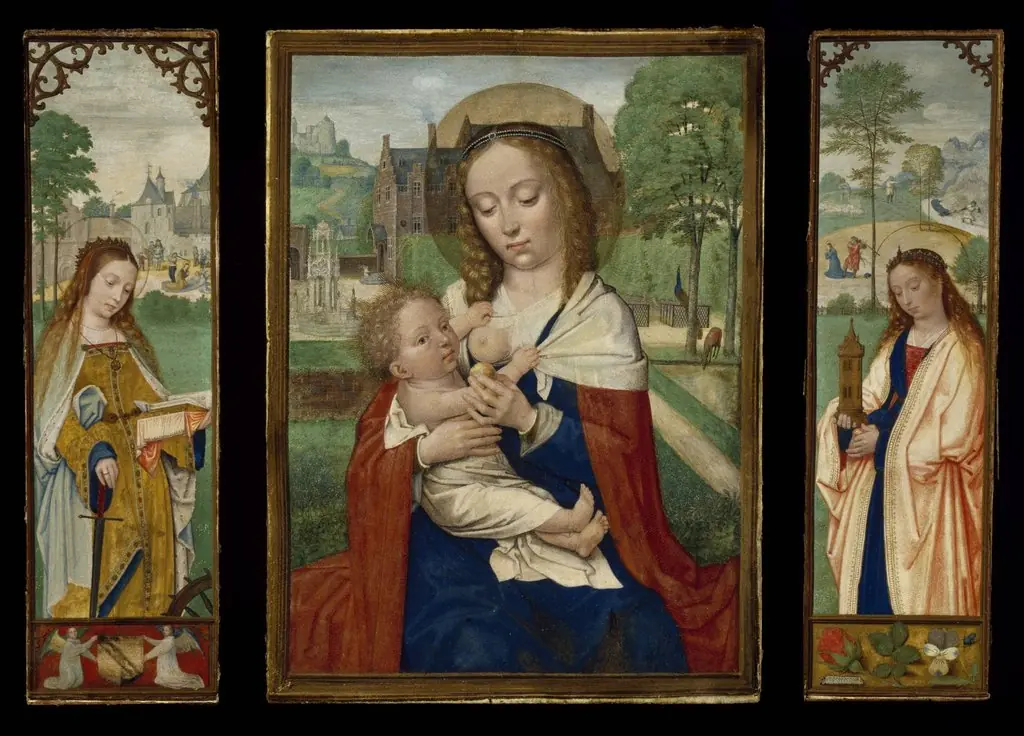 Triptych of Virgin and Child; Saints Catherine and Barbara