Artwork
Tipu Sultan
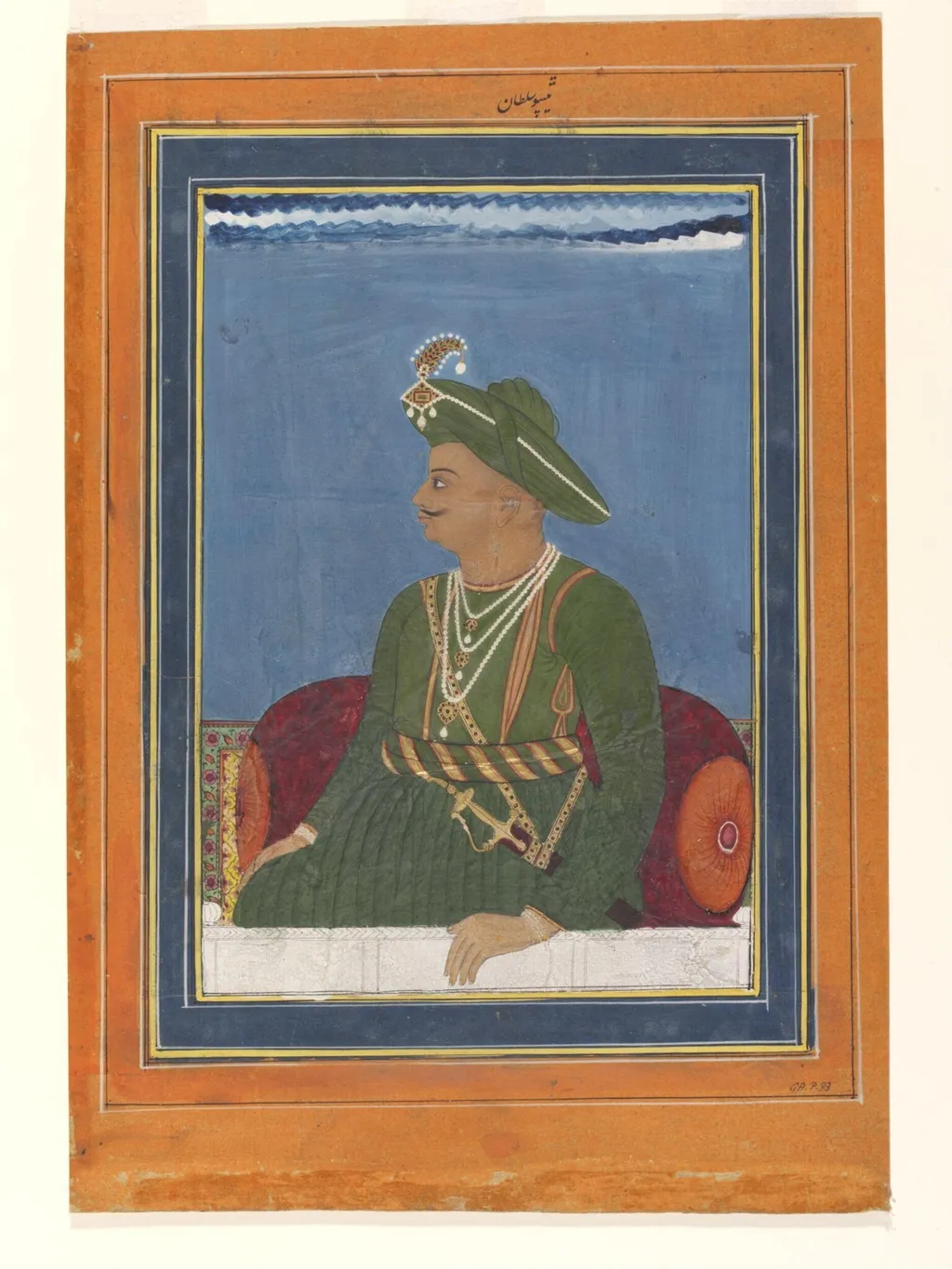
Tipu Sultan is a paint painting by the Romanticist artist Unknown. It dates from 1790 and is held in the collection of the Victoria and Albert Museum.
About this work
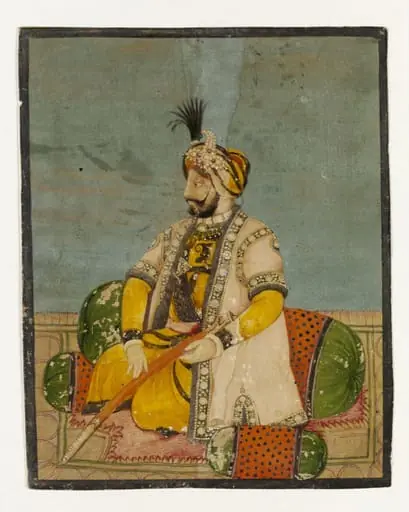
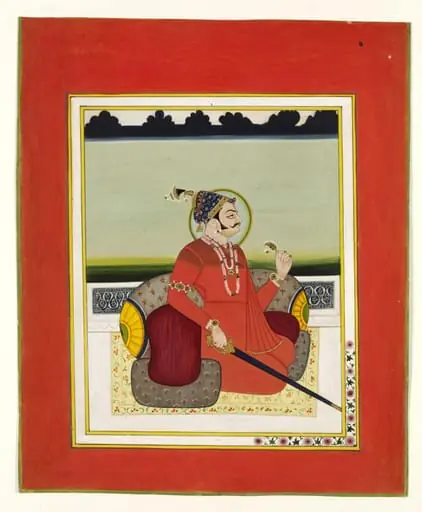
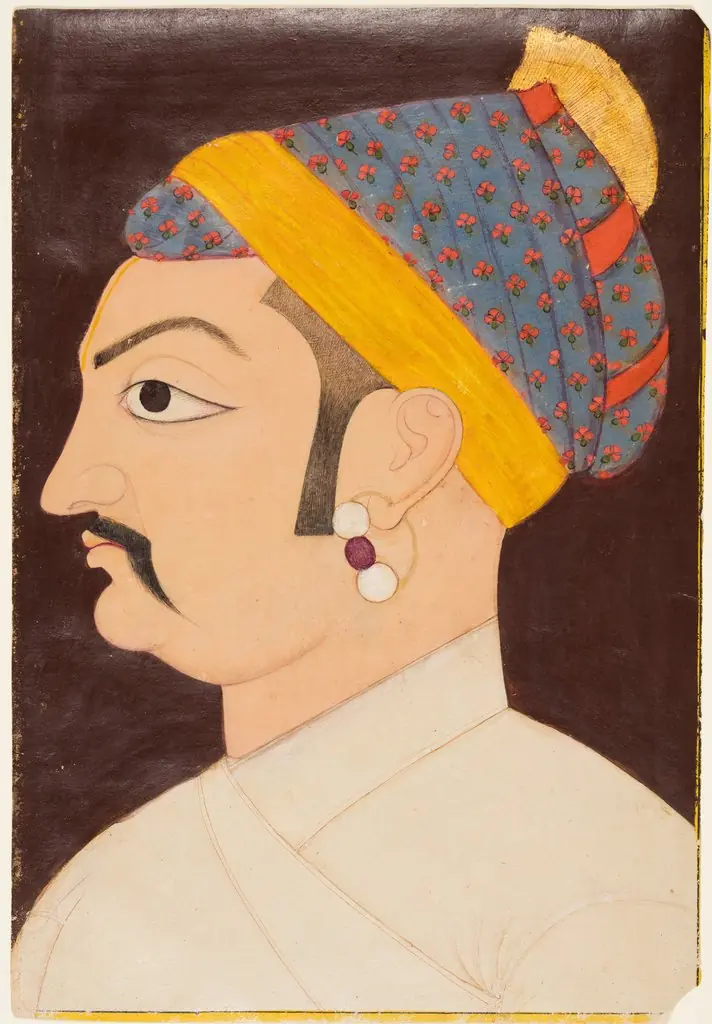
A man in a green coat sits on a chair. A white cloth covers his lap. His hands rest on his knees. He wears a red turban and a gold sash.
This painting shows Tipu Sultan, the ruler of Mysore in the late 1700s. He fought the British and lost in 1799. Artworks like this often honored Indian leaders after their deaths.
See this in person at the Victoria and Albert Museum.
Overview
This portrait of Tipu Sultan, ruler of Mysore from 1782 to 1799, was created by an unidentified Indian artist, likely in the Mysore region.
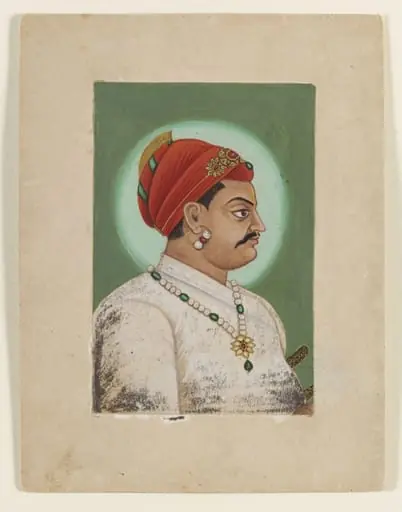
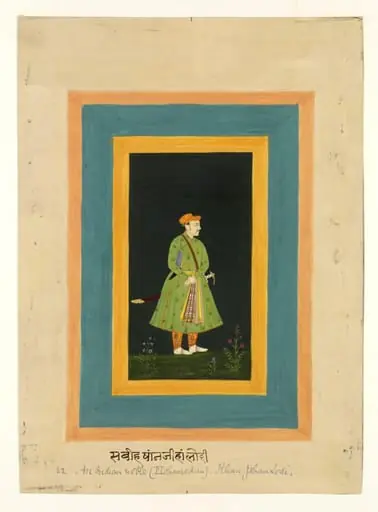
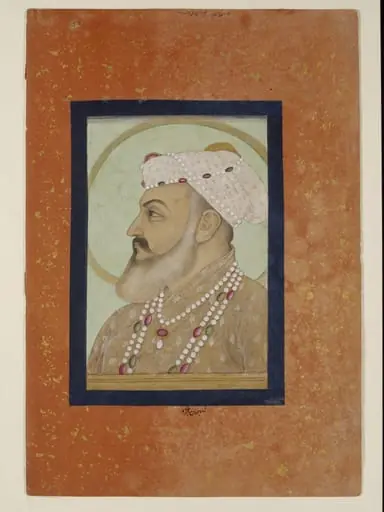
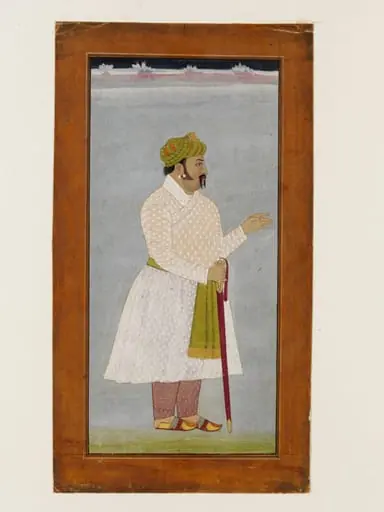
This portrait of Tipu Sultan, ruler of Mysore from 1782 to 1799, was created by an unidentified Indian artist, likely in the Mysore region. It captures him seated formally, dressed in regional attire that distinguishes him from northern Indian nobility. Though produced during or shortly after his lifetime, the image later served as a visual reference for artists in Delhi, who incorporated his likeness into broader series commemorating prominent Indian rulers.
Subject & Meaning
Tipu Sultan is depicted with calm authority, seated in a chair with hands resting on his knees, draped in a white cloth and adorned with a red turban and gold sash. His attire reflects the distinct material culture of southern India, setting him apart from Mughal or Delhi courtly styles. The portrait functions as a commemorative image, preserving his identity after his death in the 1799 Siege of Seringapatam, when British forces ended his rule.
Technique & Style
Executed in the miniature painting tradition, the work employs fine brushwork and restrained coloration to convey dignity rather than grandeur. The composition is frontal and static, emphasizing the subject’s presence over narrative detail. The rendering of textiles and jewelry is precise, suggesting attention to regional dress codes. Unlike European portraiture, it avoids perspective or shadow, adhering to South Indian conventions of representation.
History & Provenance
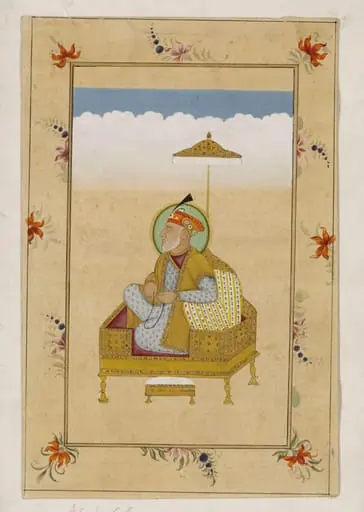
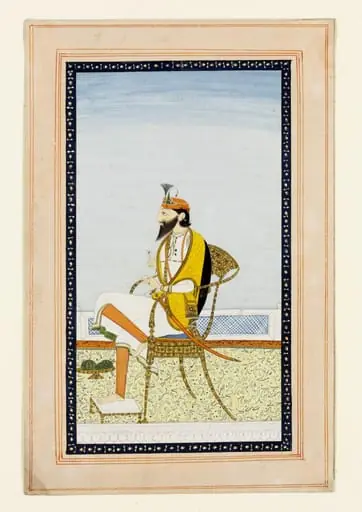
The painting likely originated in Mysore during or after Tipu Sultan’s reign. After his death, Delhi-based artists adopted this image as a model for portraits of regional rulers, integrating it into a broader genre of historical commemoration. One such Delhi variant, now in the Victoria and Albert Museum (646-1870), confirms the circulation and adaptation of this visual type across artistic centers in early 19th-century India.
Context
Tipu Sultan’s resistance to British expansion made him a symbol of defiance in Indian political memory. Though defeated and killed in 1799, his image endured in art as a marker of sovereignty and regional identity. Portraits like this were not merely likenesses but assertions of legacy, produced in courts distant from Mysore to affirm the continuity of indigenous leadership amid colonial dominance.
Legacy
The portrait’s influence extended beyond its immediate context, becoming a template for later depictions of Tipu Sultan in Delhi miniatures. Its adoption by artists outside Mysore indicates a shared cultural interest in preserving the likenesses of regional rulers who opposed colonial power. The painting thus contributes to a broader visual archive of Indian sovereignty, preserved in museum collections like the V&A.
Artist & collection

 Domestic Scene
 Giacomo and Cardinal Marco, investing Andrea, Abbot of San Zeno, with his Benefice
 The Nymph of Fontainebleau
 Portrait of a Woman
 Madonna and Child with Saints in the Enclosed Garden
 Venus and Minerva
 Family Group of Four on Sofa
 Wall painting from Room H of the Villa of P. Fannius Synistor at Boscoreale