Artwork
Rama, Sita, Hanuman and Lakshman
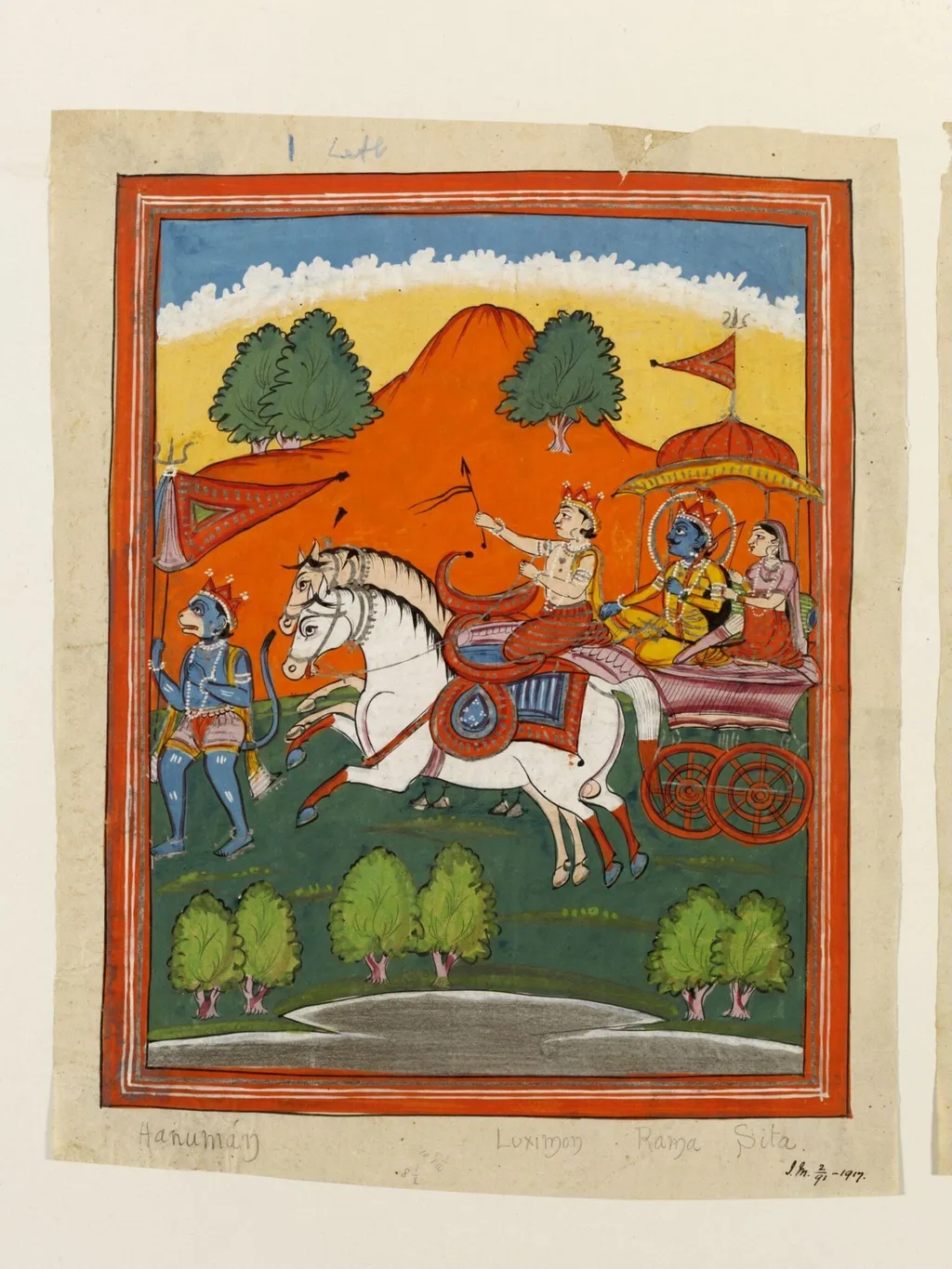
Rama, Sita, Hanuman and Lakshman is a paint painting by Unknown. It dates from 1850 and is held in the collection of the Victoria and Albert Museum.
About this work
Overview
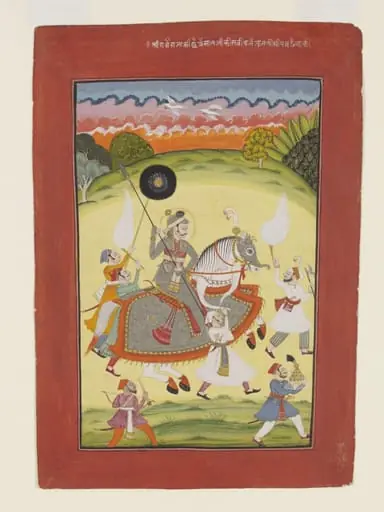
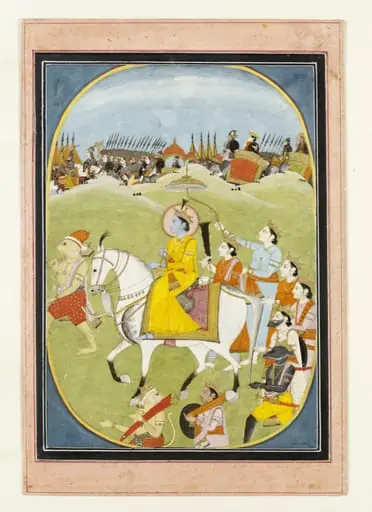
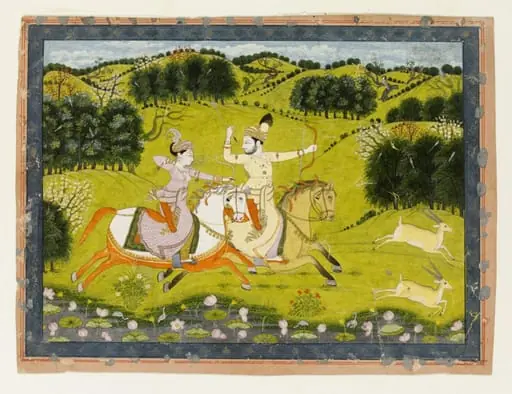
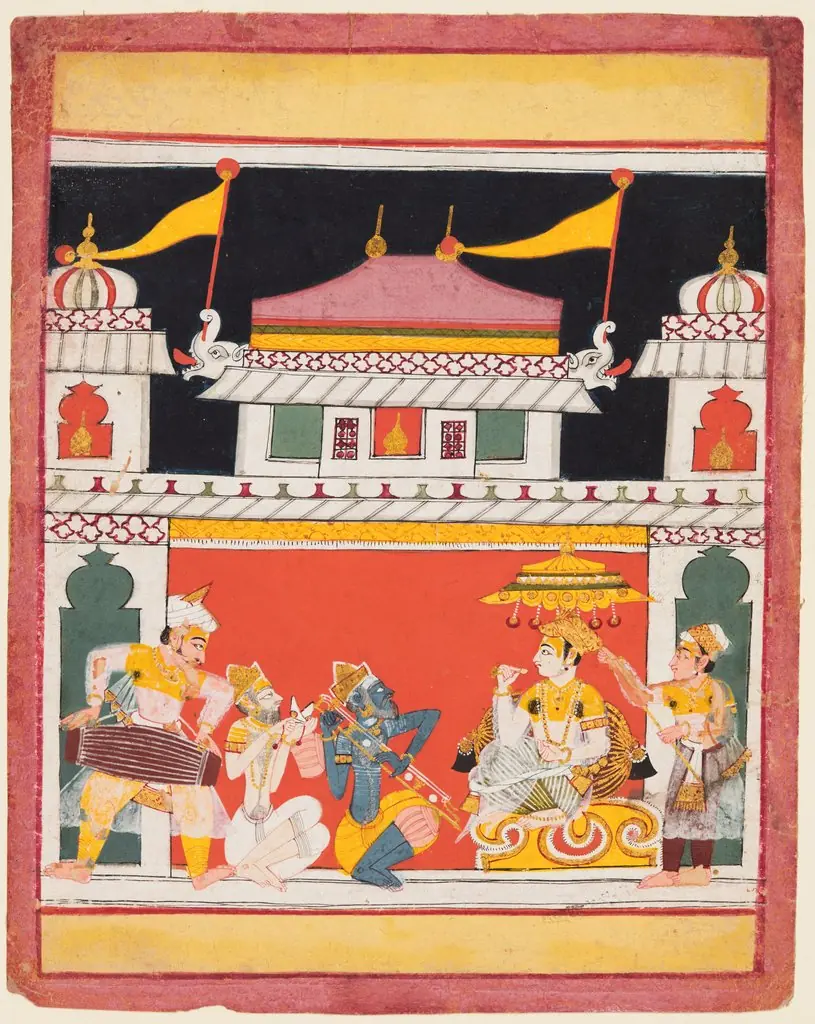
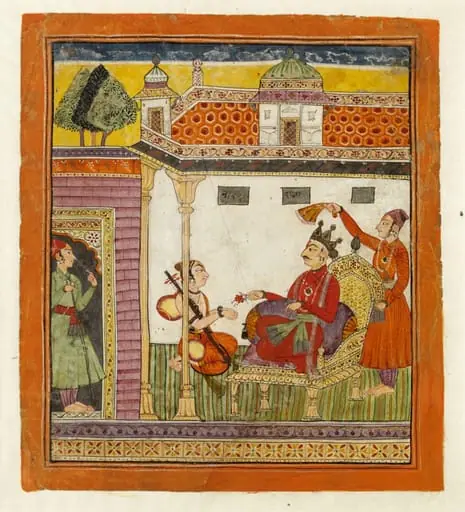
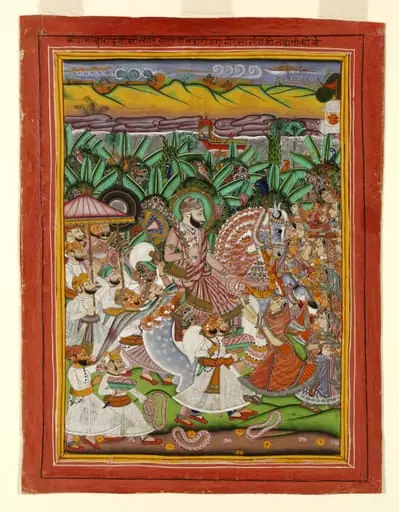
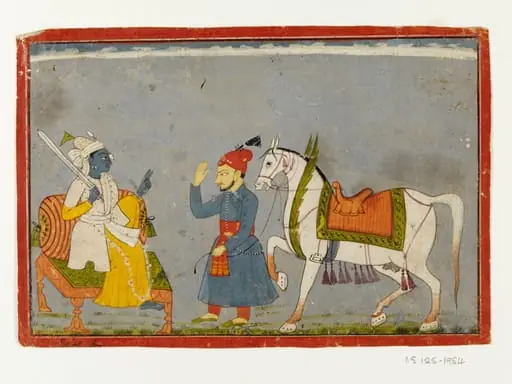
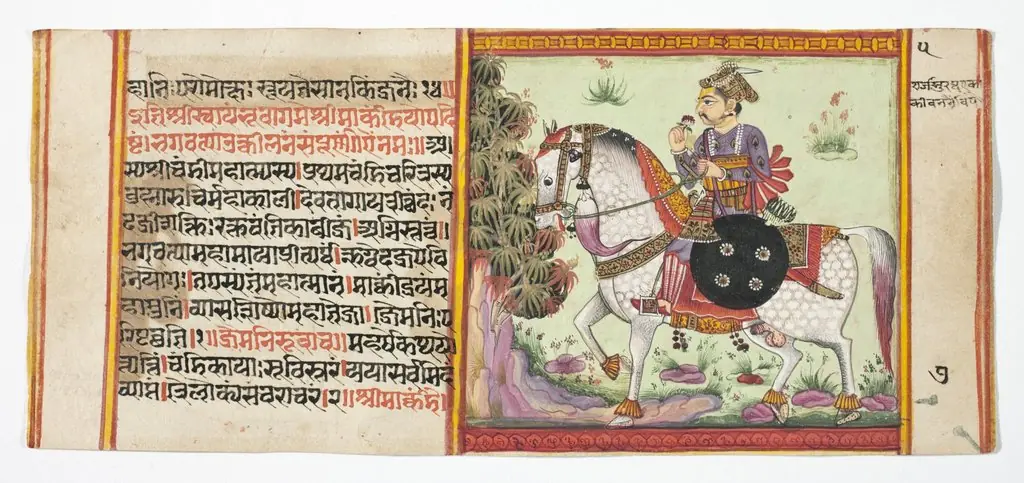
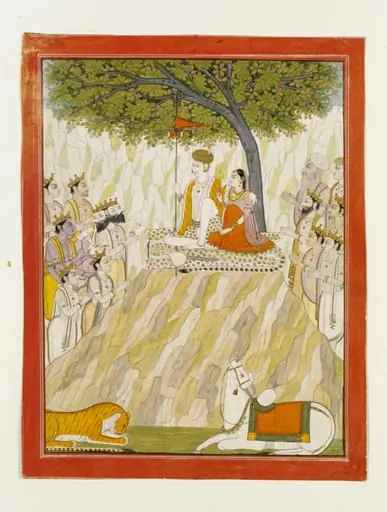
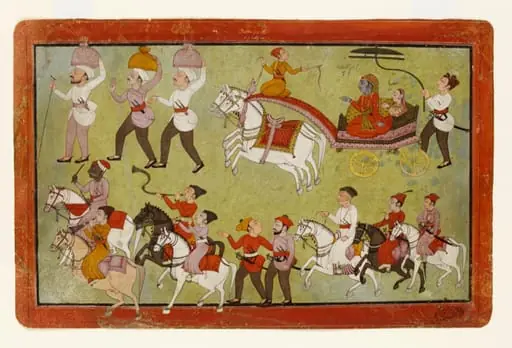
The work portrays a lively episode from the Indian epic Ramayana, featuring the hero Rama and his consort Sita seated in a chariot drawn by Lakshman, while the devoted monkey‑god Hanuman leads the procession. Executed in opaque watercolour on paper, the composition is bright and crowded, with a blue‑skinned figure holding a white horse, a central rider in red and gold, and a red‑capped chariot bearing two passengers in yellow and pink.
Subject & Meaning
The scene captures a moment of divine travel and devotion: Rama and Sita, central figures of dharma, are escorted by their loyal brother Lakshman and the ever‑faithful Hanuman, whose presence underscores themes of loyalty and spiritual assistance within the narrative of the Ramayana.
Technique & Style
Rendered with opaque watercolour, the artist employs vivid pigments and clear outlines to delineate each figure against a backdrop of a red hill, verdant trees, and a blue sky dotted with clouds. The use of a blue disc on the horse’s saddle suggests symbolic detailing common in 19th‑century Indian miniature traditions.
History & Provenance
The painting forms part of a larger album of 196 works assembled by J. Lockwood Kipling between 1865 and 1893, primarily sourced from bazaars and fairs in Upper India and Bengal. In 1917 the album was bequeathed to the museum by Rudyard Kipling, linking the piece to the Kipling family’s collecting activities.
Context
Created during a period when British officials and travelers frequently acquired Indian artworks for personal albums, the piece reflects the cross‑cultural exchange of visual culture in the late colonial era, illustrating a popular narrative motif that appealed to both Indian and European audiences.
Artist & collection

 Domestic Scene
 Giacomo and Cardinal Marco, investing Andrea, Abbot of San Zeno, with his Benefice
 The Nymph of Fontainebleau
 Portrait of a Woman
 Madonna and Child with Saints in the Enclosed Garden
 Venus and Minerva
 Family Group of Four on Sofa
 Wall painting from Room H of the Villa of P. Fannius Synistor at Boscoreale