Artwork
Rama, Lakshmana and Jatayu
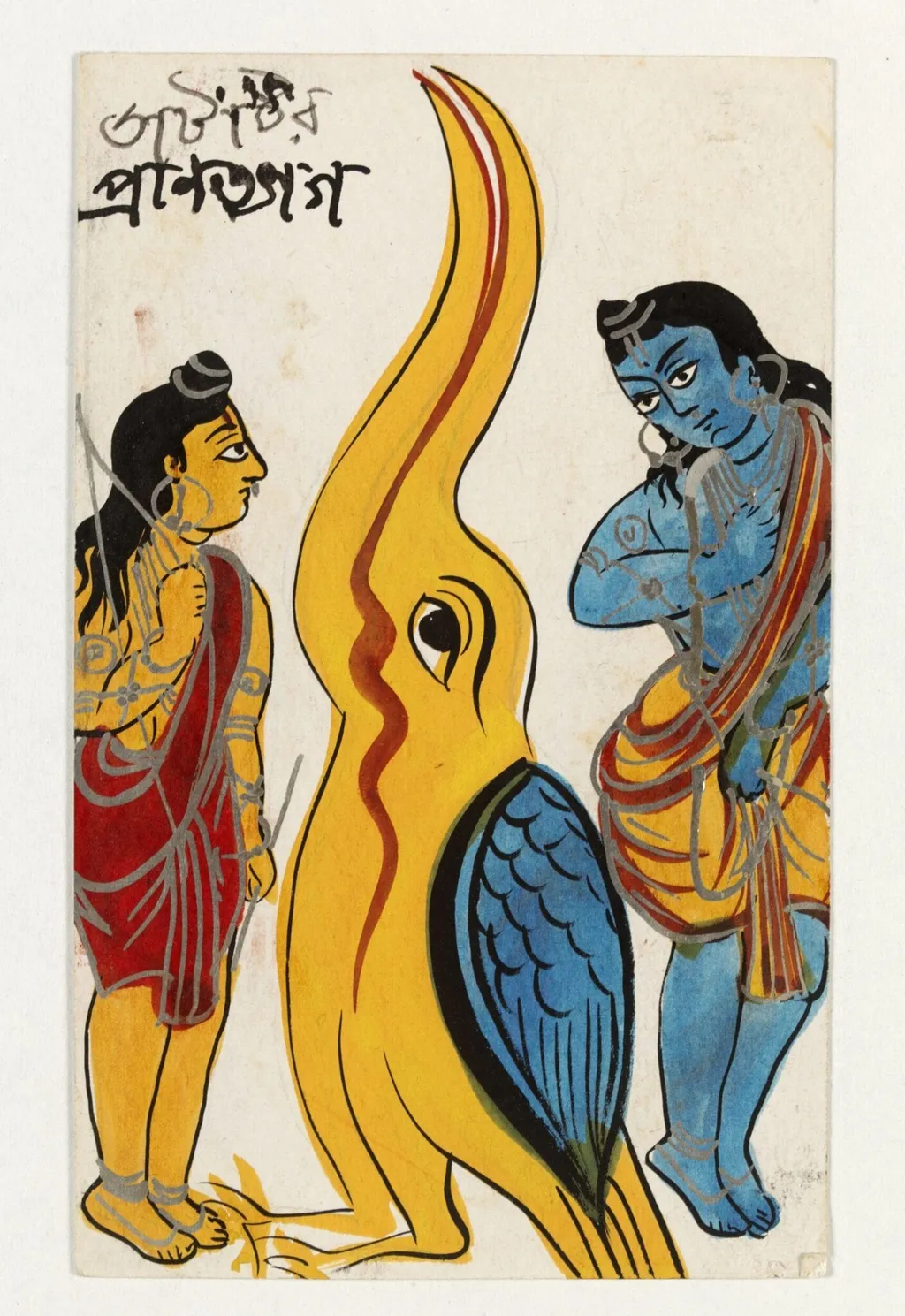
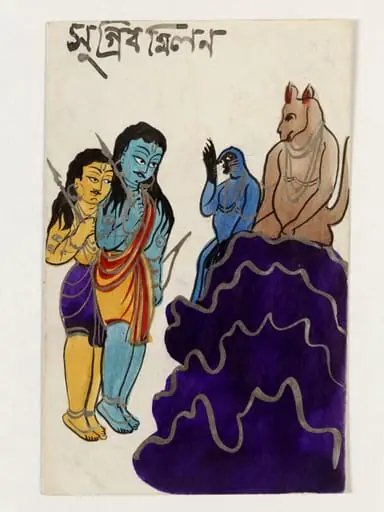
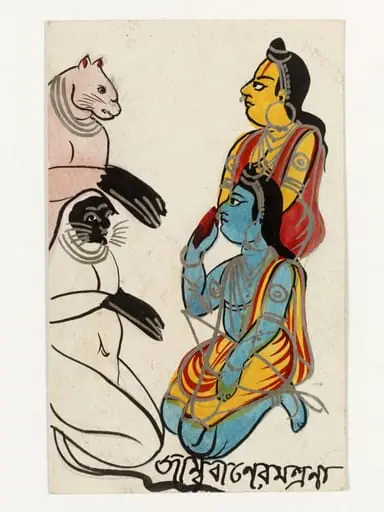
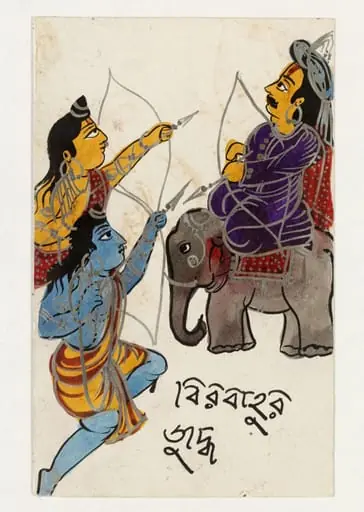
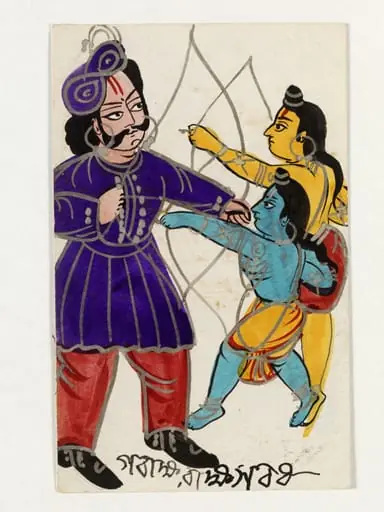
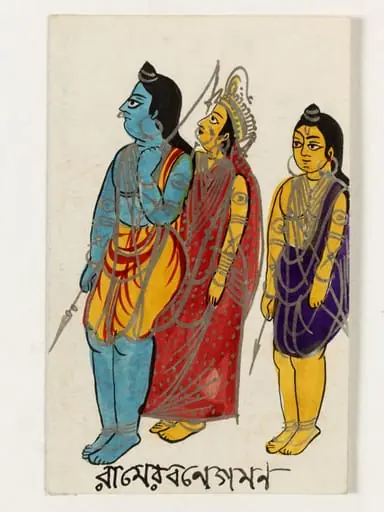
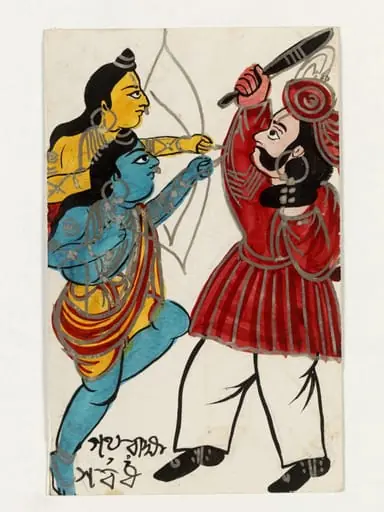
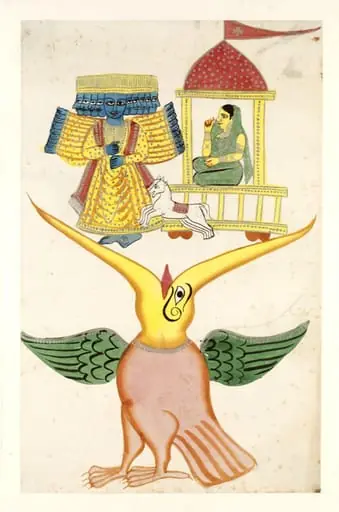
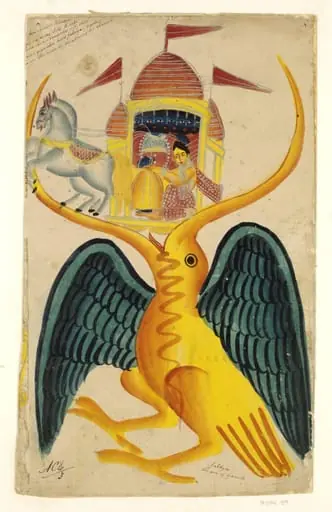
Rama, Lakshmana and Jatayu is a paint painting by the Impressionist artist Unknown. It dates from 1890 and is held in the collection of the Victoria and Albert Museum. The work is a watercolor painting on paper, enhanced with tin alloy details, portraying a dramatic episode from the Indian epic Ramayana.
About this work
Overview
The work is a watercolor painting on paper, enhanced with tin alloy details, portraying a dramatic episode from the Indian epic Ramayana. Central figures are the brothers Rama and Lakshmana, shown beside the mortally wounded bird‑like creature Jatayu. The composition balances human and animal forms against a muted beige backdrop, creating a clear visual focus on the narrative moment.
Subject & Meaning
The scene captures the moment when the heroic brothers encounter Jatayu, the giant eagle who has been gravely injured while attempting to rescue Sita. The depiction emphasizes themes of loyalty, sacrifice, and the tragic cost of duty, reflecting the moral and spiritual lessons embedded in the Ramayana tradition.
Technique & Style
Executed in watercolor with added tin alloy accents, the painting employs the Kalighat school’s hallmark bright palette, simplified outlines, and brisk brushwork. The figures are rendered with bold contours and flat areas of color, while the bird’s yellow plumage and blue wings stand out against the subtle background, echoing the immediacy of folk illustration merged with influences of 19th‑century realism.
History & Provenance
Created circa 1890, the piece belongs to a wave of Bengali artists who reinterpreted indigenous mythological subjects for a market that included both local patrons and colonial collectors. Its survival in a private collection suggests it was likely sold through the bustling Kalighat workshops that supplied prints and paintings to a growing urban audience during the late colonial period.
Context
The painting reflects a broader cultural shift in Bengal where traditional rural artistic practices were adapted to address literary themes and the complexities of colonial society. By visualizing a revered epic in a popular, accessible style, the work illustrates how artists negotiated identity, spirituality, and modernity at the turn of the twentieth century.
Artist & collection

 Domestic Scene
 Giacomo and Cardinal Marco, investing Andrea, Abbot of San Zeno, with his Benefice
 The Nymph of Fontainebleau
 Portrait of a Woman
 Madonna and Child with Saints in the Enclosed Garden
 Venus and Minerva
 Family Group of Four on Sofa
 Wall painting from Room H of the Villa of P. Fannius Synistor at Boscoreale