Artwork
Jatayu, Ravana and Sita
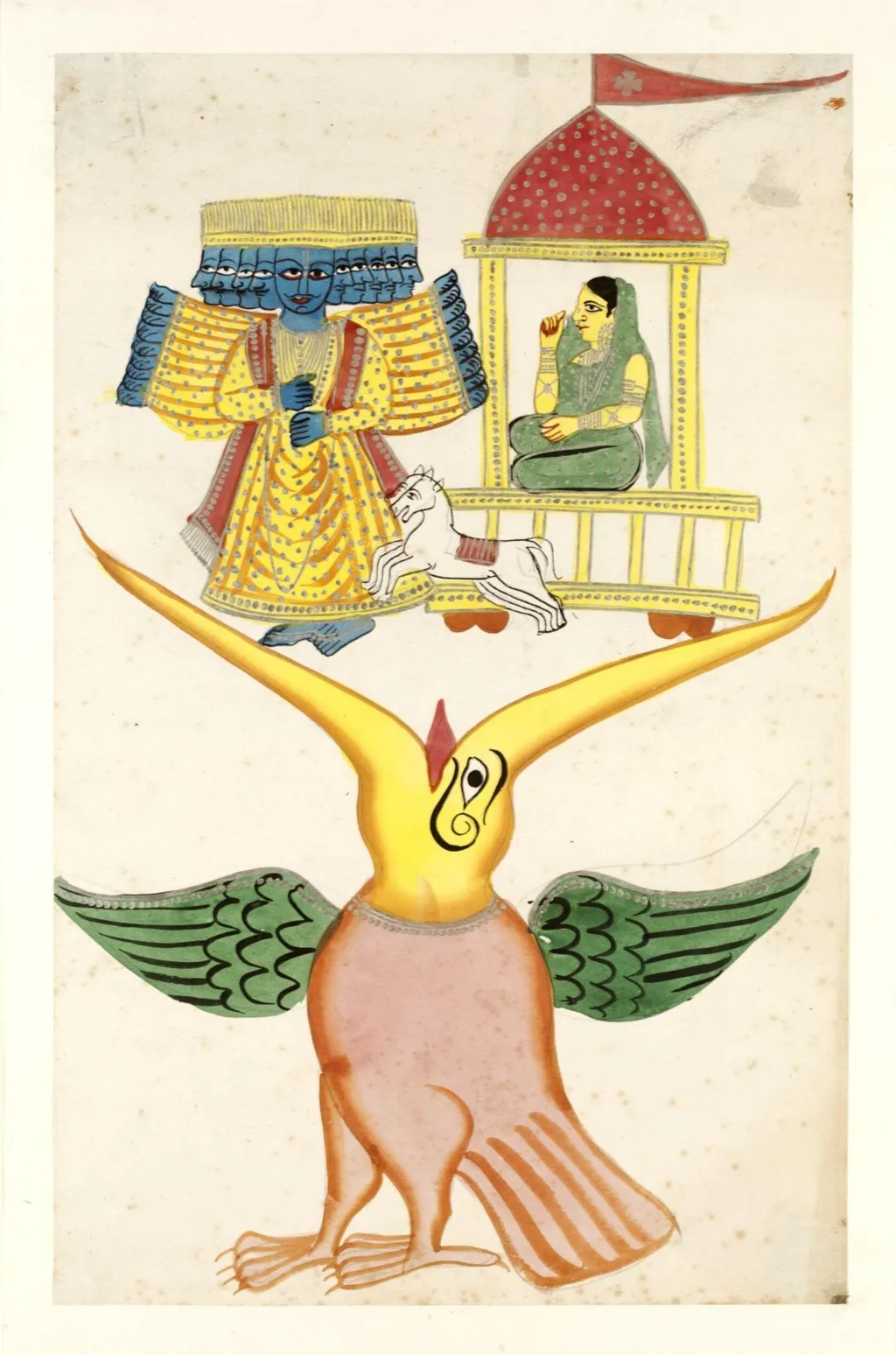
Jatayu, Ravana and Sita is a paint painting by the Romanticist artist Unknown. It dates from 1830 and is held in the collection of the Victoria and Albert Museum.
About this work
Overview
The work portrays a dramatic episode from the Indian epic Ramayana, where the heroic bird Jatayu confronts the demon king Ravana as he abducts Sita.
The work portrays a dramatic episode from the Indian epic Ramayana, where the heroic bird Jatayu confronts the demon king Ravana as he abducts Sita. The composition centers on the clash between the vulture and the chariot, emphasizing the urgency of the rescue attempt. The scene is rendered in opaque watercolour on paper, employing a limited palette that foregrounds bright yellows, soft pinks, and verdant greens.
Subject & Meaning
In the narrative, Jatayu sacrifices himself to impede Ravana’s flight, symbolising loyalty and courage. The painting captures this moment of intervention, with the vulture’s open beak and enlarged form underscoring its pivotal role. The presence of a small pavilion where a figure watches the action adds a layer of observation, suggesting the wider moral implications of the struggle between duty and tyranny.
Technique & Style
The artist uses opaque watercolour applied in flat, unmodulated washes, avoiding chiaroscuro or gradual shading. This approach yields vivid, uniform colour fields that give the scene a graphic quality. The dominant hues of yellow, pale pink, and green create a harmonious yet striking visual rhythm, while the lack of tonal depth focuses attention on the narrative gestures rather than realistic modeling.
Context
The painting belongs to a tradition of South Asian visual storytelling that adapts literary epics for a pictorial audience. By employing a simplified, decorative style, the work aligns with decorative arts of the period, where narrative clarity often took precedence over naturalistic representation. Its medium—opaque watercolour on paper—was common for portable devotional and illustrative pieces circulated among patrons.
Artist & collection

 Domestic Scene
 Giacomo and Cardinal Marco, investing Andrea, Abbot of San Zeno, with his Benefice
 The Nymph of Fontainebleau
 Portrait of a Woman
 Madonna and Child with Saints in the Enclosed Garden
 Venus and Minerva
 Family Group of Four on Sofa
 Wall painting from Room H of the Villa of P. Fannius Synistor at Boscoreale
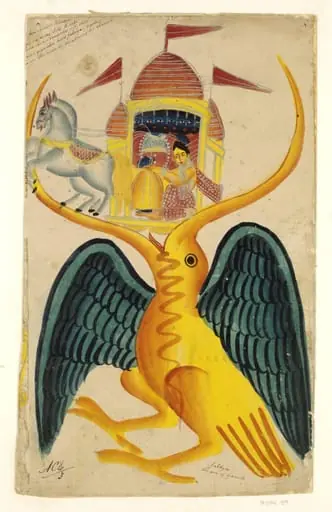 Ravana, Sita and Jatayu
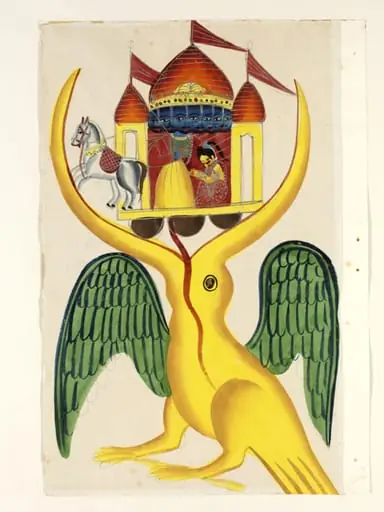 Jatayu, Sita and Ravana
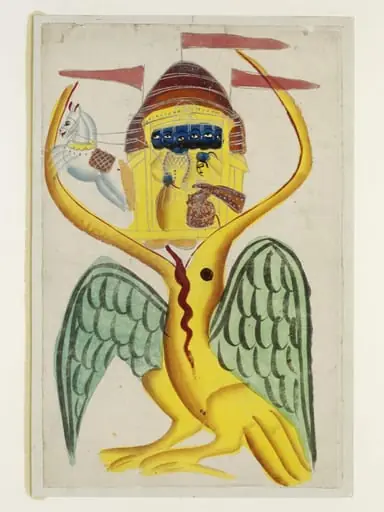 Ravana, Sita and Jatayu
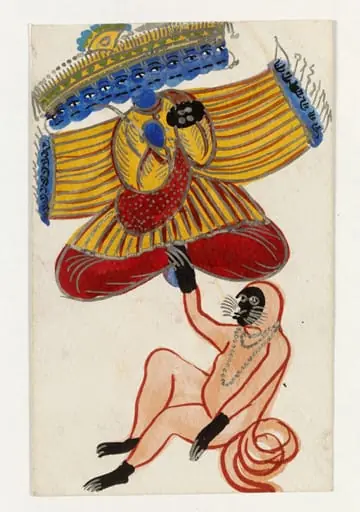 Hanuman and Ravana
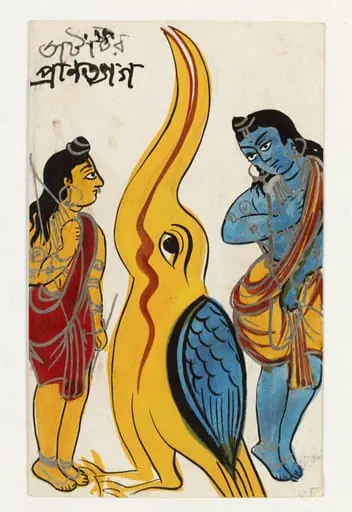 Rama, Lakshmana and Jatayu
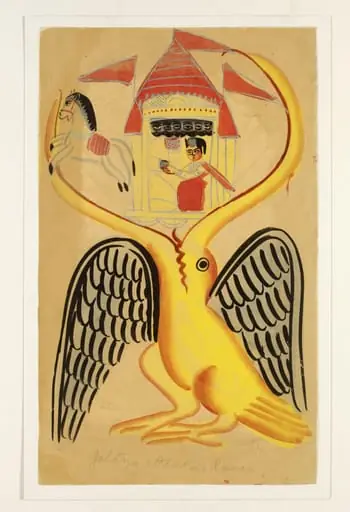 Jatayu, Ravana and Sita
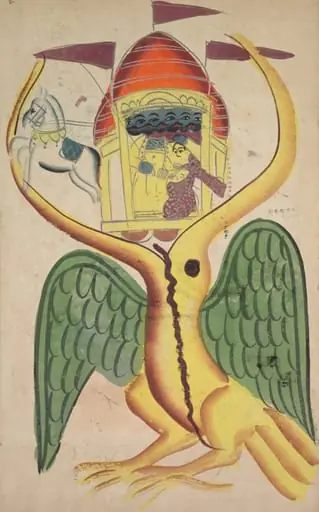 Jatayu hinders Ravana’s chariot, trying to prevent the abduction of Sita (recto), from a Kalighat album
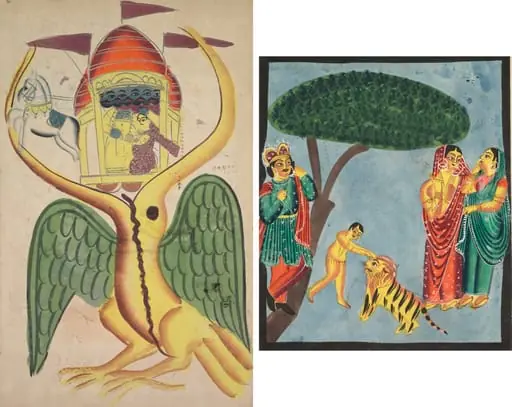 Leaf from a Kalighat album: Jatayu hinders Ravana’s chariot, trying to prevent the abduction of Sita (recto); Dushyanta watching his son Bharat playing with the tiger at the end of the Abhijnanashakuntalam (verso)
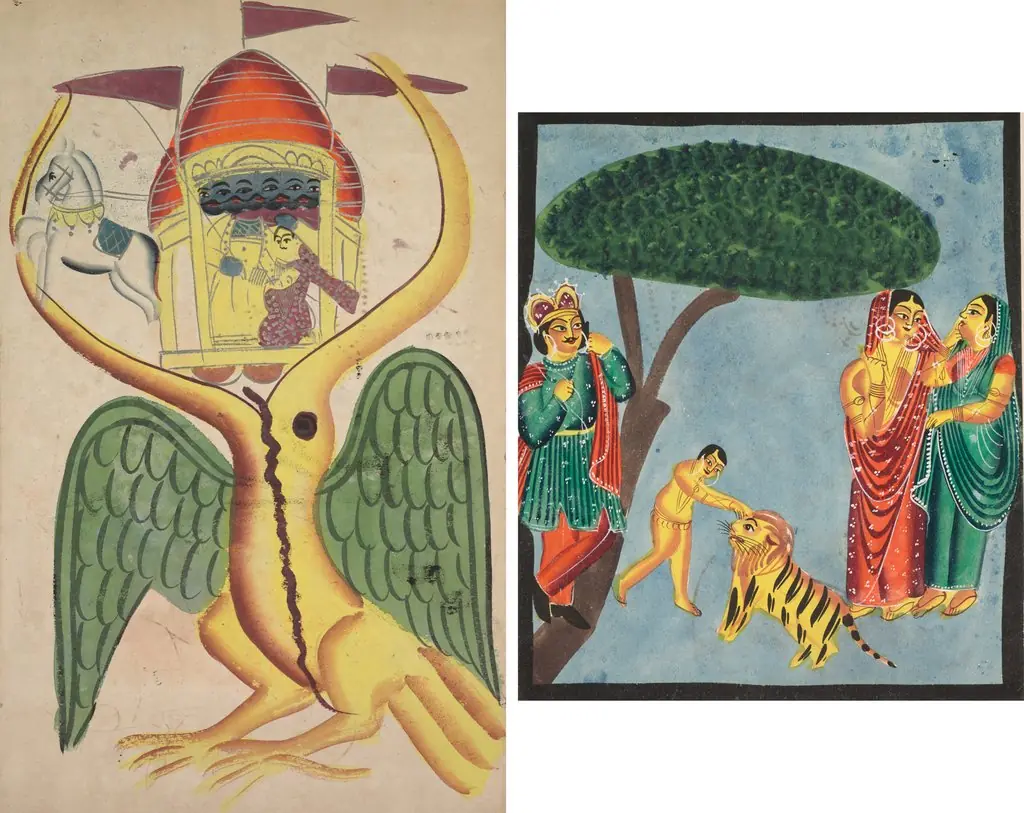 Leaf from a Kalighat album: Jatayu hinders Ravana’s chariot, trying to prevent the abduction of Sita (recto); Dushyanta watching his son Bharat playing with the tiger at the end of the Abhijnanashakuntalam (verso)