Artwork
Rama, Sita, Lakshmana and Hanuman
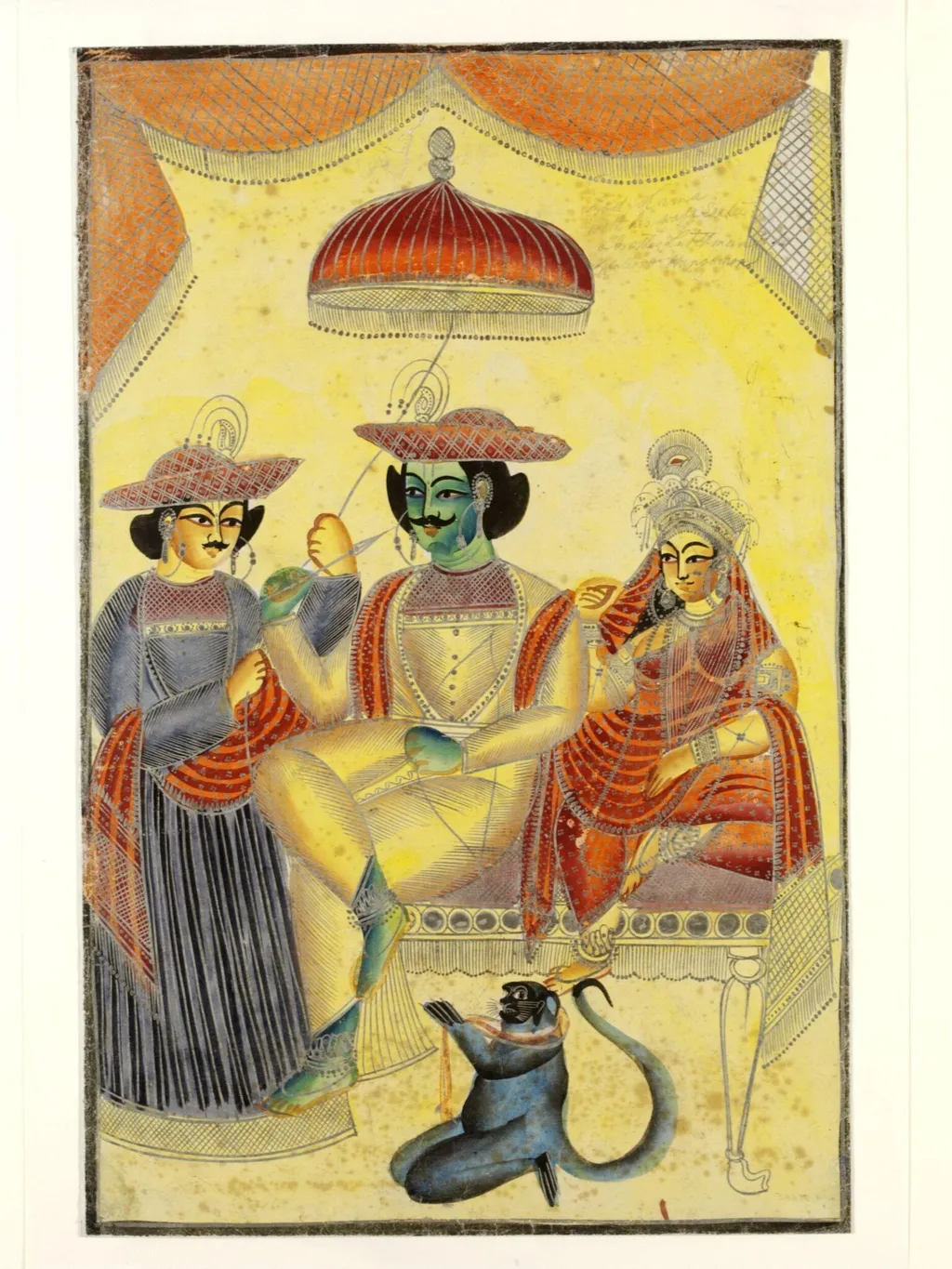
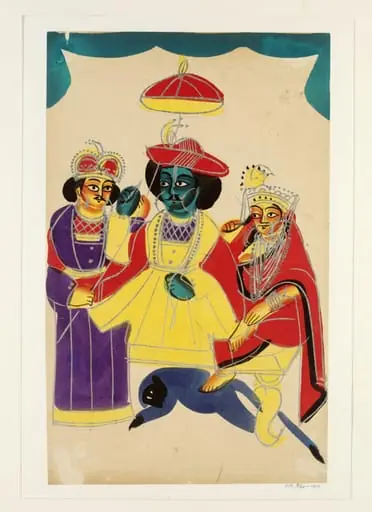
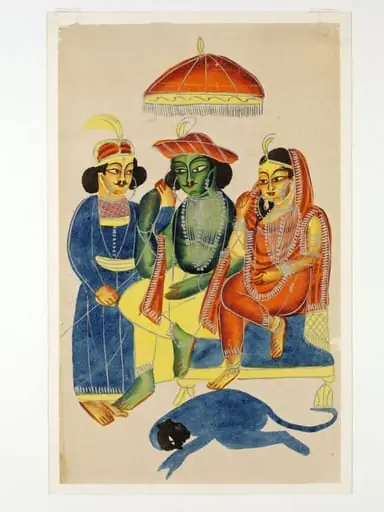
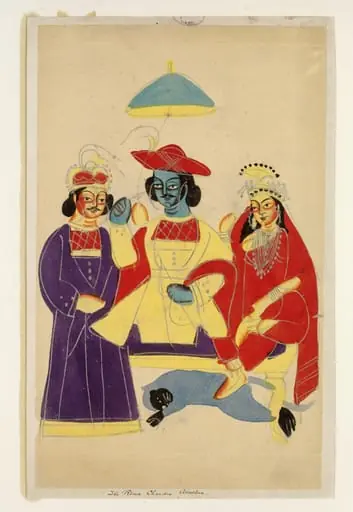
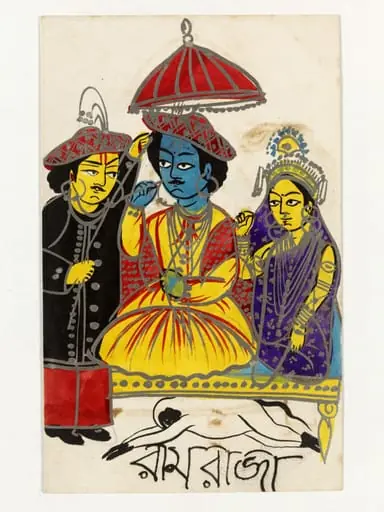
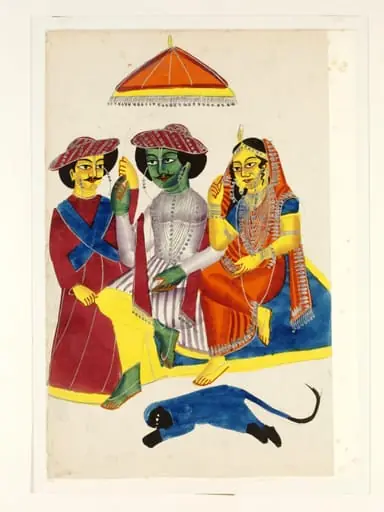
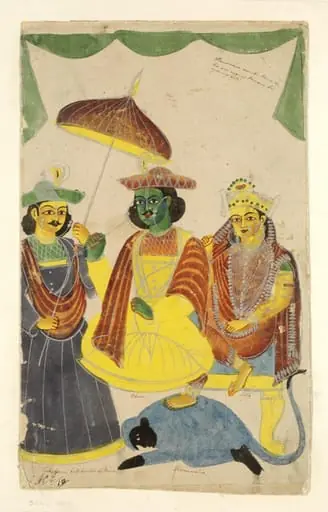
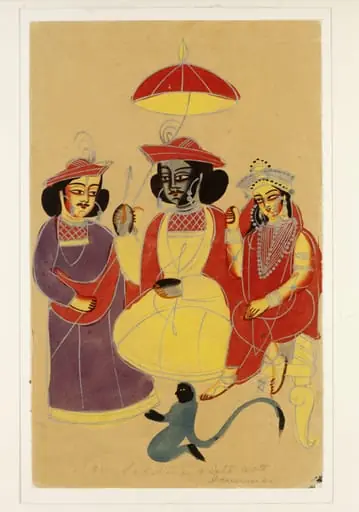
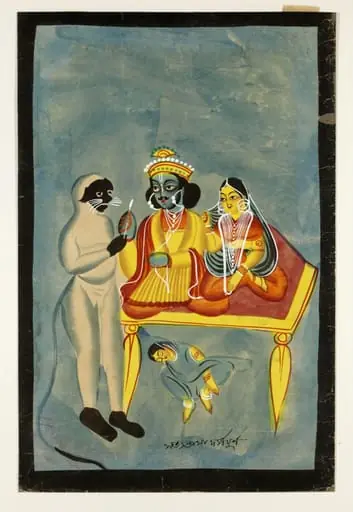
Rama, Sita, Lakshmana and Hanuman is a paint painting by the Impressionist artist Unknown. It dates from 1860 and is held in the collection of the Victoria and Albert Museum. This 1860 opaque watercolour on paper originates from Calcutta during British colonial rule and belongs to the Kalighat painting tradition.
About this work
Overview
This 1860 opaque watercolour on paper originates from Calcutta during British colonial rule and belongs to the Kalighat painting tradition.
This 1860 opaque watercolour on paper originates from Calcutta during British colonial rule and belongs to the Kalighat painting tradition. It depicts a scene from the Ramayana, rendered with bold outlines and vivid pigments. The composition centers on divine figures arranged hierarchically, reflecting both religious narrative and the stylistic conventions of 19th-century Bengali folk art produced for pilgrims and local patrons.
Subject & Meaning
The painting illustrates Rama, Sita, Lakshmana, and Hanuman in a moment of quiet reverence. Rama, with blue-green skin and royal attire, sits beside Sita, while Lakshmana holds an umbrella—a symbol of protection. Hanuman, kneeling at Rama’s feet, embodies devotion. The scene captures the idealized relationships of duty and loyalty central to the Ramayana, rendered not as grand epic but as intimate, accessible devotion.
Technique & Style
Executed in opaque watercolour on paper, the work employs sharp outlines, flat planes of color, and minimal shading—hallmarks of Kalighat art. Brushwork is swift and confident, emphasizing expressive forms over detail. The palette is rich but restrained: reds, golds, blues, and greens dominate, creating visual harmony. The figures are stylized, their gestures simplified to convey emotional and spiritual relationships rather than naturalistic realism.
History & Provenance
Created in Calcutta around 1860, the painting emerged from the Kalighat temple precincts, where artists produced affordable devotional images for pilgrims. These works were often sold near the Kalighat Kali Temple and adapted to changing urban tastes. While rooted in traditional iconography, the style evolved alongside colonial influence, blending indigenous themes with new audiences and commercial demands.
Context
In mid-19th century Bengal, Kalighat paintings responded to urbanization and colonial presence. Mythological subjects remained popular, but their presentation became more immediate and less ornate. This piece reflects a cultural space where religious imagery was both preserved and reshaped—serving spiritual needs while adapting to the rhythms of city life and emerging print culture.
Legacy
Kalighat paintings like this one influenced later Indian modern art and folk revival movements. Their directness and visual clarity offered an alternative to academic European styles promoted under colonial rule. Though mass-produced and ephemeral in origin, such works are now recognized as vital records of 19th-century Bengali religious life and artistic innovation.
Artist & collection

 Domestic Scene
 Giacomo and Cardinal Marco, investing Andrea, Abbot of San Zeno, with his Benefice
 The Nymph of Fontainebleau
 Portrait of a Woman
 Madonna and Child with Saints in the Enclosed Garden
 Venus and Minerva
 Family Group of Four on Sofa
 Wall painting from Room H of the Villa of P. Fannius Synistor at Boscoreale