Artwork
Rama, Sita, Lakshmana and Hanuman
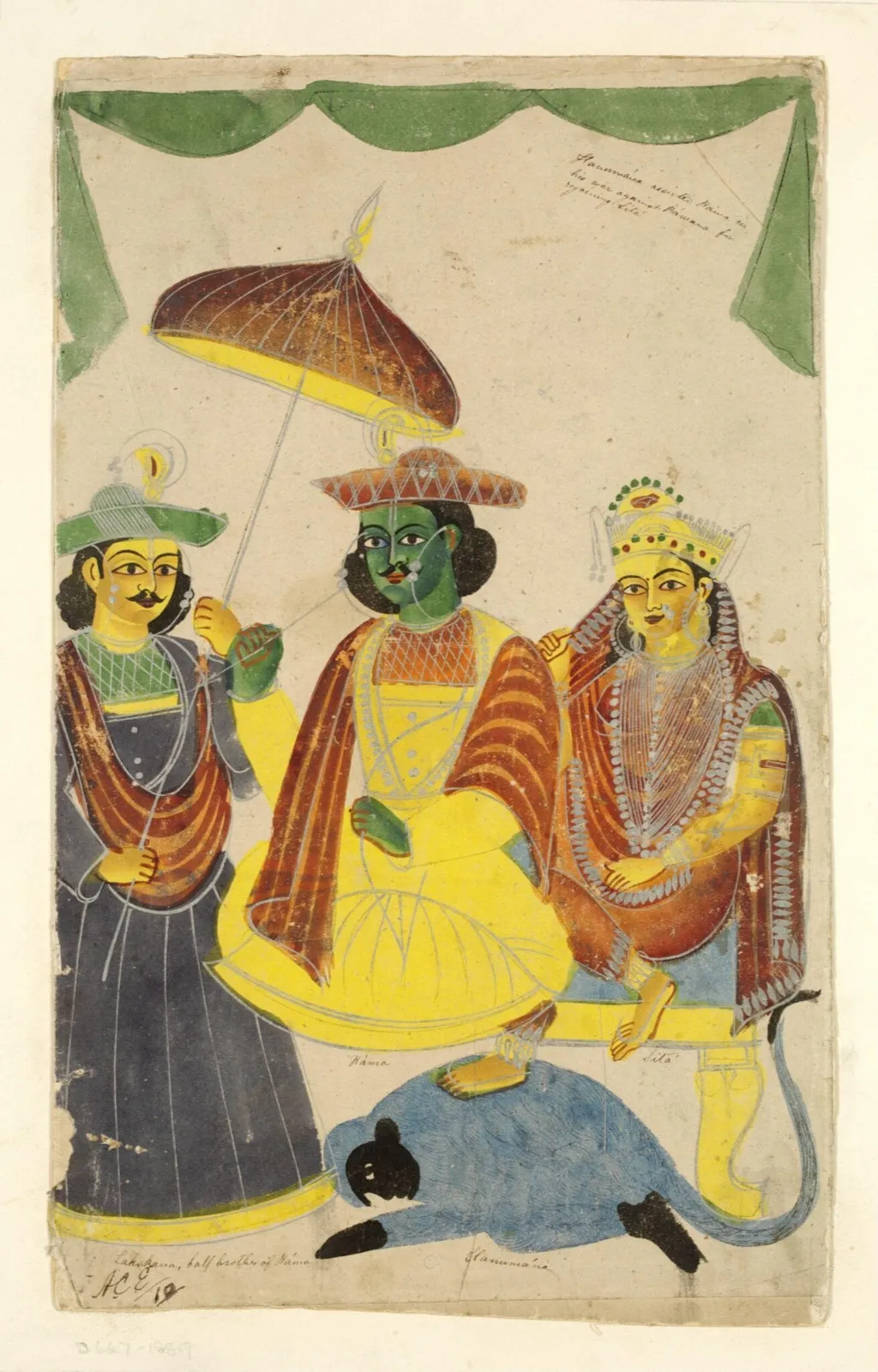
Rama, Sita, Lakshmana and Hanuman is a paint painting by the Impressionist artist Unknown. It dates from 1850 and is held in the collection of the Victoria and Albert Museum. This watercolor on paper, acquired by the Department of Prints and Drawings in 1889 from G.
About this work
Overview
The use of flat pigments and strong outlines reflects a regional painting tradition focused on narrative clarity over spatial illusion.
This watercolor on paper, acquired by the Department of Prints and Drawings in 1889 from G. Wild, portrays four figures from the Ramayana. Tin-alloy highlights add subtle luminosity to the surface. The composition is compact, with figures arranged in a static, frontal grouping against an unmodeled background. The use of flat pigments and strong outlines reflects a regional painting tradition focused on narrative clarity over spatial illusion.
Subject & Meaning
The central figure, Rama, is identified by his green face and yellow parasol, symbolizing his royal and divine status. To his right, Sita, adorned in red and gold with a crown, represents virtue and devotion. Lakshmana, on Rama’s left, holds a staff, signifying his role as protector. Hanuman, the small crouching figure at their feet, embodies loyalty and service. Together, they embody key relationships from the epic, emphasizing duty, fidelity, and devotion.
Technique & Style
The painting employs opaque watercolor with minimal shading, relying on bold outlines and flat areas of color to define form. Tin-alloy highlights, applied sparingly to garments and accessories, catch light to suggest texture without modeling. The figures lack anatomical detail, instead rendered as symbolic silhouettes. This approach prioritizes legibility and spiritual presence over naturalism, aligning with devotional painting conventions of the period.
History & Provenance
The work entered the collection of the Department of Prints and Drawings in 1889 through acquisition from G. Wild, a known collector of South Asian artworks. Its earlier provenance remains undocumented, though stylistic features suggest origin in the Pahari or Rajasthani school. The painting’s preservation indicates it was valued as a devotional or illustrative object, likely used in private or temple settings before entering institutional care.
Context
Created during a period when illustrated manuscripts of the Ramayana flourished across North India, this painting reflects a tradition where religious narratives were rendered for contemplative or ceremonial use. Artists often adapted regional aesthetics to depict epic heroes, blending local dress and iconography with established symbolic codes. Such works served both as visual aids for storytelling and as objects of personal devotion.
Legacy
As a representative of 18th- to 19th-century Indian miniature painting, this work contributes to the understanding of how Hindu epics were visually codified outside textual traditions. Its preservation in a Western museum underscores the colonial-era collection of South Asian art, while its stylistic simplicity continues to inform contemporary studies of non-Western pictorial systems and devotional aesthetics.
Artist & collection

 Domestic Scene
 Giacomo and Cardinal Marco, investing Andrea, Abbot of San Zeno, with his Benefice
 The Nymph of Fontainebleau
 Portrait of a Woman
 Madonna and Child with Saints in the Enclosed Garden
 Venus and Minerva
 Family Group of Four on Sofa
 Wall painting from Room H of the Villa of P. Fannius Synistor at Boscoreale
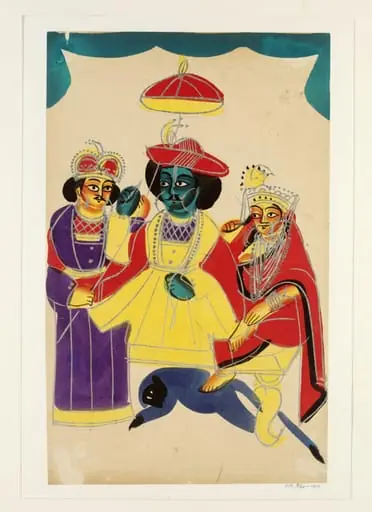 Rama, Sita, Lakshmana and Hanuman
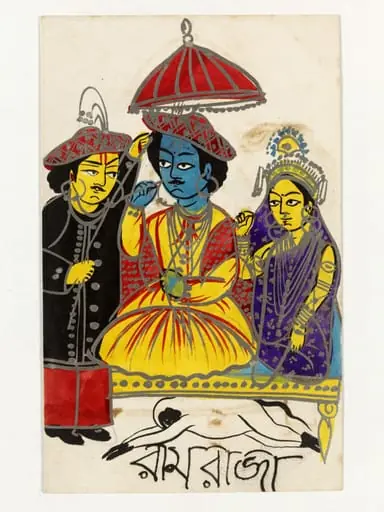 Rama, Sita, Lakshmana and Hanuman
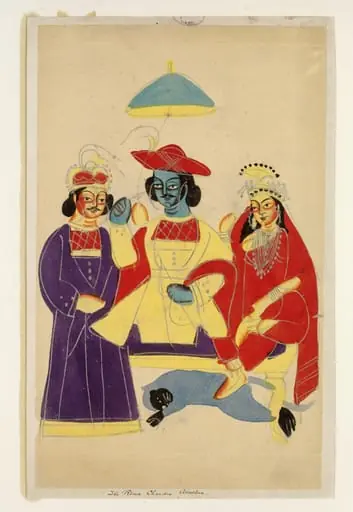 Rama, Sita, Hanuman and Lakshmana
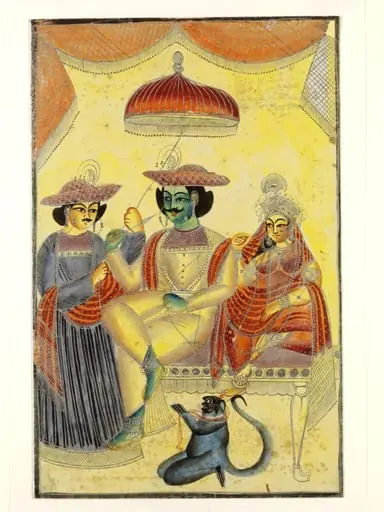 Rama, Sita, Lakshmana and Hanuman
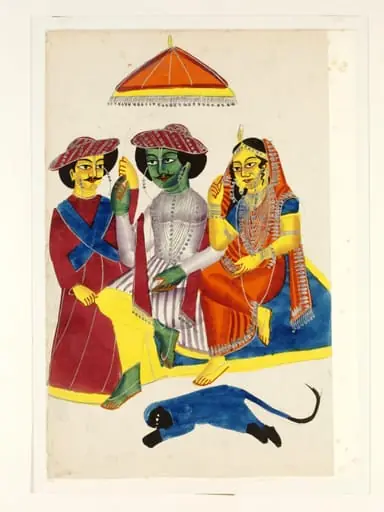 Hanuman before Rama, Sita and Lakshmana
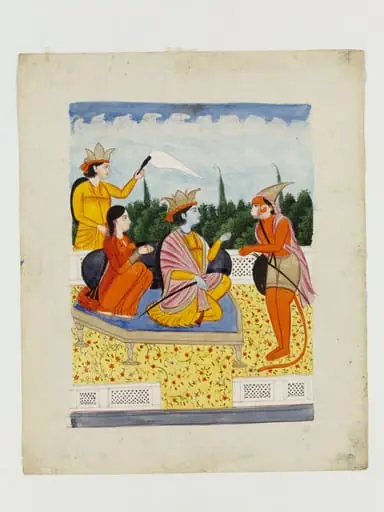 Hanuman, Rama and Sita and Lakshmana
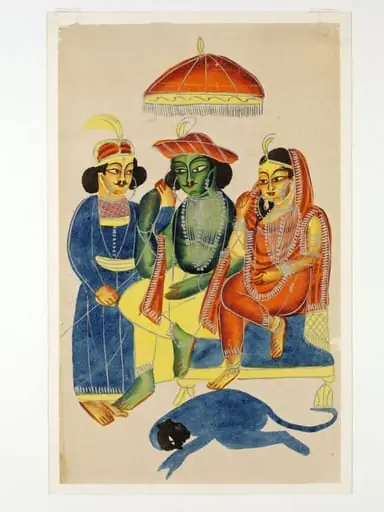 Hanuman, Rama, Sita and Lakshmana
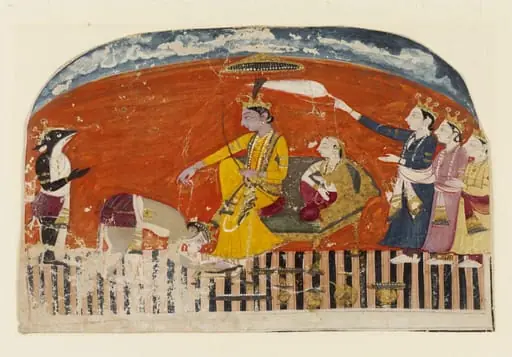 Hanuman, Rama and Sita
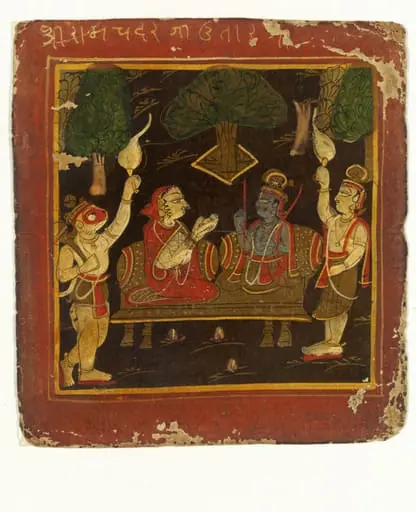 Rama and Sita, Lakshman and Hanuman
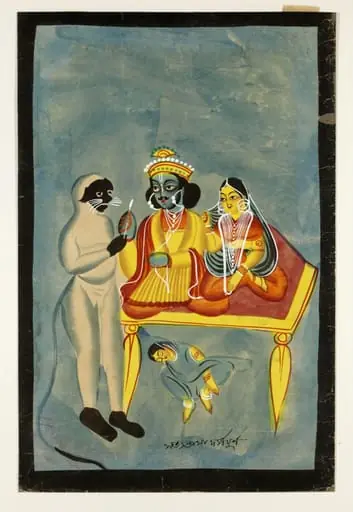 Rama and Sita, Hanuman and Satyabhama
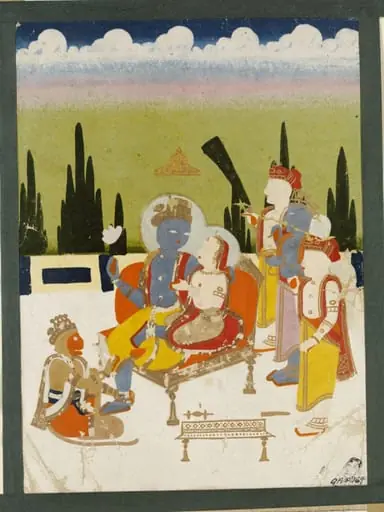 Rama and Sita