Artwork
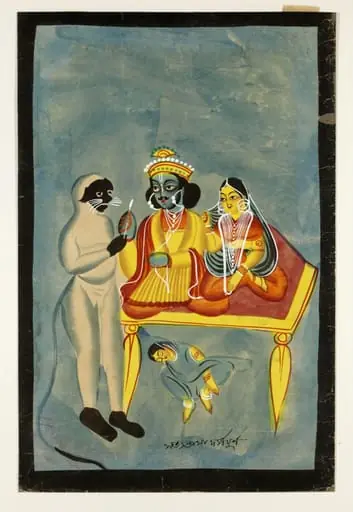
Hanuman before Rama, Sita and Lakshmana
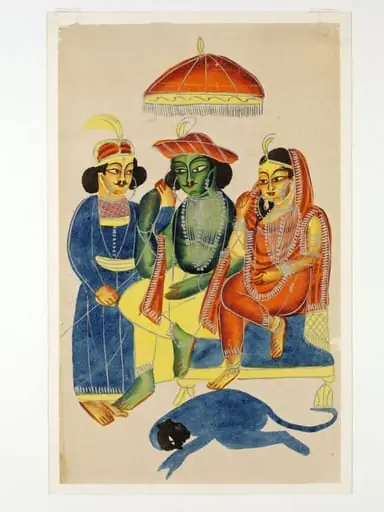
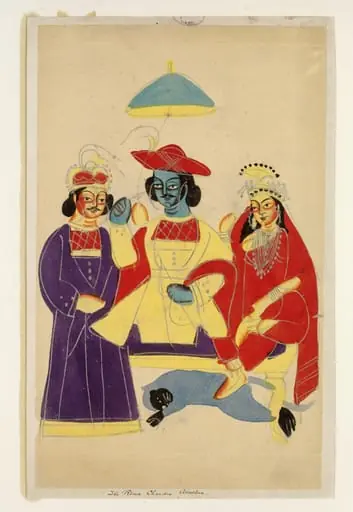
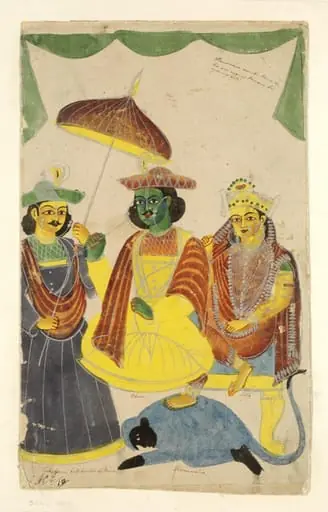
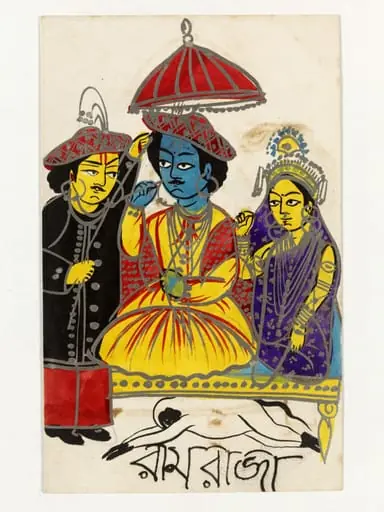
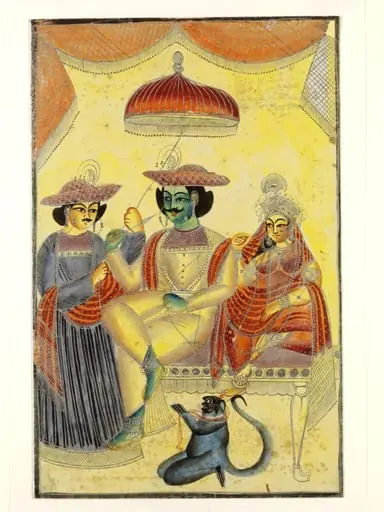
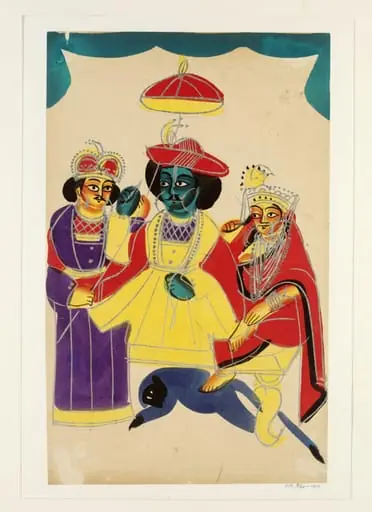
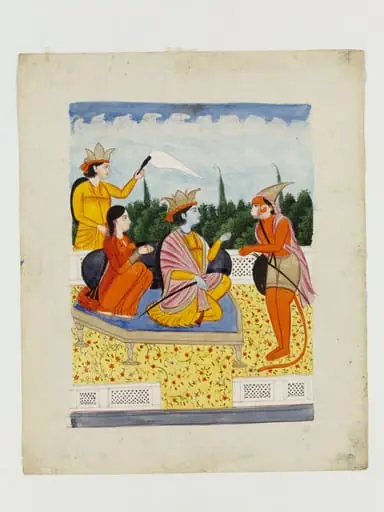
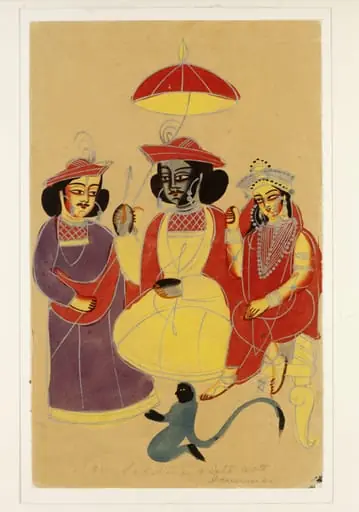
Hanuman before Rama, Sita and Lakshmana is a paint painting by the Patna School of Painting artist Unknown. It dates from 1865 and is held in the collection of the Victoria and Albert Museum. This opaque watercolor on paper, dated 1865, depicts a moment from the Ramayana in which Hanuman pays homage to Rama, Sita, and Lakshmana.
About this work
Overview
This opaque watercolor on paper, dated 1865, depicts a moment from the Ramayana in which Hanuman pays homage to Rama, Sita, and Lakshmana. Executed in vibrant pigments, the work belongs to the Indian miniature painting tradition. It was donated to the University Museum of Archaeology and Ethnology in Cambridge by Mrs. Western of Havant, Hampshire, and remains part of its collection.
Subject & Meaning
The composition underscores the hierarchical relationship between divine ruler and loyal devotee, central to the spiritual ethos of the Ramayana.
The scene captures Hanuman’s act of devotion to Rama, the exiled prince and avatar of Vishnu, flanked by his wife Sita and brother Lakshmana. Hanuman, depicted with a blue body and human posture, kneels in reverence, embodying the ideal of selfless service. The composition underscores the hierarchical relationship between divine ruler and loyal devotee, central to the spiritual ethos of the Ramayana.
Technique & Style
The painting employs opaque watercolor with bold, saturated hues, characteristic of 19th-century North Indian courtly art. Gold leaf accents highlight Rama’s throne and garments, while the figures are rendered with fine linear detail. Hanuman’s form blends simian features with human expression, emphasizing emotional sincerity over naturalism, a hallmark of devotional illustration in this tradition.
History & Provenance
Created in 1865, the painting entered the University Museum of Archaeology and Ethnology in Cambridge through donation by Mrs. Western of Langrookside, Hampshire. Its journey from an Indian artistic context to a British institutional collection reflects broader patterns of colonial-era acquisition and the preservation of South Asian visual culture in Western museums.
Context
This work emerged during a period when traditional Indian painting persisted alongside colonial influence. Though produced under British rule, it draws from longstanding regional styles that illustrated Hindu epics for devotional and courtly audiences. The depiction of Hanuman’s humility aligns with popular religious narratives that emphasized dharma and loyalty as moral ideals.
Legacy
The painting contributes to the documentation of 19th-century devotional art in India, preserving visual conventions that sustained religious storytelling. Its presence in a British university collection offers scholars access to a non-Western aesthetic tradition, facilitating comparative study of how sacred narratives were rendered across cultures and time.
Artist & collection

 Domestic Scene
 Giacomo and Cardinal Marco, investing Andrea, Abbot of San Zeno, with his Benefice
 The Nymph of Fontainebleau
 Portrait of a Woman
 Madonna and Child with Saints in the Enclosed Garden
 Venus and Minerva
 Family Group of Four on Sofa
 Wall painting from Room H of the Villa of P. Fannius Synistor at Boscoreale