Artwork
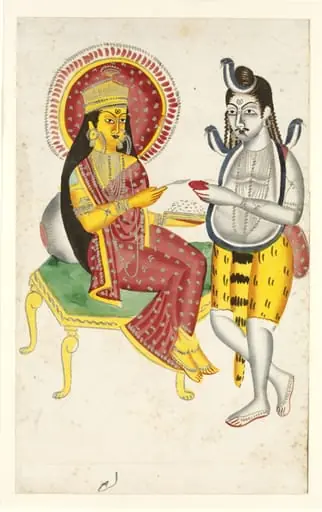
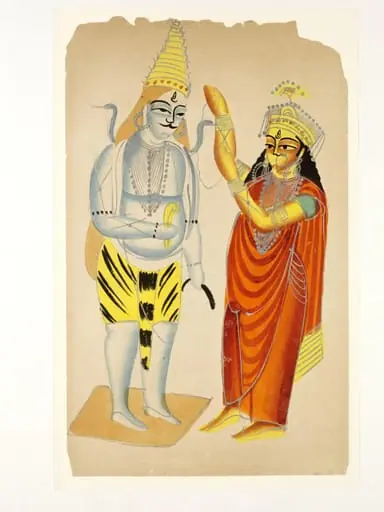
Rati and Shiva
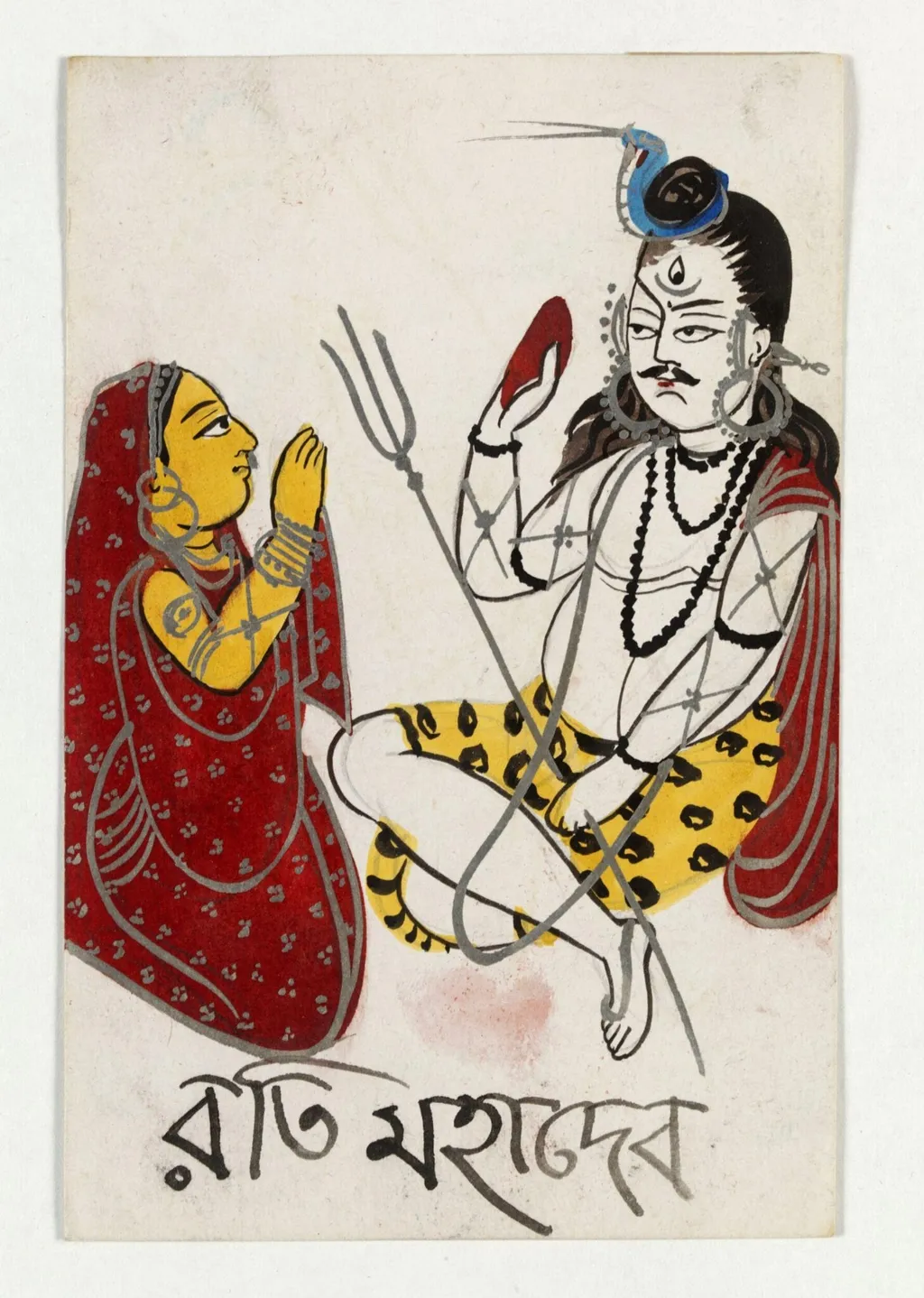
Rati and Shiva is a paint painting by the Impressionist artist Unknown. It dates from 1890 and is held in the collection of the Victoria and Albert Museum.
About this work
Overview
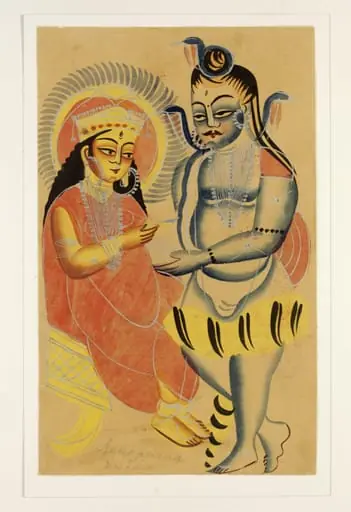
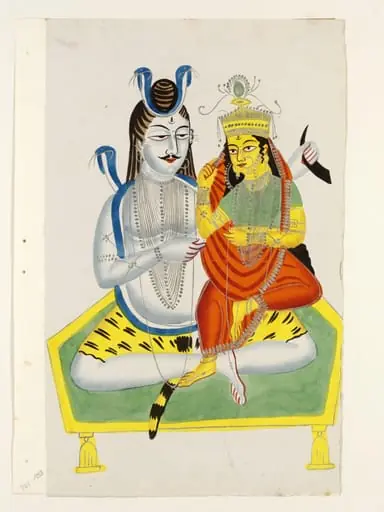
This 1890 watercolour and tin alloy painting on cardboard portrays a devotional scene featuring two central figures, a woman and a man, in a seated pose against a plain off-white background.
Subject & Meaning
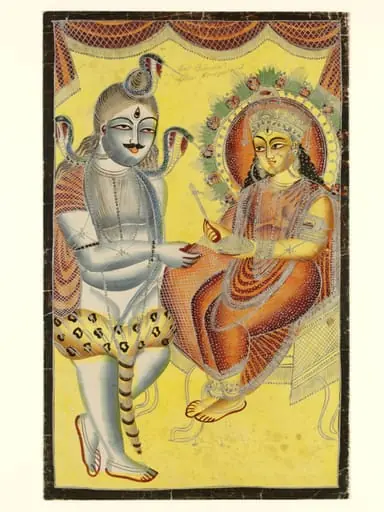
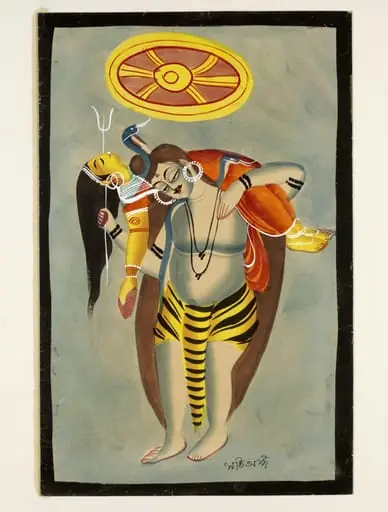
The painting depicts Rati, wife of Kama (the Hindu god of love), kneeling in devotion before Shiva, a major deity in Hinduism. Rati's raised right hand signifies prayer or supplication, while Shiva's calm demeanor reflects contemplation.
Technique & Style
Executed in watercolour and tin alloy on cardboard, the work showcases detailed attire and accessories: Rati wears a red, flower-patterned sari, and Shiva, a white dhoti with a yellow and black draped cloth and a distinctive blue and black hairpiece.
History & Provenance
Created in 1890, this painting is classified under the Kalighat style, a 19th-century Indian art form known for its religious and social themes. It is part of the collection at the Victoria and Albert Museum.
Context
The Kalighat style, emerging in Kolkata, often depicted Hindu deities and mythological scenes for a broader audience, reflecting the cultural and religious practices of the time.
Legacy
As a Kalighat painting, it contributes to the understanding of 19th-century Indian folk art and its role in popularizing Hindu mythology through accessible, illustrative forms.
Artist & collection

 Domestic Scene
 Giacomo and Cardinal Marco, investing Andrea, Abbot of San Zeno, with his Benefice
 The Nymph of Fontainebleau
 Portrait of a Woman
 Madonna and Child with Saints in the Enclosed Garden
 Venus and Minerva
 Family Group of Four on Sofa
 Wall painting from Room H of the Villa of P. Fannius Synistor at Boscoreale