Artwork
Shiva and Annapurna
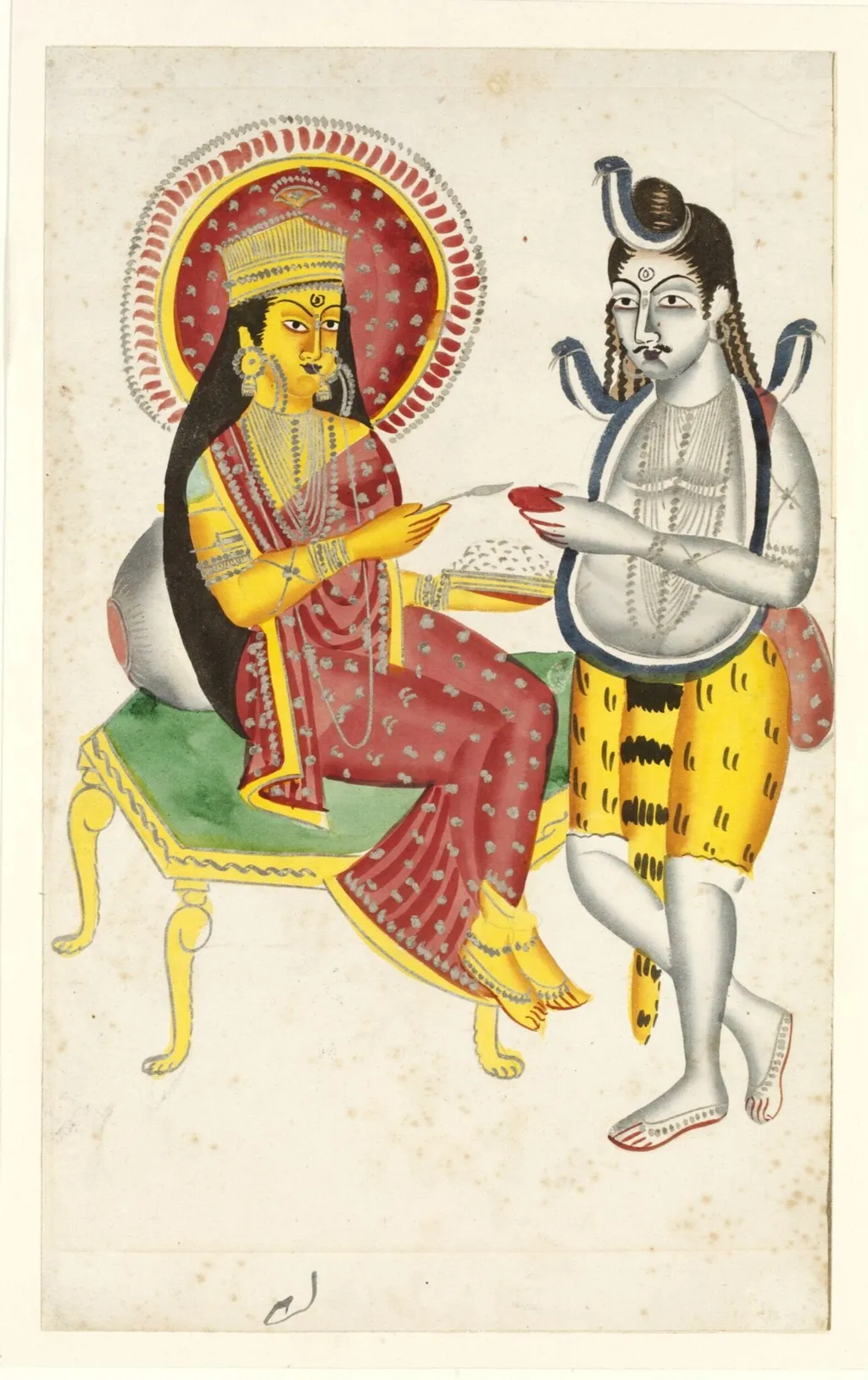
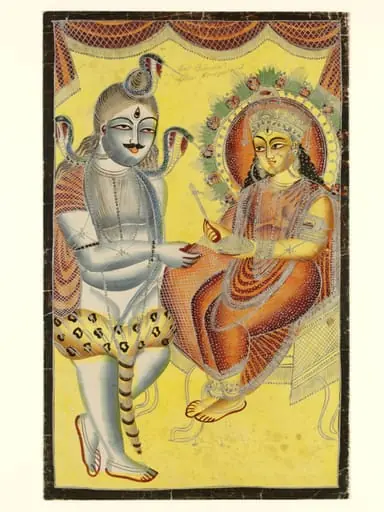
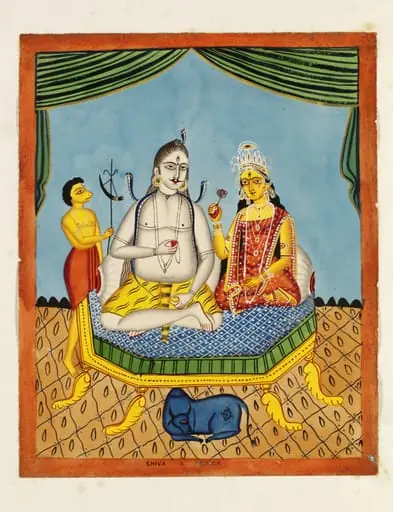
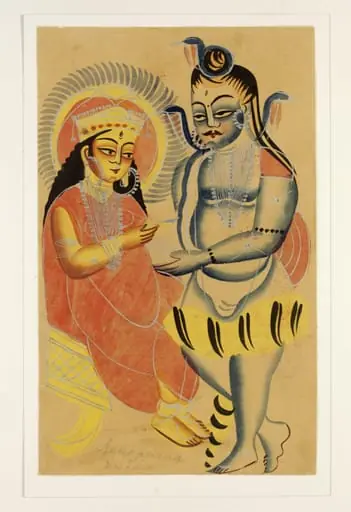
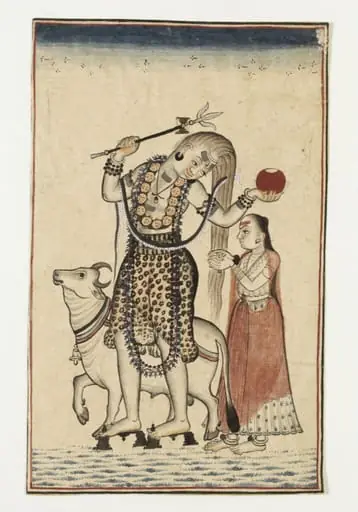
Shiva and Annapurna is a paint painting by the Romanticist artist Unknown. It dates from 1830 and is held in the collection of the Victoria and Albert Museum.
About this work
Overview
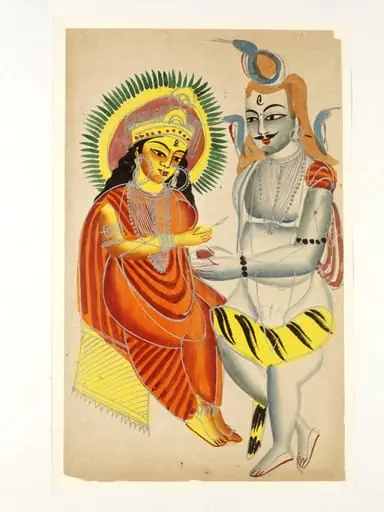
The work is an opaque watercolor on paper, dated to 1830, portraying the Hindu deities Shiva and Annapurna in a domestic exchange. Shiva stands on the right, while Annapurna is seated on a low stool to the left, each holding a serving vessel. The composition is dominated by muted reds, greys, yellows and greens, set against an off‑white background that highlights the figures’ calm interaction.
Subject & Meaning
The scene illustrates the mythic episode in which Annapurna, the goddess of nourishment, offers food to Shiva, symbolising the sustenance of spiritual practice. Annapurna’s red sari and silver ornaments emphasize her role as provider, while Shiva’s simple attire and the fruit or sweetmeat he receives underscore his ascetic aspect.
Technique & Style
Rendered in opaque watercolor, the artist employed a limited palette of earth tones and bright accents, applying metallic tin alloy for decorative details. The figures are outlined with clear lines, and the use of flat colour planes creates a stylised, almost illustrative quality typical of early nineteenth‑century Indian court paintings.
History & Provenance
Created in 1830, the painting originates from a period when Indian artists incorporated Western material culture, evident in the spoon held by Annapurna. Its precise provenance is undocumented, but the work reflects the cross‑cultural exchanges occurring in Indian art workshops during the early colonial era.
Context
The depiction aligns with devotional art that emphasizes the reciprocal relationship between the divine and daily life. By showing a goddess providing sustenance to a god, the image reinforces the principle that material nourishment supports spiritual pursuits, a theme common in Hindu iconography of the time.
Artist & collection

 Domestic Scene
 Giacomo and Cardinal Marco, investing Andrea, Abbot of San Zeno, with his Benefice
 The Nymph of Fontainebleau
 Portrait of a Woman
 Madonna and Child with Saints in the Enclosed Garden
 Venus and Minerva
 Family Group of Four on Sofa
 Wall painting from Room H of the Villa of P. Fannius Synistor at Boscoreale