Artwork
Rechts
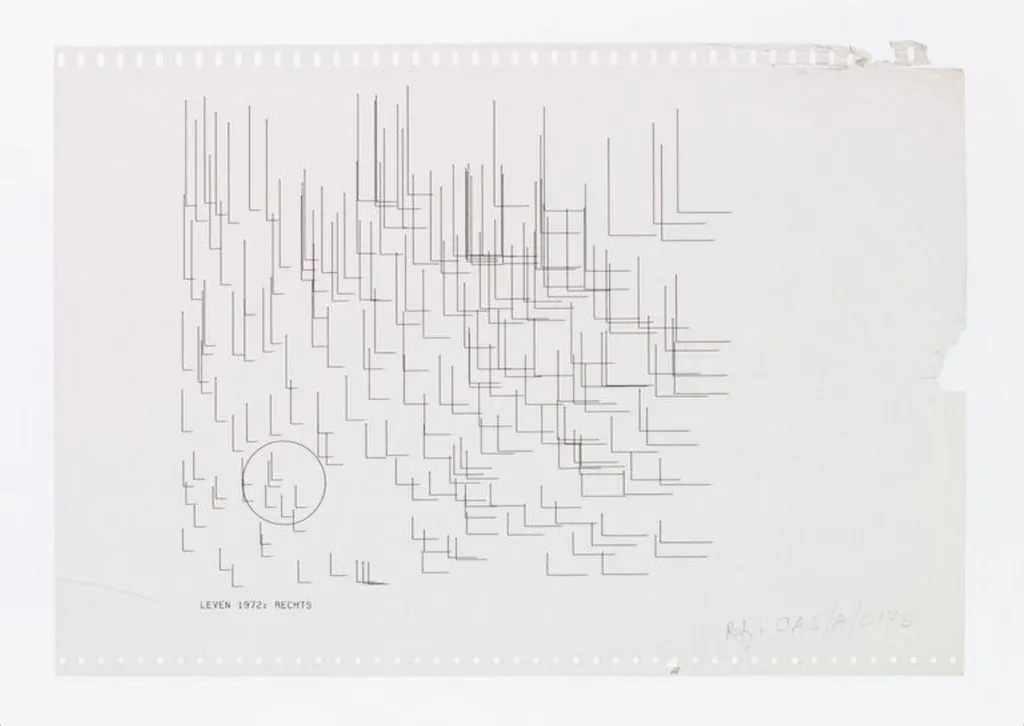
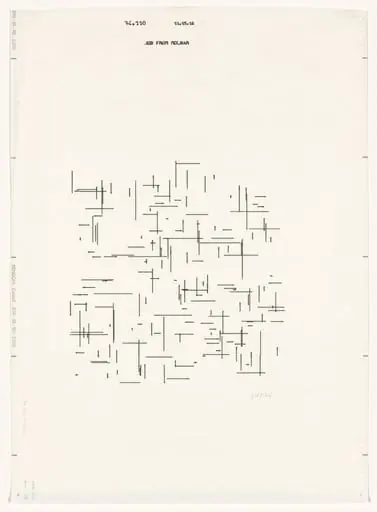
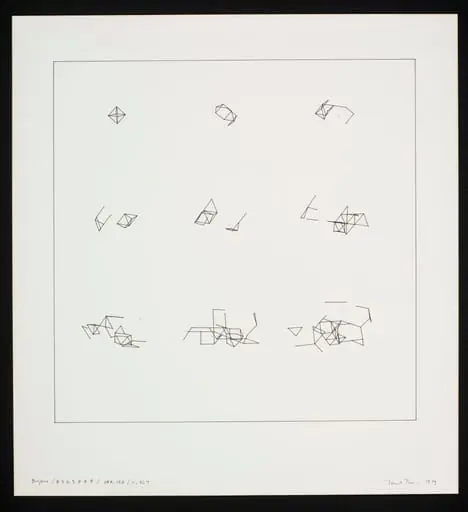
Rechts is a drawing by Unknown. It dates from 1972 and is held in the collection of the Victoria and Albert Museum. This drawing was produced in 1972 using a pen plotter, a mechanical device controlled by a computer program.
About this work
Overview
Unlike traditional hand-drawn works, the image emerged from algorithmic instructions that directed the plotter’s pen across the paper.
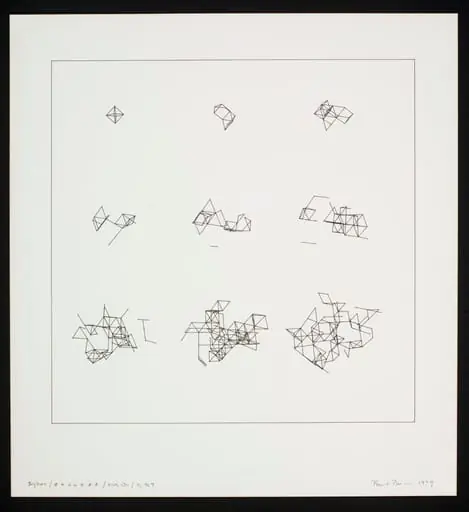
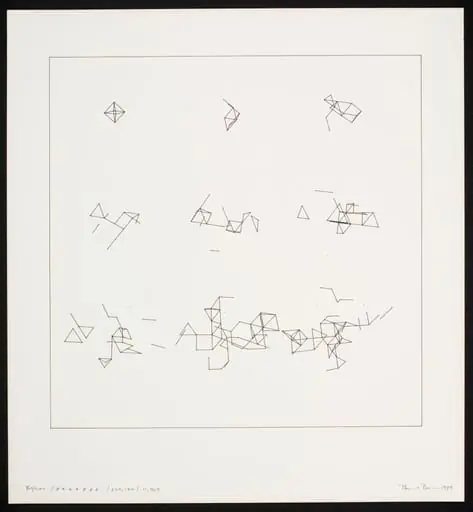
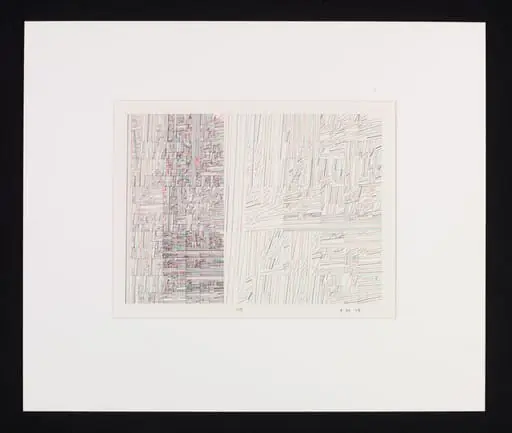
This drawing was produced in 1972 using a pen plotter, a mechanical device controlled by a computer program. Unlike traditional hand-drawn works, the image emerged from algorithmic instructions that directed the plotter’s pen across the paper. The technique reflects early experiments in digital art, where artists began to collaborate with machines to generate visual forms. The work stands as a record of computational precision applied to artistic expression.
Subject & Meaning
The composition consists of abstract lines and geometric patterns with no representational subject. Its form suggests systematic exploration rather than narrative intent. The inscription 'LEVEN 1972' in the lower left remains ambiguous—possibly naming the artist, programmer, or the software used—but its presence underscores the work’s conceptual grounding in process over imagery. The piece invites consideration of authorship in machine-assisted creation.
Technique & Style
The drawing was made by a plotter, a device that moves a pen along programmed paths to trace continuous lines. The resulting marks are uniform yet intricate, revealing the logic of code translated into physical form. Unlike hand-drawn stippling or hatching, the lines emerge from precise, repeatable commands. The style is characterized by clarity, repetition, and a deliberate absence of human gesture, emphasizing the machine’s role in shaping the final image.
History & Provenance
Created in 1972, this work belongs to a small group of early computer-generated drawings produced before widespread access to digital displays. Pen plotters were among the first tools capable of translating code into tangible art, used primarily in scientific and industrial contexts before being adopted by artists. The identity of the creator remains unknown, and the work’s origin is documented only through its date and method, reflecting the anonymity common in early digital art practices.
Context
In the early 1970s, artists began exploring computers as creative tools, often working with engineers or programmers to develop custom software. This period marked a shift from analog to algorithmic art, with plotters offering a bridge between programming and visual output. Though limited in resolution and speed, these machines enabled new forms of generative aesthetics, laying groundwork for later digital art movements and challenging traditional notions of artistic skill.
Legacy
This drawing represents an early step in the integration of computation into artistic practice. While pen plotters have since been replaced by digital displays and 3D printers, the conceptual framework they established—art as executable code—remains influential. Contemporary generative artists continue to draw from this lineage, valuing process, system, and automation as central to creative production rather than mere technical novelty.
Artist & collection

 Domestic Scene
 Giacomo and Cardinal Marco, investing Andrea, Abbot of San Zeno, with his Benefice
 The Nymph of Fontainebleau
 Portrait of a Woman
 Madonna and Child with Saints in the Enclosed Garden
 Venus and Minerva
 Family Group of Four on Sofa
 Wall painting from Room H of the Villa of P. Fannius Synistor at Boscoreale
![Das Bild Hebt Sich Vom Blatt AB [The picture stands out against the sheet], by Unknown](https://artifactworldgallery.com/img/unknown--das-bild-hebt-sich-vom-blatt-ab-the-picture-stands-out-again--08e8f4d953e44ea9-w320.webp)