Artwork
Tantric Manuscript "Sangrahani Sutra"
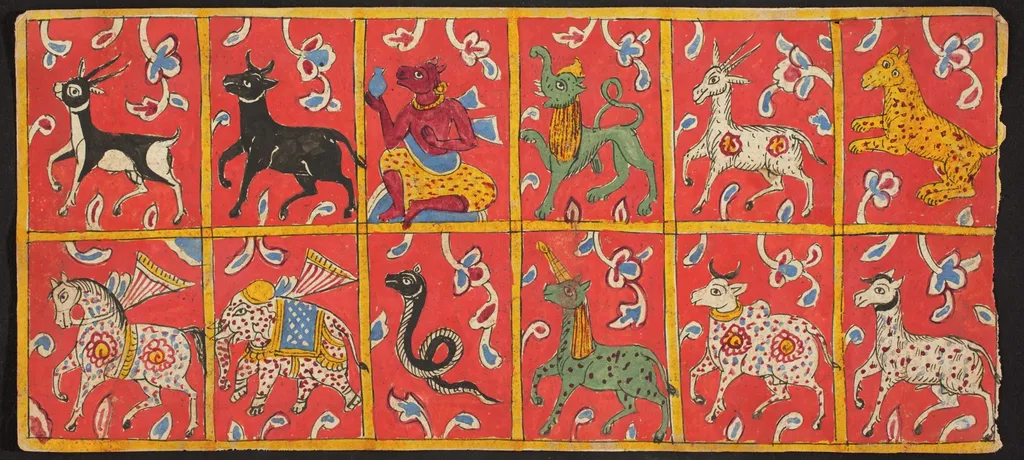
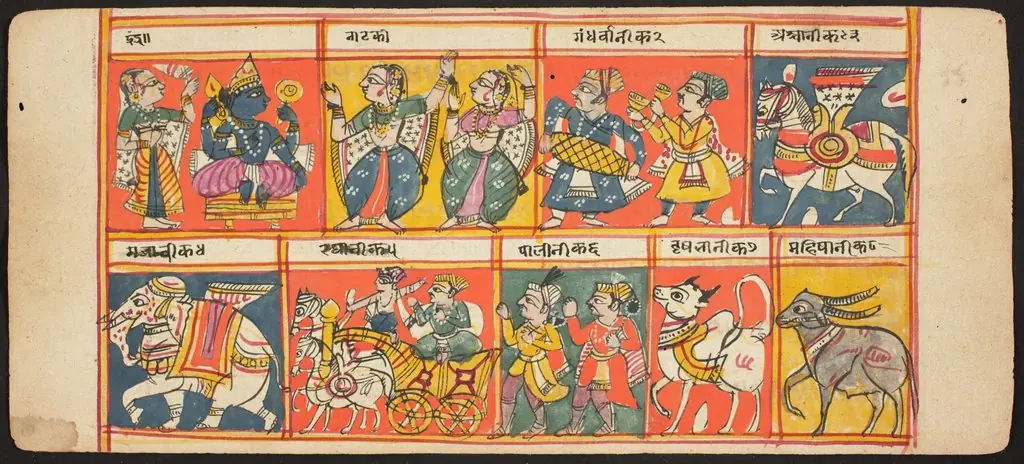
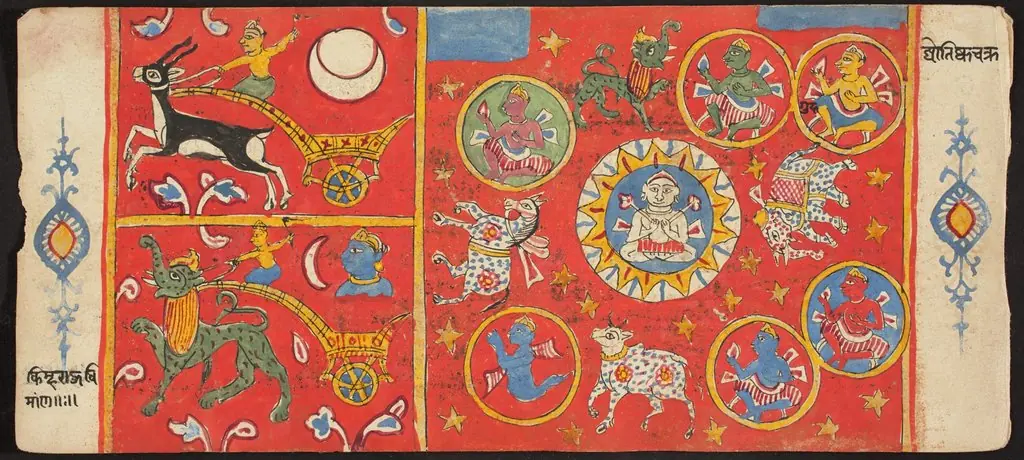
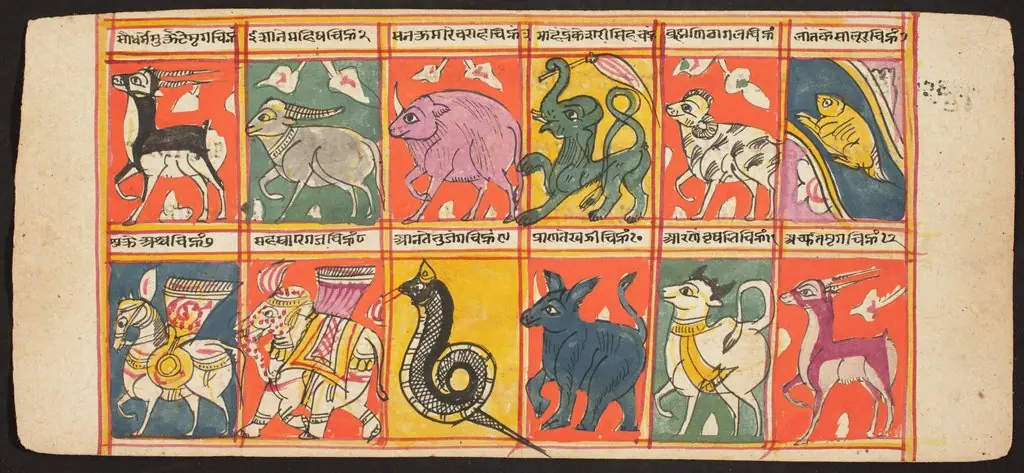
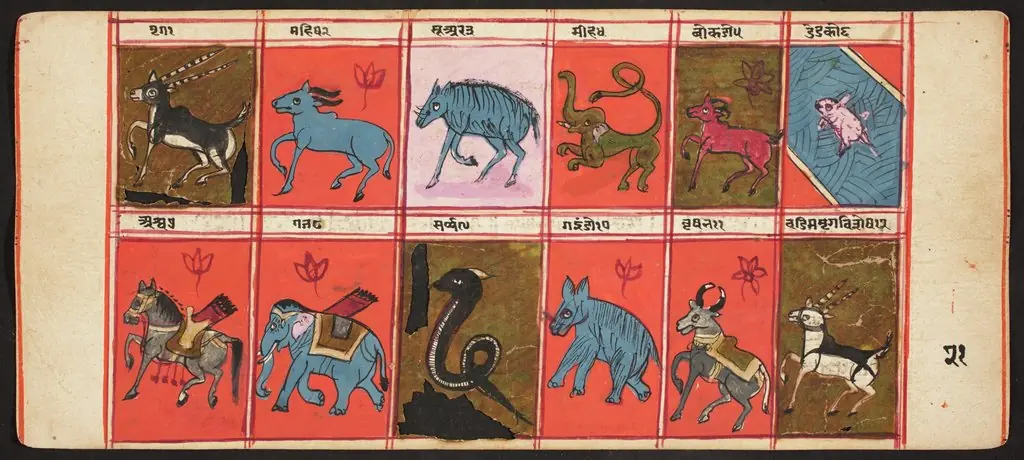
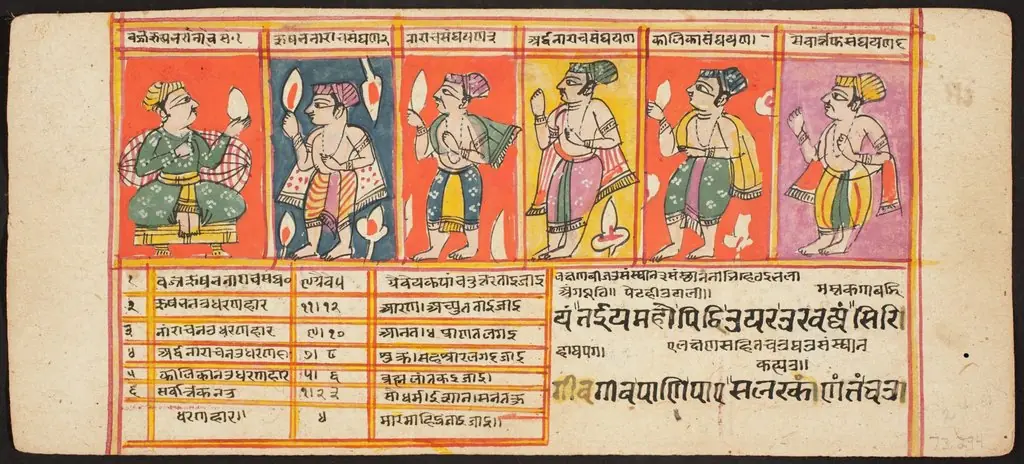
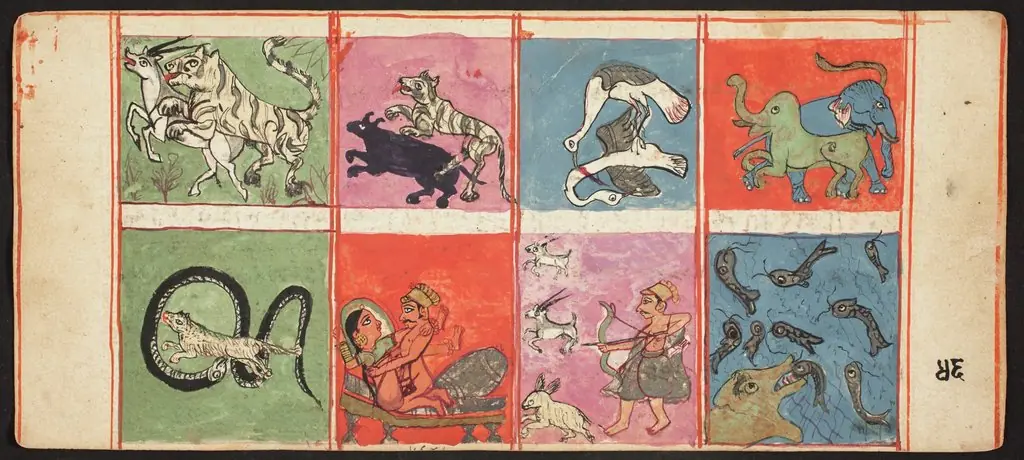
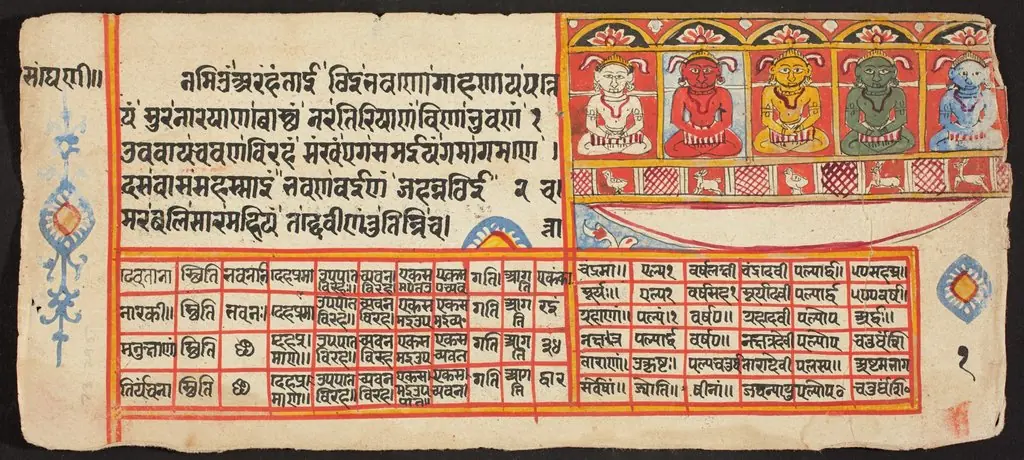
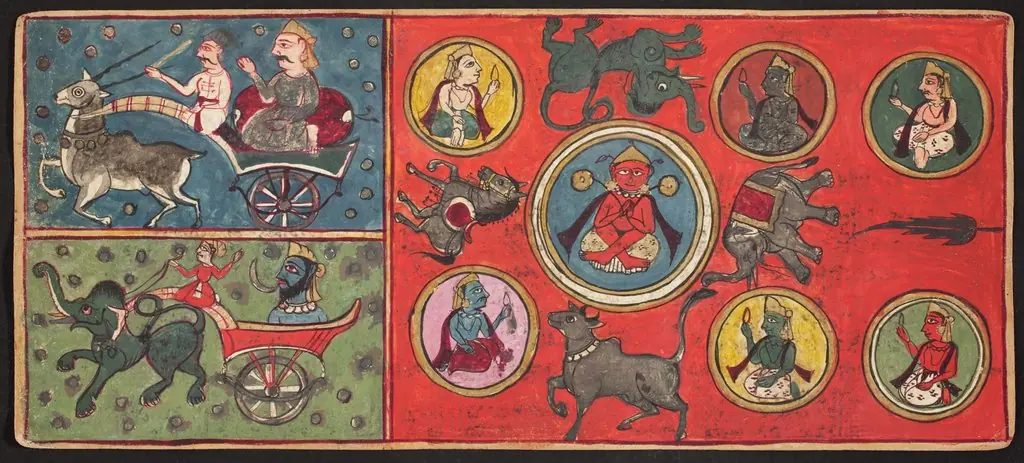
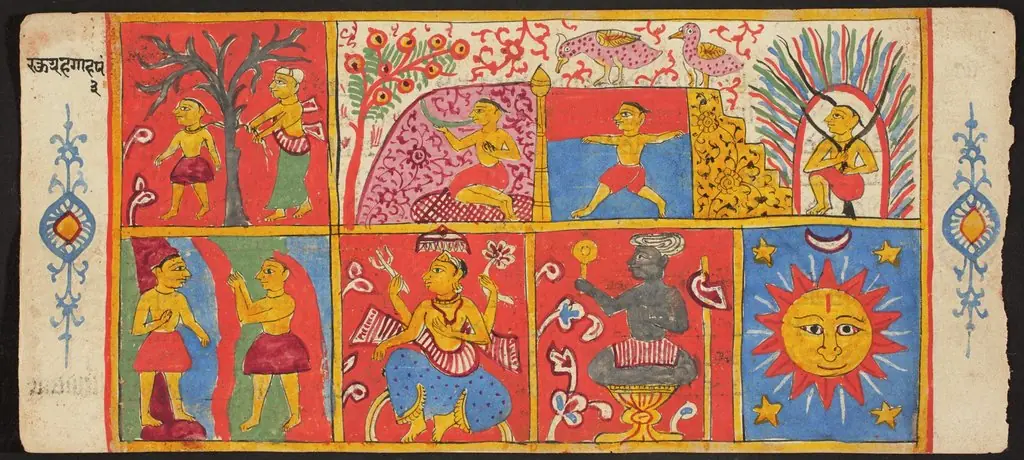
Tantric Manuscript "Sangrahani Sutra" is an unspecified painting by Unknown. It is held in the collection of the Detroit Institute of Arts. The work titled “Sangrahani Sutra” is a rectangular painted panel divided into twelve equal squares.
About this work
Overview
The work titled “Sangrahani Sutra” is a rectangular painted panel divided into twelve equal squares. Each compartment contains a distinct animal figure rendered in vivid hues, set against a dominant red field that is overlaid with swirling white and blue motifs. The composition conveys a dynamic visual rhythm, suggesting the creatures are poised for movement.
Subject & Meaning
The twelve panels present a variety of fauna, including a monochrome deer, a red-bodied figure with a blue abdomen, and a green animal distinguished by an elongated tail. While the precise symbolic import is not documented, the assortment of animals and the title’s reference to a tantric sutra imply a possible allegorical or ritual significance within a spiritual framework.
Technique & Style
The painting employs bright, saturated pigments applied with fine detail, allowing each animal to be individually articulated within its square.
The painting employs bright, saturated pigments applied with fine detail, allowing each animal to be individually articulated within its square. The background’s bold red expanse is interrupted by fluid, white and blue patterns that create a sense of motion. The overall visual language combines precise line work with decorative surface treatment, characteristic of manuscript illumination traditions.
History & Provenance
The piece is part of the collection of the Detroit Institute of Arts. No further information on its acquisition, previous ownership, or original context is provided in the available data, limiting the ability to trace its journey before entering the museum’s holdings.
Context
The title associates the work with tantric literature, suggesting it may have originated within a religious or meditative practice where visual representations serve didactic or contemplative purposes. The format of a twelve‑square grid aligns with schematic approaches found in certain ritual manuals, where each segment could correspond to a specific doctrinal element.
Artist & collection

 Domestic Scene
 Giacomo and Cardinal Marco, investing Andrea, Abbot of San Zeno, with his Benefice
 The Nymph of Fontainebleau
 Portrait of a Woman
 Madonna and Child with Saints in the Enclosed Garden
 Venus and Minerva
 Family Group of Four on Sofa
 Wall painting from Room H of the Villa of P. Fannius Synistor at Boscoreale
 Tantric Manuscript "Sangrahani Sutra"
 Tantric Manuscript "Sangrahani Sutra"
 Tantric Manuscript "Sangrahani Sutra"
 Tantric Manuscript "Sangrahani Sutra"
 Tantric Manuscript "Sangrahani Sutra"
 Tantric Manuscript "Sangrahani Sutra"
 Tantric Manuscript, "Sangrahani Sutra"
 Tantric Manuscript "Sangrahani Sutra"
 Tantric Manuscript, "Sangrahani Sutra"
 Tantric Manuscript "Sangrahani Sutra"
 Tantric Manuscript, "Sangrahani Sutra"
 Tantric Manuscript "Sangrahani Sutra"