Artwork
Ruin near Arimathea
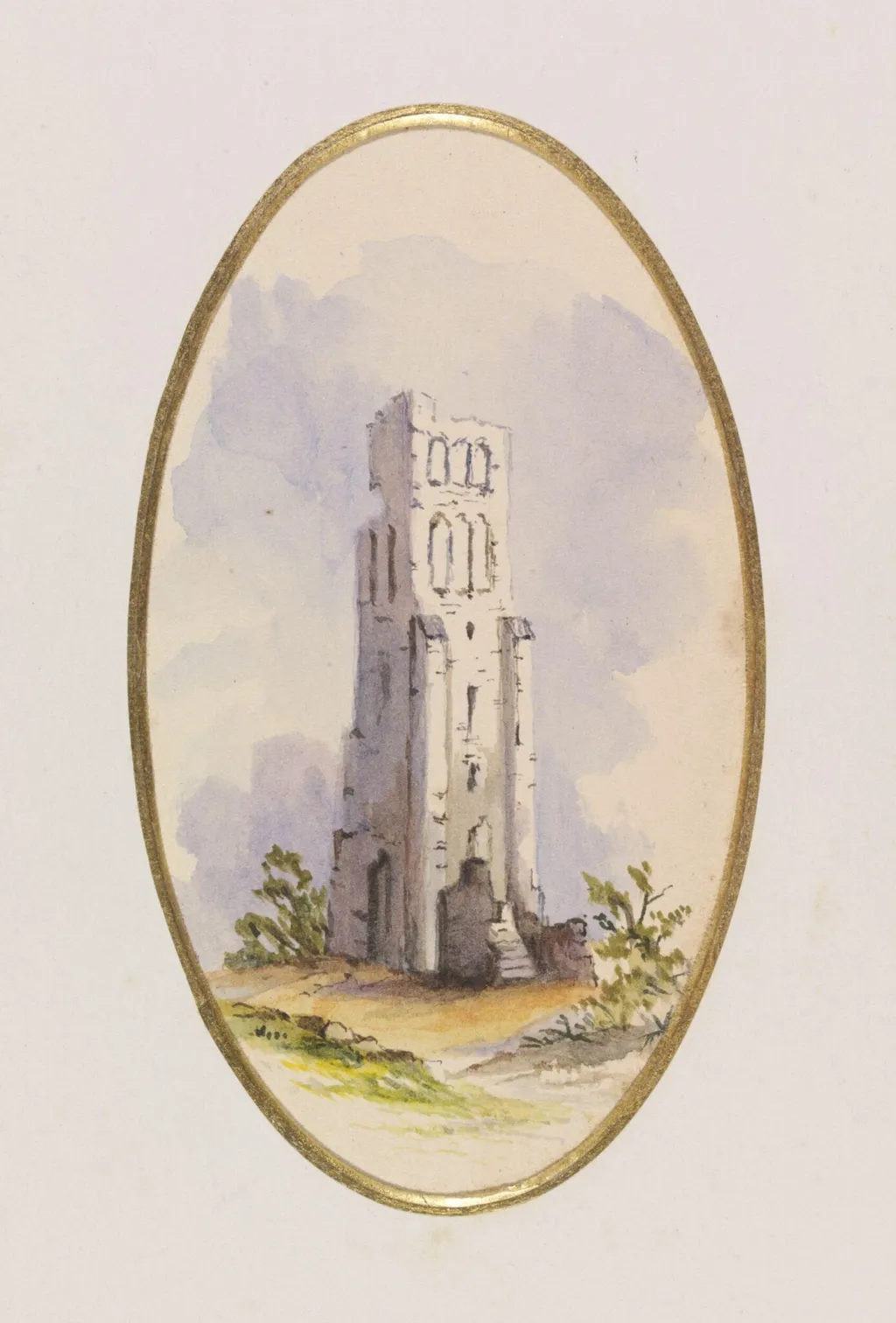
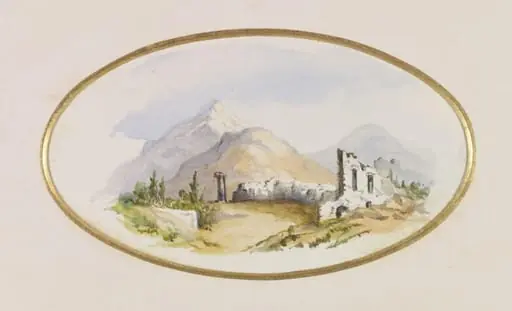
Ruin near Arimathea is a watercolor work on paper by the Romanticist artist Unknown. It dates from 1845 and is held in the collection of the Victoria and Albert Museum.
About this work
Overview
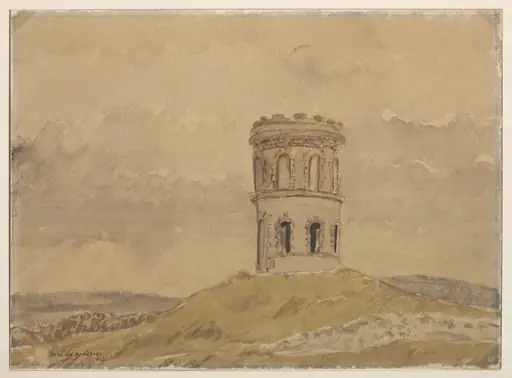
The work is a watercolour depicting a solitary, weathered stone tower with arched windows near its summit, surrounded by sparse grass and low bushes under a pale sky. Rendered in loose, fluid brushwork, the image conveys a quiet, timeless atmosphere. It forms part of a series of twelve landscape scenes presented in oval vignette formats.
Subject & Meaning
The central tower, rendered with rough stone texture and a sense of age, suggests a ruin that has endured through centuries. Its isolation amid modest vegetation emphasizes themes of decay and the passage of time, inviting contemplation of the landscape’s silent history.
Technique & Style
The artist employs a watery, translucent palette characteristic of watercolour, allowing the sky to appear soft and luminous. Brushstrokes remain broad and unrefined, preserving a dreamy quality while suggesting the tower’s materiality through subtle tonal variations.
History & Provenance
The piece is catalogued under the title *Eastern Sketches* and is stored in a maroon Morocco leather case with gilt detailing. Earlier scholarship, recorded in the Searight Archive, assigned the work to Sir John Gardner Wilkinson, though this attribution has since been reconsidered.
Context
Created as one of a dozen landscape vignettes, the watercolour reflects a broader 19th‑century interest in documenting remote or antiquated sites. Its format and subject align with contemporary Romantic sensibilities that valued the evocative power of ruins within natural settings.
Artist & collection

 Domestic Scene
 Giacomo and Cardinal Marco, investing Andrea, Abbot of San Zeno, with his Benefice
 The Nymph of Fontainebleau
 Portrait of a Woman
 Madonna and Child with Saints in the Enclosed Garden
 Venus and Minerva
 Family Group of Four on Sofa
 Wall painting from Room H of the Villa of P. Fannius Synistor at Boscoreale
![View of Castle-knock, 3 miles from Dublin [...], by Gabriel, ca.1729-1817 Beranger](https://artifactworldgallery.com/img/gabriel-ca-1729-1817-beranger--view-of-castle-knock-3-miles-from-dublin--4e9a7099f4e41684-w320.webp)
![Deserted Tin-Mine, Cornwall. [ 1938 ], by Hardie](https://artifactworldgallery.com/img/hardie--deserted-tin-mine-cornwall-1938--abfeba7bb57d1e54-w320.webp)