Artwork
Vishnu as Kalki
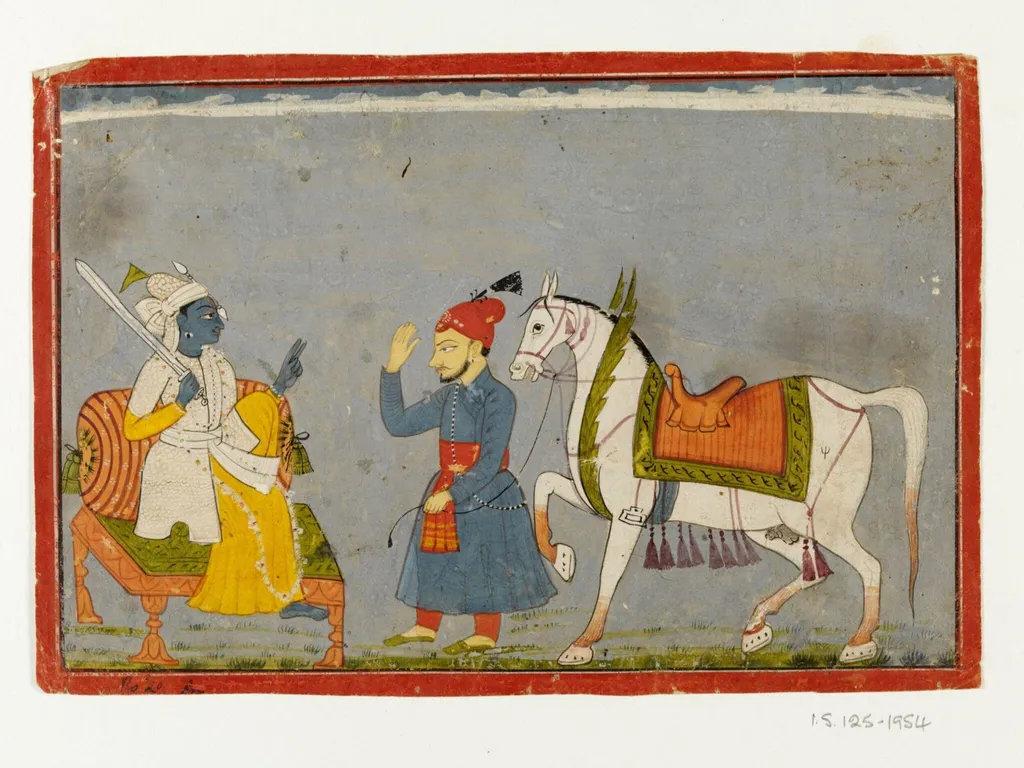
Vishnu as Kalki is a paint painting by the Baroque artist Unknown. It dates from 1720 and is held in the collection of the Victoria and Albert Museum.
About this work
Overview
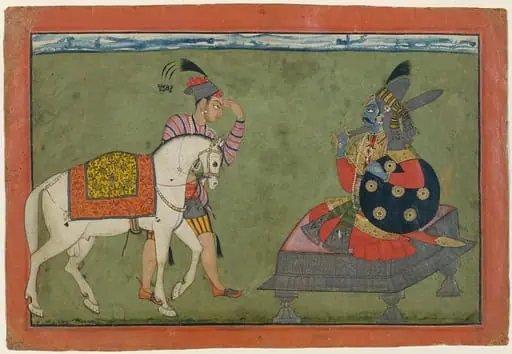
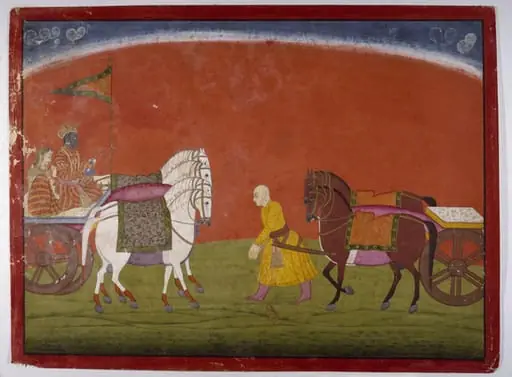
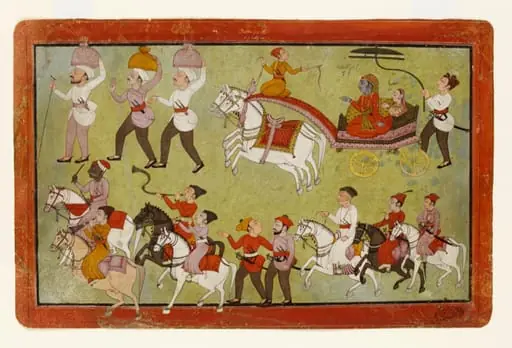
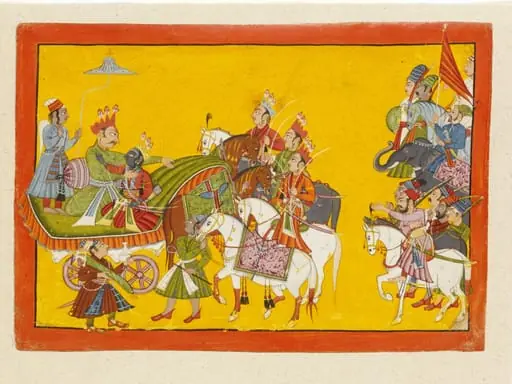
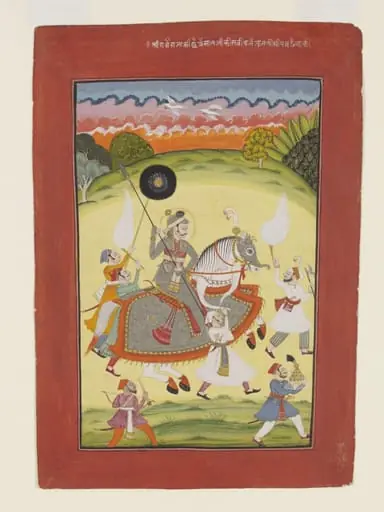
This opaque watercolour on paper, dated to around 1720, portrays Vishnu in his future incarnation as Kalki, the final avatar destined to restore cosmic order.
This opaque watercolour on paper, dated to around 1720, portrays Vishnu in his future incarnation as Kalki, the final avatar destined to restore cosmic order. Executed in the Pahari style, it reflects the regional painting traditions of northern India, particularly those associated with the Bilaspur court. The work was later acquired by Maggs Bros. and entered a private collection before being purchased by a major institution.
Subject & Meaning
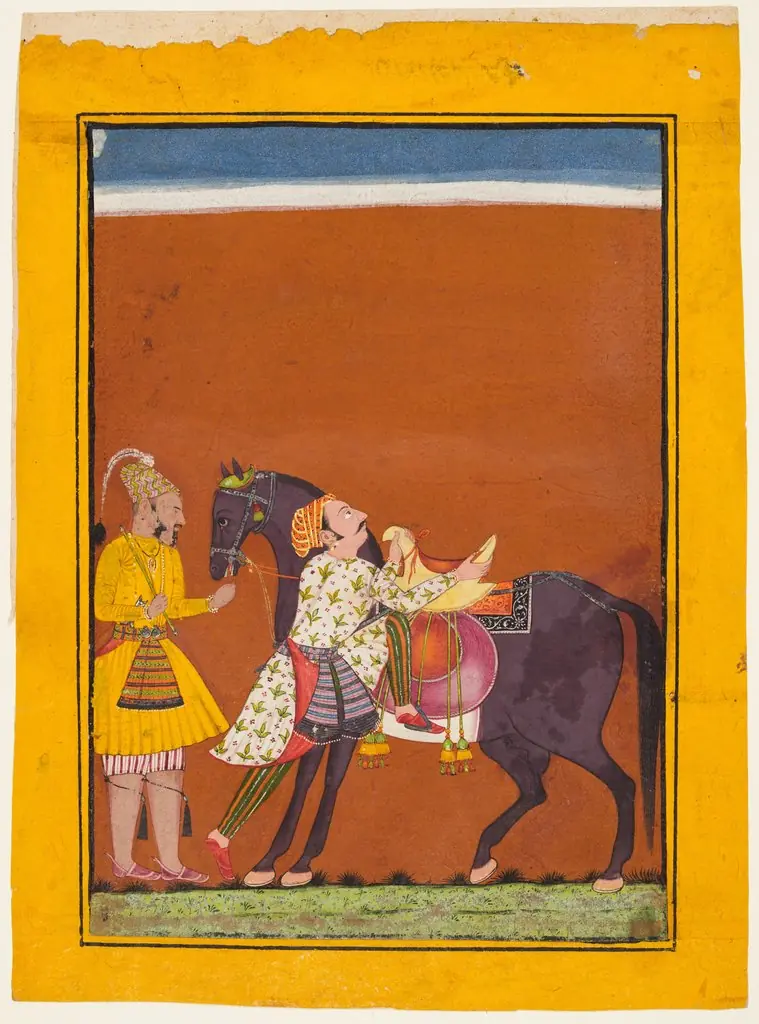
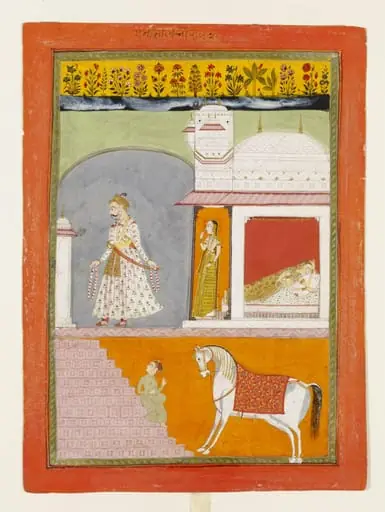
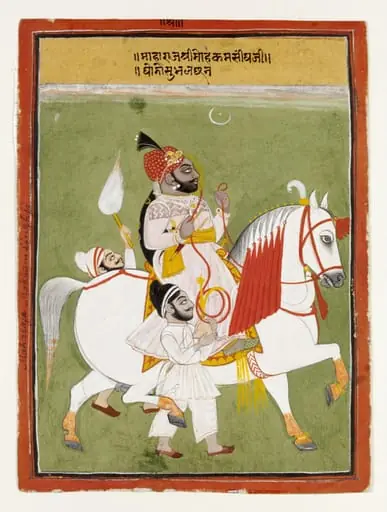
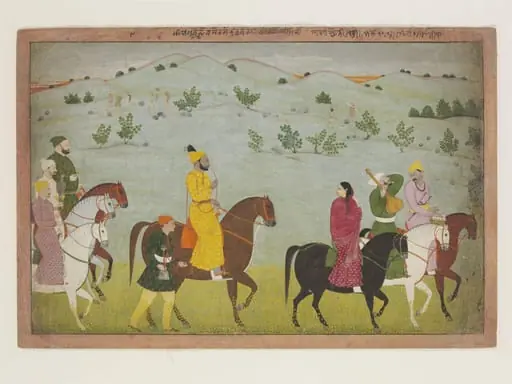
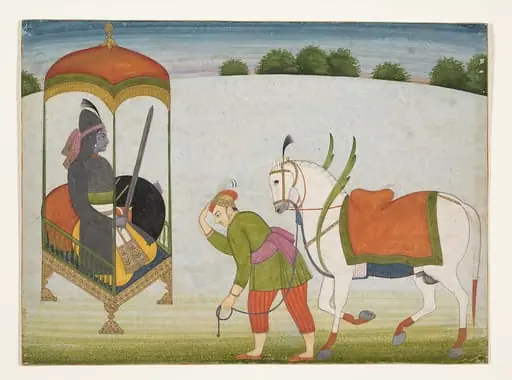
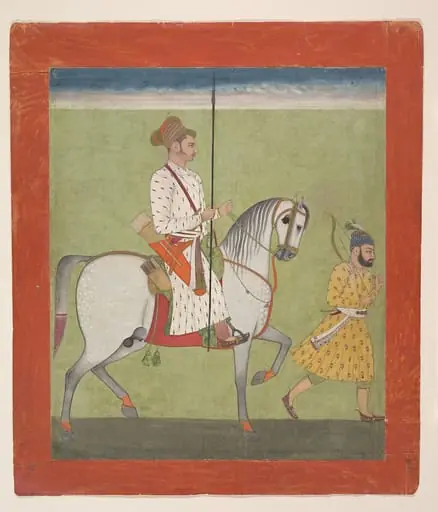
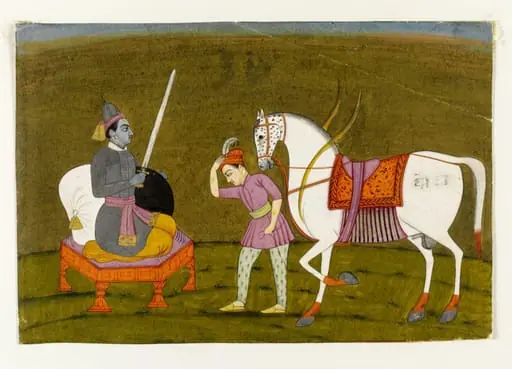
Kalki, the prophesied tenth avatar of Vishnu, is depicted as a warrior on horseback, symbolizing the divine intervention that will end the age of moral decline. The central figure, clad in blue, holds a raised hand in a gesture of protection or command. To the left, a seated figure in white may represent a royal patron or sage, while the white horse, richly saddled, signifies purity and divine power. The scene conveys eschatological hope rooted in Hindu cosmology.
Technique & Style
The painting employs fine brushwork and layered opaque watercolours to render intricate details in clothing, weaponry, and ornamentation. The palette features vivid blues, reds, and greens against a subdued gray background, enhancing the figures’ prominence. While the composition is orderly and decorative, any resemblance to Baroque elements is superficial; the style is firmly grounded in the miniature traditions of the Himalayan foothills, emphasizing clarity and symbolic precision over illusionistic depth.
History & Provenance
The painting originated in the Bilaspur royal collection, likely commissioned during the reign of Raja Kharakh Chand (1824–1839). It passed to his descendant Thakur Iswari Singh following the division of the family’s holdings. Later, it entered the inventory of Abdullah & Sons in Udaipur, a known dealer of Indian artworks. In the 19th or early 20th century, it was acquired by Maggs Bros. in London, eventually finding its way into a public collection through purchase.
Context
Produced during a period when Pahari courts actively patronized devotional art, this work aligns with a broader trend of illustrating Vaishnava themes in miniature form. Bilaspur, though smaller than neighboring states like Kangra or Guler, maintained a distinct artistic identity, often blending local aesthetics with broader North Indian iconographic conventions. The depiction of Kalki reflects both religious devotion and the ruler’s association with divine legitimacy.
Legacy
This painting contributes to the documented corpus of early 18th-century Pahari miniatures, offering insight into how regional courts interpreted Hindu eschatology through visual narrative. Its survival through family inheritance and commercial trade highlights the mobility of Indian artworks in colonial and post-colonial contexts. Today, it remains a reference point for understanding the continuity of devotional imagery in Himalayan painting traditions.
Artist & collection

 Domestic Scene
 Giacomo and Cardinal Marco, investing Andrea, Abbot of San Zeno, with his Benefice
 The Nymph of Fontainebleau
 Portrait of a Woman
 Madonna and Child with Saints in the Enclosed Garden
 Venus and Minerva
 Family Group of Four on Sofa
 Wall painting from Room H of the Villa of P. Fannius Synistor at Boscoreale