Artwork
Ruru
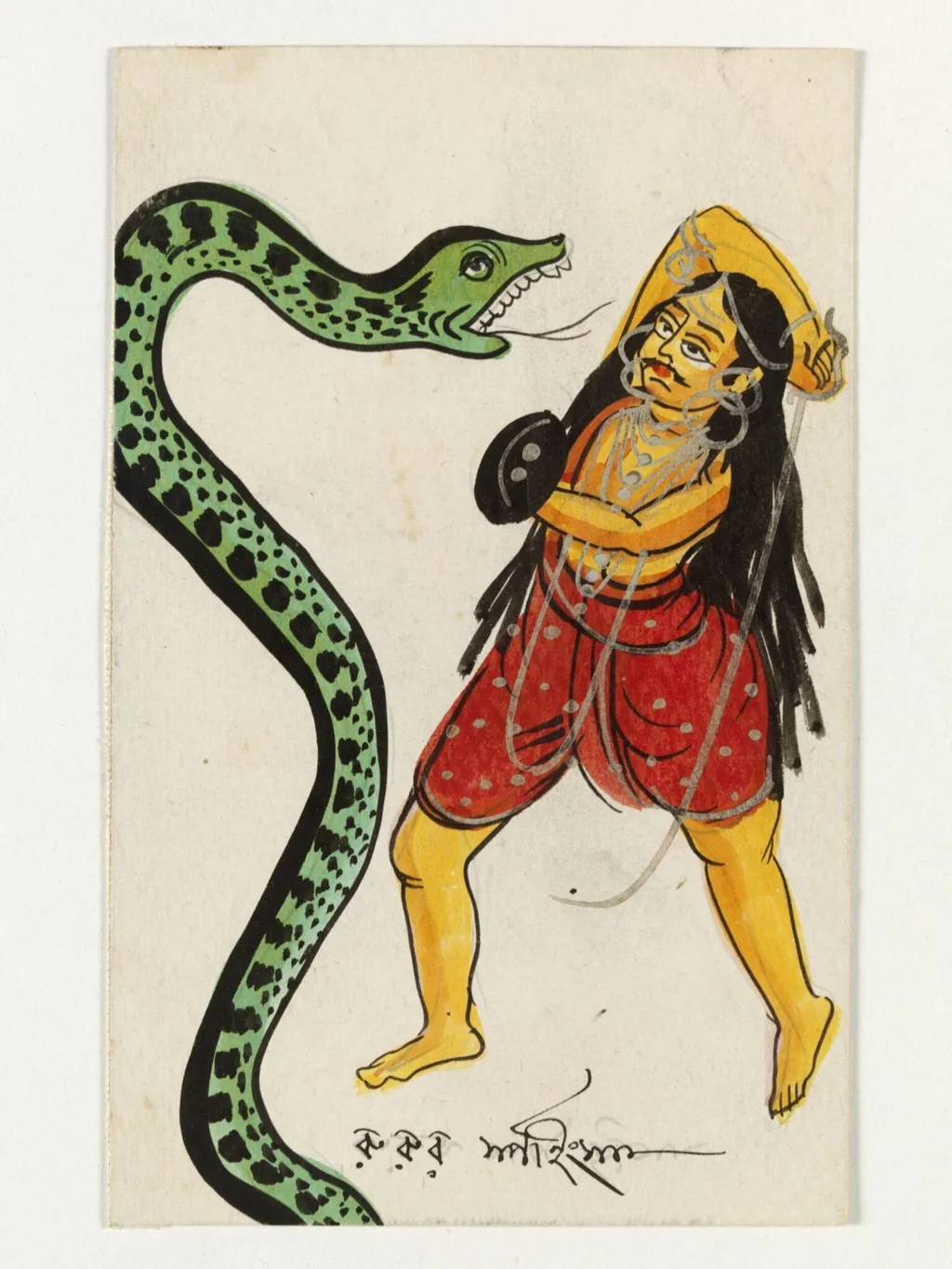
Ruru is a paint painting by the Impressionist artist Unknown. It dates from 1890 and is held in the collection of the Victoria and Albert Museum. Created in 1890, this work is a watercolour and tin alloy painting on cardboard.
About this work
Overview
The use of non-traditional materials like tin alloy suggests a fusion of local artistic practices with available resources.
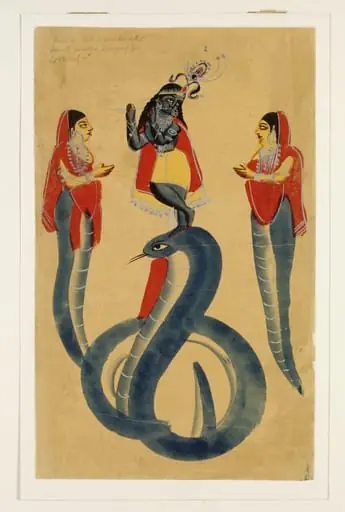
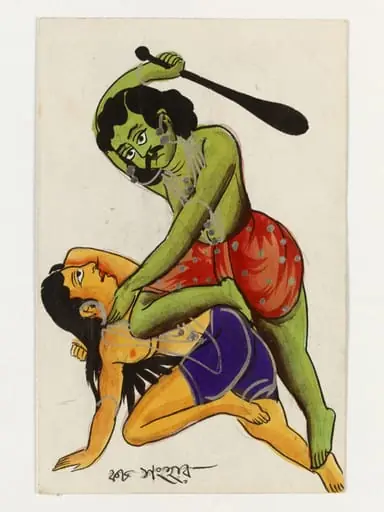
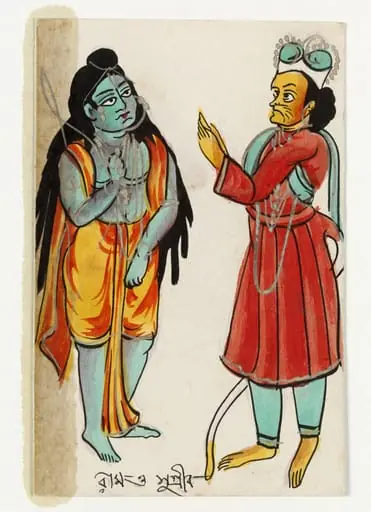
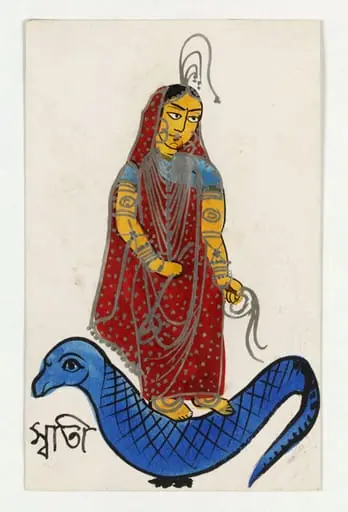
Created in 1890, this work is a watercolour and tin alloy painting on cardboard. It presents a dynamic scene featuring a human figure in vivid attire engaged with a serpentine creature. The use of non-traditional materials like tin alloy suggests a fusion of local artistic practices with available resources. The composition is compact and stylized, emphasizing pattern and movement over naturalistic detail.
Subject & Meaning
The figure, adorned in yellow pants, a red skirt, and a gold headpiece, appears in a poised, one-legged stance, suggesting ritual motion rather than mere dance or combat. The green, spotted serpent coils around the legs, its head near the shoulder, implying a symbolic encounter. The imagery may reflect mythological or ceremonial narratives, where human and serpent represent opposing or complementary forces within a cultural cosmology.
Technique & Style
The artist employed flat, unmodulated colours bounded by sharp, clean outlines, avoiding gradations or chiaroscuro. Tin alloy was applied to enhance certain areas, adding reflective texture. This approach prioritizes symbolic clarity over illusionistic depth, aligning with traditions that value bold form and decorative intensity. The result is a visually arresting image grounded in stylization rather than realism.
History & Provenance
The painting originates from a context where indigenous artistic practices incorporated imported materials like tin alloy. Its survival into the late 19th century suggests it was preserved within a community or collector’s circle. While its exact origin remains undocumented, its material choices and iconography point to a regional tradition that resisted European artistic norms while adapting new media.
Context
This work emerged during a period of cultural exchange, when colonial presence introduced new materials but did not fully displace local aesthetics. The figure’s attire and the serpent’s form resonate with oral traditions and ceremonial dress found in Pacific and Southeast Asian communities. The painting reflects an artistic continuity that maintained symbolic expression despite external pressures.
Legacy
The painting contributes to a broader understanding of non-Western visual languages that prioritized symbolic representation over naturalism. Its preservation offers insight into how local artists integrated novel materials without abandoning traditional forms. It stands as a quiet testament to the resilience of indigenous visual systems in the face of cultural disruption.
Artist & collection

 Domestic Scene
 Giacomo and Cardinal Marco, investing Andrea, Abbot of San Zeno, with his Benefice
 The Nymph of Fontainebleau
 Portrait of a Woman
 Madonna and Child with Saints in the Enclosed Garden
 Venus and Minerva
 Family Group of Four on Sofa
 Wall painting from Room H of the Villa of P. Fannius Synistor at Boscoreale