Artwork
Sacrificial Fire, from the "Tula Ram" Bhagavata Purana
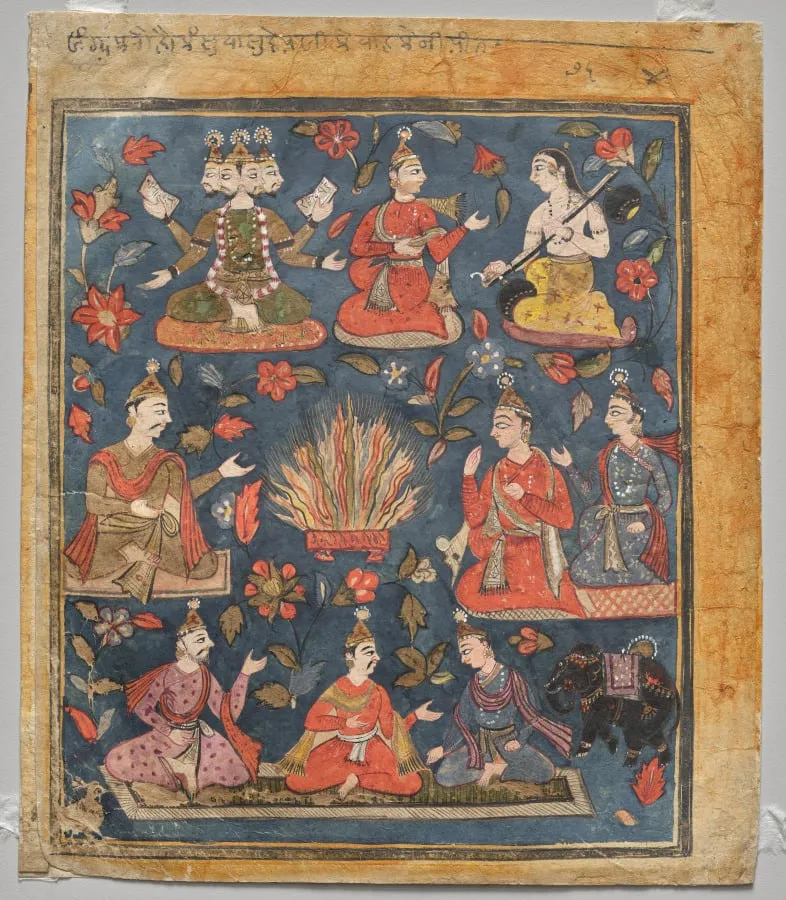
Sacrificial Fire, from the "Tula Ram" Bhagavata Purana is an unspecified painting by the Baroque artist Unknown. It dates from 1720 and is held in the collection of the Cleveland Museum of Art.
About this work
Overview
Sacrificial Fire is a painting from the 'Tula Ram' Bhagavata Purana series, depicting a pivotal scene from Hindu mythology involving King Kamsa's attempt to kill Vasudeva, father of Krishna, through a fire sacrifice.
Subject & Meaning
The painting illustrates King Kamsa's sacrificial fire ritual aimed at Vasudeva's demise. Divine presence is marked by Brahma (upper left) and Narada (upper right), underscoring the mythological and religious significance of the event.
Technique & Style
The artwork features abundant floral motifs, which scholars associate with contemporary textile patterns from the thriving international trade in the port city of its creation, notably Surat in western India (Gujarat). These motifs are integrated into the composition as painted vines and blooms.
History & Provenance
Originating from a port city, likely Surat in Gujarat, this painting reflects the influence of the local textile trade on art. It is part of the dispersed 'Tula Ram' Bhagavata Purana series.
Context
Created in a hub of international textile trade, the painting's floral elements mirror the designs found on fine cloths traded there, highlighting the interchange between commerce and art in 17th-century western India.
Legacy
As part of the 'Tula Ram' Bhagavata Purana series, 'Sacrificial Fire' contributes to the visual narrative of Hindu mythology, with its style influencing or reflecting the artistic trends of its time in western Indian painting.
Artist & collection

 Domestic Scene
 Giacomo and Cardinal Marco, investing Andrea, Abbot of San Zeno, with his Benefice
 The Nymph of Fontainebleau
 Portrait of a Woman
 Madonna and Child with Saints in the Enclosed Garden
 Venus and Minerva
 Family Group of Four on Sofa
 Wall painting from Room H of the Villa of P. Fannius Synistor at Boscoreale
 Rama and Sita, Lakshman and Hanuman
 Krishna playing his flute
 Tantric Manuscript "Sangrahani Sutra"
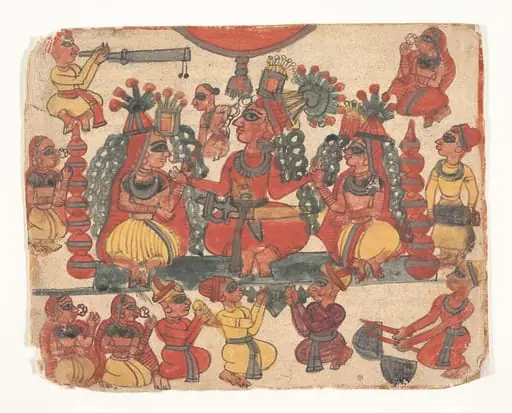 Untitled
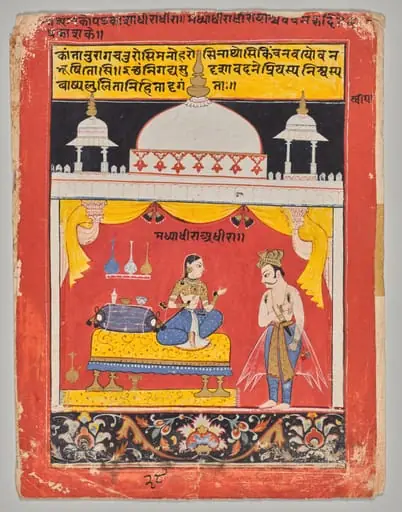 A Young, Angry Heroine, Folio 28 from a Rasamanjari
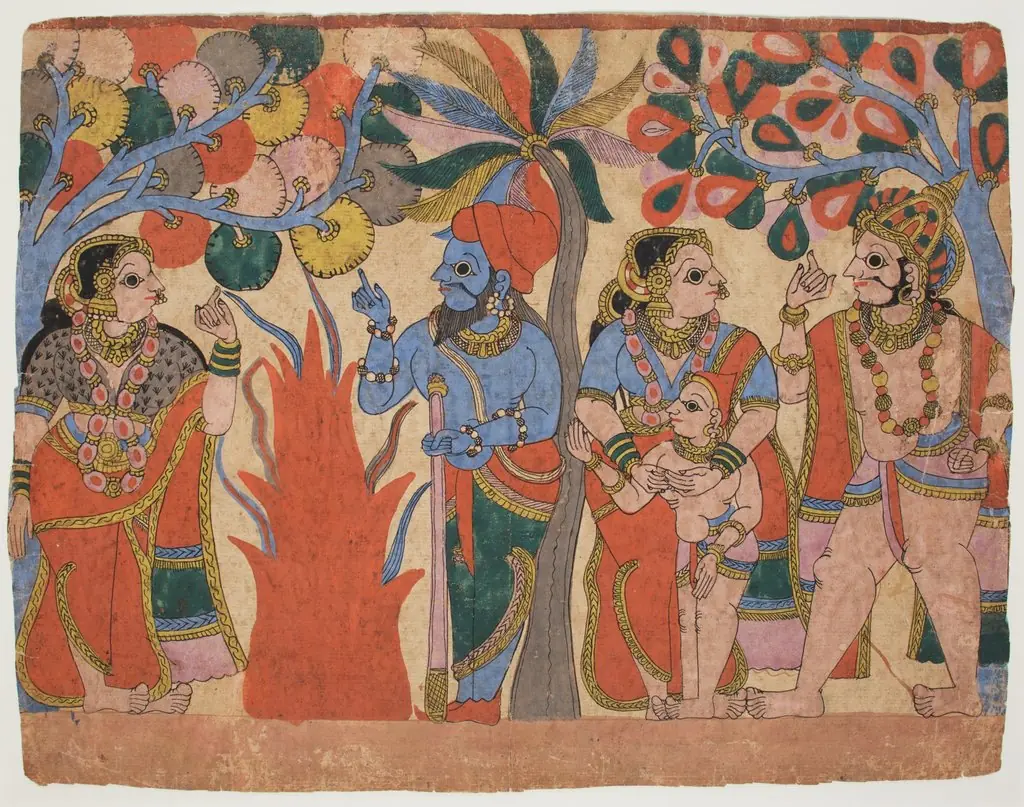 Scene from the Ramayana
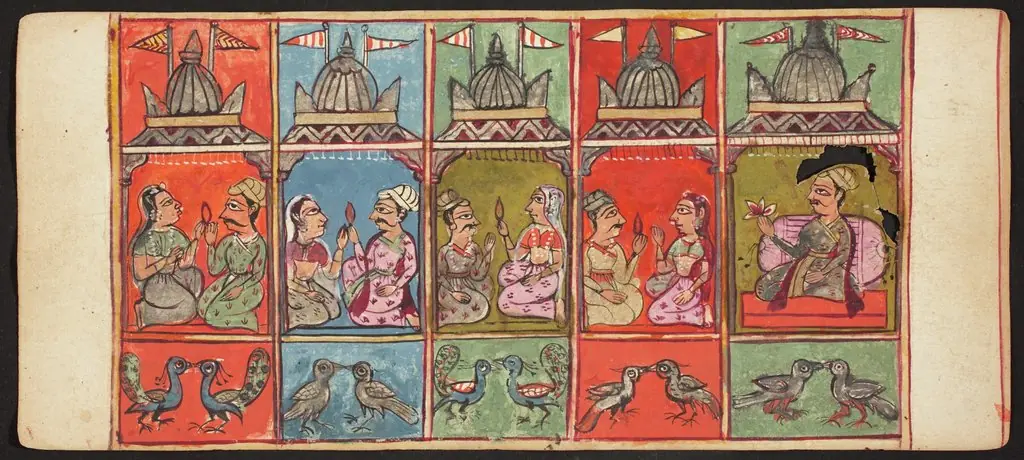 Tantric Manuscript, "Sangrahani Sutra"
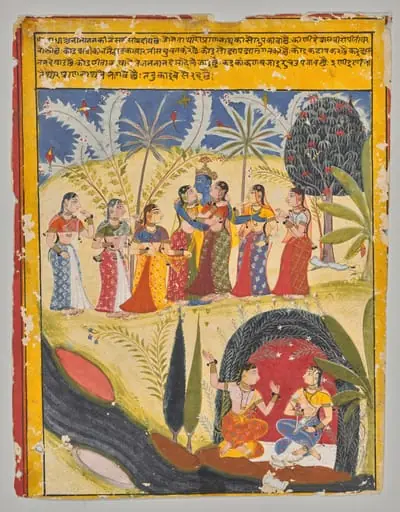 Krishna and Gopis
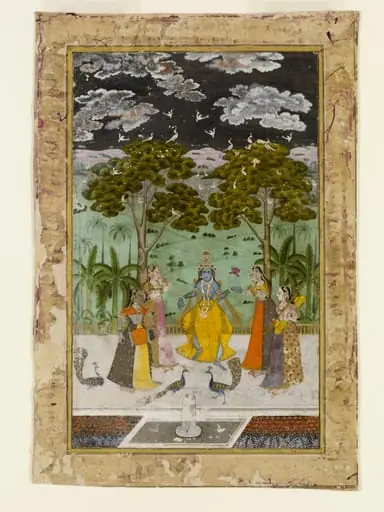 Megh Mallar Raga
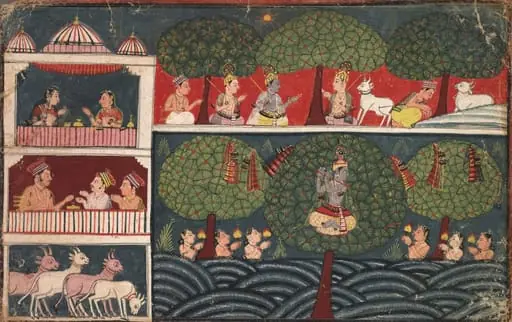 Krishna Steals the Clothes of the Milkmaids and Expounds on the Virtue of Trees, from a Braj Bhagavata Purana