Artwork
Salome with the Head of John the Baptist
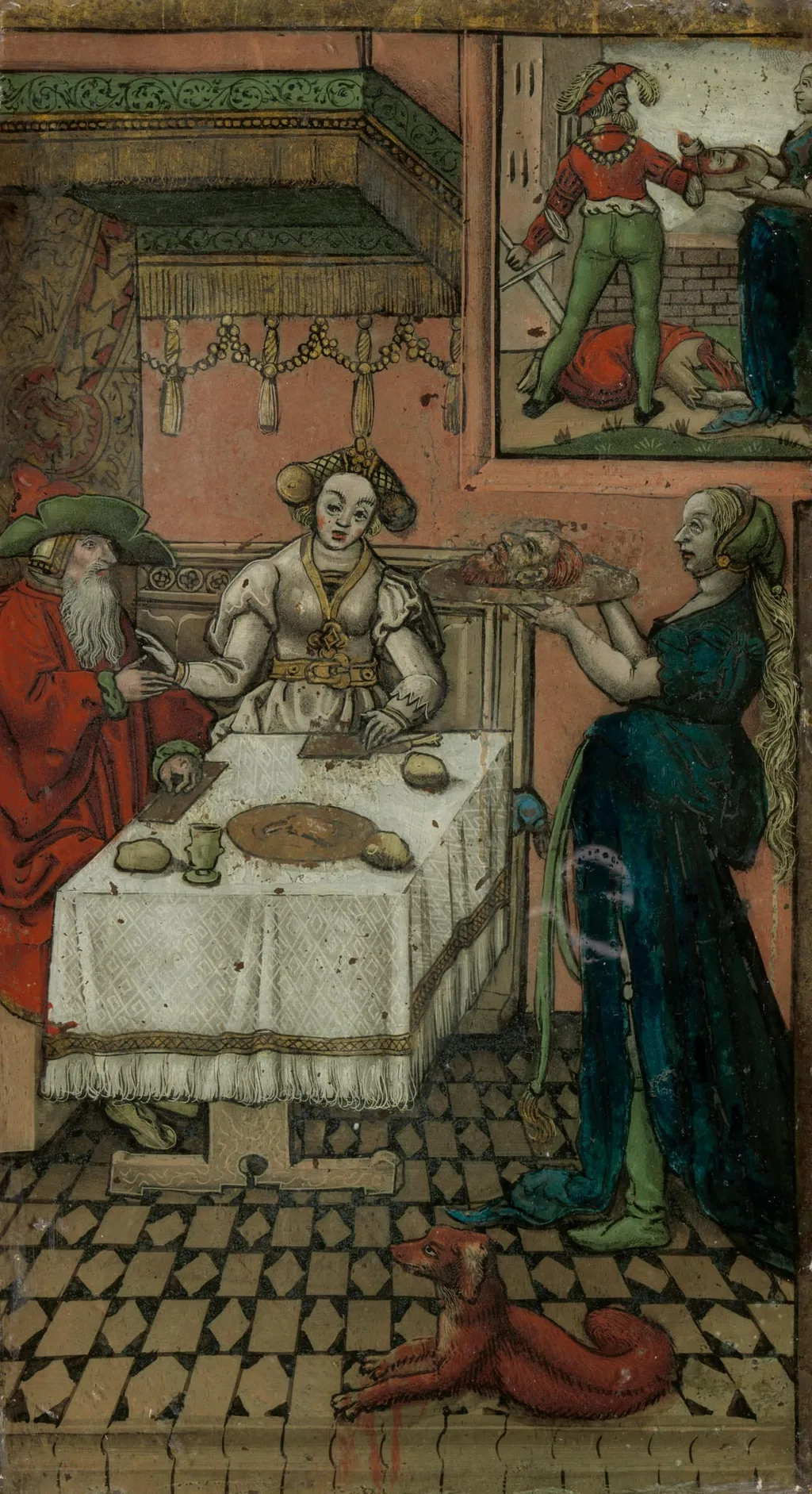
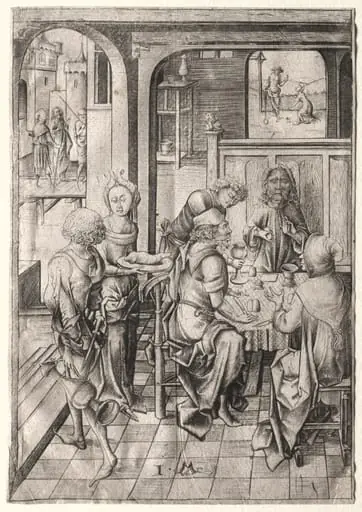
Salome with the Head of John the Baptist is an unspecified painting by the Mannerist artist Unknown. It dates from 1550 and is held in the collection of the Rijksmuseum. This painting depicts the biblical scene of Salome holding the severed head of John the Baptist.
About this work
Overview
This painting depicts the biblical scene of Salome holding the severed head of John the Baptist. Key elements include Salome with the head on a platter, Herod and Herodias dining under a canopy, a dog on the floor, and an executioner visible through a window handing over the head. The work is a copy of Lucas van Leyden's woodcut, with notable differences in visual execution.
Subject & Meaning
The painting illustrates a dramatic moment from the Salome narrative, where she receives John the Baptist's head as a result of her mother Herodias's vengeance. The scene conveys the dark, tragic outcome of the story, with the contrast between the somber act and the ongoing feast underscoring the themes of power, revenge, and mortality.
Technique & Style
Executed in a style that reflects its status as a copy, the painting features flatter colors and less sharp lines compared to the original woodcut by Lucas van Leyden. Despite these differences, it retains the crowded composition of the original, including secondary details like the dog and the visible execution.
History & Provenance
The painting is a direct copy of Lucas van Leyden's woodcut on the same subject. While specific details about its creation date and artist are not provided, its existence highlights the influence and dissemination of van Leyden's works through various media and potentially different regions.
Context
Created in the context of Northern European artistic traditions, this painting reflects the period's interest in biblical narratives and the technical challenge of translating woodcut designs into painting. The original woodcut by van Leyden, housed at the Rijksmuseum, provides a point of comparison.
Legacy
As a copy, the painting's primary legacy lies in its testimony to the popularity and reproductive circulation of Lucas van Leyden's original work. It contributes to the broader artistic heritage by preserving the composition for different audiences, albeit in a stylistically distinct manner.
Artist & collection

 Domestic Scene
 Giacomo and Cardinal Marco, investing Andrea, Abbot of San Zeno, with his Benefice
 The Nymph of Fontainebleau
 Portrait of a Woman
 Madonna and Child with Saints in the Enclosed Garden
 Venus and Minerva
 Family Group of Four on Sofa
 Wall painting from Room H of the Villa of P. Fannius Synistor at Boscoreale
![A Courtier Standing Between Covetousness and Dissimulation [fol. 14 recto], by French early 16th Century](https://artifactworldgallery.com/img/french-early-16th-century--a-courtier-standing-between-covetousness-and-dissimulation-f--2578f4fe9846edc2-w320.webp)