Artwork
Supper at Emmaus
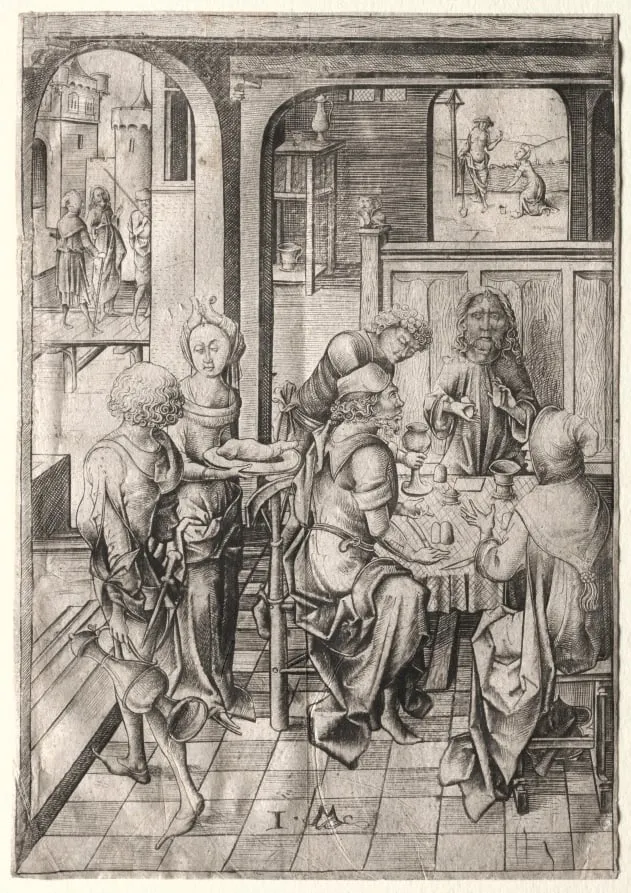
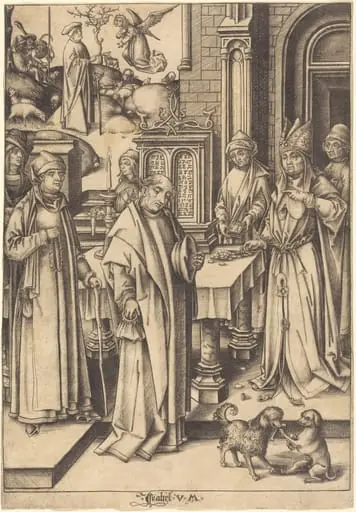
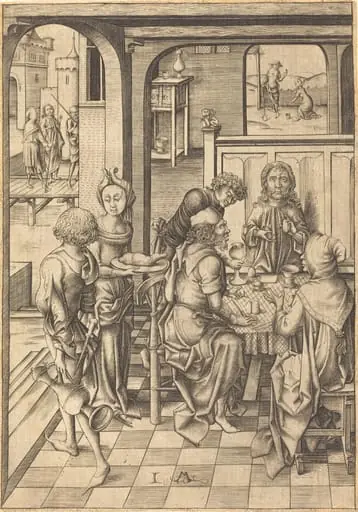
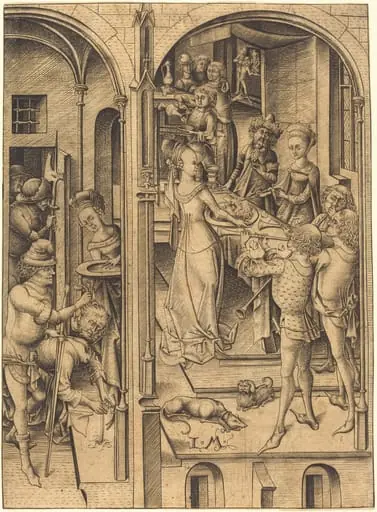
Supper at Emmaus is a print by the Renaissance artist Israhel van Meckenem. It dates from 1480 and is held in the collection of the Cleveland Museum of Art.
About this work
Overview
Its small scale and reproducible nature made it accessible to a broad audience in early 16th-century Germany, serving both devotional and educational purposes.
Israhel van Meckenem created a detailed metal engraving depicting the biblical moment of Christ’s revelation at Emmaus. Unlike painted versions, this work was produced through incised lines on a metal plate, allowing for multiple impressions. Its small scale and reproducible nature made it accessible to a broad audience in early 16th-century Germany, serving both devotional and educational purposes.
Subject & Meaning
The scene captures the instant when two disciples recognize the risen Christ during a meal, unaware until he blesses the bread. Van Meckenem emphasizes recognition through subtle facial expressions and gestures: the disciples’ startled gazes contrast with the servants’ obliviousness. The act of breaking bread evokes the Last Supper, linking Christ’s sacrifice to his resurrection and affirming his divine identity to those who witness it.
Technique & Style
Van Meckenem employed fine, precise lines in metal engraving to define forms and textures with clarity. The composition relies on linear detail rather than tonal gradation, creating a stark, graphic quality. Light is suggested through contrast in shadowed interiors and illuminated faces, enhancing emotional focus without the use of chiaroscuro. The technique prioritizes narrative legibility over atmospheric depth.
History & Provenance
Produced around 1490–1500, this engraving was part of a broader trend of religious prints circulating in the Holy Roman Empire. Van Meckenem, active in Bocholt, was known for his prolific output of devotional subjects. The print’s survival in multiple copies suggests widespread distribution, likely through religious networks and traveling merchants, reflecting its role in popular piety before the Reformation.
Context
In late 15th-century Germany, printed images were increasingly used to convey biblical stories to lay audiences with limited literacy. Van Meckenem’s work aligns with this shift, offering a compact, portable version of a key resurrection narrative. The inn setting reflects contemporary domestic interiors, grounding the sacred in familiar spaces to deepen viewer identification and emotional engagement.
Legacy
Though less celebrated than painted versions by Caravaggio or Titian, van Meckenem’s engraving contributed to the visual dissemination of the Emmaus story across Northern Europe. Its clarity and accessibility influenced later printmakers who sought to communicate religious narratives through precise line work. The work remains a testament to the power of print in shaping devotional culture before the age of mass media.
Artist & collection
Artist
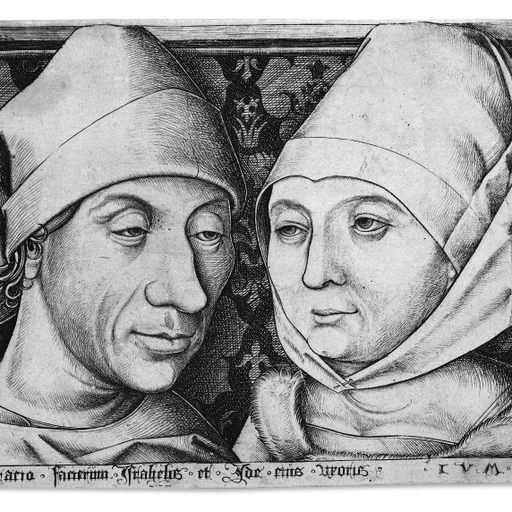
Israhel van Meckenem (c. 1445 – 10 November 1503), also known as Israhel van Meckenem the Younger, was a German printmaker and goldsmith, perhaps of a Dutch family origin. He was the most prolific engraver of the…