Artwork
Christ at the Table of Simon the Pharisee
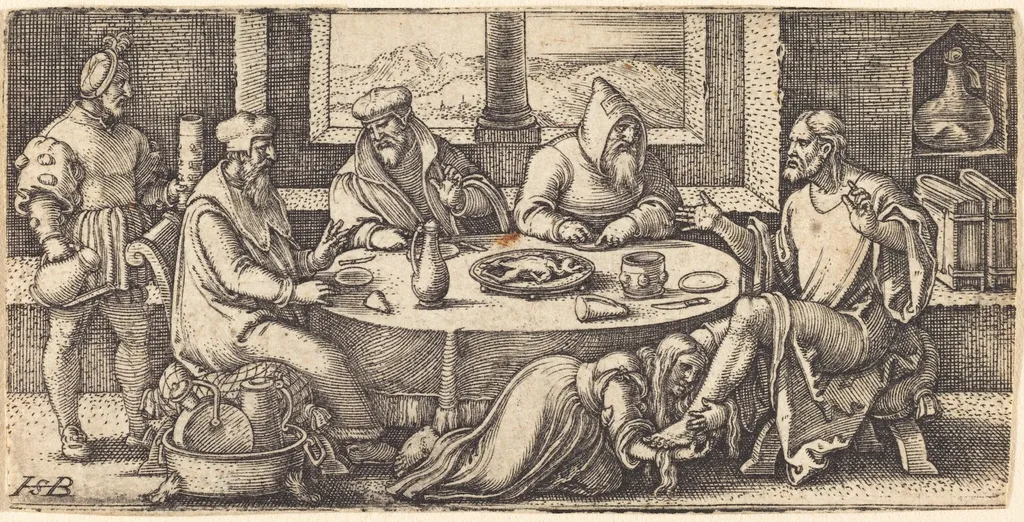
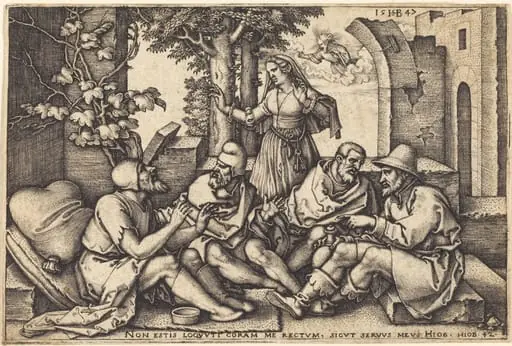
Christ at the Table of Simon the Pharisee is an ink print by the Renaissance artist Sebald Beham. It dates from 1539 and is held in the collection of the National Gallery of Art.
About this work
Overview
As a member of the group known as the Little Masters, Beham specialized in finely detailed prints, often religious in theme.
Created around 1539 by Sebald Beham, this engraving captures a biblical moment in miniature scale. As a member of the group known as the Little Masters, Beham specialized in finely detailed prints, often religious in theme. Executed in ink on paper, the work reflects the precision and intimacy characteristic of Northern Renaissance printmaking. Its small size invites close viewing, emphasizing craftsmanship over grandeur.
Subject & Meaning
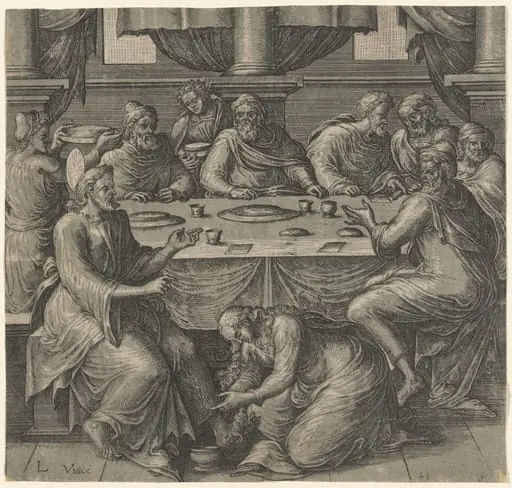
The scene illustrates Luke 7:36–50, where a woman anoints Jesus’ feet in the home of Simon the Pharisee. Her act of humility contrasts with the seated men, who observe in silence. The inclusion of tableware and a landscape beyond the window grounds the sacred moment in everyday space, suggesting divine presence within ordinary life. The composition invites reflection on mercy, judgment, and devotion.
Technique & Style
Beham employed fine, controlled lines to render textures of fabric, wood, and stone with meticulous care. Shading is achieved through cross-hatching, creating subtle depth without heavy contrast. The figures are arranged in a compact group, their gestures restrained, enhancing the quiet tone. Background details, including the window’s distant view, are rendered with equal precision, reinforcing the work’s immersive realism.
History & Provenance
Beham, born in Nuremberg and later active in Frankfurt, produced hundreds of engravings during the 1530s and 1540s. This print belongs to a series of biblical scenes he made for private collectors, reflecting the growing demand for devotional imagery outside church settings. Its survival in multiple museum collections suggests it was widely circulated and valued among educated patrons of the time.
Context
In early 16th-century Germany, printmaking flourished as a medium for disseminating religious ideas amid Reformation debates. Beham’s small-scale engravings catered to private devotion, offering accessible alternatives to large altarpieces. His work bridges late Gothic detail with emerging Renaissance naturalism, aligning with humanist interests in biblical authenticity and emotional restraint.
Legacy
Beham’s engravings influenced later Northern artists through their technical discipline and intimate scale. Though less celebrated than Dürer, his contributions helped define the role of print as a vehicle for personal piety. This work remains a testament to how religious narratives were reimagined for domestic contemplation, shaping the visual culture of Protestant households in the decades after the Reformation.
Artist & collection
Artist
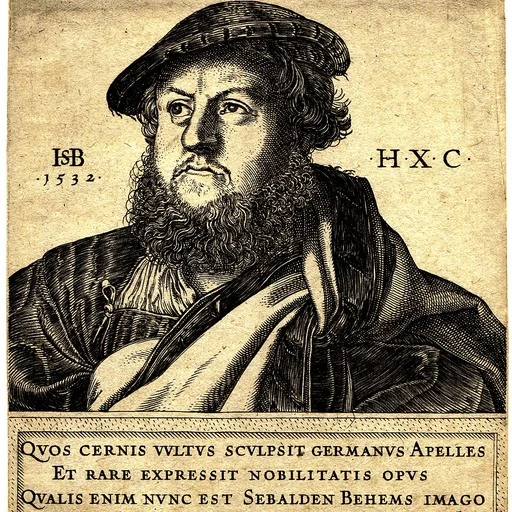
Sebald Beham (1500–1550) was a German painter and printmaker, mainly known for his very small engravings.


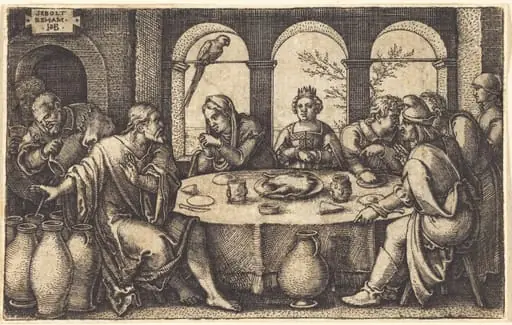 The Wedding at Cana
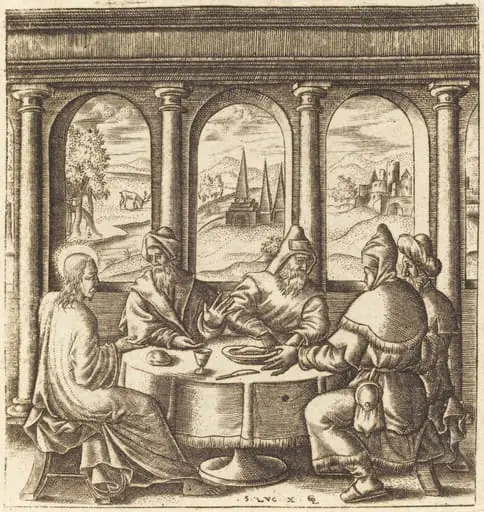 Christ Teaching
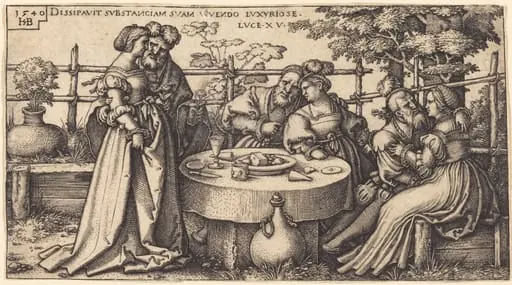 The Prodigal Son Wasting His Fortune
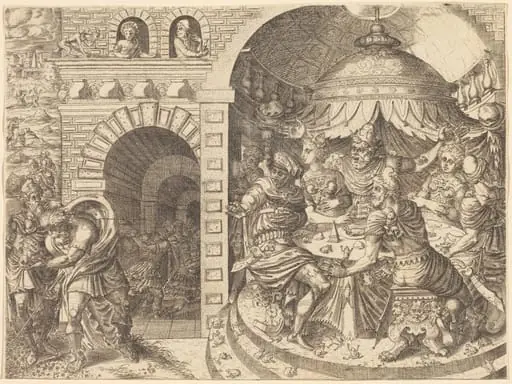 Pharaoh and the Plague of Frogs
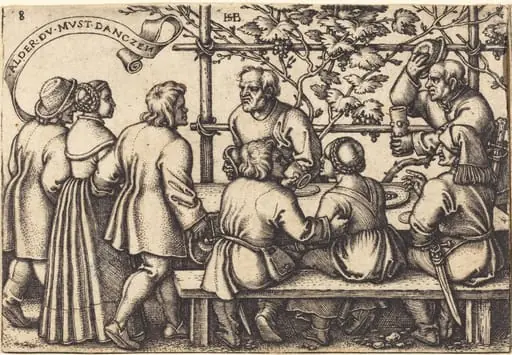 Peasants' Feast
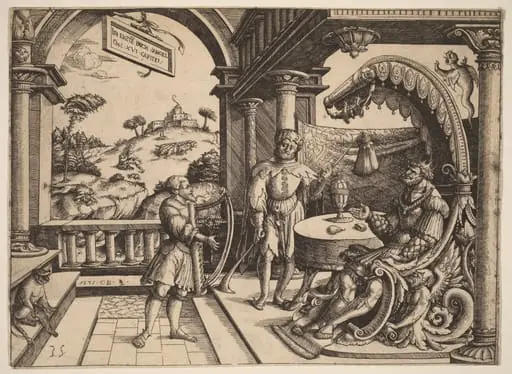 David Playing the Harp before Saul
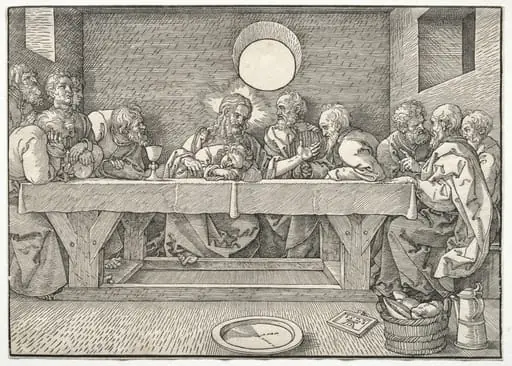 The Last Supper
 The Martyrdom of Saint James (?)
 Christ at Emmaus
 Herod and Herodias
 Christ at the Table of Simon the Pharisee
 Job Conversing with His Friends