Artwork
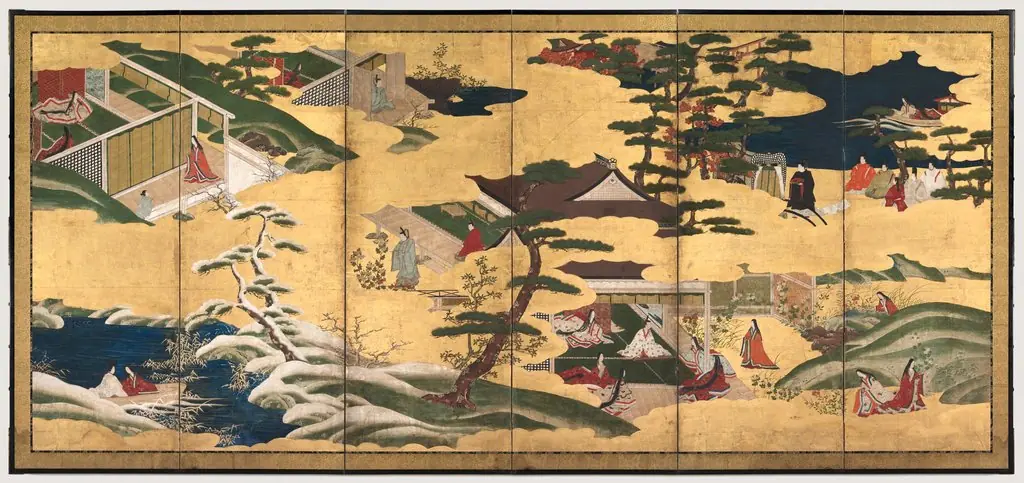
Scenes from the Tales of Ise
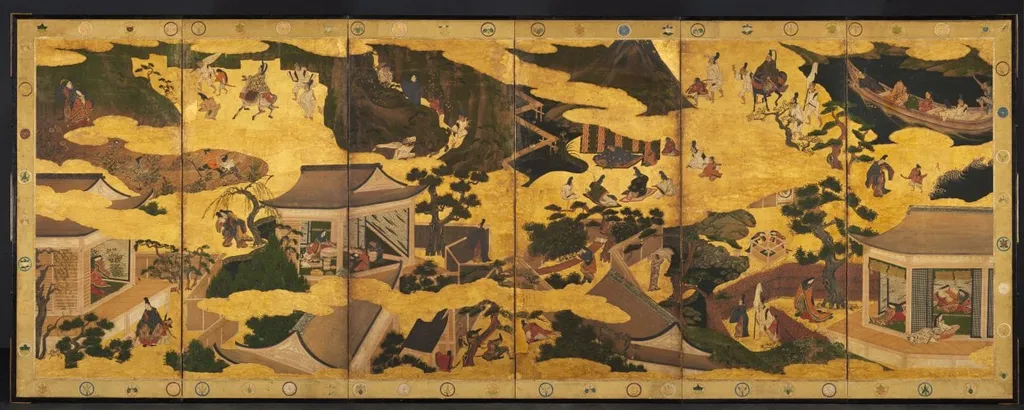
Scenes from the Tales of Ise is an unspecified painting by the Baroque artist Unknown. It dates from 1604 and is held in the collection of the Cleveland Museum of Art.
About this work
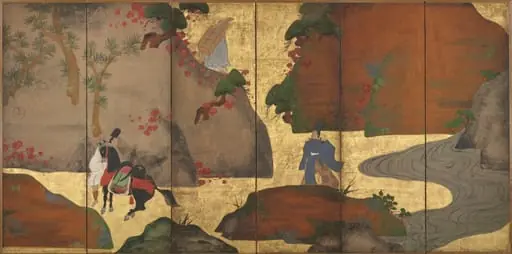
You see a narrow scroll crowded with tiny travelers crossing rivers, climbing hills, and stopping at rustic huts under pine trees.
You see a narrow scroll crowded with tiny travelers crossing rivers, climbing hills, and stopping at rustic huts under pine trees.
The scenes come from a 1,000-year-old book of poems called the *Tales of Ise*. Each poem matches a moment in the painting—like a travel diary where words and pictures swap places. The artist never signed the work, so we don’t know who turned the verses into brushstrokes.
If you like these quiet road-trip scenes, look up japan, edo period (1615–1868) for more painted scrolls of everyday life.
Overview
This folding screen illustrates episodes from the Tales of Ise, a 10th-century collection of lyrical poems and brief narratives centered on a courtier’s travels. Rendered in the early 17th century, the work presents a sequence of landscape scenes that correspond to the poems, arranged to be read from right to left. Though unsigned, its style aligns with the Kyoto school associated with Iwasa Matabei, reflecting a broader trend among patrons who favored native Japanese themes over Chinese-inspired models.
Subject & Meaning
The scenes depict a solitary traveler moving through rural Japan, pausing by rivers, climbing hills, and resting in simple dwellings beneath pine trees. Each vignette corresponds to a poem in the Tales of Ise, where nature’s changing seasons and terrain mirror the traveler’s inner solitude and quiet longing. For contemporary viewers, these images would have evoked familiar literary moments, transforming the screen into a visual companion to the text rather than an independent narrative.
Technique & Style
The painting employs mineral pigments and extensive gold leaf to create a luminous, decorative surface, typical of early Edo-period Yamato-e traditions. Figures are rendered in fine, delicate lines, while landscapes are stylized rather than realistic, emphasizing rhythm and poetic suggestion over topographical accuracy. The composition unfolds horizontally, guiding the viewer’s eye through a continuous yet segmented journey that mirrors the structure of the original poems.
History & Provenance
Created in Kyoto during the first decades of the 1600s, the screen reflects the cultural appetite for indigenous literary subjects after centuries of Chinese artistic dominance. Though its original owner is unknown, its format and style suggest it was made for a wealthy patron interested in classical Japanese literature. The absence of an artist’s signature was common in such works, where the literary source held greater cultural weight than individual authorship.
Context
During the early Edo period, there was a revival of interest in native Japanese literary traditions, especially among urban elites. Paintings like this one responded to a desire for art that connected with classical poetry and courtly aesthetics. The Tales of Ise, though older than the Tale of Genji, remained widely known and was frequently adapted into visual form, reinforcing a sense of cultural continuity amid political change.
Legacy
This work exemplifies how classical poetry continued to inspire visual art well into the Edo period. Its influence can be seen in later scroll paintings and screens that similarly paired literature with landscape, shaping a distinctively Japanese mode of narrative art. Though the artist remains anonymous, the screen’s enduring recognition underscores the lasting power of the Tales of Ise as a cultural touchstone.
Artist & collection

 Domestic Scene
 Giacomo and Cardinal Marco, investing Andrea, Abbot of San Zeno, with his Benefice
 The Nymph of Fontainebleau
 Portrait of a Woman
 Madonna and Child with Saints in the Enclosed Garden
 Venus and Minerva
 Family Group of Four on Sofa
 Wall painting from Room H of the Villa of P. Fannius Synistor at Boscoreale
 Scenes from the Tales of Ise
 Scenes from the Tales of Ise
 Scenes from the Tale of Genji
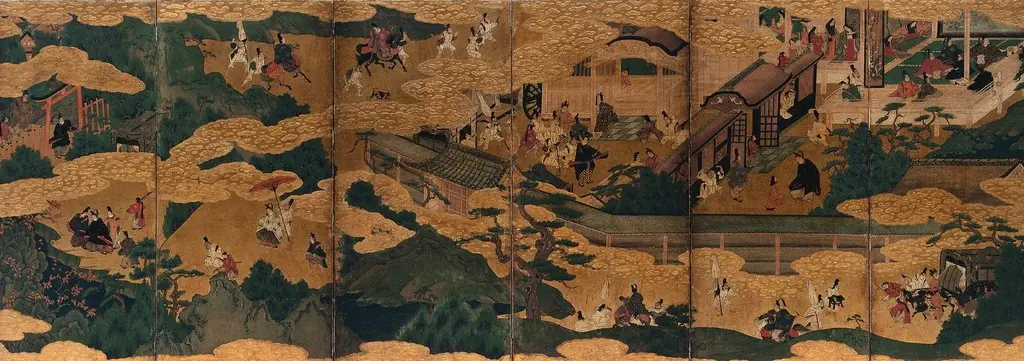 Scenes from the Tales of Ise
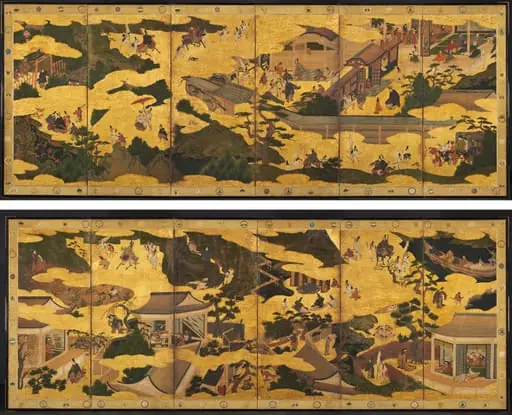 Scenes from the Tales of Ise
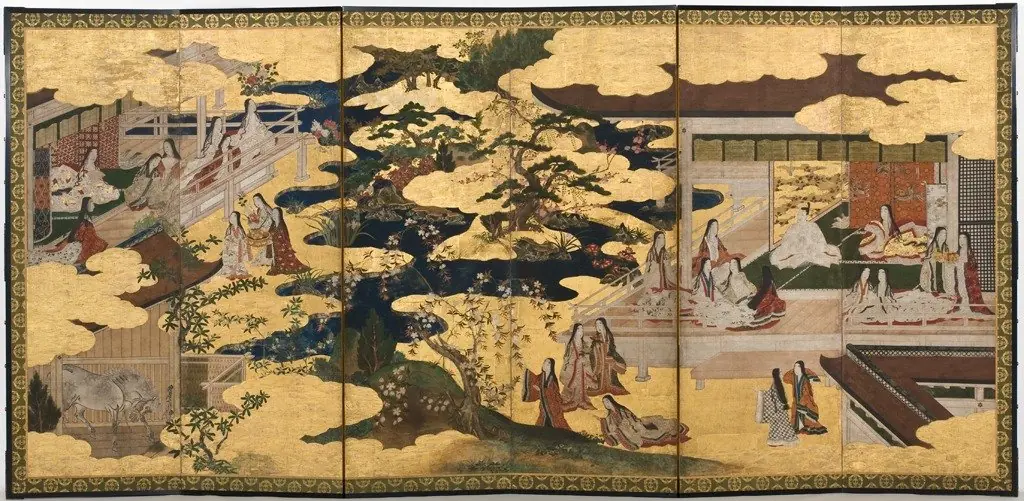 Scene from "The Tale of Genji": from the chapter "The Maiden"
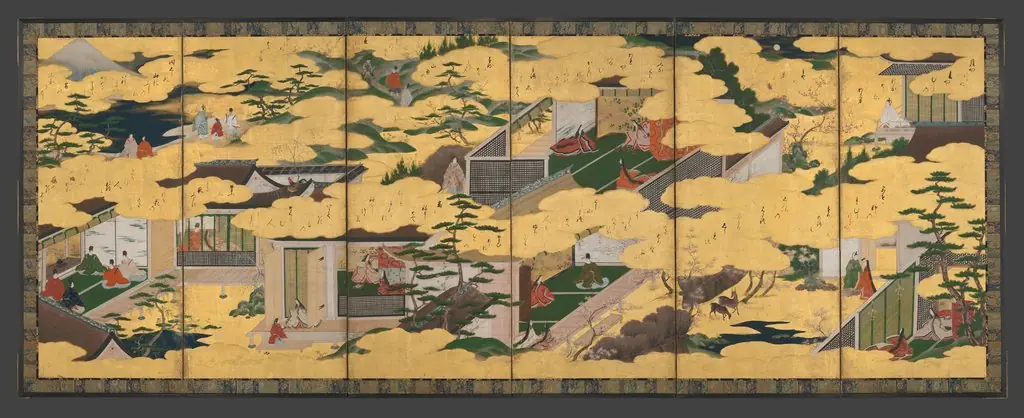 Scenes from the Tales of Ise
 Ivy Lane
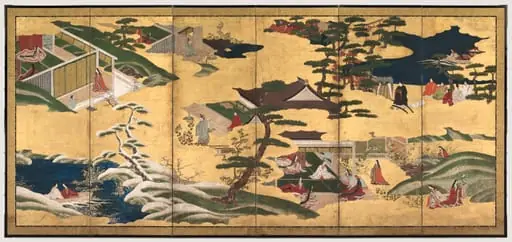 Scenes from the Tale of Genji
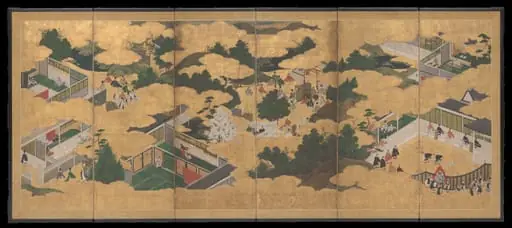 Scenes from the Tale of Genji
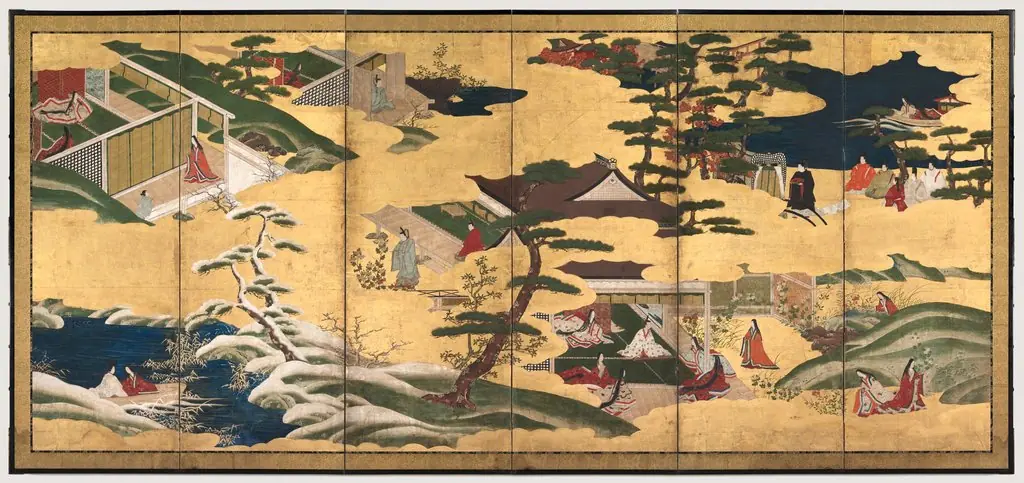 Scenes from the Tale of Genji
 Scenes from the Tale of Genji