Artwork
Sepulchral Chapel of Rekié Sultana, Mother of Sultan Mahmoud
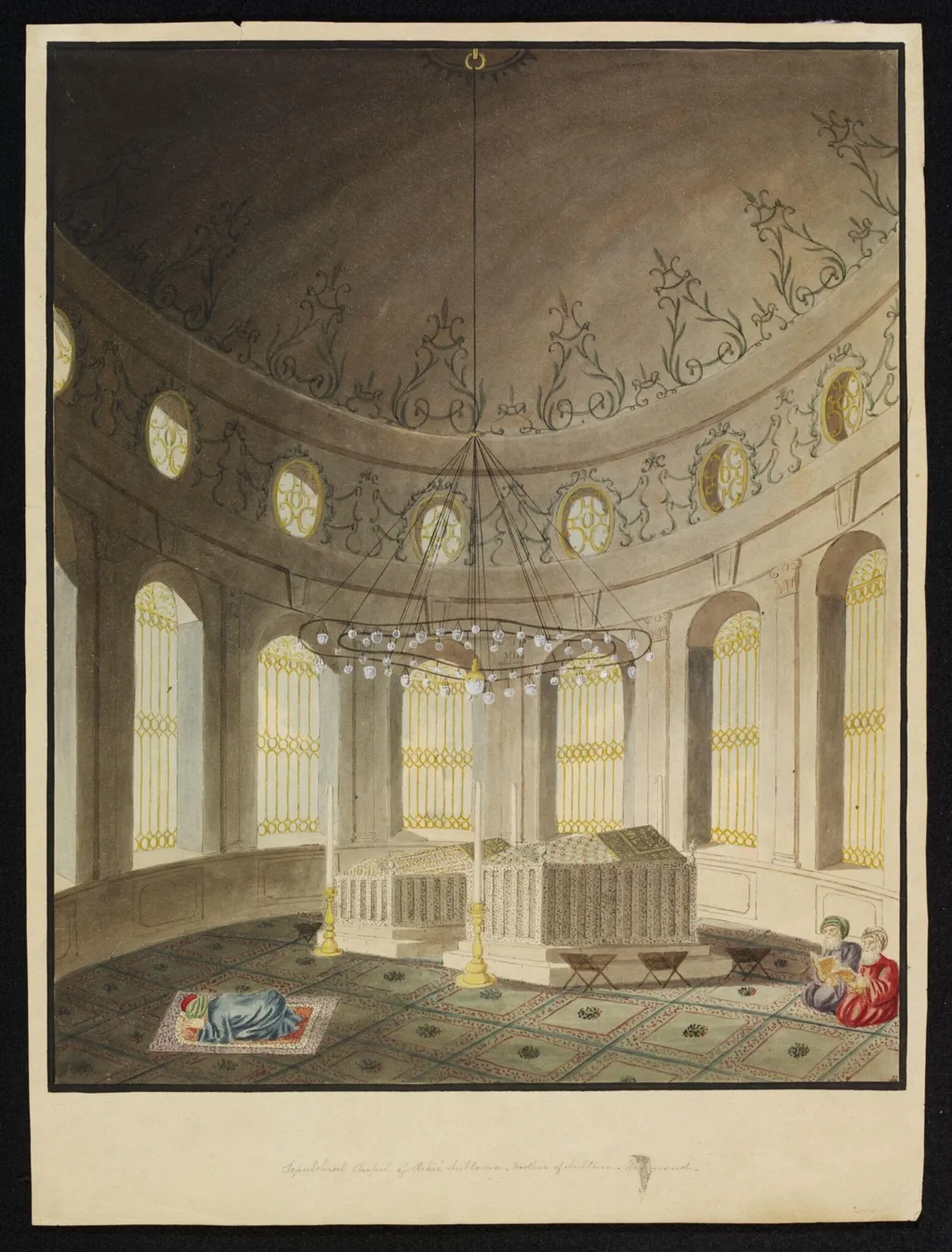
Sepulchral Chapel of Rekié Sultana, Mother of Sultan Mahmoud is a watercolor work on paper by the Romanticist artist Unknown. It dates from 1820 and is held in the collection of the Victoria and Albert Museum. This watercolour depicts the sepulchral chapel built in 1818 for Rekié Sultana, mother of Sultan Mahmud II.
About this work
Overview
Executed with delicate precision, the work captures the interior of a türbe—a funerary structure within Ottoman imperial tradition.
This watercolour depicts the sepulchral chapel built in 1818 for Rekié Sultana, mother of Sultan Mahmud II. Executed with delicate precision, the work captures the interior of a türbe—a funerary structure within Ottoman imperial tradition. The artist, likely active in Constantinople, is identified through stylistic links to two other related drawings. The piece functions as a quiet record of a sacred space, emphasizing stillness and architectural detail over narrative.
Subject & Meaning
The chapel served as the resting place for Naksidil Sultan, wife of Abdül Hamid I and mother of Mahmud II. Though titled for Rekié Sultana, the structure commemorates Naksidil, reflecting the complex naming conventions of imperial women. The interior, rendered with subdued reverence, was intended for private devotion. The kneeling figures suggest ritual presence, anchoring the space in spiritual practice rather than public ceremony.
Technique & Style
The artist employed fine brushwork and muted watercolour tones to convey a sense of serene intimacy. Delicate patterns on the windows and intricate tilework on the floor are rendered with meticulous care, while the domed ceiling features subtle circular medallions and swirling motifs. Soft lighting and restrained palette enhance the contemplative mood, avoiding theatricality in favor of quiet monumentality.
History & Provenance
The watercolour is one of a small group of related works attributed to the same hand, all likely produced in early 19th-century Constantinople. These drawings may have been commissioned for imperial circulation or private collection. While the artist’s identity remains unknown, the consistency of style and subject suggests a workshop familiar with courtly architecture and ritual spaces, possibly linked to the imperial atelier.
Context
During Mahmud II’s reign, Ottoman funerary architecture continued to blend traditional Islamic forms with emerging European influences. The türbe’s design reflects this synthesis: ornate tilework and domes coexist with restrained interior composition. Such chapels were not merely tombs but spaces of ongoing remembrance, where family and courtiers could offer prayers, reinforcing dynastic continuity through ritual.
Legacy
This watercolour contributes to a modest but significant corpus of Ottoman architectural studies from the early 1800s. It preserves the visual language of imperial funerary spaces at a time of transition, offering insight into how sacred interiors were documented beyond official monuments. Its quiet detail invites comparison with later European orientalist works, though here the perspective remains grounded in local observation rather than exoticism.
Artist & collection

 Domestic Scene
 Giacomo and Cardinal Marco, investing Andrea, Abbot of San Zeno, with his Benefice
 The Nymph of Fontainebleau
 Portrait of a Woman
 Madonna and Child with Saints in the Enclosed Garden
 Venus and Minerva
 Family Group of Four on Sofa
 Wall painting from Room H of the Villa of P. Fannius Synistor at Boscoreale