Artwork
Sf. Antonie cel Mare
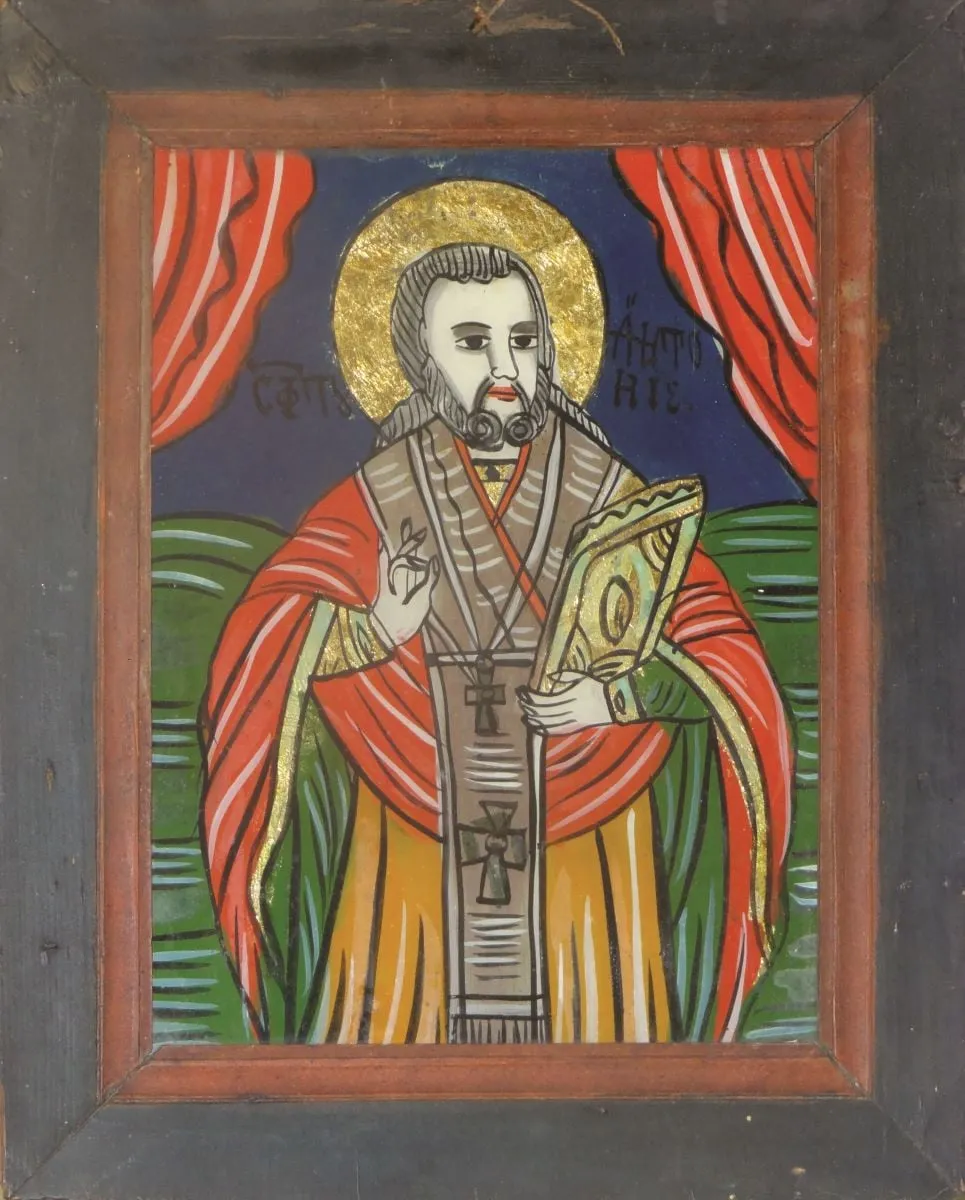
Sf. Antonie cel Mare is a drawing by Unknown. It dates from 1850 and is held in the collection of the Alba Iulia Unification National Museum. This painted image portrays Saint Anthony the Great, a foundational Christian ascetic, rendered in a folk-art tradition.
About this work
Overview
This painted image portrays Saint Anthony the Great, a foundational Christian ascetic, rendered in a folk-art tradition. The figure is centrally positioned, framed by deep blue skies and richly colored drapery. The composition emphasizes symbolic elements over naturalism, aligning with regional devotional practices rather than academic conventions.
Subject & Meaning
The figure represents Saint Anthony the Great, recognized by his long beard, halo, and the book he holds—symbolizing his scriptural knowledge and monastic authority. The crosses on his robe and pendant affirm his Christian devotion, while the red robe and green-yellow accents reflect traditional iconographic color codes associated with holiness and divine presence.
Technique & Style
The painting employs flat planes of color, minimal perspective, and stylized forms typical of folk religious art. Details like the textured robes and simplified landscape suggest hand-painted execution, likely using local pigments. The rigid posture and decorative framing with curtains indicate adherence to established regional models rather than individual artistic innovation.
History & Provenance
Though specific origins are unrecorded, the work’s aesthetic closely resembles devotional panels produced in Eastern European rural communities during the 18th or 19th centuries. Its style and iconography align with artifacts collected by the Museum of Ethnography, suggesting it may have been used in domestic or small-scale ecclesiastical settings before entering institutional collections.
Context
Created outside urban artistic centers, this image reflects the persistence of traditional religious imagery in peasant and monastic communities. Such works served as objects of personal veneration, often made by local artisans who followed inherited visual templates rather than contemporary artistic trends, preserving spiritual symbolism through generations.
Legacy
The painting contributes to the understanding of vernacular religious expression in Eastern Europe. Its survival and preservation highlight how folk traditions sustained Orthodox Christian iconography beyond formal church art, offering insight into the spiritual life of communities that relied on handmade devotional objects for worship and identity.
Artist & collection
Museum
Alba Iulia Unification National Museum
Continue through works from the same source collection.
 Domestic Scene
 Giacomo and Cardinal Marco, investing Andrea, Abbot of San Zeno, with his Benefice
 The Nymph of Fontainebleau
 Portrait of a Woman
 Madonna and Child with Saints in the Enclosed Garden
 Venus and Minerva
 Family Group of Four on Sofa
 Wall painting from Room H of the Villa of P. Fannius Synistor at Boscoreale
 Sf. Mare Ierarh Nicolae
 Sf. Nicolae
 Icoae mi
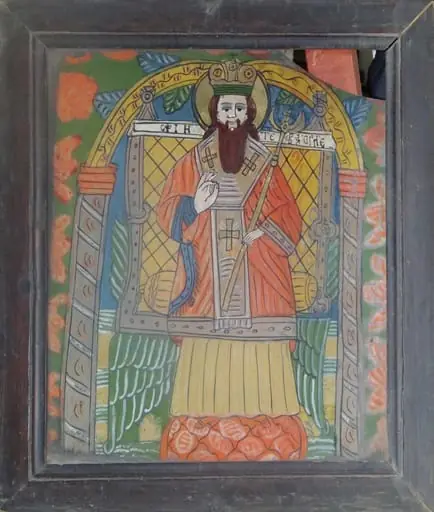 Sf. Vasile cel Mare
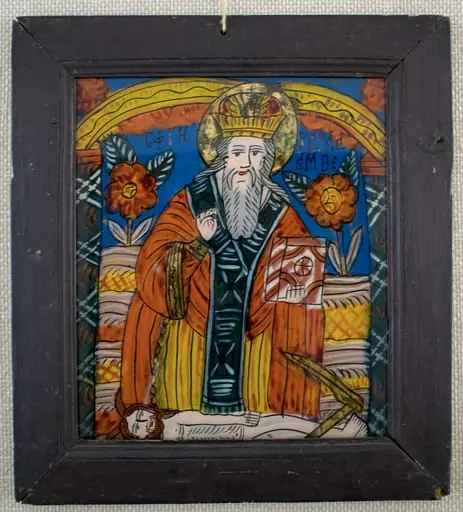 Icoafolc
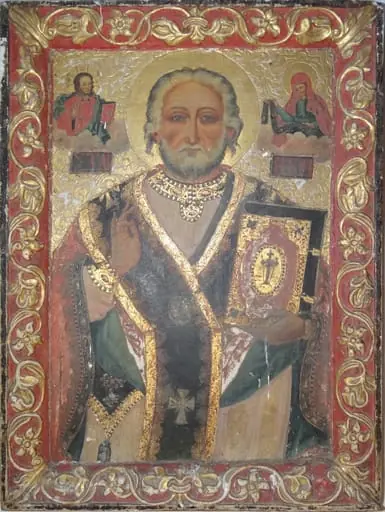
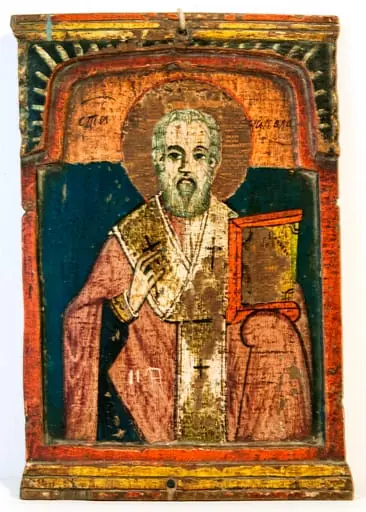 În spațiul incavat este pictat frontal sfântul ierarh Nicolae, 3/4. în ipostaza canonică, în mâna dreaptă având o cruce, cu stânga acoperită ținând cartea sfântă.Părul și barba cărunte, desenate cu mințiozitate, fruntea înaltă,barba scurtă. Este înveșmântat cu un sacos grena stihar bleumarin cu mânecuțe aurii și epitrahil alb brodat cu cruci negre, subțiri.Cartea este legată, coperta decorată. Nimb trasat cu un instrument, pe margine cu linie roșie, cu interiorul rășluit.(probabil luată foița de aur) Fond albastru închis în porțiunea dreptunghiulară, în interiorul portalului culoare deschisă, pe care iese în evidență scrisul cu litere negre subțiri. Porțiunea în relief este pictată cu roșu(chenarul de la interior)și marginile de sus și jos, albastru cu raze albe porțiunea creată de portal, galben zonele rămase. Sus - orificiu pentru a fi agățată pe perete(după ce li-a pierdut funcționalitea de triptic). Lateral se observă locașurile unde se montau voleurile.
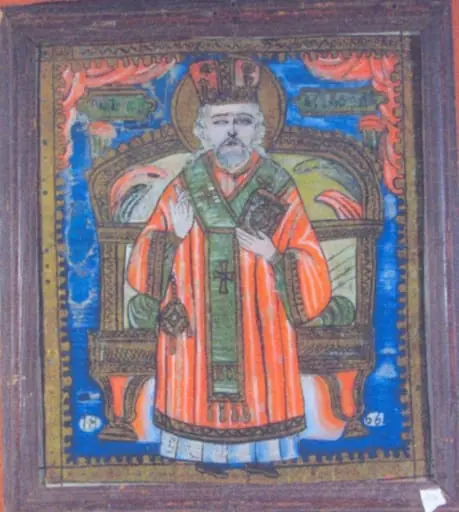 Sfântul Ierarh Nicolae
 Sf. Nicolae