Artwork
Sfântul Ierarh Nicolae
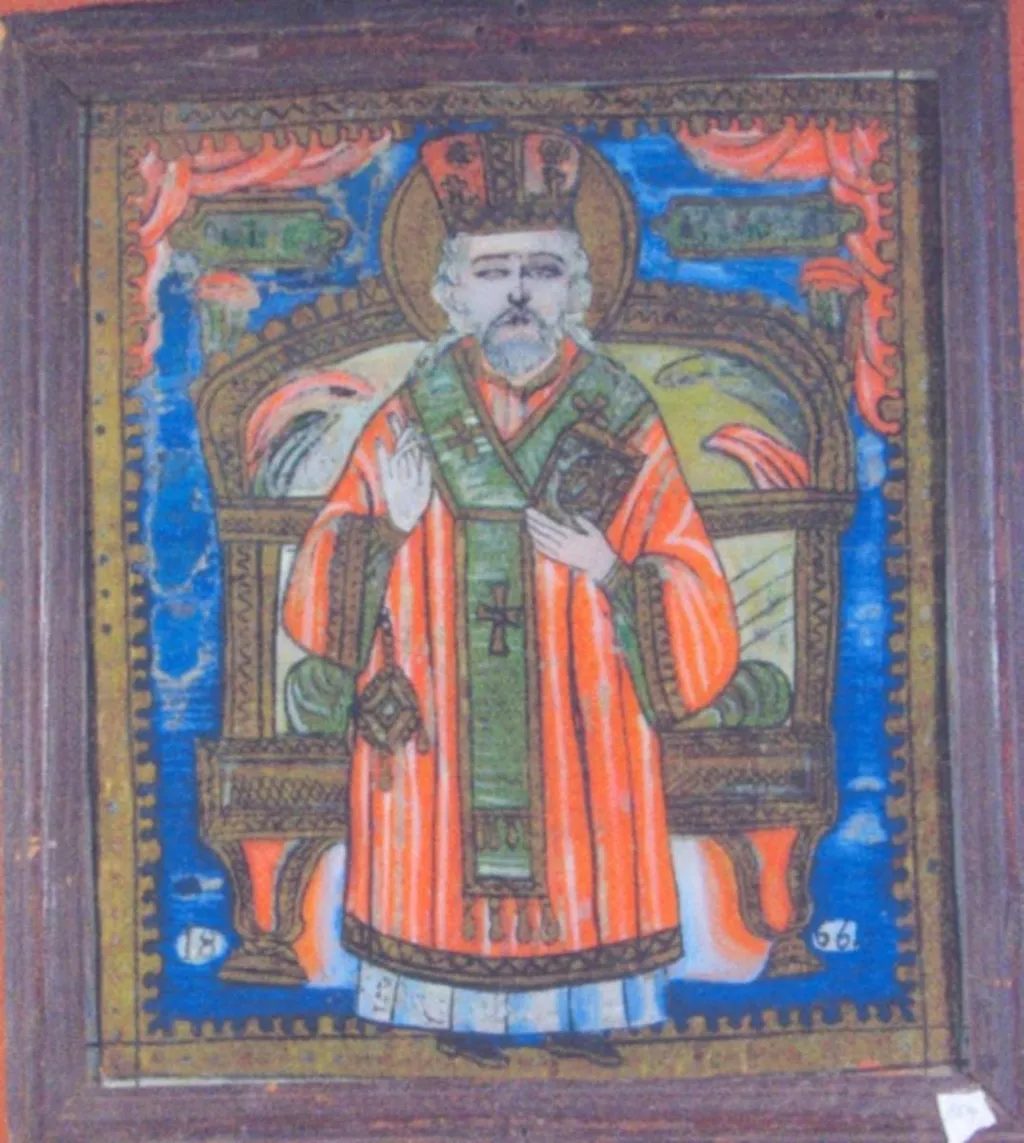
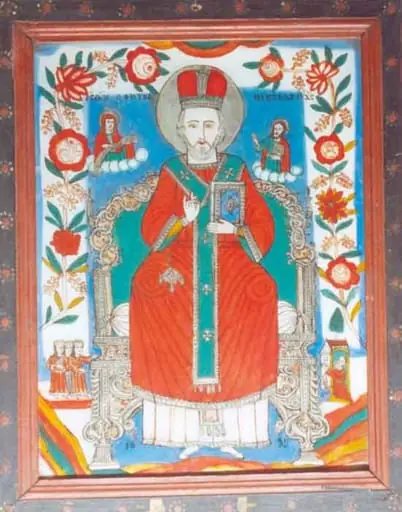
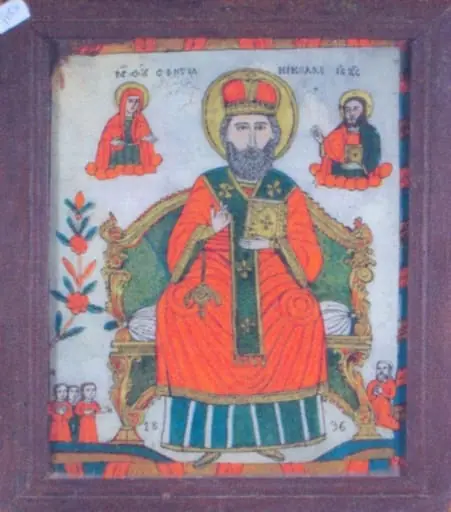
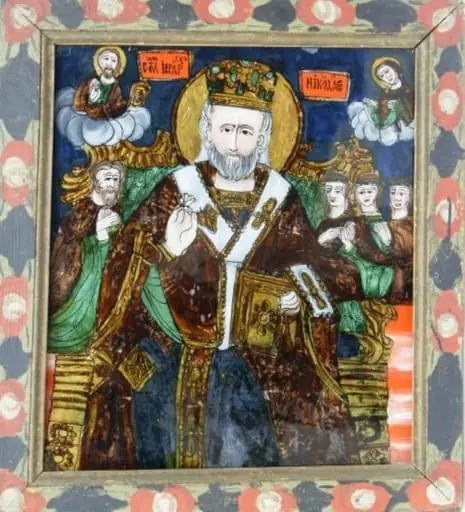
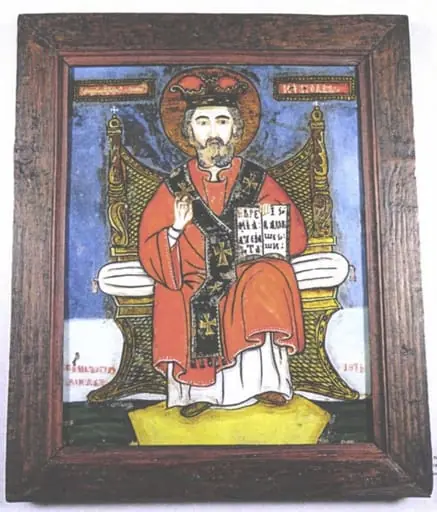
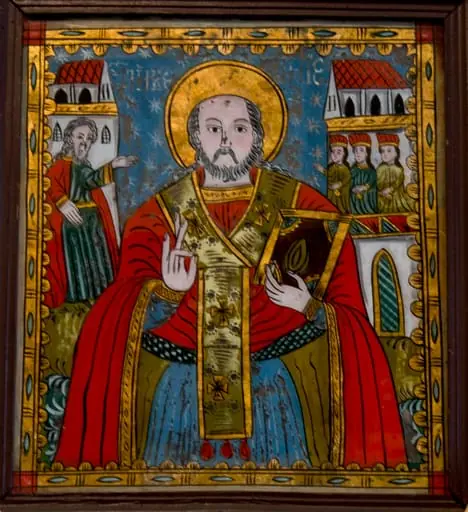
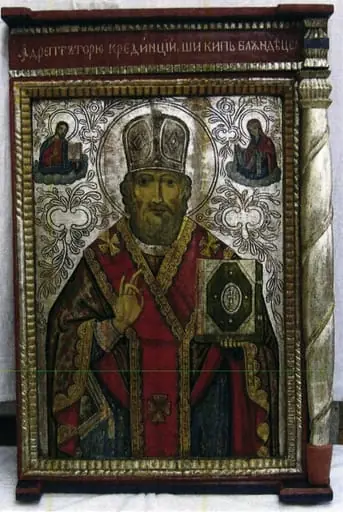
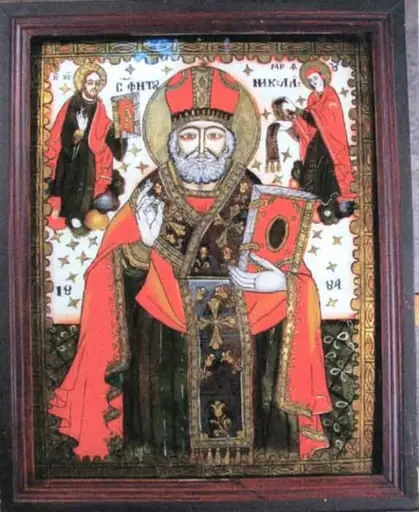
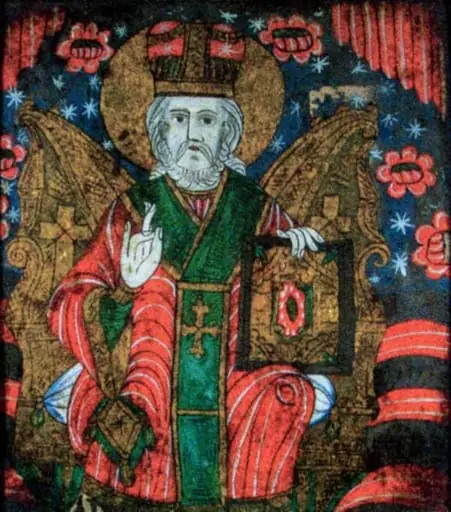
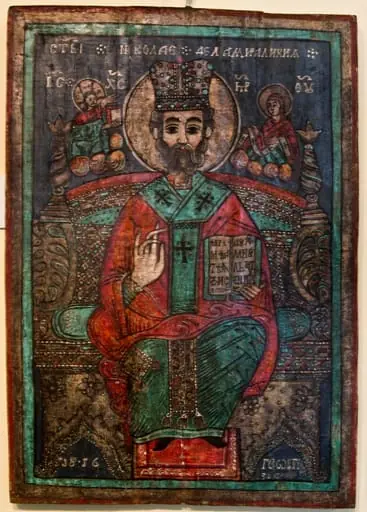
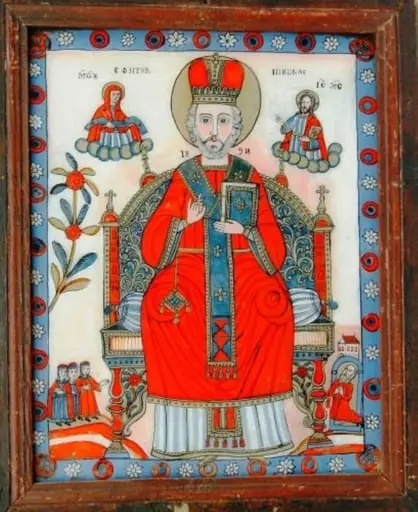
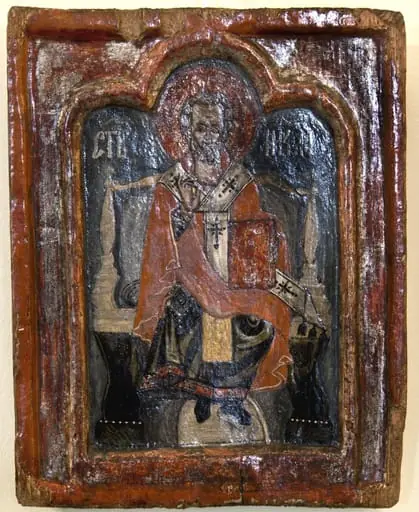
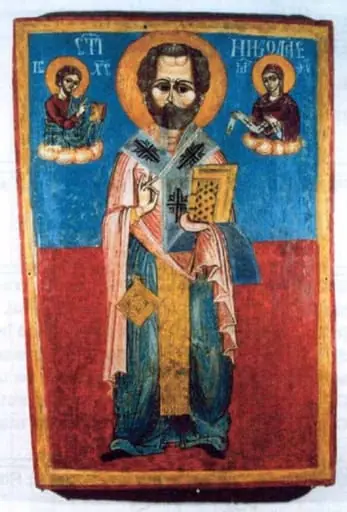
Sfântul Ierarh Nicolae is a drawing by the Impressionist artist Unknown. It dates from 1866 and is held in the collection of the Romanian Academy in Bucharest.
About this work
Overview
This work portrays Saint Nicholas, a venerated Christian bishop, rendered in a figurative style that blends elements of Realism and Impressionism.
This work portrays Saint Nicholas, a venerated Christian bishop, rendered in a figurative style that blends elements of Realism and Impressionism. The figure stands before an ornate chair, framed by a sky filled with soft clouds. His attire and gestures reflect ecclesiastical tradition, while the brushwork and color palette suggest a modern approach to religious portraiture, distinct from strict iconographic conventions.
Subject & Meaning
The figure is identified as Saint Nicholas, known for his role as a protector and benefactor. His raised right hand conveys blessing, a standard symbol of spiritual authority, while his left hand rests over the heart, indicating devotion. The chair behind him may reference his episcopal seat, reinforcing his status as a church leader. The composition emphasizes dignity and quiet authority rather than theatrical grandeur.
Technique & Style
The painting employs visible, expressive brushstrokes and saturated hues, aligning with Impressionist tendencies in handling light and texture. The red robe and green sash contrast sharply against the blue sky, creating visual rhythm. Details like the chair’s ornamentation are suggested rather than meticulously rendered, balancing realism with a looser, more atmospheric technique that prioritizes emotional tone over precise detail.
History & Provenance
No documented origin or collector history is provided for this image. It appears to be a modern interpretation rather than a historical ecclesiastical artifact. The style suggests 20th-century production, possibly by an artist engaging with both Orthodox traditions and Western artistic movements, though its specific creator and provenance remain unverified.
Context
While traditional Orthodox icons of Saint Nicholas follow strict symbolic rules, this work diverges by adopting Western painting methods. Its use of naturalistic light and loose brushwork reflects broader 19th- and 20th-century trends in religious art, where artists sought to humanize sacred figures through contemporary visual language, bridging devotional purpose with modern aesthetics.
Legacy
This image contributes to a broader 20th-century trend of reimagining religious subjects through non-traditional techniques. It does not belong to a canonical school but represents a personal or regional synthesis of Orthodox subject matter and Western stylistic influences. Its significance lies in its quiet negotiation between sacred tradition and evolving artistic expression.
Artist & collection
 Domestic Scene
 Giacomo and Cardinal Marco, investing Andrea, Abbot of San Zeno, with his Benefice
 The Nymph of Fontainebleau
 Portrait of a Woman
 Madonna and Child with Saints in the Enclosed Garden
 Venus and Minerva
 Family Group of Four on Sofa
 Wall painting from Room H of the Villa of P. Fannius Synistor at Boscoreale