Artwork
Sf. Ilie Prorocul
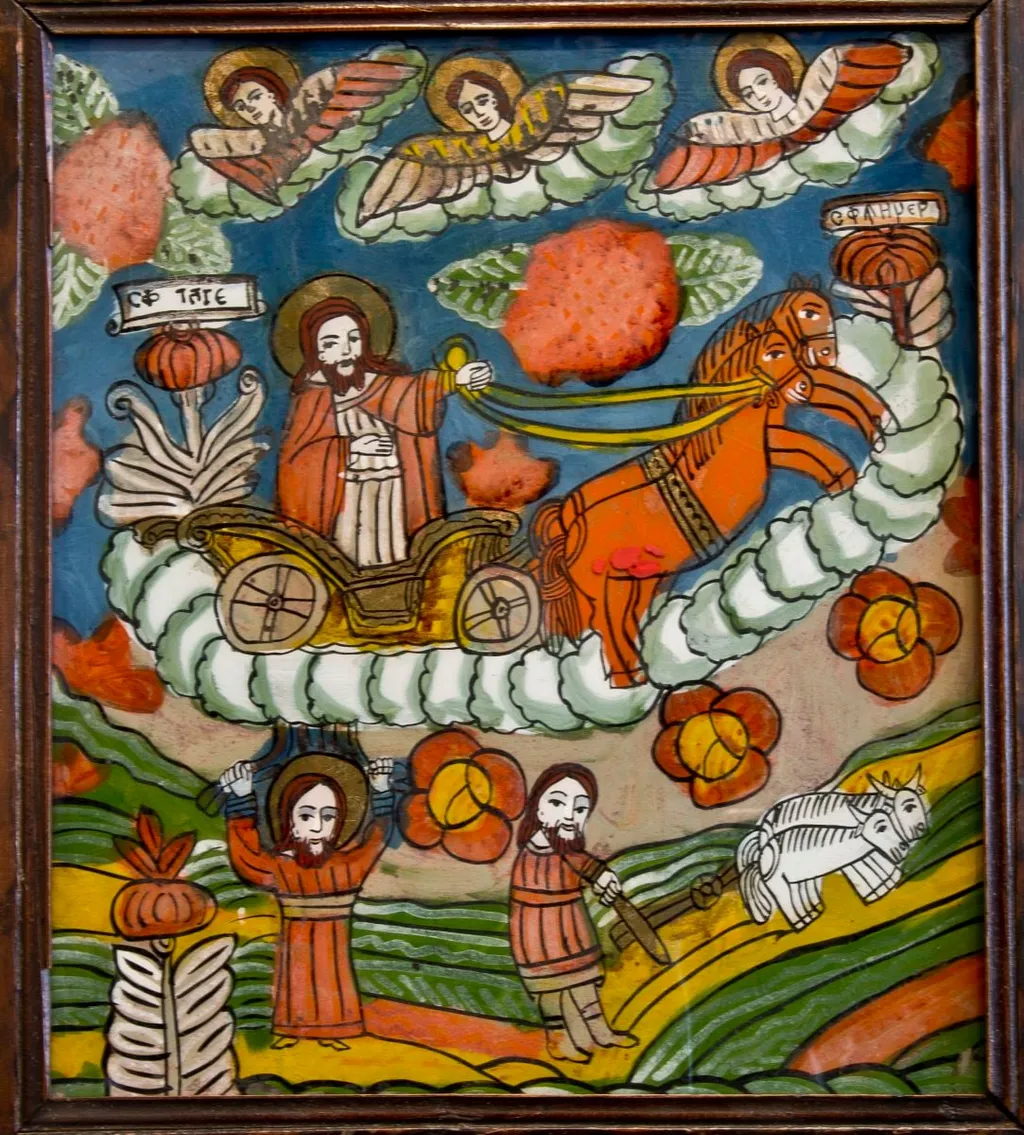
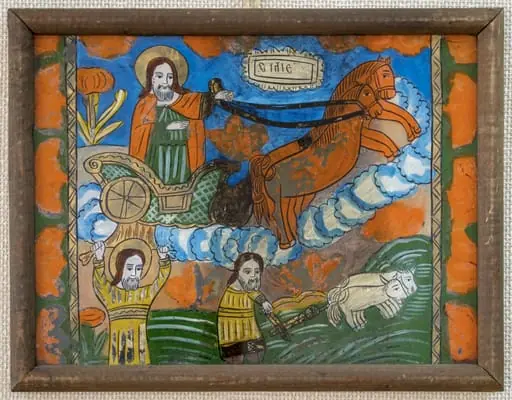
Sf. Ilie Prorocul is a drawing by Unknown. It dates from 1850 and is held in the collection of the National Museum of Art of Romania. This religious image depicts the Prophet Elijah ascending to heaven in a fiery chariot, a scene drawn from the biblical account in 2 Kings.
About this work
Overview
This religious image depicts the Prophet Elijah ascending to heaven in a fiery chariot, a scene drawn from the biblical account in 2 Kings. The composition is richly detailed, with celestial and earthly elements arranged to emphasize divine intervention. Bright hues and dynamic movement draw attention to the central figure, while surrounding figures and symbols reinforce the sacred narrative.
Subject & Meaning
The central figure, Elijah, is shown being taken to heaven in a chariot drawn by horses, a moment marking his departure from earthly life.
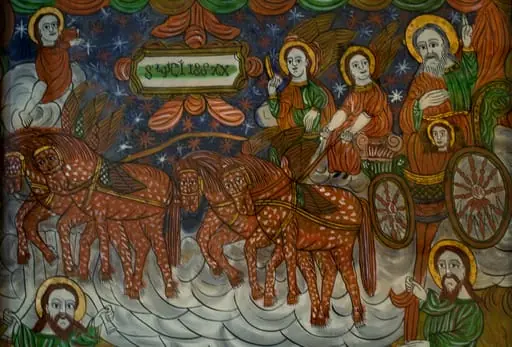
The central figure, Elijah, is shown being taken to heaven in a chariot drawn by horses, a moment marking his departure from earthly life. The golden object he holds may represent divine authority or the scroll of prophecy. Below, two figures gesture in reverence, while angels above play instruments, suggesting heavenly celebration. The scene conveys transition, divine favor, and the fulfillment of prophetic destiny.
Technique & Style
The painting employs bold, saturated colors—reds, blues, and yellows—to create visual emphasis and spiritual intensity. Shading is achieved through cross-hatching, a technique that adds depth without relying on gradients. The chariot’s wheels bear crosses, integrating religious symbolism into the vehicle’s design. The figures are stylized, with elongated proportions and expressive gestures typical of devotional iconography.
History & Provenance
The work is attributed to a tradition of Eastern Orthodox icon painting, likely produced in the Balkans or Anatolia during the late medieval or early modern period. Its survival suggests it was venerated in a church or private chapel. While its exact origin and maker remain undocumented, its iconographic consistency with regional religious art points to a well-established artistic lineage.
Context
Elijah’s ascension was a popular subject in Christian iconography, symbolizing the triumph of faith and the possibility of divine elevation. In Orthodox tradition, such images served both devotional and didactic purposes, reinforcing theological narratives for congregations with limited literacy. The inclusion of natural elements like flowers and pumpkins reflects a local, earthly setting intertwined with the supernatural.
Legacy
This image continues to reflect the enduring role of religious iconography in preserving theological stories through visual language. Its stylistic choices—symbolic color, linear shading, and hierarchical composition—align with broader Eastern Christian traditions. Though not widely known outside regional collections, it remains a representative example of how sacred narratives were rendered in vernacular artistic forms.
Artist & collection

 Domestic Scene
 Giacomo and Cardinal Marco, investing Andrea, Abbot of San Zeno, with his Benefice
 The Nymph of Fontainebleau
 Portrait of a Woman
 Madonna and Child with Saints in the Enclosed Garden
 Venus and Minerva
 Family Group of Four on Sofa
 Wall painting from Room H of the Villa of P. Fannius Synistor at Boscoreale
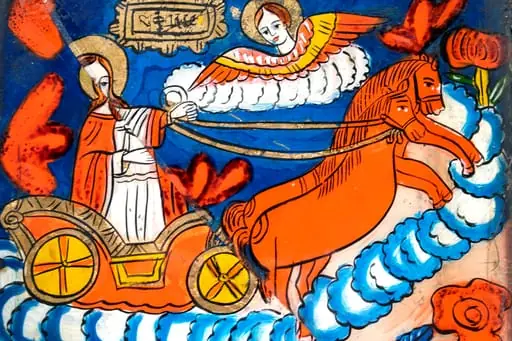 Icoana este pictată pe un suport de glajă formă dreptunghiulară în ax vertical. Scena ridicării la cer a Sfântului Ilie(Răpirea la cer)este redată într-o viziune populară. Sfântul Ilie, ca stăpân al tunetelor, fulgerelor și al ploii, purtat de un car de foc pe cer, este redat în registrul superior, în cel inferior fiind reprezantat proorocul Elisei în două ipostaze. Pe un registru în lanț de nori pastelați alb-albaștri, trăsura de culoare roșu cărămiziu, cu marginile și cercurile roților poleite, trasă de doi cai de aceeași culoare îl poartă pe sfântul Ilie înveșmântat cu tunică albă cu faldurile marcate cu negru, o mantie roșie. În slavă, pe nori, un heruvim. În registrul inferior, colțul stâng, proorocul Elisei(tunică albastră, brâul și manșetele galbene, în jurul capului, nimb aurit) cu mâinile ridicate primește haina sf. Ilie, ca semn al investiturii cu puterile acestuia.În colțul drept apare arând pământul cu un plug poleit tras de doi boi albi. Înveșmântat aici cu o tunică de culoare roșie cu poalele și încălțămintea albastră. Chipurile expresive, ochii negri, proporțiile corpului sunt reduse. Câmpul icoanei este împărțit în mai multe registre: partea superioară, în spatele carului, este albastră cu flori cu câte trei petale dispuse în poziții diferite; În cea de jos - benzi hașurate divers pe fond verde, sugerând relieful ; Registrul terestru este separat de cel celest printr-o zonă gri roz decorată cu trei flori roșii cu frunze verzi. Inscripția - în partea de sus, într-un chenar alb cu marginile dantelate. Suportul pictural deteriorat(oblic și colțul din stânga jos). Rama - patru șipci din lemn de brad, băițuite, îmbinate oblic la colțuri și întărite cu pene ascunse la colțuri. Capacul este realizat din două scânduri de lemn de brad.
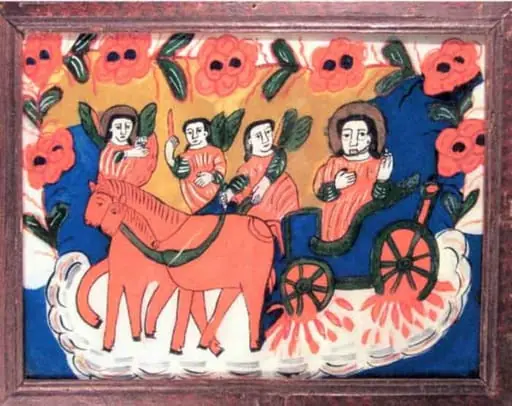 Sfântul Ilie
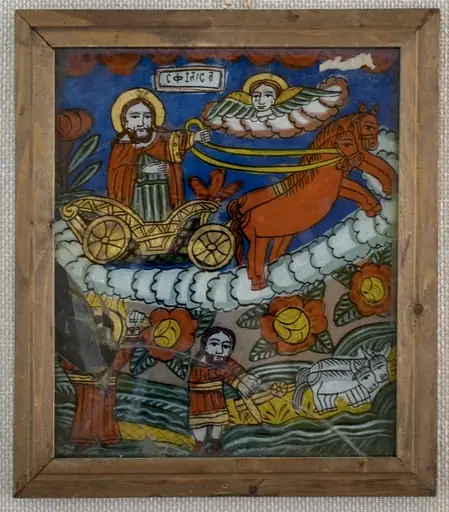 Icoascri
 Icoauite
 Icoaată
 Naștiu s
 Icoa îmb
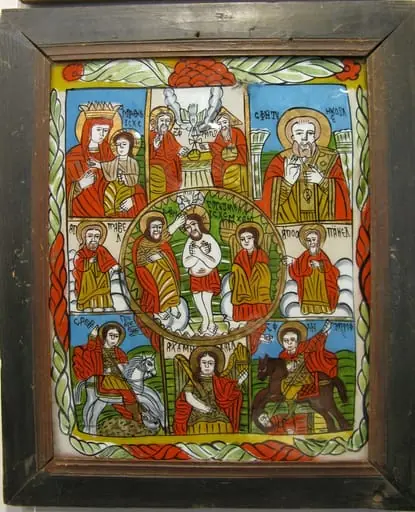 Prăznicar – Botezul lui IS HS