Artwork
Sfântul Ilie
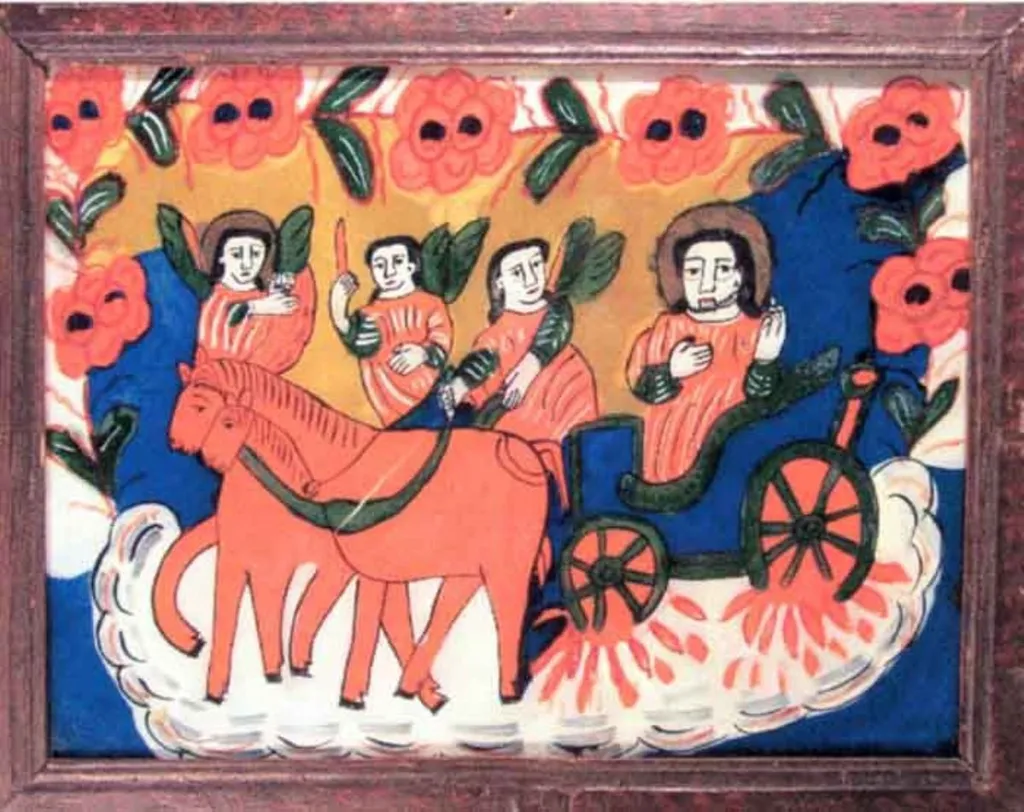
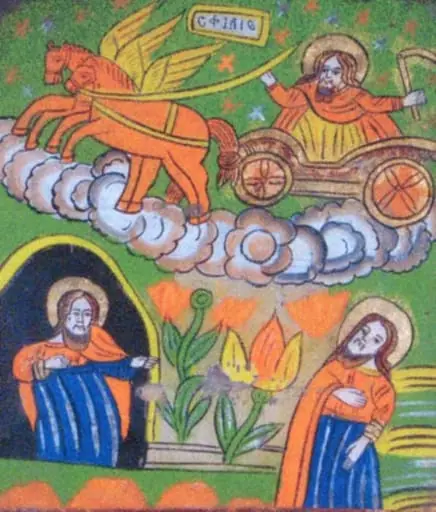
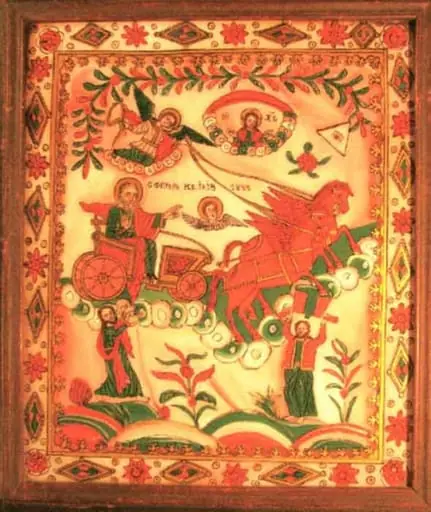
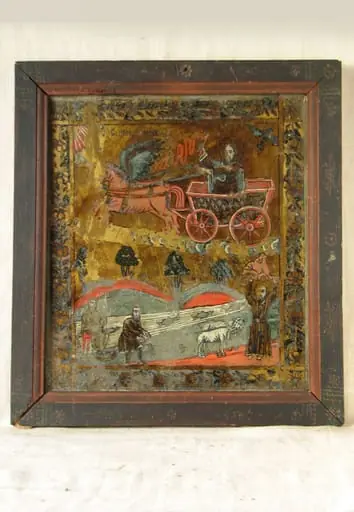
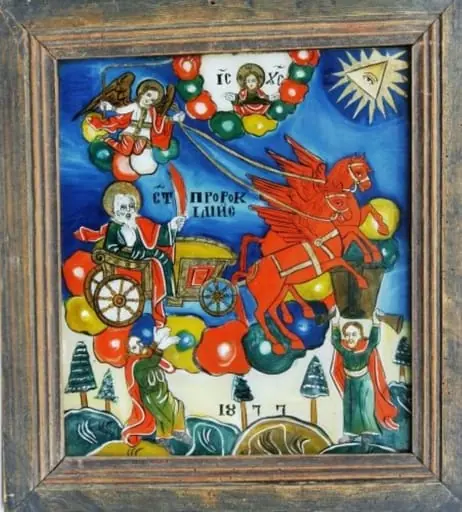
Sfântul Ilie is a drawing by the Impressionist artist Unknown. It dates from 1868 and is held in the collection of the Romanian Peasant Museum. This painted image depicts four winged figures ascending on a white cloud, surrounded by dense clusters of red flowers and green foliage.
About this work
Overview
This painted image depicts four winged figures ascending on a white cloud, surrounded by dense clusters of red flowers and green foliage.
This painted image depicts four winged figures ascending on a white cloud, surrounded by dense clusters of red flowers and green foliage. Each figure wears flowing robes and bears a halo, suggesting sacred status. The composition is symmetrical and lacks depth, with figures arranged in a row against a flat, ornamental background. Bold, unmodulated colors and simplified forms give the scene a decorative, almost symbolic quality.
Subject & Meaning
The figures are likely saints, identified by their halos and serene expressions. Their attributes—a book and a staff—hint at spiritual authority or divine mission. The cloud suggests ascension or divine transport, common in religious iconography. The abundance of floral motifs may symbolize heavenly abundance or the flourishing of faith, though their specific identity remains unconfirmed by inscriptions or known sources.
Technique & Style
The artist employed flat planes of color with minimal shading, creating a stylized, two-dimensional effect. Forms are outlined clearly, and textures are suggested through pattern rather than realism. The fluffy cloud and dense floral arrangements are rendered with rhythmic repetition, emphasizing ornamentation over naturalism. This approach reflects a tradition prioritizing symbolic clarity over illusionistic depth.
History & Provenance
The work’s origin and creator are undocumented. Its style aligns with regional religious art from areas where iconographic traditions blended folk motifs with ecclesiastical themes. No record of commission, patronage, or early ownership exists. It likely served a devotional or liturgical function, possibly in a local chapel or private home, but its exact place and date of creation remain uncertain.
Context
The painting reflects a broader tradition in Eastern European religious art where floral festoons and celestial motifs adorned sacred imagery. Such decorations were not merely ornamental but carried theological meaning, evoking paradise or divine presence. The use of bold, unshaded color and rigid composition echoes medieval and early modern icon practices, where spiritual message outweighed naturalistic detail.
Legacy
Though not widely known outside regional collections, the work exemplifies how local artistic communities interpreted sacred themes through accessible, visually rich forms. Its emphasis on pattern and symbolism influenced later folk religious art in the region. It remains a quiet testament to the persistence of devotional imagery in communities where formal training was limited but spiritual expression endured.
Artist & collection

 Domestic Scene
 Giacomo and Cardinal Marco, investing Andrea, Abbot of San Zeno, with his Benefice
 The Nymph of Fontainebleau
 Portrait of a Woman
 Madonna and Child with Saints in the Enclosed Garden
 Venus and Minerva
 Family Group of Four on Sofa
 Wall painting from Room H of the Villa of P. Fannius Synistor at Boscoreale