Artwork
Sf. Mare Mucenic Dimitrie
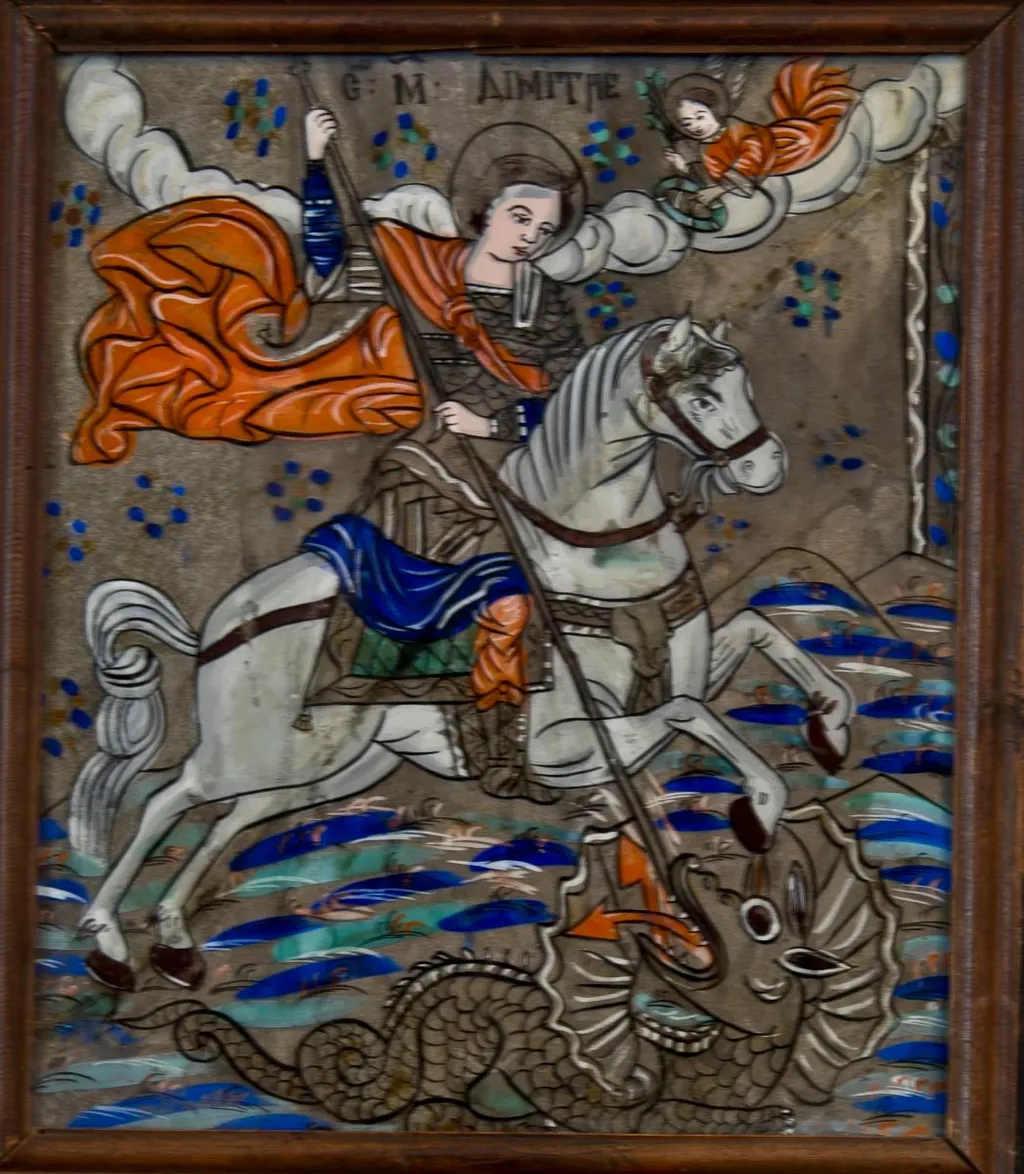
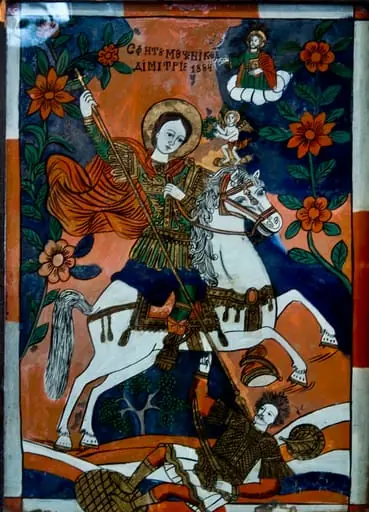
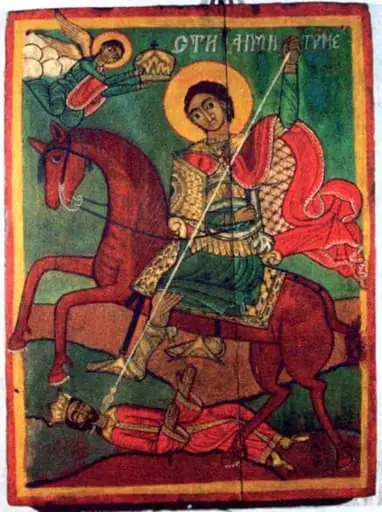
Sf. Mare Mucenic Dimitrie is a drawing by Unknown. It dates from 1850 and is held in the collection of the National Museum of Art of Romania. This painted image depicts a saintly knight on horseback engaged in combat with a dragon.
About this work
Overview
The scene is rendered in vivid, flat colors with minimal depth, evoking the visual language of devotional icons rather than naturalistic painting.
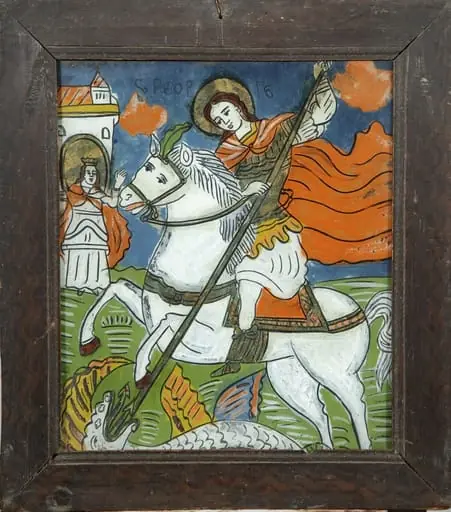
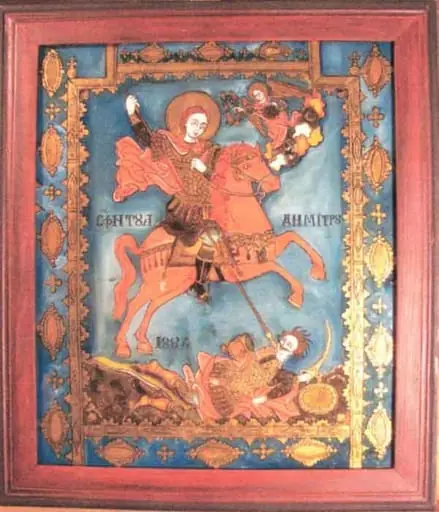
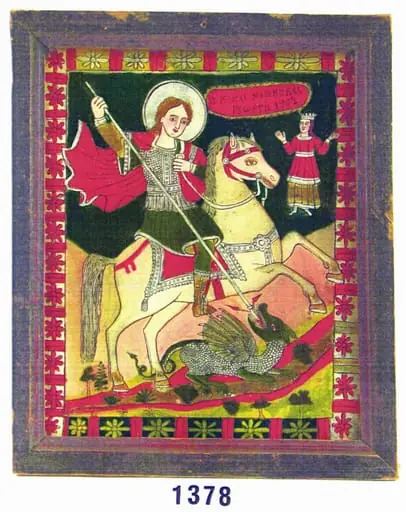
This painted image depicts a saintly knight on horseback engaged in combat with a dragon. The scene is rendered in vivid, flat colors with minimal depth, evoking the visual language of devotional icons rather than naturalistic painting. The composition centers on the knight’s confrontation with the beast, framed by celestial figures above and turbulent terrain below, suggesting a spiritual battle made visible.
Subject & Meaning
The figure on horseback represents Saint Demetrius, a Christian martyr and military saint often shown triumphing over evil. The dragon symbolizes sin or demonic forces, while the winged figure above may be an angelic messenger or divine presence. The hovering small angel reinforces the sacred nature of the struggle, framing the knight’s act as divinely sanctioned rather than merely martial.
Technique & Style
The painting employs bold, unmodulated colors and simplified forms, avoiding chiaroscuro or perspective to emphasize symbolic clarity. The knight’s metallic armor and the dragon’s scaled hide are rendered with sharp contrasts, while the angel’s robes flow in soft, flame-like folds. The flatness and decorative quality align with Byzantine and folk icon traditions, prioritizing spiritual narrative over realism.
History & Provenance
The work originates from a regional Orthodox Christian tradition, likely created in the Balkans during the 18th or early 19th century. Such images were commonly commissioned for churches or private devotion, serving as visual prayers for protection. Its style reflects local artisan practices, blending ecclesiastical iconography with folk motifs passed through generations of painters.
Context
Equestrian saints like Demetrius were popular in Orthodox communities as protectors against invasion and spiritual corruption. The dragon-slaying motif, drawn from apocryphal legends and biblical symbolism, reinforced the idea of divine victory over chaos. This image would have been displayed in a church or home, offering the faithful a tangible representation of heavenly aid in daily trials.
Legacy
The painting preserves a regional variant of a widespread hagiographic theme, illustrating how local artists adapted canonical subjects to their visual customs. While not part of major art movements, such works remain vital to understanding popular religious expression in Eastern Europe. They continue to be studied as cultural artifacts that bridge liturgical function and folk aesthetics.
Artist & collection

 Domestic Scene
 Giacomo and Cardinal Marco, investing Andrea, Abbot of San Zeno, with his Benefice
 The Nymph of Fontainebleau
 Portrait of a Woman
 Madonna and Child with Saints in the Enclosed Garden
 Venus and Minerva
 Family Group of Four on Sofa
 Wall painting from Room H of the Villa of P. Fannius Synistor at Boscoreale