Artwork
Sf. Mare Mucenic Gheorghe
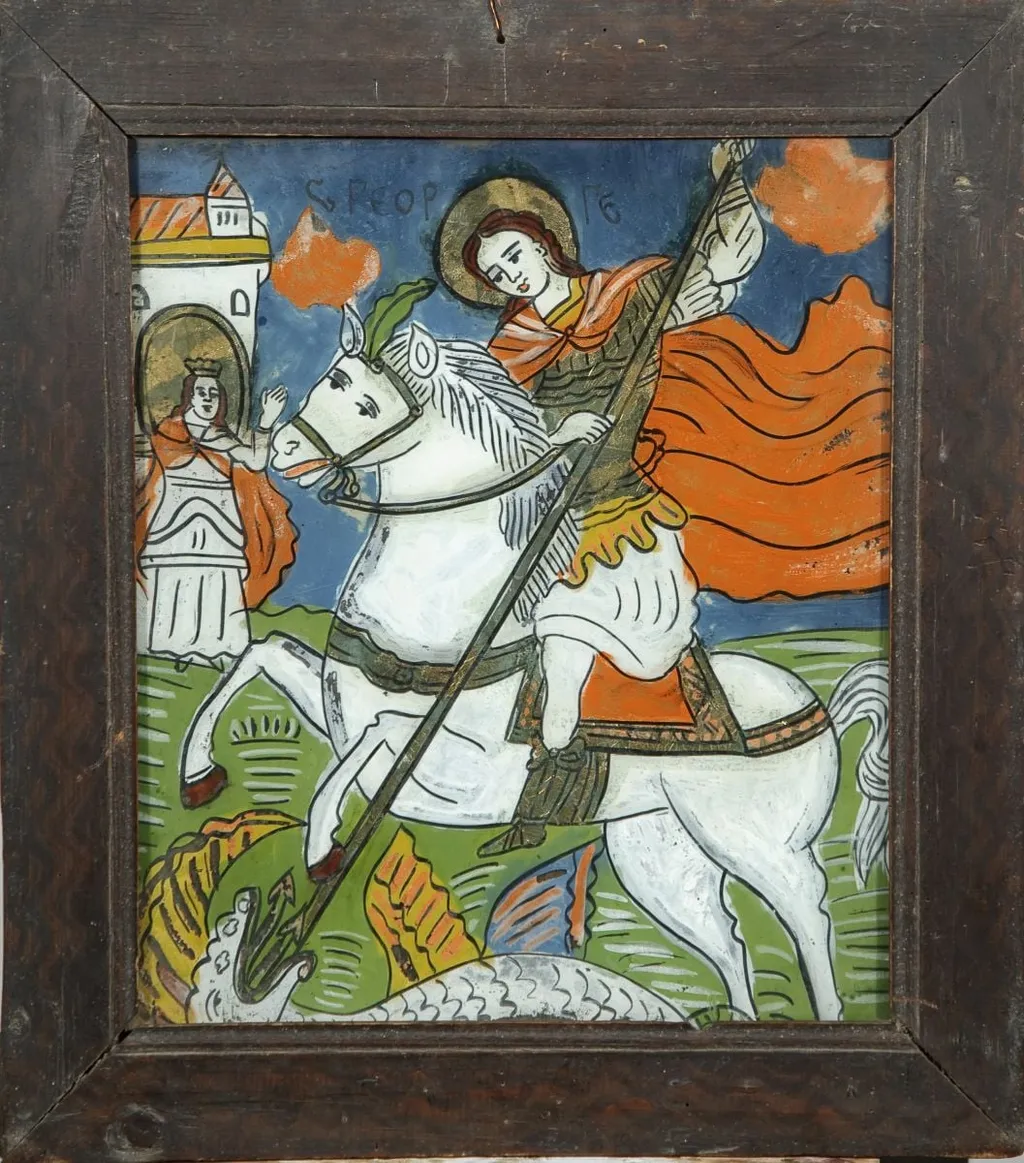
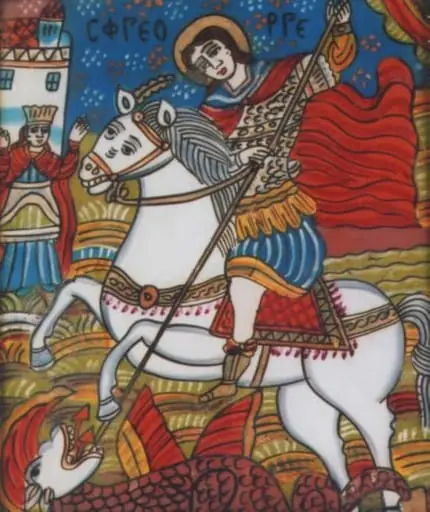
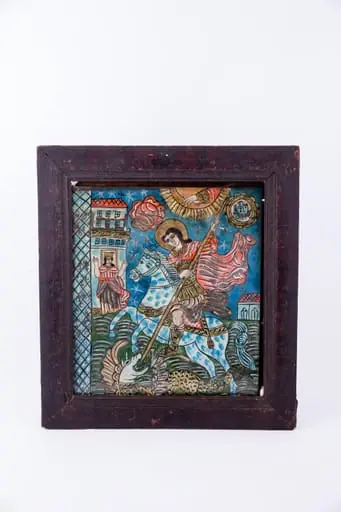
Sf. Mare Mucenic Gheorghe is a drawing by Unknown. It dates from 1850 and is held in the collection of the National Museum of Art of Romania. This image depicts Saint George the Martyr on horseback, armed with a spear, against a stylized landscape.
About this work
Overview
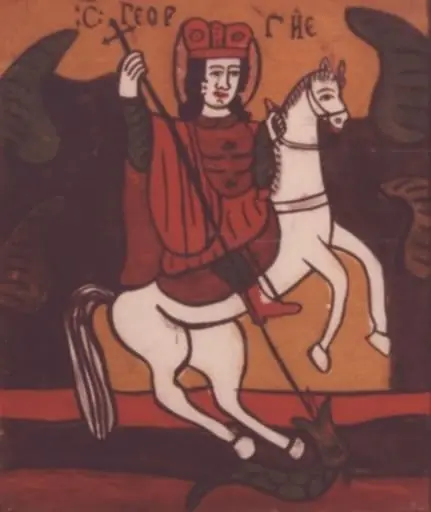
This image depicts Saint George the Martyr on horseback, armed with a spear, against a stylized landscape. The composition is simplified, with minimal depth and no shading, emphasizing symbolic presence over naturalism. The bright, unmodulated colors and linear forms suggest a connection to folk or devotional traditions rather than academic painting techniques.
Subject & Meaning
The figure represents Saint George, a Christian martyr often portrayed as a warrior-saint. His halo and white horse align with traditional iconography of divine protection and purity. The figure’s poised stance suggests readiness for spiritual combat, while the distant figure waving near a tower may symbolize a supplicant or witness, reinforcing the saint’s role as intercessor.
Technique & Style
The painting employs flat, unshaded color fields and rudimentary line work to define form. Musculature and drapery are rendered with minimal detail, resembling schematic drawings. The green saddle and orange clouds contrast sharply with the blue sky, creating a decorative rather than illusionistic space. The style reflects a non-Westernized, possibly regional or popular artistic approach.
History & Provenance
The work’s origin is undocumented, but its visual language aligns with devotional images produced in Eastern European or Balkan communities during the 18th or 19th centuries. Such images were often created by itinerant painters for local churches or homes, prioritizing symbolic clarity over technical refinement. Its survival suggests continued local veneration.
Context
In regions where literacy was limited, visual saints’ images served as aids to devotion and moral instruction. Saint George, as a protector against evil, was especially popular in rural Orthodox communities. This painting’s simplicity reflects a tradition where imagery functioned as a spiritual tool rather than an artistic statement.
Legacy
This image contributes to a broader corpus of folk religious art that preserved saintly iconography outside formal ecclesiastical channels. Its stylistic traits—flat color, linear economy, symbolic composition—continue to inform contemporary folk art and regional revival movements, offering insight into how sacred narratives were adapted locally.
Artist & collection

 Domestic Scene
 Giacomo and Cardinal Marco, investing Andrea, Abbot of San Zeno, with his Benefice
 The Nymph of Fontainebleau
 Portrait of a Woman
 Madonna and Child with Saints in the Enclosed Garden
 Venus and Minerva
 Family Group of Four on Sofa
 Wall painting from Room H of the Villa of P. Fannius Synistor at Boscoreale
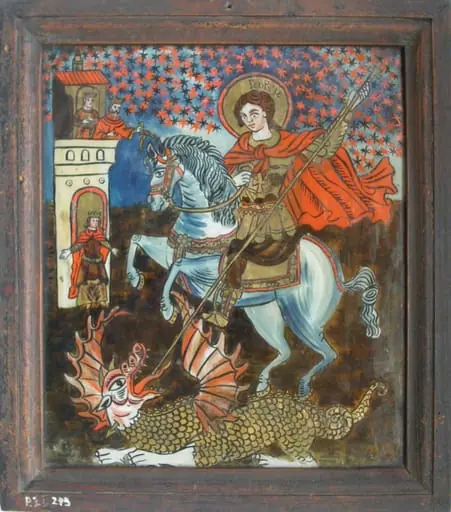 Sf. Gheorghe, ucigând balaurul
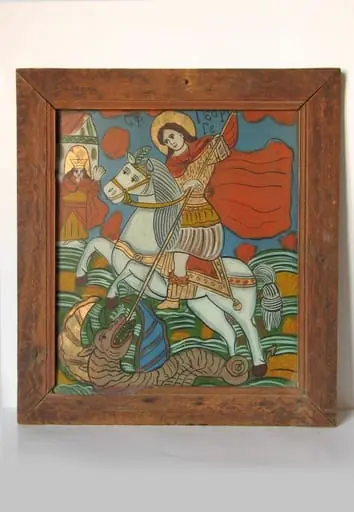 Sfântul Mare Mucenic Gheorghe Purtător de Biruință
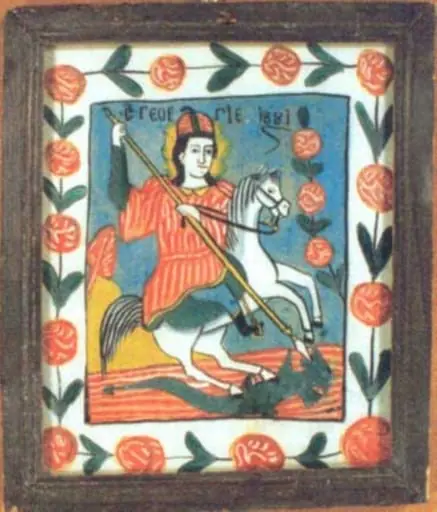 Sfântul Gheorghe
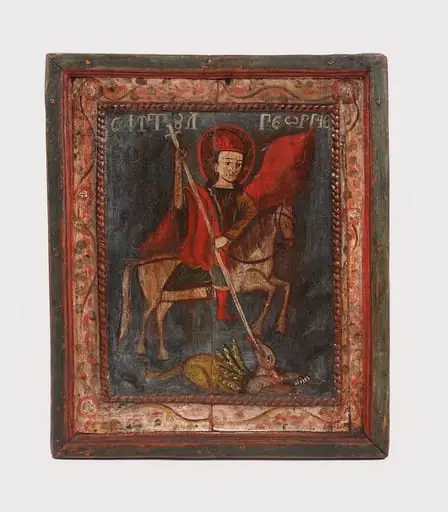 Sf. Gheorghe omorând balaurul
 Sfântul Gheorghe
 Sfântul Mare Mucenic Gheorghe
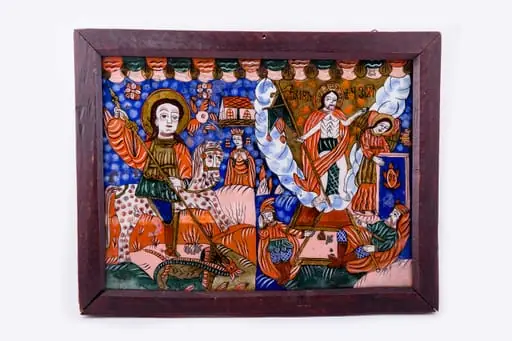 Sfânmati
 Sfân
Sfân Sfantul Gheorghe
 Sfântul Mare Mucenic Gheorghe
 Sfântul Mare Mucenic Gheorghe
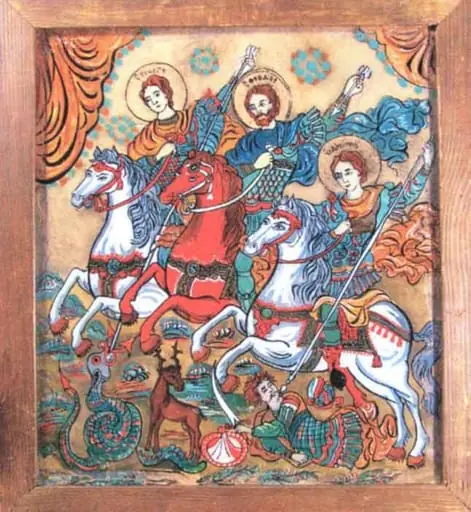 Sfinții Militari Gheorghe, Theodor - Tiron și Dimitrie