Artwork
Sfântul Mare Mucenic Gheorghe
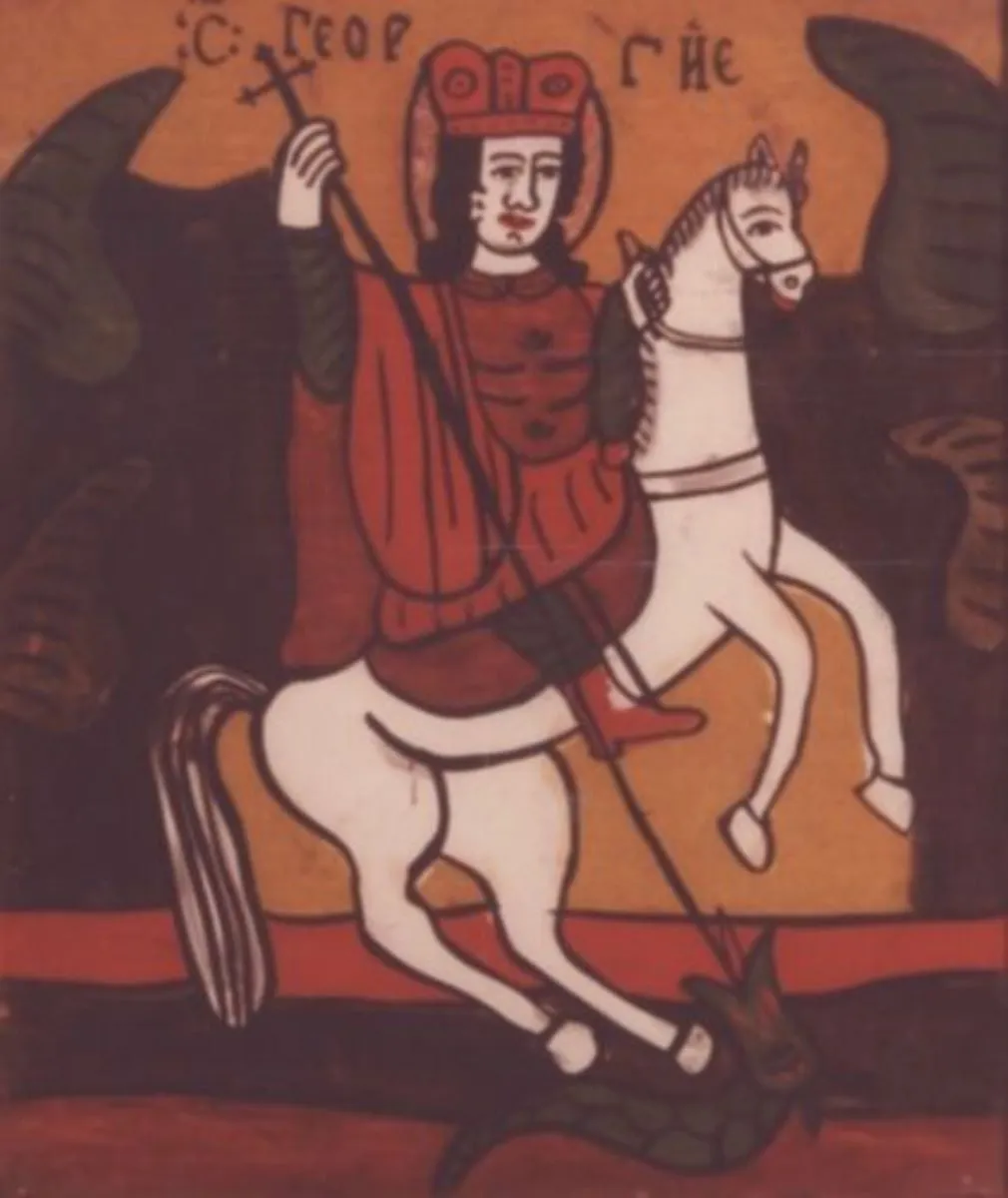
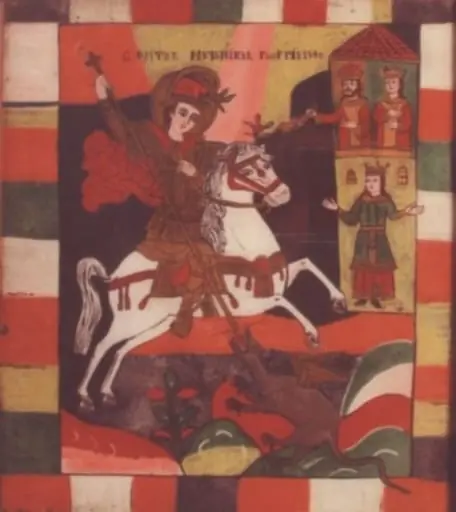
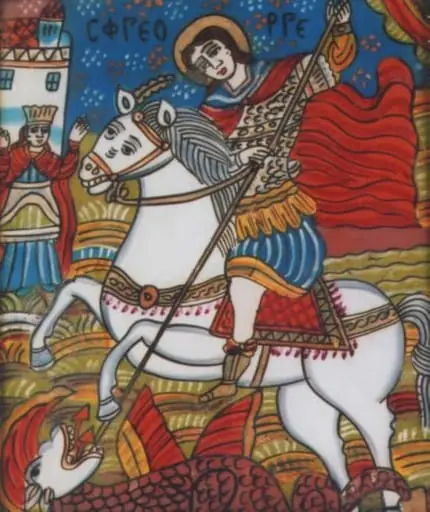
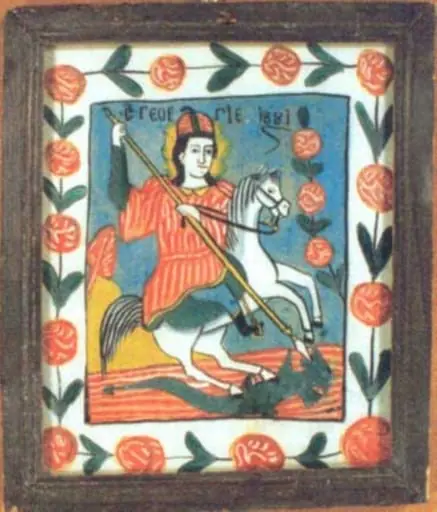
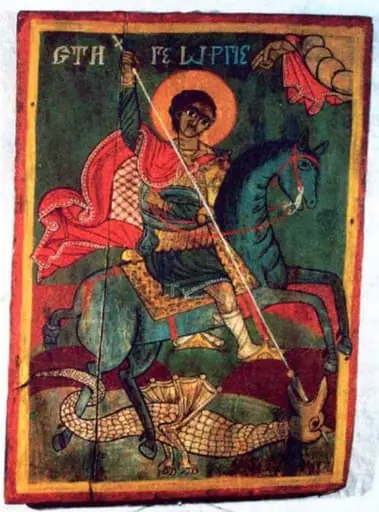
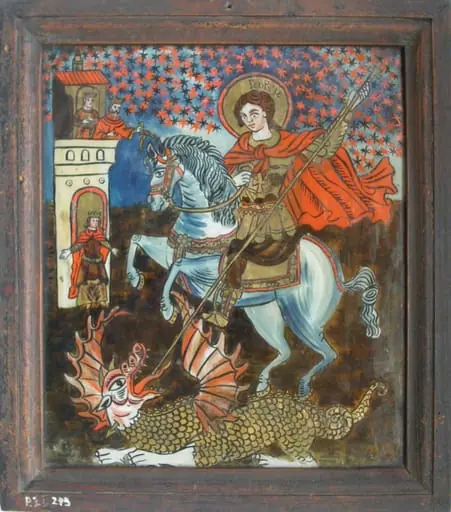
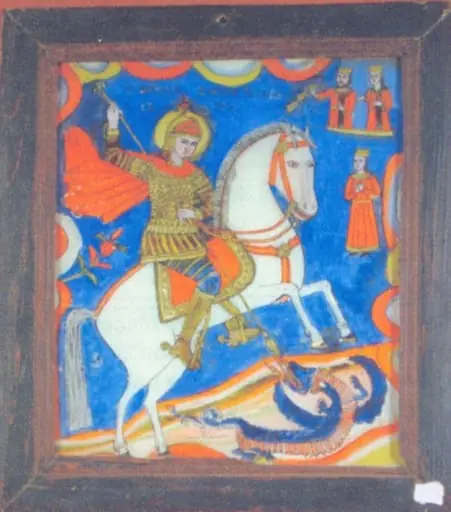
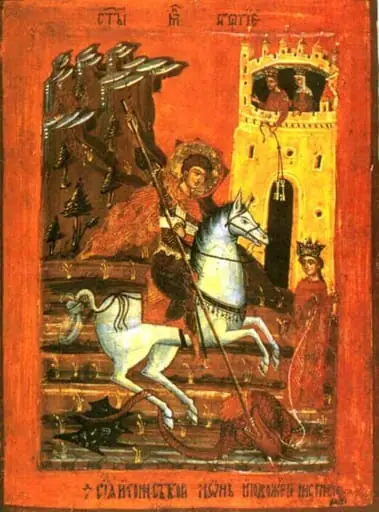
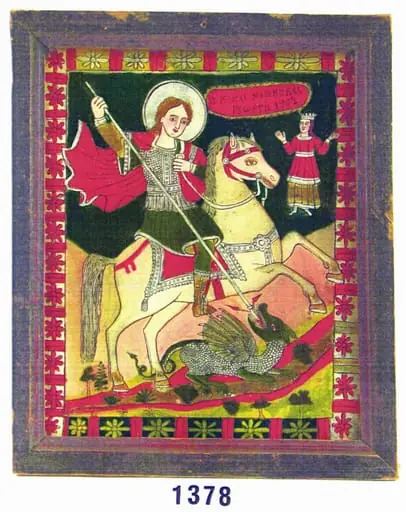
Sfântul Mare Mucenic Gheorghe is a drawing by Unknown. It dates from 1850 and is held in the collection of the Ethnographical Museum of Transylvania. This drawing depicts Saint George, a Christian martyr and military saint, shown as a mounted figure in a stylized, symbolic manner.
About this work
Overview
Rendered in black ink on a red ground with a dark background, the composition emphasizes simplicity and spiritual presence over naturalism.
This drawing depicts Saint George, a Christian martyr and military saint, shown as a mounted figure in a stylized, symbolic manner. Rendered in black ink on a red ground with a dark background, the composition emphasizes simplicity and spiritual presence over naturalism. The figure and horse are outlined with clean, unshaded lines, suggesting a devotional or liturgical function rather than a decorative one.
Subject & Meaning
The rider represents Saint George, traditionally venerated as a warrior saint who defeated evil, often symbolized by a dragon. Here, the absence of the dragon shifts focus to his authority and faith. The crown and raised cross signify his divine mandate and martyrdom. The floating shapes above may denote spiritual forces or celestial approval, reinforcing his role as an intercessor between heaven and earth.
Technique & Style
The image employs minimal line work and flat color areas, avoiding shading or perspective. The cross is stylized as a Greek cross with a circular termination, a common Byzantine motif. The face is simplified, with large, serene eyes conveying inner stillness. The red ground and dark background create a stark, otherworldly space, typical of medieval iconographic traditions that prioritize symbolic meaning over physical realism.
History & Provenance
The drawing likely originates from a religious manuscript or devotional panel in the Eastern Orthodox tradition, possibly from the Balkans or Anatolia during the late medieval period. Its schematic style aligns with liturgical illustrations used in monastic settings. No documented provenance is available, but its iconographic elements suggest it was produced for private or communal veneration rather than public display.
Context
Saint George was widely revered across Christian communities, especially in regions under Byzantine influence. His image as a mounted knight symbolized divine protection and moral courage. In Orthodox liturgy, he was invoked for victory over adversity. This drawing reflects a localized, simplified version of a broader iconographic tradition, adapted for accessibility in devotional practice among non-elite populations.
Legacy
Though not attributed to a known artist, the drawing preserves a vernacular expression of Orthodox saint veneration. Its enduring visual language—flat planes, symbolic color, and hieratic posture—continues to inform folk religious art in Eastern Europe. It stands as a quiet testament to the persistence of medieval iconographic principles in everyday spiritual life, long after the rise of Renaissance naturalism.
Artist & collection
Museum
Ethnographical Museum of Transylvania
Continue through works from the same source collection.
 Domestic Scene
 Giacomo and Cardinal Marco, investing Andrea, Abbot of San Zeno, with his Benefice
 The Nymph of Fontainebleau
 Portrait of a Woman
 Madonna and Child with Saints in the Enclosed Garden
 Venus and Minerva
 Family Group of Four on Sofa
 Wall painting from Room H of the Villa of P. Fannius Synistor at Boscoreale