Artwork
Sf. Maria Magdalena
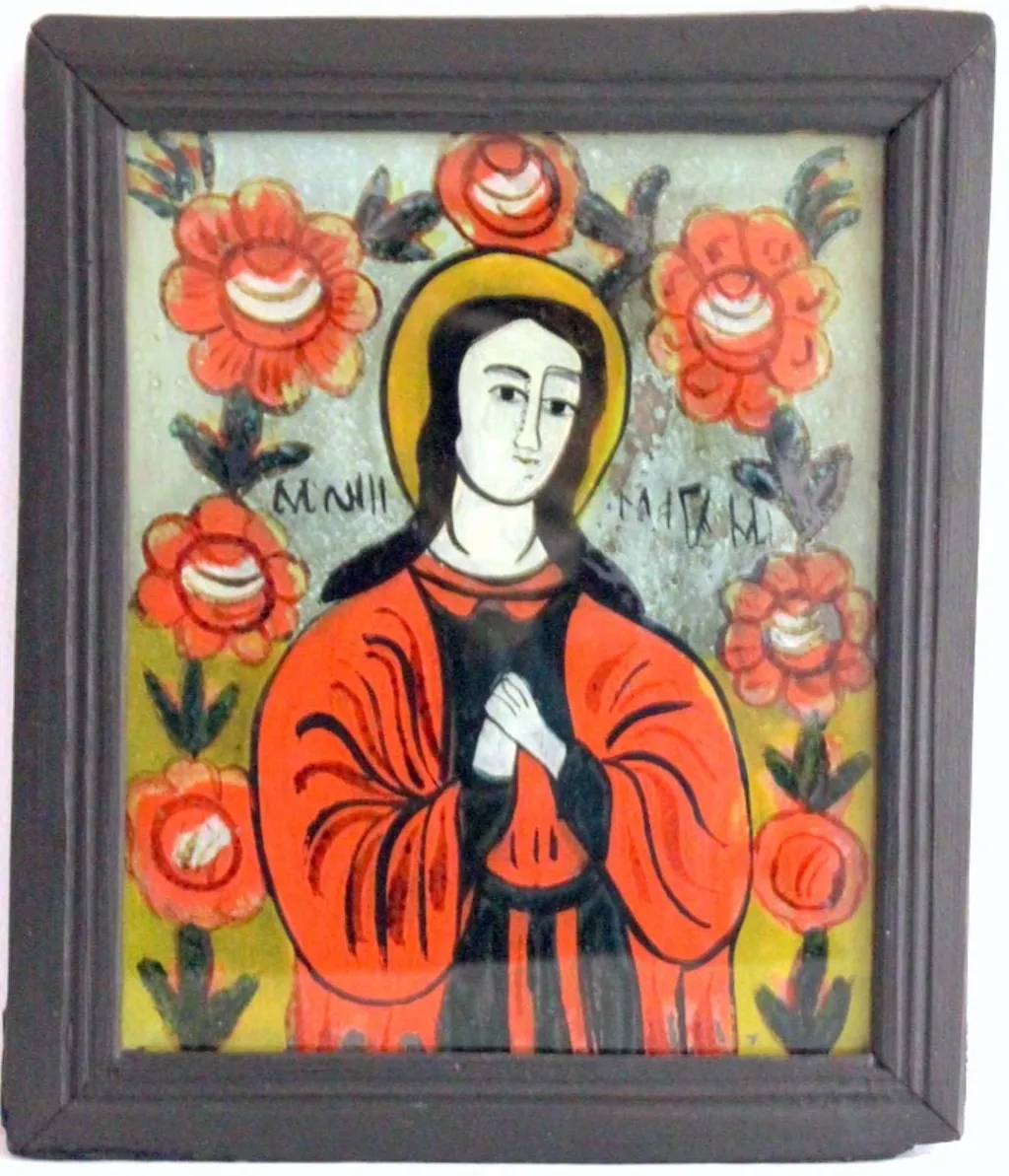
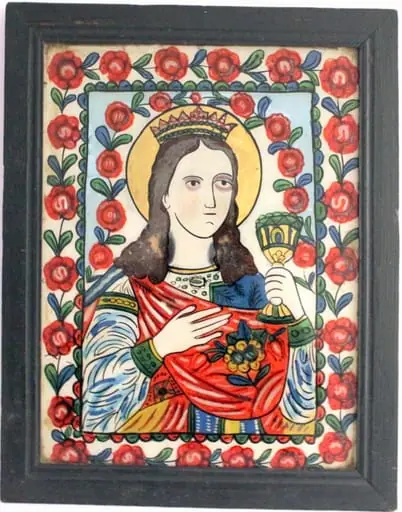
Sf. Maria Magdalena is a drawing by Unknown. It dates from 1850 and is held in the collection of the "Dimitrie Gusti" National Village Museum. This drawing depicts Saint Mary Magdalene in a stylized, non-naturalistic manner.
About this work
Overview
This drawing depicts Saint Mary Magdalene in a stylized, non-naturalistic manner. The figure is centered, haloed, and shown with hands clasped in quiet devotion. The composition lacks depth or perspective, relying instead on flat areas of bold color. Ornamental flowers frame the figure, and the background suggests a simplified garden setting without detailed spatial cues.
Subject & Meaning
The figure is identified as Saint Mary Magdalene, a biblical figure often associated with repentance and devotion. Her serene expression and folded hands convey contemplation, while the golden halo marks her sanctity. The red robe, traditionally linked to her role as a witness to Christ’s resurrection, contrasts with the dark stripes, emphasizing her spiritual presence amid natural symbolism.
Technique & Style
The style prioritizes symbolic clarity over realism, aligning with traditions that favor spiritual representation over naturalistic detail.
The drawing employs flat, unmodulated colors with no shading or modeling to suggest volume. Outlines are clear and deliberate, and forms are reduced to essential shapes. The absence of cross-hatching or texture reinforces a decorative, almost icon-like quality. The style prioritizes symbolic clarity over realism, aligning with traditions that favor spiritual representation over naturalistic detail.
History & Provenance
The origin of this work is undocumented, with no known artist, date, or prior ownership recorded. Its simple format and lack of inscription beyond the subject’s name suggest it may have been a devotional sketch or study, possibly created for private use rather than public display. The materials and execution hint at a regional or folk tradition rather than a major artistic center.
Context
This image reflects a devotional visual culture common in pre-modern religious art, where figures were rendered for veneration rather than illusion. The use of symbolic color and flattened space parallels illuminated manuscripts and folk icons from various European traditions. The inclusion of flowers may reference resurrection themes, aligning with liturgical practices surrounding Mary Magdalene’s feast day.
Legacy
Though not part of a well-known artistic lineage, this drawing exemplifies how religious subjects were interpreted in modest, non-academic settings. Its stylistic choices—flat color, symbolic flora, and frontal pose—echo enduring patterns in vernacular sacred art. It remains a quiet testament to personal piety expressed through accessible visual forms.
Artist & collection
Museum
"Dimitrie Gusti" National Village Museum
Continue through works from the same source collection.
 Domestic Scene
 Giacomo and Cardinal Marco, investing Andrea, Abbot of San Zeno, with his Benefice
 The Nymph of Fontainebleau
 Portrait of a Woman
 Madonna and Child with Saints in the Enclosed Garden
 Venus and Minerva
 Family Group of Four on Sofa
 Wall painting from Room H of the Villa of P. Fannius Synistor at Boscoreale