Artwork
Sfân
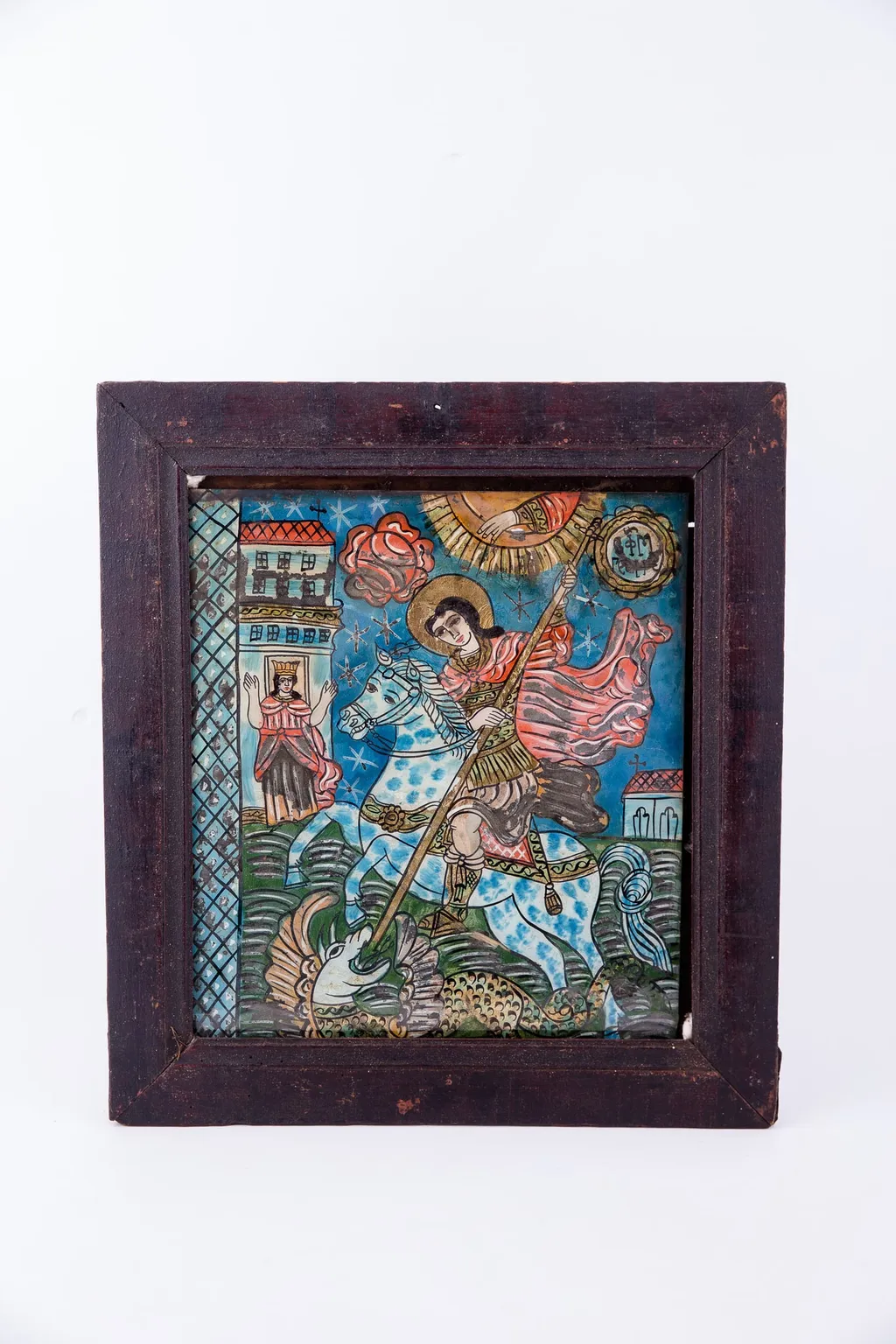
Sfân is a drawing by Unknown. It dates from 1850 and is held in the collection of the ASTRA National Museum Complex. This artwork portrays a mounted saint in dynamic motion, armed with a spear and shield.
About this work
Overview
The figure is clad in a red robe and crowned with a gold halo, while the horse is rendered in white with blue spotting.
This artwork portrays a mounted saint in dynamic motion, armed with a spear and shield. The figure is clad in a red robe and crowned with a gold halo, while the horse is rendered in white with blue spotting. A distant structure with a red roof and a figure in red attire appear in the background. The composition emphasizes movement through bold color contrasts and directional lines, suggesting imminent action.
Subject & Meaning
The saint is likely a military or crusading figure, common in medieval religious iconography. The spear and shield imply divine protection or holy warfare, while the halo signifies sanctity. The presence of a building and another figure may represent earthly authority or witness to the saint’s divine mission. The imagery aligns with traditions that equate spiritual strength with martial virtue.
Technique & Style
Color is used strategically to create spatial depth and visual rhythm: red dominates the foreground, blue accents the horse, and gold defines the halo. The brushwork suggests a deliberate contrast between solid forms and atmospheric background elements. Though cross-hatching is mentioned, the description does not confirm its use; instead, flat planes of color and clear outlines dominate the style.
History & Provenance
No specific artist, date, or origin is provided. The stylistic elements—halo, heraldic colors, and mounted saint—suggest a late medieval or early Renaissance devotional panel, possibly from Southern Europe. Its provenance remains undocumented, but similar imagery appears in altarpieces from the 13th to 15th centuries intended for private or ecclesiastical veneration.
Context
Depictions of saintly warriors were common in Christian art during periods of crusading fervor and religious conflict. Such images served both devotional and didactic purposes, reinforcing ideals of faith, courage, and divine intervention. The inclusion of a distant figure and architecture situates the saint within a broader sacred narrative, linking heavenly action to earthly realms.
Legacy
While the work lacks a documented influence on later artists, its visual language reflects enduring conventions in religious iconography. The fusion of martial imagery with spiritual symbolism persisted in European art for centuries, shaping how sanctity was visually associated with authority and action. This piece stands as a modest example of a widespread devotional type.
Artist & collection

 Domestic Scene
 Giacomo and Cardinal Marco, investing Andrea, Abbot of San Zeno, with his Benefice
 The Nymph of Fontainebleau
 Portrait of a Woman
 Madonna and Child with Saints in the Enclosed Garden
 Venus and Minerva
 Family Group of Four on Sofa
 Wall painting from Room H of the Villa of P. Fannius Synistor at Boscoreale
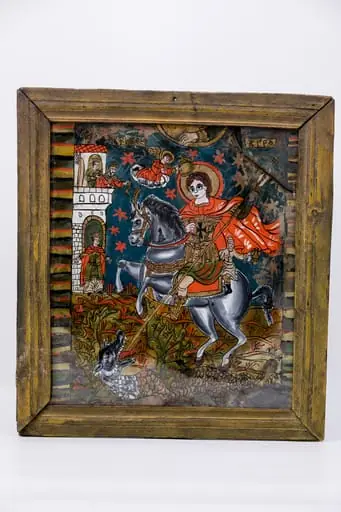 Sfântul Mare Mucenic Gheorghe este așezat călare pe un cal alb-gri, cu elemente de harnașament bronzii și șa roșie, omorând balaurul gri-gaben-verde cu creastă, solzi și coadă lungă, cu lancea, pe care o ține cu amândouă mâinile, înfingându-i-o animalului în gâtlej. În partea dreaptă a Sfântului Gheorghe, în registrul îndepărtat, este pictată domnița salvată și ocrotită de marele mucenic, cu mâinile ridicate, atât de teamă și spaimă, cât și de mulțumire către sfântul purtător de biruință. În registrul superior este Dumnezeu-Tatăl Binecuvântând cu mâna dintr-o deschidere a Cerurilor și un înger serafim care aduce Sfântului Gheorghe cununa de mucenic. În balconul castelului sunt două personaje cu cheile turnului în mână și pe șaua calului, în spatele Sfântului Mare Mucenic Gheorghe este un personaj foarte mic, îmbrăcat în haine arăbești, având în mână o candelă-amforă-cădelniță. Fondul icoanei este cerul albastru-gri-întunecat cu elemente astrale, stele roșii și câmpuri brune-kaki cu elemente vegetale roșii vermillon, în registrul inferior. Mantia Sfântulu Mucenic Purtător de Biruință este roșie-fluturândă având cămașa de cavaler cu zale și o cruce neagră de cavaler pe piept. Culoarea roșie este caracteristică mucenicilor și martirilor. Atât în dreapta, cât și în stânga sunt elemente de arhitectură, astfel spațializându-se narațiunea iconografică. Cromatica este armonioasă; roșu vermillon, albastru-gri întunecat, galben-ocru, verde văratic, verde brad, kaki, bronziu, alb și negru. Inscripția din româno-chirilică se traduce Sfântul Gheorghe. Icoana este din Țara Oltului. Icoana este mai rară, datorită diversității personajelor.
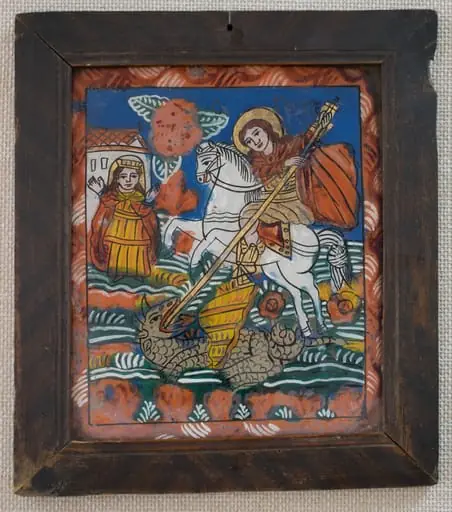 Icoana îl reprezintă pe sfântul Gheorghe omorând balaurul. Sfântul, călare pe cal alb, plasat central. Veșmintele sunt asemănătoare celor ale soldaților chezaro-crăiești, cizme înalte, tunică scurtă, zale, mantie roșie fluturând în vânt. Are capul descoperit, plete lungi, castanii, ochi mari, gura roșie, trăsăturile bine definite, expresive. În mână ține o suliță lungă, cruciformormă,aurită, cu care omoară balaurul înaripat, căzut la pământ, scoțînd limbi ascuțite. Calul este alb, capul mic, coada înnodată. Relieful este realizat prin linii albe) și vrâste de culoare(verde, galben,roșu), marcate cu motive fitomorfe. Câmp albastru închis, înviorat de o floare roșie cu frunze delimitate de nervuri albe. În partea stângă, în plan îndepărtat, în fața palatului sugerat printr-o clădire simplă,albă, înaltă, cu acoperiș de olane roșii, se află fata de împărat pe care o salvează sfântul conform legendei. Întreaga compoziție este încadrată de un chenar rectangular de culoare roșie, traversat longitudinal de o linie spiralată ale cărei meandre sunt însoțite de blicuri albe și verzui. Desenul complicat, tușa groasă, culorile intense, asemănător vitraliilor. Umplerea cu culoare neglijentă indică o producție de serie. Rama din lemn de brad este vopsită în cafeniu închis și decorată cu u motiv în formă de V Dosul este realizat din două scândurele de brad dispuse orizontal.
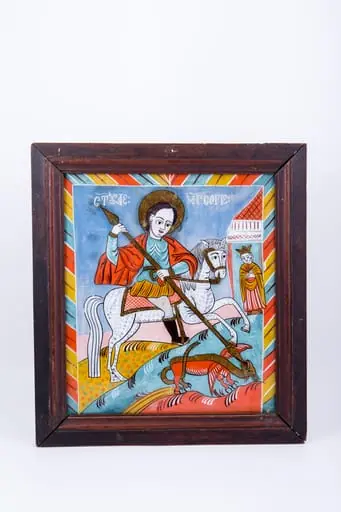 Sfântul Mare Mucenic Gheorghe este așezat călare pe un cal alb cu pete albastre gri, omorând balaurul roșu-bronziu cu creastă, solzi și coadă lungă, cu lancea, pe care o ține cu amândouă mâinile, înfingându-i-o animalului în gâtlej. În partea stângă a Sfântului Gheorghe, în registrul îndepărtat, este pictată domnița salvată și ocrotită de marele mucenic, cu mâinile mulțumindu-i cu sfială și recunoștință sfântului purtător de biruință. Fondul este albastru. În registrul inferior, fondul este verde, cu linii ondulatorii albe, cele două registre în centrul icoanei ușor întrepătrundu-se. Mantia Sfântului Mucenic Purtător de Biruință este roșie, având cămașa de cavaler cu zale. Culoarea roșie este caracteristică mucenicilor și martirilor. Chenarul decorativ geometrizant cu tușe-benzi paralele, oblice, alternative roșii, albastre și ocru încadrează armonios întreaga tematică iconografică. Cromatica este armonioasă; roșu vermillon, roz, albastru-gri, ocru, verde, bronziu, alb și negru. Inscripția din româno-chirilică se traduce Sfântul Gheorghe. Icoana este rafinată prin acuratețea desenului, compoziția echilibrată și armonia cromatică.
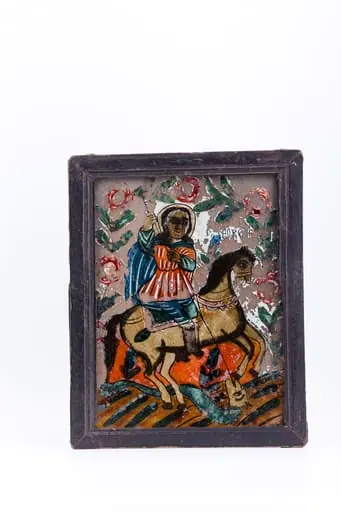 Sfântul Mare Mucenic Gheorghe este așezat călare pe un cal brun-maro-cafeniu, omorând balaurul cu solzi de bronz gri-pământiu cu lancea, pe care o ține cu amândouă mâinile. Balaurul este pictat cu brun-pământiu, având solzi bronzii. Fondul este albastru ceruleum și cobalt, în registrul superior cu elemente decorative fitomorfe, formate din ruje roșii, în cel inferior fiind câmpuri paralele de maro, brun, cafeniu-negru, în centrul icoanei ușor întrepătrundu-se toate culorile. Mantia Sfântului Mucenic Purtător de Biruință este albastră regal, fluturândă, având pantalonii albaștri și cămașa de cavaler, tunica roșie. În registrul superior, icoana este încadrată de o ghirlandă decorativă, formată din 4 ruje - trandafiri roșii, cu frunze verzi. Cromatica este armonioasă, formată fiind din roșu vermillon, albastru cobalt, verde brad, maro, brun, gri, alb și negru. Inscripția din româno-chirilică se traduce Sf Gheorghe. Icoana este deteriorată, fiind absențe cromatice.
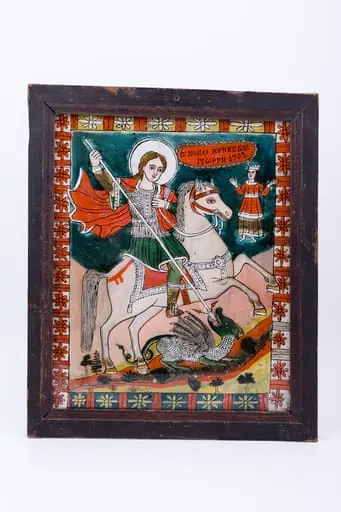 Sfântul Mare Mucenic Gheorghe este așezat călare pe un cal alb, omorând balaurul brun cu lancea, pe care o ține în amândouă mâinile. Balaurul este pictat cu brun-nisipiu, având solzi și coarne. În partea stângă a Sfântului Gheorghe este pictată domnița salvată și ocrotită de marele mucenic. Fondul este turcoaz, în registrul superior și roz- verde-ocru în cel inferior, în centrul icoanei ușor întrepătrundu-se toate culorile. Mantia Sfântului Mucenic Purtător de Biruință este roșie, având pantalonii albi și cămașa de zale de cavaler gri. Cromatica este armonioasă; roșu vermillon, roz, turcoaz, ocru, galben, alb și negru. Inscripția din româno-chirilică se traduce Sf Mare Mucenic Gheorghe. Icoana este rafinată prin acuratețea desenului, compoziția echilibrată și armonia cromatică, Icoana este datată 1902. Icoana este pictată de Matei Țimforea, din Cârțișoara, Țara Făgărașului.
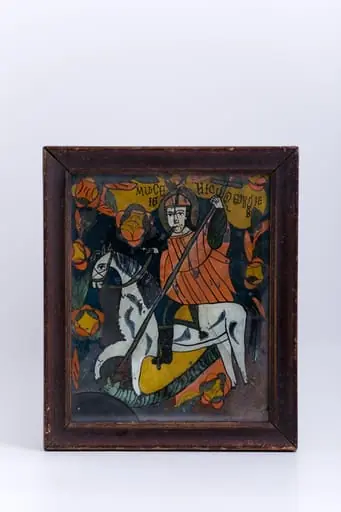 Sfântul Mare Mucenic Gheorghe este așezat călare pe un cal alb acoperit cu elemente de harnașament galbene și verzi și omorând balaurul cu lancea bronzie, pe care o ține în mâna stângă. Balaurul este pictat cu verde smarald-gri și kaki și gri cenușiu-antracit verzui și având corp de reptilă, cu coadă de diavol. Fondul icoanei este cerul albastru ultramarin-bleumarin și galben-chihlimbar în exterior și în cel inferior, în centrul icoanei ușor întrepătrundu-se toate culorile. Tunica Sfântului Mucenic Purtător de Biruință este roșie-vermillon-orange, având pantalonii albaștri-ultramarin. În registrul superior, icoana este încadrată de un chenar decorativ, format dintr-o ghirlandă de 8 ruje orang-galben. Cromatica este armonioasă: roșu vermillon, orange, albastru-regal, cobalt și ceruleum, ocru, galben chihlimbar, verde kaki și smarald, gri antracit, alb și negru. Inscripția din româno-chirilică se traduce Mucenicu Gheorghe. Icoana este din Nordul Transilvaniei, Nicula.
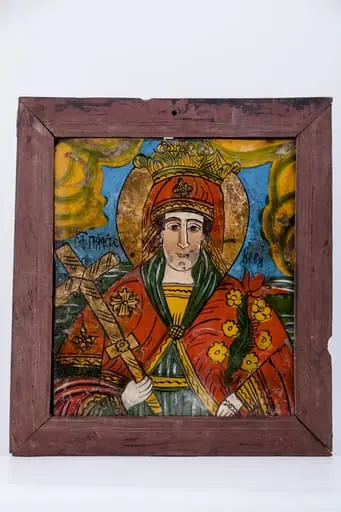 Sfânta Mare Cuvioasă Parascheva de la Iași are crucea în mâna dreaptă și ramură înflorită, cu 6 flori galbene și una roșie în vârf în mâna stângă. Este îmbrăcată în veșmânt roșu vermillon, cu interiorul căptușit cu verde și galben. Peste maforionul roșu, sfânta cuvioasă are aureolă. Fondul icoanei este cerul albastru regal, cu o arcadă de lumină galbenă, în registrul superior și bronziu, în jurul chipului și aureolei Sfintei Paraschiva și o alternanță de câmpuri verzi, dispuse paralel, în registrul mediu și inferior. Este o icoană cu aer cald, tomnatic, de octombrie 14, Praznicul Sfintei Cuvioase Parascheva. Inscripția din româno-chirilică se traduce Sf Paraschiva. Cromatica este armonioasă: roșu vermillon, albastru regal, verde văratic și forest, brun-cafeniu, negru, galben chihlimbar, ocru, bronziu, gri, negru, alb. Icoana este din Țara Oltului.
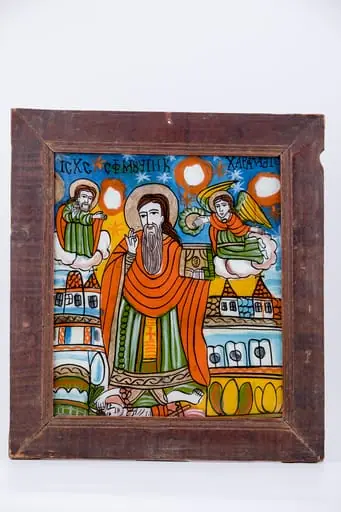 Sfântul Mare Mucenic Haralambie, făcător-de-minuni, este cel mai bătrân mucenic din cei prăznuiți de creștini. Este cunoscut ca și făcător-de-minuni, vindecător de boli și ocrotitor al caselor familiilor creștine. Central este pictat Sfântul, îmbrăcat cu veșminte liturgice, arhierești, cu sacos verde-văratic, felon roșu vermillon și epitrahil galben, cu o cruce mică orange, cu aureolă. Fiind foarte bătrân, are barbă albă, lungă sură și părul șaten-castaniu lăsat pe umeri. În mâna stângă are Sfânta Evanghelie închisă și cu mâna dreaptă Binecuvântează, și ține în lanț ciuma, reprezentată antropomorfic. Ciuma, simbolizând boala incurabilă și moartea, are secera în mână și coarne de diavol, fiind, totodată și păcatul, patima, aducătoare de moartea duhovnicească. În registrul superior, în dreapta este Dumnezeu-Tatăl Binecuvântând, de pe o mandorlă de nouri albi-crem și în stânga sfântului ierarh, este un înger îngenuncheat pe un nor, cu aripile galbene, care așează cununa de mucenicie pe capul Sfântului Haralambie. În registrul inferior, este o alternanță de câmpuri galbene-verzi cu elemente florale de câmp, iar în registrul mediu sunt elemente de arhitectură. Fondul icoanei este cerul albastru regal cu steluțe albe-roșii, astfel creându-se o simetrie compozițională. Cromatica este armonioasă: albastru regal, cobalt, roșu vermillon, galben chihlimbar, verde văratic, brun, bej, crem, alb, negru se întrepătrunde estetic cu detaliile minuțioase ale desenului. Inscripția din româno-chirilică se traduce IC XC Iisus Hristos Sf Mucenic Haralambie. Icoana este din Țara Oltului, Șcheii Brașovului.