Artwork
Sfânta Mare Cuvioasă Parascheva de la Iași are crucea brun-bronzie în mâna dreaptă, binecuvântând, și o ramură de finic în mâna stângă. Este îmbrăcată în veșmânt roșu vermillon, cu interiorul căptușit cu gri și brun-bronziu. Sacosul este alb-zinc cu danteluță și guleraș gri-verzui. Sfânta Cuvioasă are părul negru lung, lăsat pe umeri, coroană roșie cu gri-verzui și aureolă. Fondul icoanei este cerul albastru cobalt, acajou-stacojiu și alb. Întreaga compoziție iconografică este încadrată de un chenar decorativ fitomorf, format dintr-o ghirlandă formată din două frunze mari de finic, dispuse acoperitor asemenea unei arcade-bolți. Fondul de ansamblu al icoanei este alb-zinc, cu linii ondulatorii paralele gri-verzui. Inscripția din româno-chirilică se traduce Paraschiva. Cromatica este armonioasă: roșu vermillon, orange, albastru cobalt, acajou stacojiu, verde forest, gri-verzui, bej-crem, bronziu, negru, alb zinc. Icoana este din Nordul Transilvaniei, Nicula.
Sfânta Mare Cuvioasă Parascheva de la Iași are crucea brun-bronzie în mâna dreaptă, binecuvântând, și o ramură de finic în mâna stângă. Este îmbrăcată în veșmânt roșu vermillon, cu interiorul căptușit cu gri și brun-bronziu. Sacosul este alb-zinc cu danteluță și guleraș gri-verzui. Sfânta Cuvioasă are părul negru lung, lăsat pe umeri, coroană roșie cu gri-verzui și aureolă. Fondul icoanei este cerul albastru cobalt, acajou-stacojiu și alb. Întreaga compoziție iconografică este încadrată de un chenar decorativ fitomorf, format dintr-o ghirlandă formată din două frunze mari de finic, dispuse acoperitor asemenea unei arcade-bolți. Fondul de ansamblu al icoanei este alb-zinc, cu linii ondulatorii paralele gri-verzui. Inscripția din româno-chirilică se traduce Paraschiva. Cromatica este armonioasă: roșu vermillon, orange, albastru cobalt, acajou stacojiu, verde forest, gri-verzui, bej-crem, bronziu, negru, alb zinc. Icoana este din Nordul Transilvaniei, Nicula. is a drawing by Unknown. It dates from 1850 and is held in the collection of the ASTRA National Museum Complex. This wooden icon, originating from Nicula in northern Transylvania, depicts Saint Parascheva in a simplified, worn form.
About this work
Overview
The original painted surface has largely deteriorated, leaving only faint traces of pigment and a rough, weathered panel.
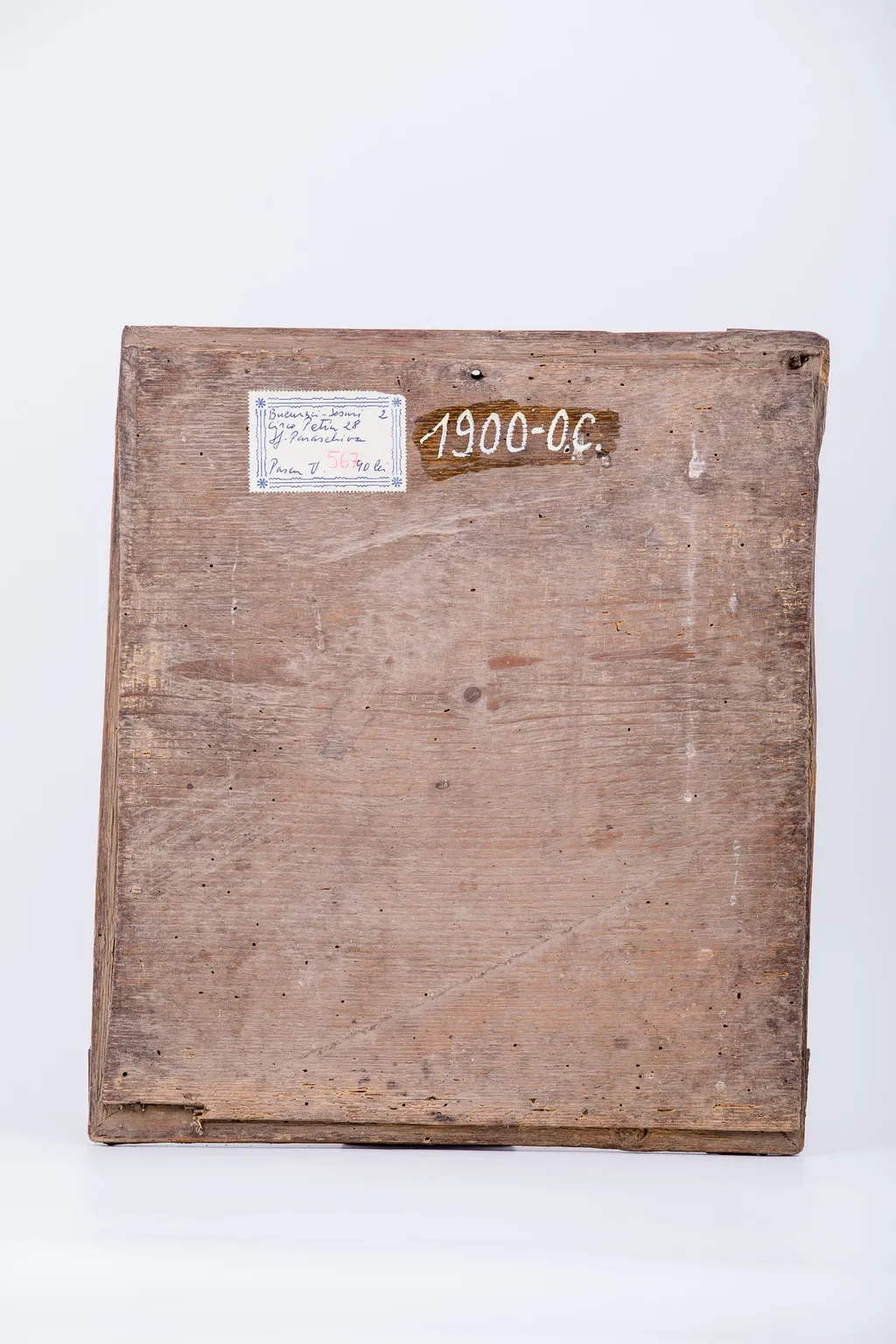
This wooden icon, originating from Nicula in northern Transylvania, depicts Saint Parascheva in a simplified, worn form. The original painted surface has largely deteriorated, leaving only faint traces of pigment and a rough, weathered panel. A small, aged label in the top left corner bears handwritten text and a stamp, suggesting it was once part of a devotional context, though its full provenance remains partially obscured by time.
Subject & Meaning
Saint Parascheva is shown holding a bronze cross in her right hand in a gesture of blessing, and a branch of holm oak in her left, symbolizing endurance and divine favor. Her dark hair falls loosely over her shoulders, and she wears a red vermilion robe with grayish-brown lining, signifying both royal dignity and ascetic humility. The presence of the branch and cross aligns with traditional hagiographic motifs linking her to martyrdom and spiritual authority.
Technique & Style
The icon was executed in tempera on wood, with a palette dominated by vermilion, cobalt blue, forest green, and metallic bronze tones. Though now faded, the original composition featured a structured, symmetrical arrangement framed by a stylized foliate border of two large holm oak leaves forming an arch. The background, once likely blue with gold highlights, now appears as a muted, uneven field of zinc white with faint gray-green undulating lines.
History & Provenance
Produced in the 18th or early 19th century in the Nicula region, the icon reflects local Transylvanian iconographic traditions with Byzantine influences. Its poor state of preservation suggests prolonged exposure to environmental or devotional wear. The surviving label, inscribed in Romanian Cyrillic with the name 'Paraschiva,' indicates its use in a domestic or parish setting before being cataloged or relocated in modern times.
Context
In the religious culture of northern Transylvania, icons like this served as focal points for private prayer and community veneration. The use of local materials and stylized forms, such as the holm oak branch and simplified aureole, reflects a regional adaptation of broader Orthodox iconography. The faded condition underscores the fragility of such objects, often subjected to repeated handling, smoke, and changing liturgical practices over centuries.
Legacy
Though now fragmented and diminished, the icon retains its role as a material witness to the persistence of Orthodox devotion in rural Transylvania. Its worn surface and surviving label offer insight into how devotional objects were maintained, labeled, and eventually displaced. As a relic of craftsmanship and faith, it contributes to the study of vernacular icon painting beyond major artistic centers.
Artist & collection

 Domestic Scene
 Giacomo and Cardinal Marco, investing Andrea, Abbot of San Zeno, with his Benefice
 The Nymph of Fontainebleau
 Portrait of a Woman
 Madonna and Child with Saints in the Enclosed Garden
 Venus and Minerva
 Family Group of Four on Sofa
 Wall painting from Room H of the Villa of P. Fannius Synistor at Boscoreale
 Sfânta Mare Cuvioasă Parascheva de la Iași are crucea cărămizie în mâna stângă, binecuvântând, și o ramură de finic verde, nuanța algelor în mâna dreaptă. Este îmbrăcată în veșmânt roșu vermillon-orange cu interiorul căptușit cu verde-smarald și franjuri brun-bronzii. Sacosul este alb-crem cu danteluță, guleraș și dungi albastre. Sfânta Cuvioasă are părul negru lung, lăsat pe umeri, coroană roșie cu verde-brad și aureolă brun-bronzie. Fondul icoanei este cerul albastru regal în registrul superior-mijloc și un câmp galben-chihlimbar, în registrul inferior. Întreaga compoziție iconografică este încadrată de un chenar decorativ fitomorf, format dintr-o ghirlandă de 4 ruje mari orange-cărămizii cu frunze verzi. Inscripția din româno-chirilică se traduce Paraschiva. Cromatica este armonioasă: roșu vermillon-orange, albastru cobalt-ceruleum, verde alge, mușchi de pădure, bej-crem, bronziu, galben-solar, negru, alb zinc. Icoana este din Nordul Transilvaniei, Nicula.
 Sfânta Mare Cuvioasă Parascheva de la Iași are crucea și o ramură de finic verde brad, în mâna dreaptă. Este îmbrăcată în veșmânt roșu vermillon, cu interiorul căptușit cu verde, vernil, crem și galben, cu sacosul alb ivoriu, cu dungi crem-bej. Sacosul este alb ivoriu crem-bej, cu danteluță și guleraș galben. Sfânta Cuvioasă are părul negru lung, ondulat, lăsat pe umeri, coroană roșie și aureolă. Fondul icoanei este cerul albastru-negru întunecat, în registrul superior și un câmp înalt luminos de grâu galben-copt, în registrul mediu și inferior, de culoare ocru-muștar. Întreaga compoziție iconografică este încadrată de un chenar decorativ geometrizant alb și unul paralel, fitomorf, format dintr-o ghirlandă de 6 ruje - margarete, cu petale roșii. Ghirlanda excelează prin delicatețea desenului și bogăția cromatică armonioasă. Cromatica este armonioasă: roșu vermillon, albastru-negru, verde forest, kaki, vernil-măr, olive, bej-crem, negru, galben chihlimbar, ocru, muștar, negru, alb. Icoana este din Nordul Transilvaniei, Nicula.
 Sfânta Mare Cuvioasă Parascheva de la Iași are crucea în mâna stângă și ramură de finic verde brad în mâna dreaptă. Este îmbrăcată în veșmânt roșu vermillon, cu interiorul căptușit cu verde forest-gri antracit, alb ivoriu și galben-solar. Sacosul este albastru cobalt cu dungi albe subțiri, cu danteluță și guleraș galben. Sfânta Cuvioasă are părul negru lung, lăsat pe umeri, coroană roșie-albastră și aureolă. Fondul icoanei este cerul albastru bleu-ciel înspre alburiu, în registrul superior și un câmp înalt luminos de grâu galben-copt, de nuanță chihlimbar închis, în registrul mediu și inferior. Întreaga compoziție iconografică este încadrată de un chenar decorativ fitomorf, format dintr-o ghirlandă de 4 ruje - trandafiri roșii și bujori roșii. Inscripția din româno-chirilică se traduce Paraschiva. Cromatica este armonioasă: roșu vermillon, albastru bleu-ciel, alburiu, cobalt, verde forest, bej-crem, negru, galben chihlimbar, ocru, muștar, negru, alb. Icoana este din Nordul Transilvaniei, Nicula.
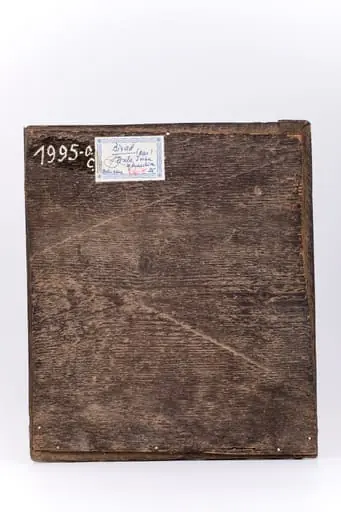 Sfânta Mare Cuvioasă Parascheva de la Iași are crucea brun-neagră în mâna dreaptă, binecuvântând, și o ramură de finic verde, nuanța algelor în mâna stângă. Este îmbrăcată în veșmânt roșu vermillon-orange cu interiorul căptușit cu verde-mușchi de pădure și franjuri brun-bronzii. Sacosul este alb-crem cu danteluță, guleraș și dungi. Sfânta Cuvioasă are părul negru lung, lăsat pe umeri, coroană roșie cu verde-brad și aureolă brun-bronzie. Fondul icoanei este cerul albastru cobalt în registrul superior-mijloc și un câmp alb-crem, ancadrator întregii compoziții. Întreaga compoziție iconografică este încadrată de un chenar decorativ fitomorf, format dintr-o ghirlandă de 5 ruje mari orange-cărămizii cu frunze verzi. Cromatica este armonioasă: roșu vermillon-orange, albastru cobalt-ceruleum, verde alge, mușchi de pădure, bej-crem, bronziu, galben-solar, negru, alb zinc. Icoana este din Nordul Transilvaniei, Nicula.
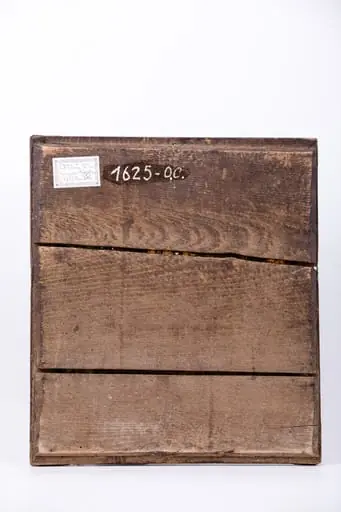 Sfânta Mare Cuvioasă Parascheva de la Iași este redată central, în picioare, având crucea în mâna dreaptă și cu mâna stângă dăruiește pace, ca printr-o atingere mângâietoare de binecuvântare, cu o ramură aurie de finic. Este îmbrăcată în veșmânt roșu vermillon, cu interiorul căptușit cu vișiniu-stacojiu, galben și verde fin-dungat cu alb. Peste maforiomul roșu, sfânta cuvioasă are coroniță și aureolă. La gât, veșmântul este închis printr-o fibulă-broșă. În registrul superior, de-a stânga și de-a dreapta, este câte un înger păzitor, serafim, în locul destinat mai precis, de obicei, Sfinților Arhangheli Mihail și Gavriil. Fondul icoanei este împărțit într-un registru superior de cer albastru regal și un registru inferior format din câmpuri de crem-bej și galben, dispuse paralel, alternativ cromatic. Compoziția este elaborată și detaliile se întrepătrund armonios cu alternanța cromatică: roșu vermillon, roșu stacojiu, galben chihlimbar, albastru regal și bleu-ciel, verde-văratic și nuanța spanac-avocado, crem, bej, negru, alb. Icoana este încadrată pe laterale de chenar decorativ lat verde, cu margine bronzie și elemente florale stilizate - ruje roșii. Este o icoană cu aer luminos, specific Țării Oltului. Inscripția din româno-chirilică se traduce Sfânta Paraschiva.
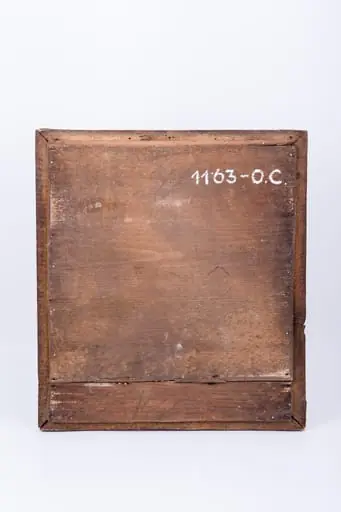 În centrul icoanei este Crucea, iar în dreapta crucii este Sfânta Împărpteasă Elena și în stânga este Împăratul Constantin, fiul său. Veșmintele sfinților împărați sunt pictate cu roșu vermillon, ocru, brun, alb și verde absint. Deasupra fiecăruia este inscripționat numele, inversat. În spatele Crucii, lipit de cruce, sunt ramuri de finic, asemenea unor raze de soare, amintind de semnul luminos apărut pe cer In hoc signo vinces - prin acest semn vei învinge. Crucea ste împodobită pe brațele vertical și orizontal, cu un vrej lung de flori și frunze, ca o ghirlandă de Rusalii. Icoana este o bogăție de culoare, lumină și detalii semnificative. Crucea este împodobită cu elemente fitomorfe: vrej-tulpină agățătoare, frunze și flori. În spatele crucii sunt doi îngeri serafimi. Icoana este de Țara Oltului. Inscripția în româno-chirilică se traduce Sf Împ Constantin Sf Împ Elena. Cromatica este armonioasă și bogată: roșu vermillon, galben-ocru, albastru ceruleum, verde kaki-olive, absint, brun, alb, negru.
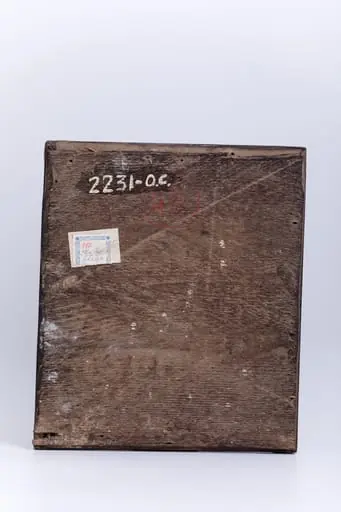 În centrul icoanei este Crucea brun-bronzie, nisipie, cu aripi din elemente vegetale - frunze de finic verzi-corai și bej. În dreapta crucii este Sfânta Împărăteasă Elena, și în stânga este Împăratul Constantin, invers inscripției. Veșmintele sfinților împărați sunt pictate cu roșu vermillon-cărămiziu-corai, verde-smarald. Poartă coroane împărătești și aureole de sfinți, mantiiile de împărați le au prinse la gât cu fibulă. Crucea este bronzie și are capetele brațelor cu elemente decorative trilobate albe-verzi cu cruce neagră. Fondul este cerul albastru cobalt, cu un câmp galben-solar, în registrul din sptaele Crucii, amintind de Soarele Dreptății - Mântuitorul Iisus Hristos. Prin Acest Semn vei învinge! In Hoc signo vinces! Compoziția iconografică este încadrată de un chenar decorativ geometrizant - ramă de fereastră, de culoare nisipie-bej, sable, cu linia albă șerpuitoare. Inscripția din româno-chirilică se traduce Constantin Elena. Cromatica este armonioasă: roșe vermillon, cărămiziu, corai, albastru cobalt, verde smarald, forest, bej, crem, bronziu, galben solar, alb, negru. Icoana este din Nordul Transilvaniei, Nicula.