Artwork
Sfântul Haralambie
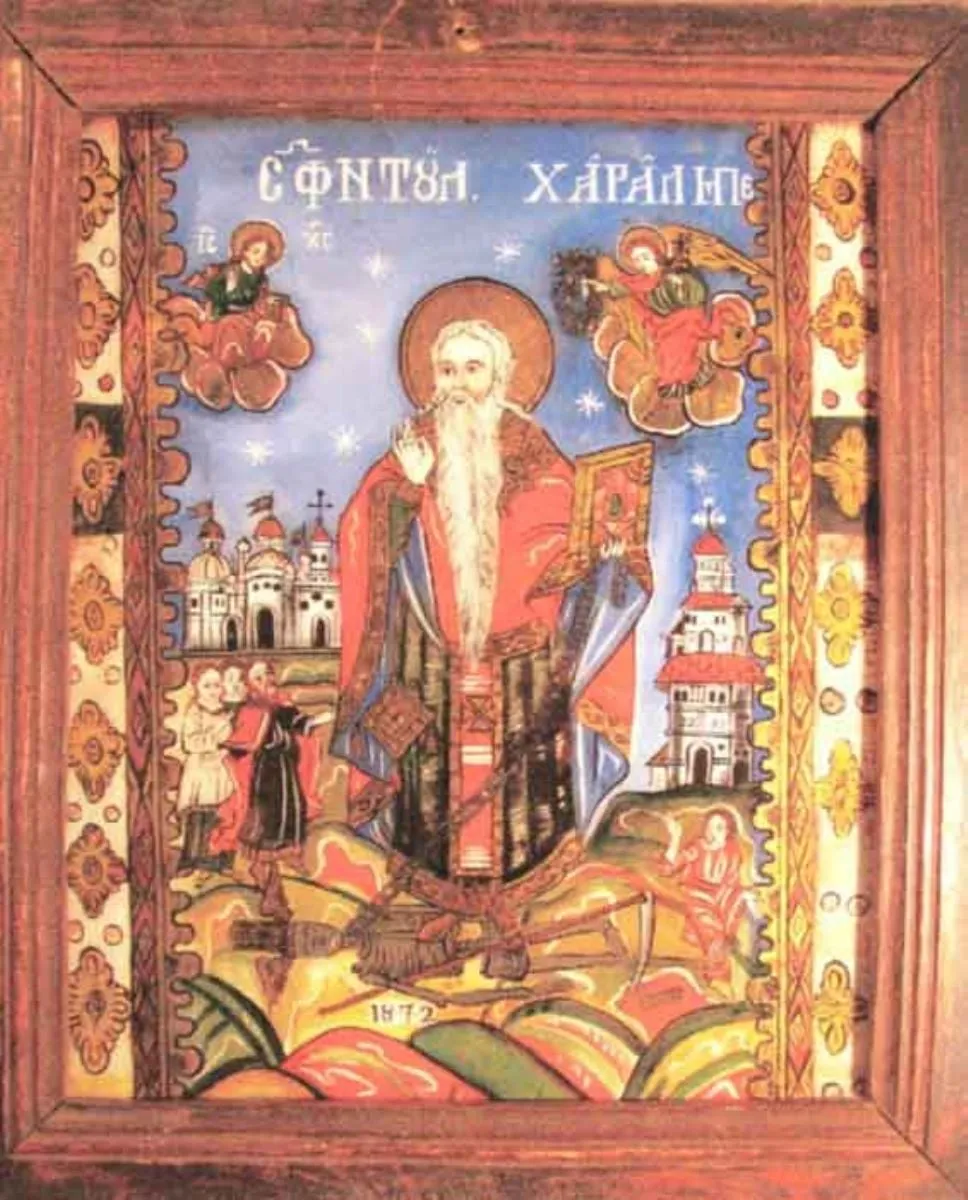
Sfântul Haralambie is a drawing by the Impressionist artist Unknown. It dates from 1872 and is held in the collection of the Romanian Peasant Museum.
About this work
Overview
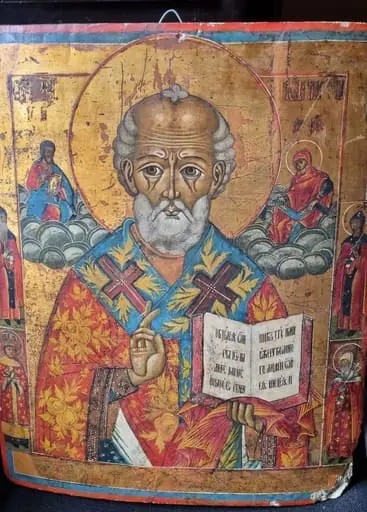
This religious panel painting portrays Saint Haralambie, a venerated Christian martyr, rendered in a traditional Eastern Orthodox iconographic style.
This religious panel painting portrays Saint Haralambie, a venerated Christian martyr, rendered in a traditional Eastern Orthodox iconographic style. The figure is centrally positioned, surrounded by symbolic elements that emphasize his sanctity. The composition follows established conventions of sacred art, with a focus on spiritual presence rather than naturalistic detail. The work lacks a documented artist, common in devotional pieces produced in regional workshops during the late medieval or early modern period.
Subject & Meaning
Saint Haralambie is depicted as an elderly bishop with a long white beard, signifying wisdom and age in holy service. He holds a closed book, likely representing the Gospels or divine scripture, while his halo denotes sanctity. The gathering figures in the foreground suggest a moment of veneration or supplication, reinforcing the saint’s role as an intercessor. The celestial blue sky with stars and distant architecture imply a divine realm intersecting with the earthly plane.
Technique & Style
The painting employs tempera or oil on wood, typical of Orthodox icon production. Rich red robes adorned with gold leaf patterns highlight the saint’s ecclesiastical status, while the blue sky and subtle architectural details provide spatial depth without perspective. Facial features are stylized, emphasizing serenity over individuality. The use of symbolic color—gold for divinity, red for martyrdom, blue for the heavens—follows established liturgical conventions of the region.
History & Provenance
The painting’s origin is undocumented, but its style aligns with religious artworks produced in the Balkans or Romanian principalities between the 16th and 18th centuries. Such panels were often commissioned for private chapels or parish churches. Its survival suggests it was preserved within a religious community, possibly removed from a dismantled altar or monastery. No record of its early ownership or maker has been established.
Context
This image belongs to a broader tradition of Orthodox hagiographic art, where saints were depicted not as historical individuals but as eternal intercessors. During periods of Ottoman rule, such icons served as anchors of cultural and spiritual identity. The inclusion of symbolic objects and celestial elements reflects theological beliefs in the communion between heaven and earth, reinforcing devotion through visual language rather than narrative storytelling.
Legacy
Though unsigned and unattributed, the painting continues to function as a devotional object, preserving liturgical aesthetics and regional artistic practices. It contributes to the understanding of how religious authority was visually sustained in communities with limited access to formal artistic training. Its endurance reflects the resilience of iconographic traditions in Eastern Christian cultures, even amid political and social upheaval.
Artist & collection

 Domestic Scene
 Giacomo and Cardinal Marco, investing Andrea, Abbot of San Zeno, with his Benefice
 The Nymph of Fontainebleau
 Portrait of a Woman
 Madonna and Child with Saints in the Enclosed Garden
 Venus and Minerva
 Family Group of Four on Sofa
 Wall painting from Room H of the Villa of P. Fannius Synistor at Boscoreale
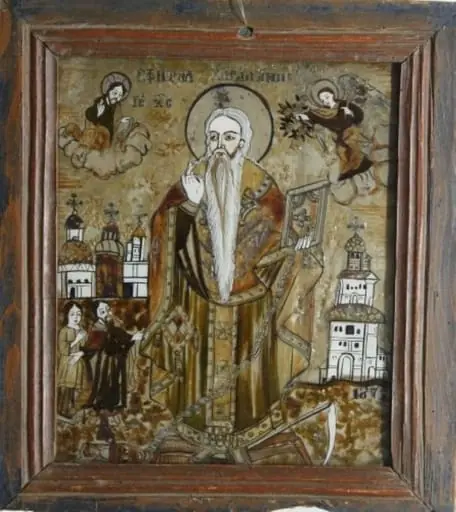 Sfântul Mare Mucenic Haralambie
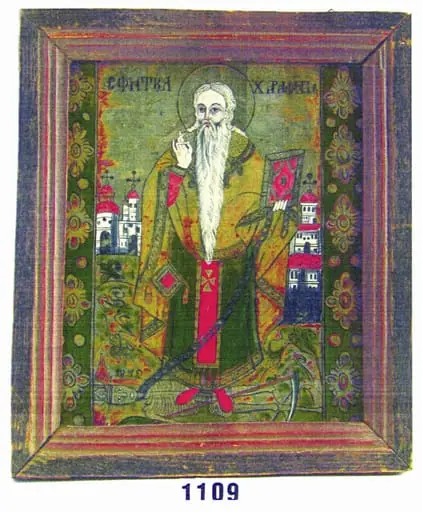 Sfântul Mare Mucenic Haralambie
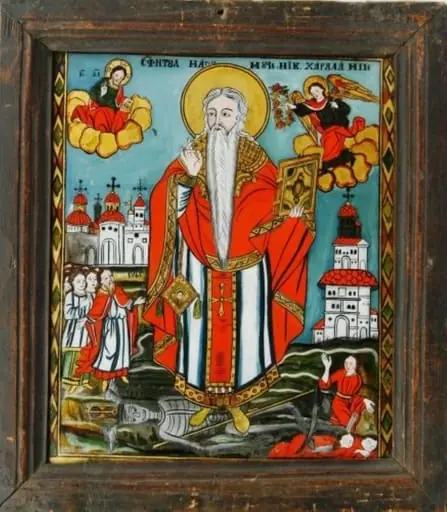 Sfântul Mare Mucenic Haralambie
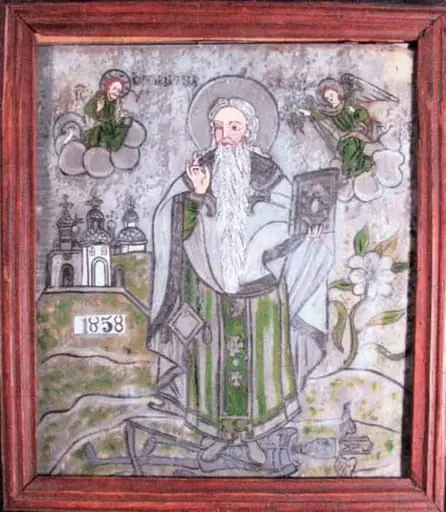 Sfântul Haralambie
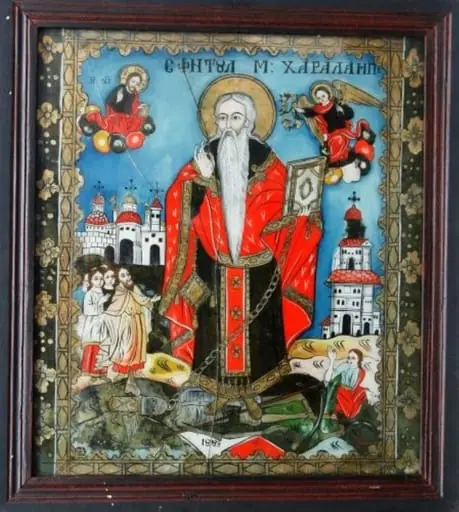 Sfântul Mare Mucenic Haralambie
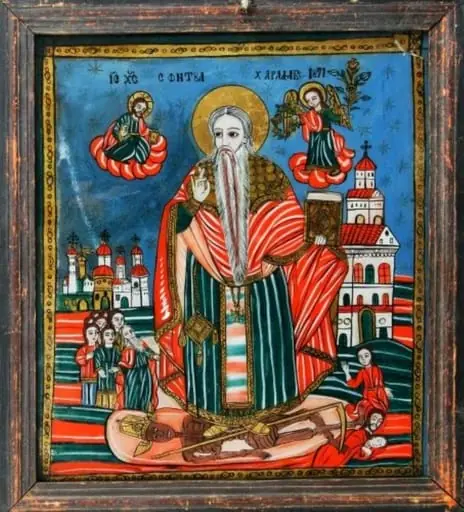 Sfântul Mare Mucenic Haralambie
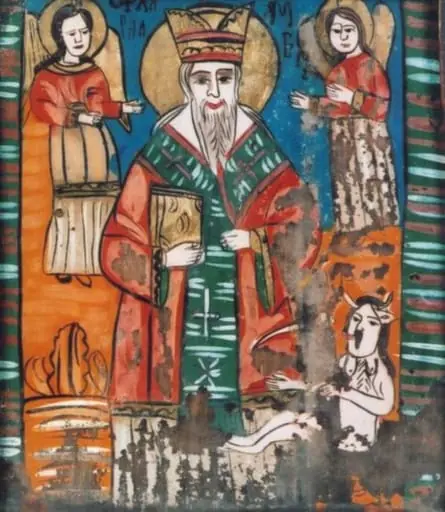 Sfântul Haralambie
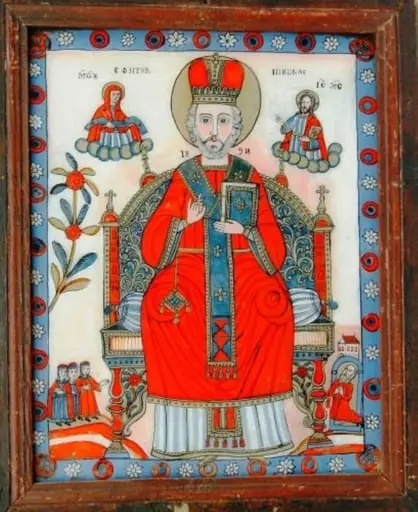 Sfântul Ierarh Nicolae
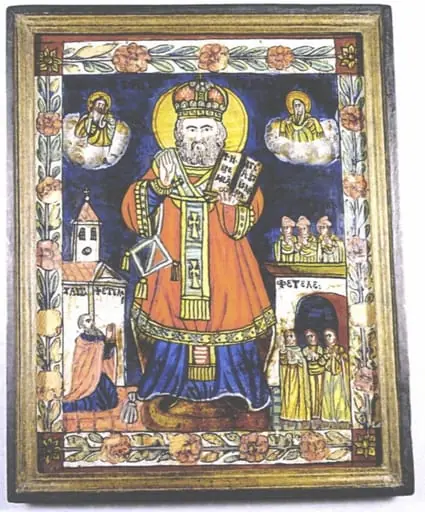 Sfântul Ncolae
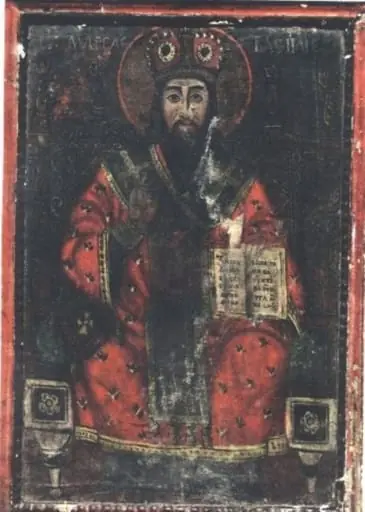 Sfântul Ierarh Vasile
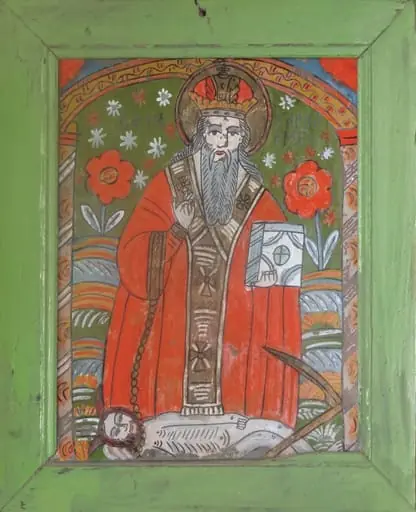 Sf. Haralambie
 Sfântul Ierarh Nicolae cu Sfinți pe chenar