Artwork
Sfântul Nicolae
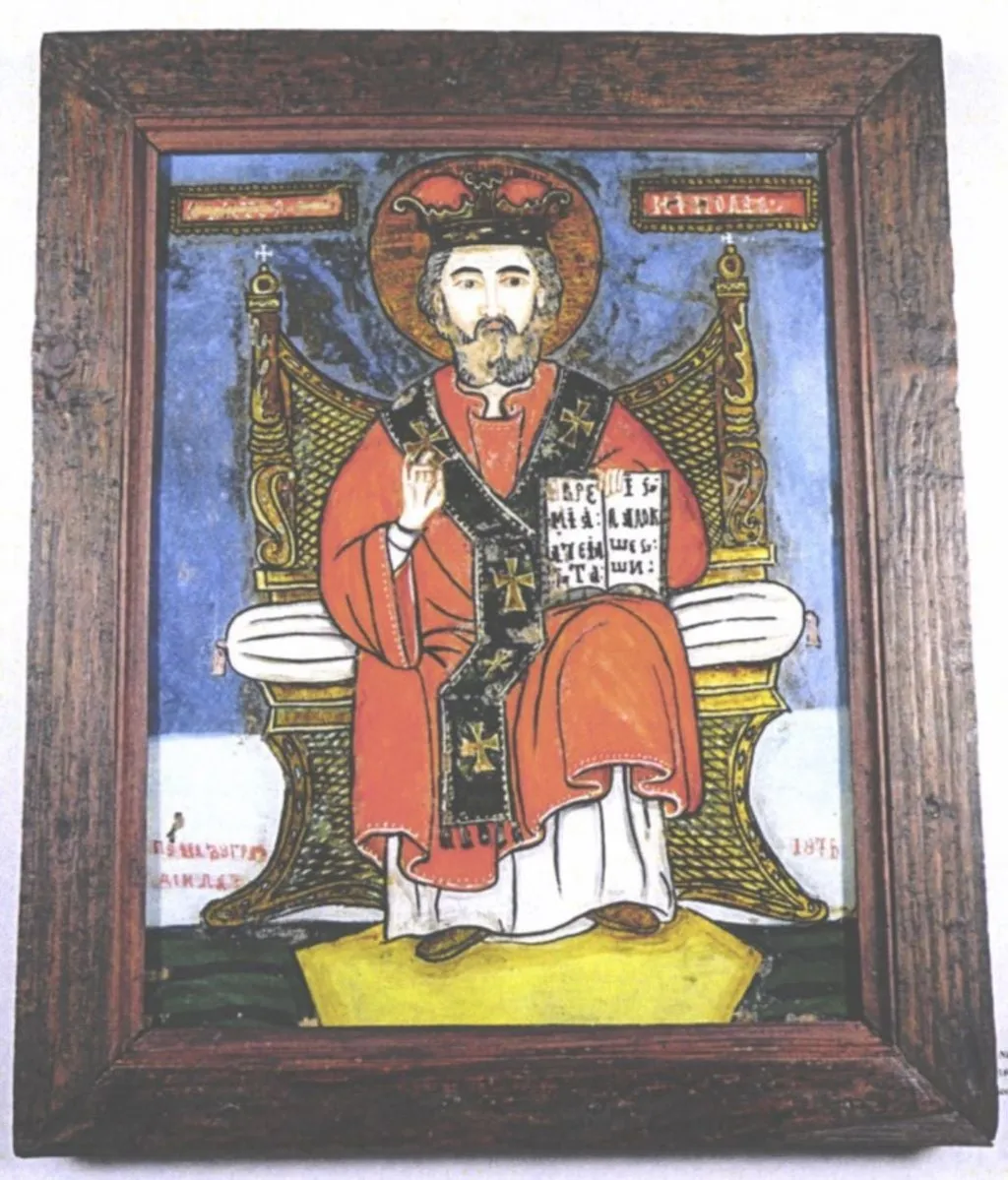
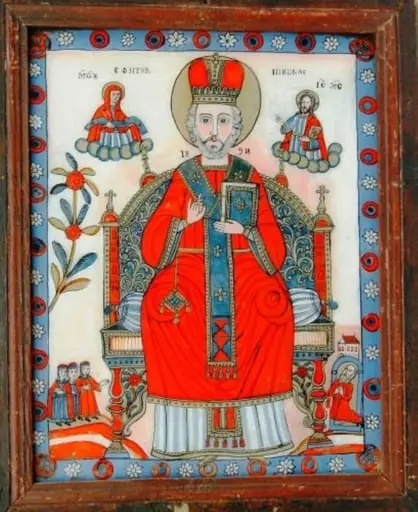
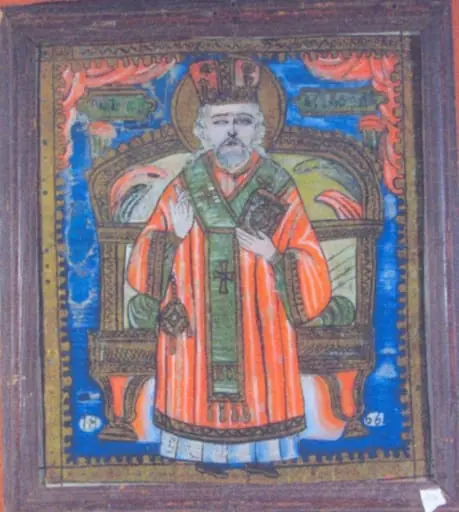
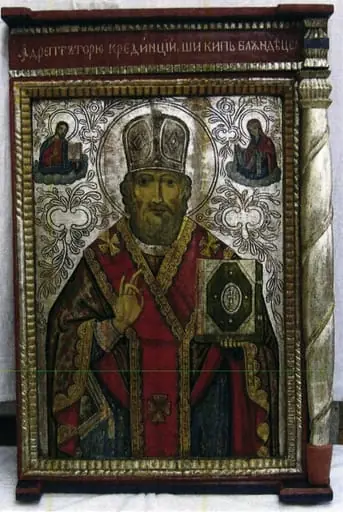
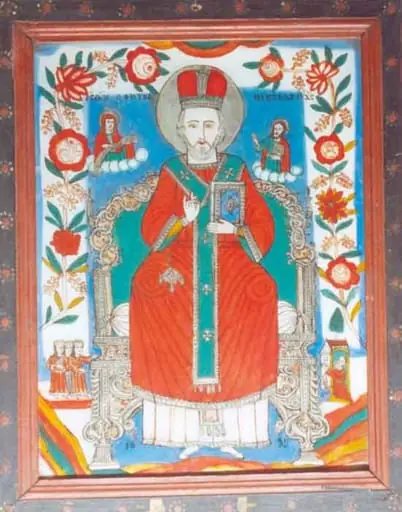
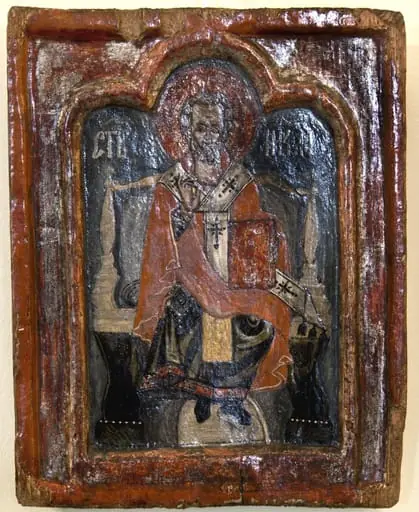
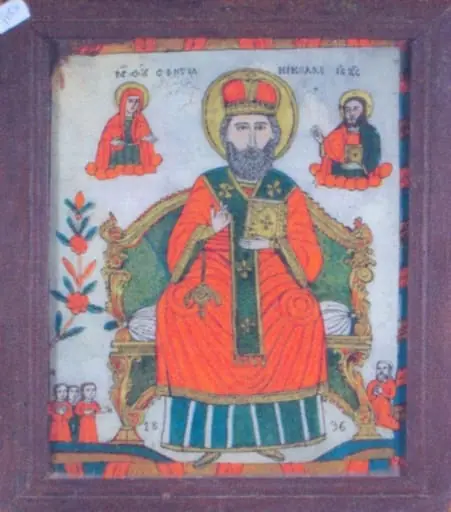
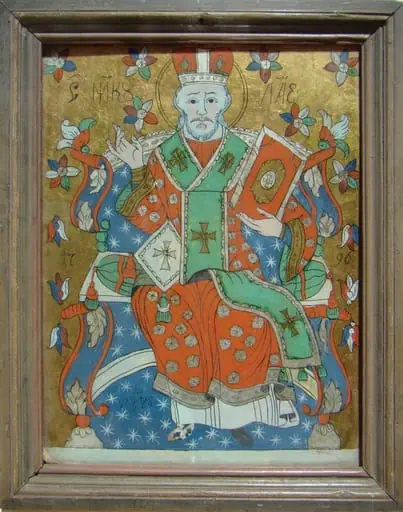
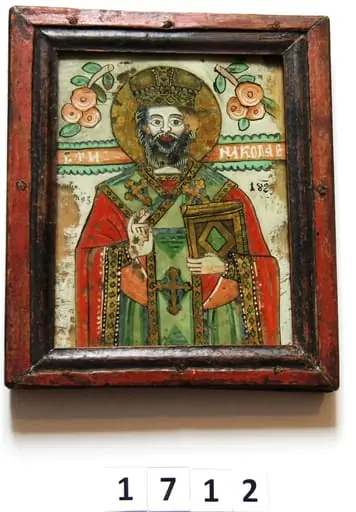
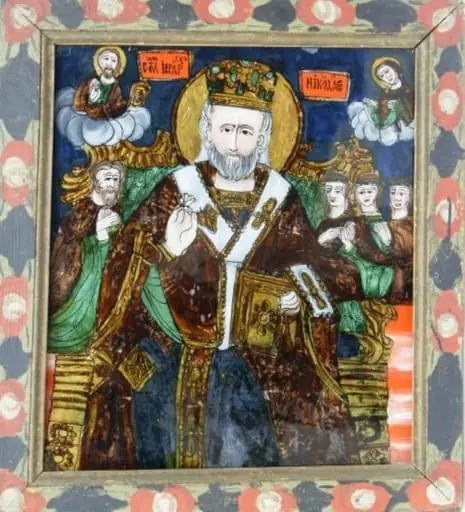
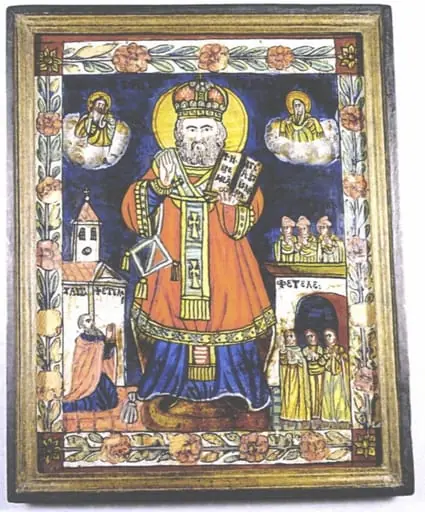
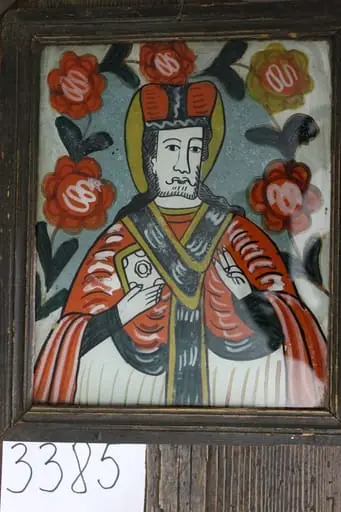
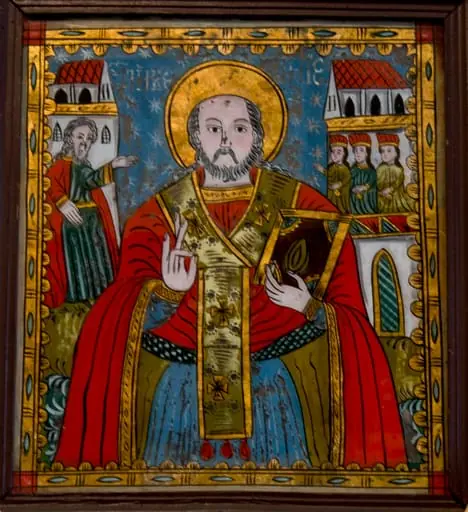
Sfântul Nicolae is a drawing by Unknown. It dates from 1850 and is held in the collection of the Ethnographical Museum of Transylvania. This devotional image depicts Saint Nicholas, a revered early Christian bishop, rendered in a traditional Eastern Orthodox style.
About this work
Overview
The figure is seated on a gilded throne, clad in rich red and black vestments adorned with crosses, signifying his ecclesiastical authority.
This devotional image depicts Saint Nicholas, a revered early Christian bishop, rendered in a traditional Eastern Orthodox style. The figure is seated on a gilded throne, clad in rich red and black vestments adorned with crosses, signifying his ecclesiastical authority. A golden halo encircles his head, and he holds an open book, likely the Gospels, while his hands are raised in a gesture of blessing. The composition is formal and hierarchical, emphasizing spiritual presence over naturalism.
Subject & Meaning
Saint Nicholas is portrayed as a protector and intercessor, consistent with his veneration in Orthodox Christianity. The open book symbolizes his role as a teacher of divine law, while the blessing gesture affirms his spiritual authority. The towers behind him may reference his episcopal seat in Myra or evoke the celestial city. The cross atop the frame reinforces the sacred context, anchoring the image in liturgical use for prayer and veneration.
Technique & Style
The painting employs tempera or egg-based pigments on wood, typical of Byzantine and post-Byzantine iconography. Gold leaf highlights the halo and throne, creating a luminous effect meant to suggest divine presence. The flat perspective, stylized drapery, and elongated proportions follow established iconographic conventions. Surface wear and color fading indicate age and prolonged exposure to ritual use, common in devotional icons.
History & Provenance
The work likely originated in the Balkans or Anatolia during the late medieval or early modern period, when Orthodox icon production flourished under Ottoman rule. Its preservation suggests it was maintained within a church or private chapel, possibly passed down through generations. The worn condition reflects centuries of handling, candle smoke, and ritual anointing, typical of icons used in domestic or communal worship.
Context
Saint Nicholas was among the most venerated saints in Eastern Christianity, known for miracles, charity, and protection of the vulnerable. Icons of him were common in homes and churches, serving as focal points for prayer. This image aligns with a broader tradition where saints are depicted not as historical figures but as eternal intercessors, their appearance governed by theological rather than realistic standards.
Legacy
The painting continues to function as a link to Orthodox devotional practices, preserving visual language that has endured for centuries. Though its specific origin remains unrecorded, its form reflects a widespread artistic and spiritual tradition. Such icons remain in use today, connecting contemporary believers to medieval liturgical customs and the enduring cult of Saint Nicholas across Eastern Christian communities.
Artist & collection
Museum
Ethnographical Museum of Transylvania
Continue through works from the same source collection.
 Domestic Scene
 Giacomo and Cardinal Marco, investing Andrea, Abbot of San Zeno, with his Benefice
 The Nymph of Fontainebleau
 Portrait of a Woman
 Madonna and Child with Saints in the Enclosed Garden
 Venus and Minerva
 Family Group of Four on Sofa
 Wall painting from Room H of the Villa of P. Fannius Synistor at Boscoreale