Artwork
Sfântul Ilie Proroc
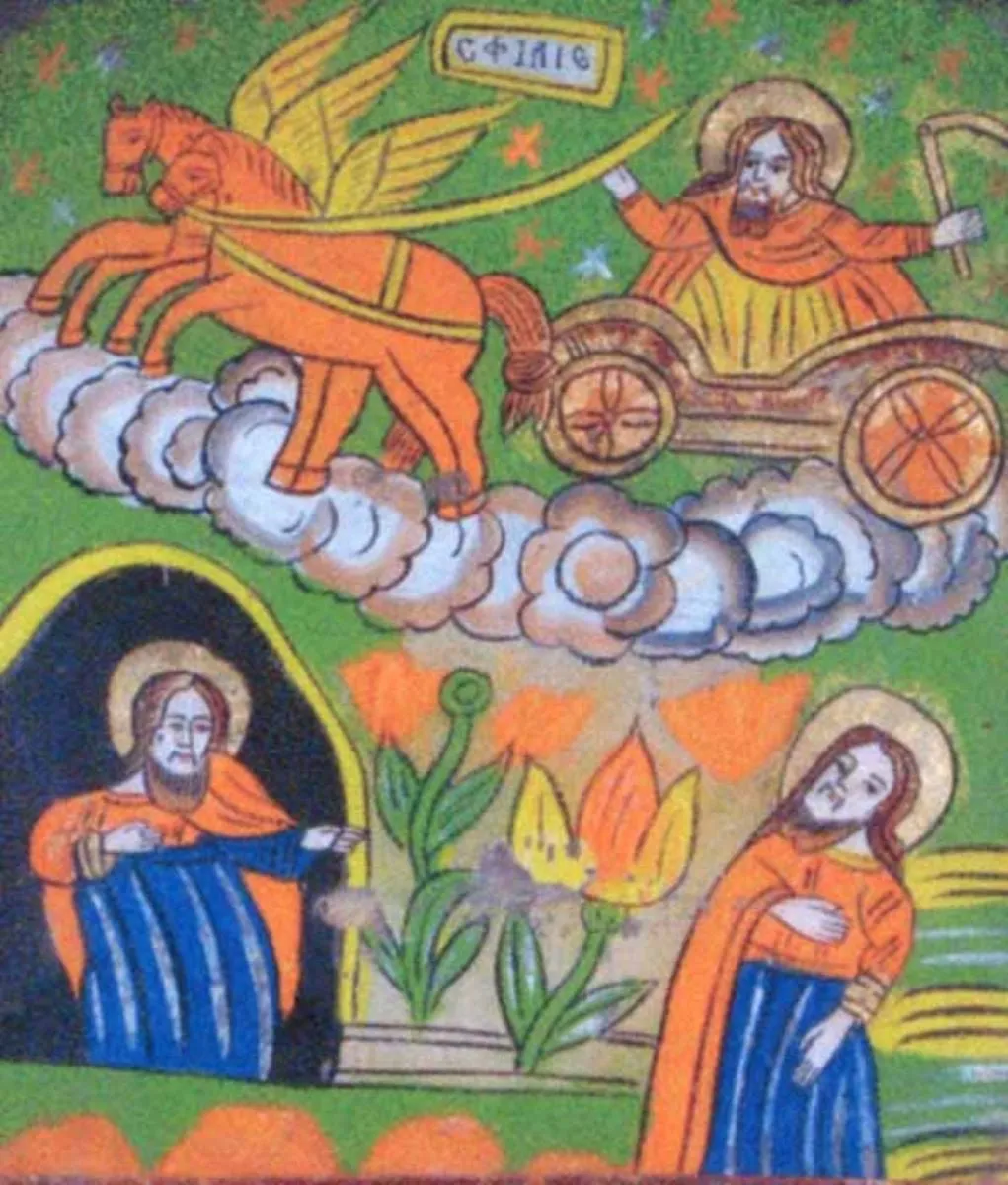
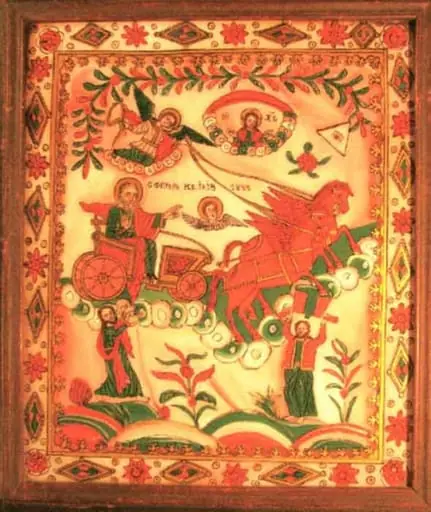
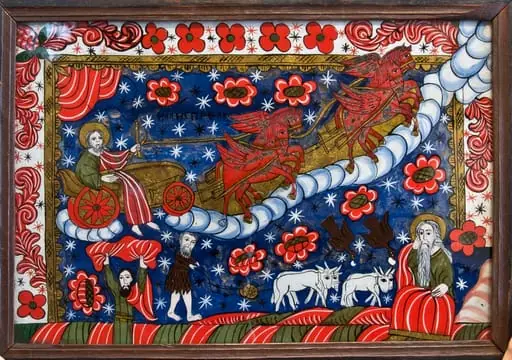
Sfântul Ilie Proroc is a drawing by Unknown. It dates from 1850 and is held in the collection of the Romanian Academy in Bucharest. This image depicts a religious scene centered on a saint, identified by the inscription 'Sfântul' at the top.
About this work
Overview
Elements like a small fire, a wheeled cart, and blooming flowers frame the narrative, hinting at a localized tradition of hagiographic illustration.
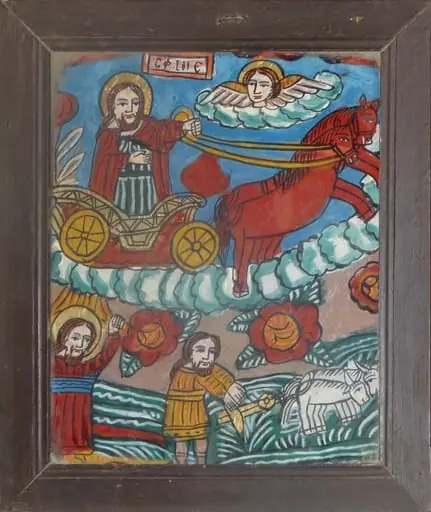
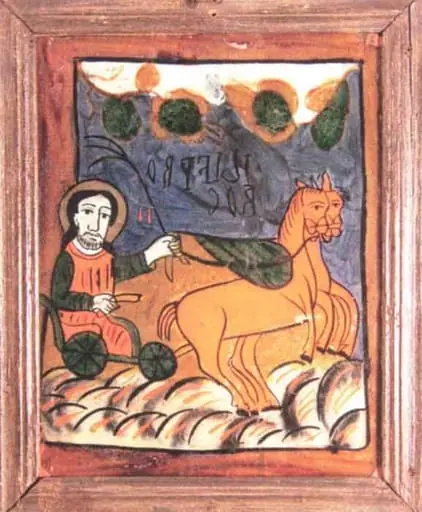
This image depicts a religious scene centered on a saint, identified by the inscription 'Sfântul' at the top. Four figures are arranged across a grassy landscape with vivid hues, suggesting a moment of divine intervention. A man falls from a horse entangled in rope, while others observe or stand in stillness. Elements like a small fire, a wheeled cart, and blooming flowers frame the narrative, hinting at a localized tradition of hagiographic illustration.
Subject & Meaning
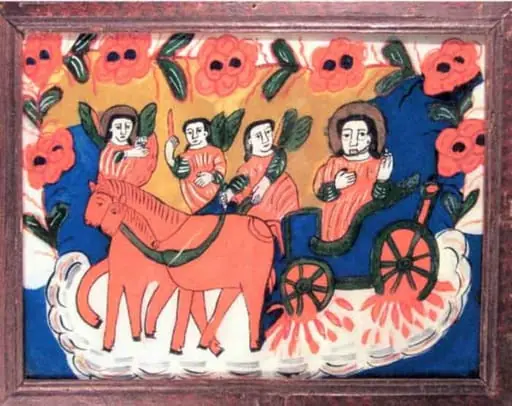
The scene likely illustrates the martyrdom or miraculous ascension of Saint Elijah, a prophet revered in Christian tradition for his fiery departure from earth. The falling figure may represent his departure in a chariot, while the seated man with a dark halo could symbolize divine authority. The woman looking downward may signify mourning or contemplation. The rope entangling the horse suggests earthly struggle, contrasting with spiritual transcendence.
Technique & Style
The figures are rendered in flat, saturated colors against a simple green backdrop, typical of folk or ecclesiastical iconography. Forms are stylized rather than naturalistic, with emphasis on symbolic clarity over spatial depth. The halos, robes, and gestures follow conventional religious iconography, while the inclusion of everyday elements like a cart and fire grounds the sacred event in a tangible, local world.
History & Provenance
The work appears to originate from a regional Orthodox Christian tradition, possibly Romanian or Balkan, where portable icons or wall paintings depicted saints in narrative form. Its style suggests it was created for devotional use in a village church or private chapel, likely between the 18th and early 20th centuries. The presence of text in Romanian confirms its cultural context.
Context
In Orthodox Christian communities, depictions of Elijah often emphasized his role as a forerunner of Christ and a symbol of divine judgment. Scenes of his ascension were common in liturgical art, especially in areas where oral traditions preserved biblical stories. The inclusion of mundane objects like the cart and fire reflects a blending of scriptural narrative with familiar rural life.
Legacy
This image contributes to a broader corpus of vernacular religious art that sustained faith through visual storytelling in communities with limited access to formal theological education. Its preservation offers insight into how local artists interpreted canonical stories, adapting them with regional aesthetics and symbolic language to resonate with everyday believers.
Artist & collection
 Domestic Scene
 Giacomo and Cardinal Marco, investing Andrea, Abbot of San Zeno, with his Benefice
 The Nymph of Fontainebleau
 Portrait of a Woman
 Madonna and Child with Saints in the Enclosed Garden
 Venus and Minerva
 Family Group of Four on Sofa
 Wall painting from Room H of the Villa of P. Fannius Synistor at Boscoreale