Artwork
Sfântul Ilie
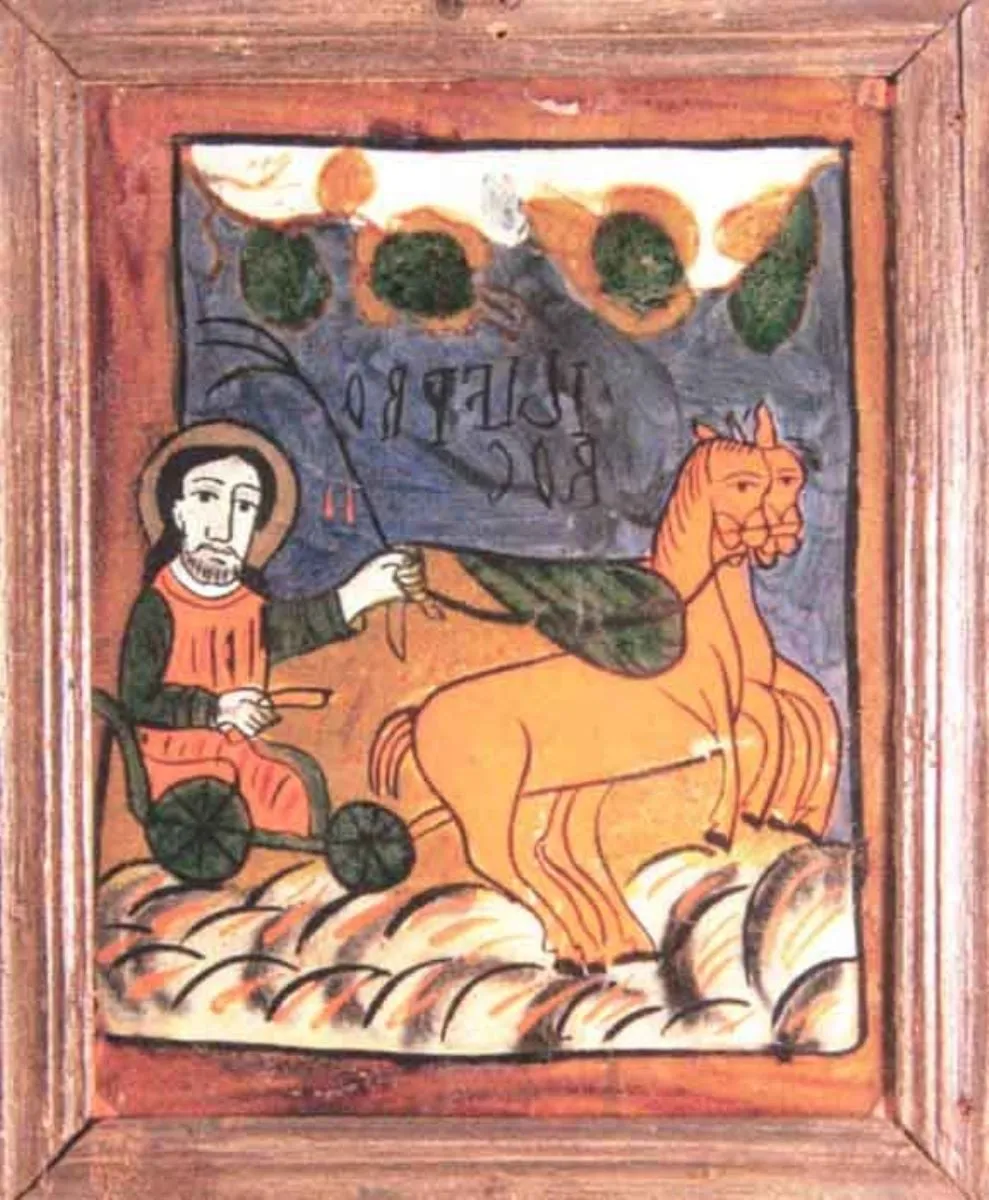
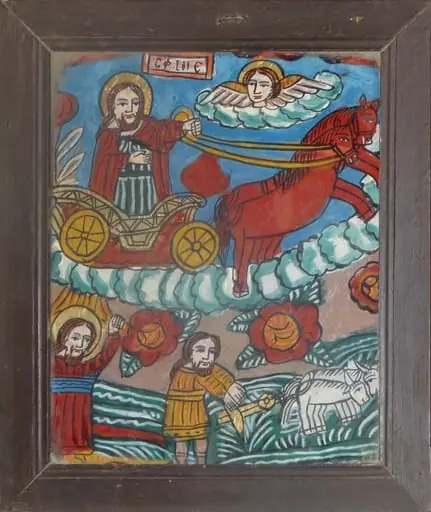
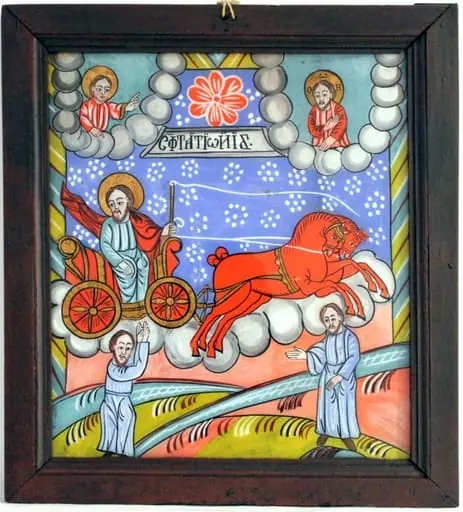
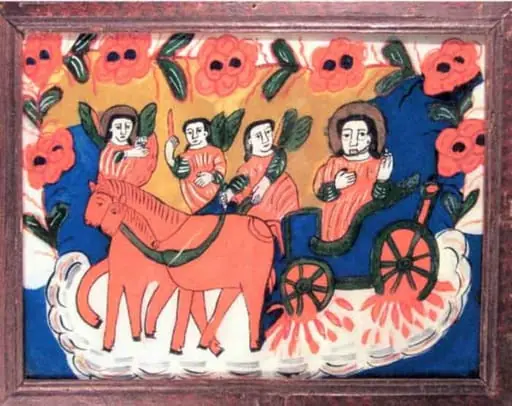
Sfântul Ilie is a drawing by Unknown. It dates from 1850 and is held in the collection of the Romanian Peasant Museum.
About this work
Overview
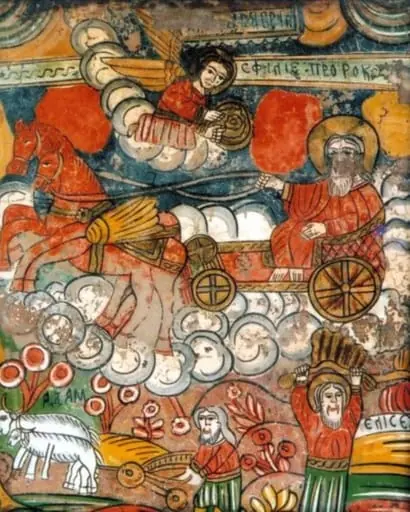
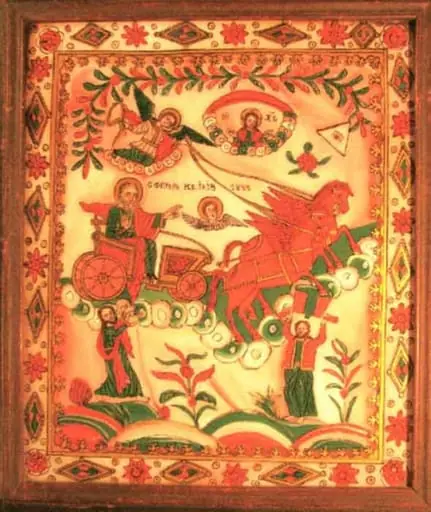
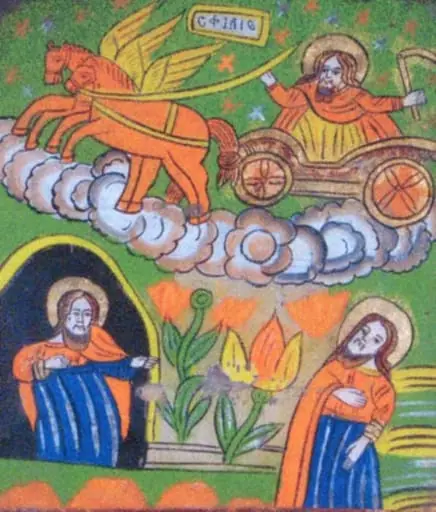
This drawing depicts the prophet Elijah, known in Eastern Christian tradition as Sfântul Ilie, seated on a gentle slope.
This drawing depicts the prophet Elijah, known in Eastern Christian tradition as Sfântul Ilie, seated on a gentle slope. He holds a staff and a scroll, with a horse standing nearby. The composition is minimal, using flat planes of color and simplified forms. The sky features pale blue with rounded cloud shapes, while the landscape is rendered in muted earth tones. The overall effect is unadorned, suggesting a devotional sketch rather than a polished panel painting.
Subject & Meaning
The figure represents Elijah, a biblical prophet associated with divine revelation and ascension. The scroll likely contains scripture, symbolizing his role as a messenger of God. The staff signifies authority or pilgrimage, while the horse may allude to his eventual departure in a chariot of fire. The quiet, solitary setting reflects his time in the wilderness, emphasizing spiritual solitude and divine encounter over narrative drama.
Technique & Style
The drawing employs a restrained, almost schematic approach. Forms are outlined with loose, economical lines; shading is minimal, and perspective is flattened. Colors are subdued, applied in broad, unmodulated areas. The lack of fine detail and the rapid, gestural quality suggest it was made quickly, possibly as a study or devotional aid. The style aligns with folk or monastic traditions that prioritized symbolic clarity over naturalism.
History & Provenance
The work’s origin is undocumented, but its style and subject suggest it comes from a Romanian Orthodox context, likely created in the 18th or 19th century. Such drawings were often produced in monasteries or by itinerant iconographers for personal or local church use. Its simplicity indicates it was not commissioned for a major altar but may have served as a private devotional image or instructional model.
Context
In Eastern Christian communities, Elijah was a widely venerated figure, especially in rural areas where his association with the wilderness and divine power resonated. Simple drawings like this were common in households and small chapels, complementing more elaborate icons. They reflected a tradition where religious imagery served as a bridge between the faithful and sacred narratives, often made with available materials and local techniques.
Legacy
This drawing exemplifies a quiet, enduring strand of religious art that prioritized spiritual presence over grandeur. Though not widely exhibited, such works contributed to the visual literacy of Orthodox communities. Their modesty and directness continue to inform contemporary folk religious art in Eastern Europe, preserving a lineage of image-making rooted in devotion rather than display.
Artist & collection

 Domestic Scene
 Giacomo and Cardinal Marco, investing Andrea, Abbot of San Zeno, with his Benefice
 The Nymph of Fontainebleau
 Portrait of a Woman
 Madonna and Child with Saints in the Enclosed Garden
 Venus and Minerva
 Family Group of Four on Sofa
 Wall painting from Room H of the Villa of P. Fannius Synistor at Boscoreale