Artwork
Sfântul Mare Ierarh Nicolae, făcător de minuni, îmbrăcat în veșminte liturgice, de ierarh, sacos gri și felon roșu vermillon, epitrahil-patrafir brun-bronziu cu patru cruci. Ține în mâna stângă Sfânta Evanghelie închisă și cu dreapta Binecuvântează. Este unul dintre cei mai populari și iubiți sfinți, ocrotitor al caselor, familiilor și copiilor. Are barbă sură-albă și mithră arhierească și aureolă. Fondul este albastru-regal gri senin. În registrul superior sunt Dumnezeu-Tatăl Binecuvântând și Maica Domnului Ocrotind cu luminosul Acoperământ. Desenul este stângaci și cromatica vie-puternică și luminoasă: roșu vermillon, orange, gri, ocru, albastru regal-gri deschis. Inscripția din româno-chirilică se traduce Sf Nicolae. Icoana este de Mărginimea Sibiului.
Sfântul Mare Ierarh Nicolae, făcător de minuni, îmbrăcat în veșminte liturgice, de ierarh, sacos gri și felon roșu vermillon, epitrahil-patrafir brun-bronziu cu patru cruci. Ține în mâna stângă Sfânta Evanghelie închisă și cu dreapta Binecuvântează. Este unul dintre cei mai populari și iubiți sfinți, ocrotitor al caselor, familiilor și copiilor. Are barbă sură-albă și mithră arhierească și aureolă. Fondul este albastru-regal gri senin. În registrul superior sunt Dumnezeu-Tatăl Binecuvântând și Maica Domnului Ocrotind cu luminosul Acoperământ. Desenul este stângaci și cromatica vie-puternică și luminoasă: roșu vermillon, orange, gri, ocru, albastru regal-gri deschis. Inscripția din româno-chirilică se traduce Sf Nicolae. Icoana este de Mărginimea Sibiului. is a drawing by Unknown. It dates from 1902 and is held in the collection of the ASTRA National Museum Complex. This wooden panel bears the image of Saint Nicholas, painted in a traditional Romanian iconographic style.
About this work
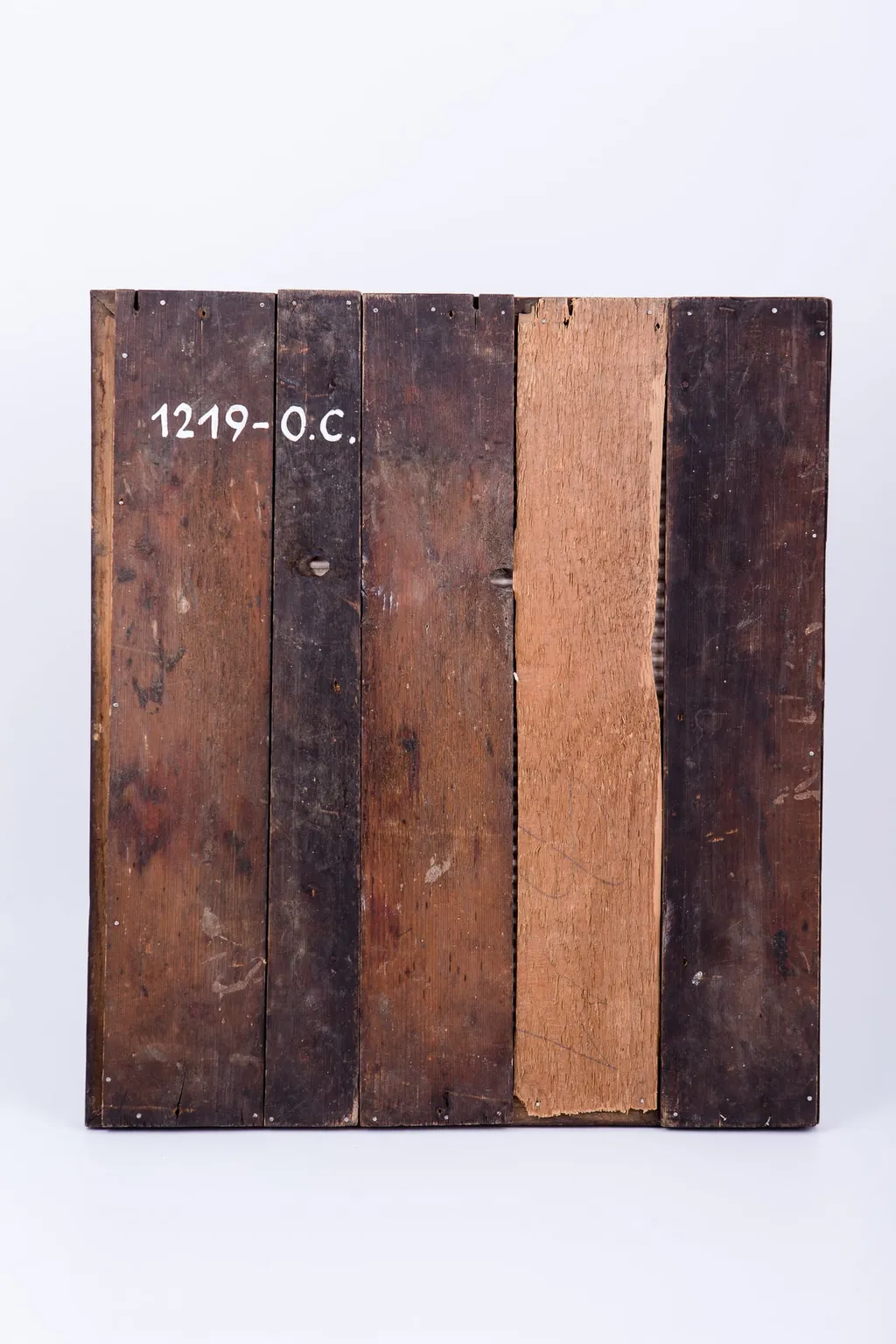
This is a wooden panel with five vertical strips of different wood tones—dark brown, reddish, and a pale beige.
This is a wooden panel with five vertical strips of different wood tones—dark brown, reddish, and a pale beige. The top left corner has a faded handwritten number: "1219-0.C." The wood looks weathered, with visible nail holes and rough edges. No paint or image is visible here.
The panel is likely part of an old religious icon, judging by the inscription and the wood’s age. These pieces were often reused or repurposed in traditional craftwork.
Look up *cult object* to see how everyday items became sacred in folk traditions.
Overview
This wooden panel bears the image of Saint Nicholas, painted in a traditional Romanian iconographic style. The surface shows signs of age: weathered wood, nail holes, and uneven edges, suggesting reuse or repurposing. Though the painted figure remains legible, the surrounding wood is bare, indicating the panel may have once been part of a larger devotional structure, later dismantled or altered.
Subject & Meaning
Saint Nicholas is depicted in full episcopal vestments—gray sacos, vermilion felon, and a bronze-hued epitrahil adorned with four crosses. He holds a closed Gospel in his left hand and raises his right in blessing. His silver-gray beard and archiepiscopal mitre signify his ecclesiastical rank. Above him, God the Father and the Virgin Mary are shown in blessing, reinforcing his role as intercessor. Revered as protector of households and children, his image served as a spiritual anchor in domestic and communal life.
Technique & Style
The painting employs vivid, saturated hues: vermilion, ochre, orange, and a pale royal blue. The brushwork is direct and somewhat asymmetrical, typical of regional folk iconography rather than academic training. The background is flat and unmodulated, drawing focus to the saint’s form. The inscriptions are in Romanian Cyrillic, reading 'Sf. Nicolae,' aligning with local liturgical traditions of the Mărginimea Sibiului region.
History & Provenance
The panel originates from Mărginimea Sibiului, a culturally distinct area in Transylvania known for its preserved religious art. The faded handwritten number '1219-0.C.' on the upper left corner suggests cataloging, possibly by a collector or ecclesiastical archive. The wood’s irregularity and exposed nail holes indicate it was once part of a multi-panel iconostasis or altarpiece, later separated and preserved as a fragment.
Context
In rural Romanian communities, icons like this were not merely decorative but functional objects of veneration. Their placement in homes or chapels connected daily life with divine protection. The reuse of wooden panels reflected both economic necessity and spiritual continuity—materials were valued for their sacred history, not their form. This object embodies the blending of liturgical tradition with folk pragmatism.
Legacy
Though incomplete, the panel retains its devotional integrity. Its survival as a fragment underscores how religious artifacts were preserved through adaptation rather than preservation. Today, such pieces serve as tangible links to a pre-modern spiritual culture, where the sacred was embedded in the material world through repetition, reuse, and quiet reverence.
Artist & collection

 Domestic Scene
 Giacomo and Cardinal Marco, investing Andrea, Abbot of San Zeno, with his Benefice
 The Nymph of Fontainebleau
 Portrait of a Woman
 Madonna and Child with Saints in the Enclosed Garden
 Venus and Minerva
 Family Group of Four on Sofa
 Wall painting from Room H of the Villa of P. Fannius Synistor at Boscoreale
 Icoana este împărțită pe două tematici iconografice: Sfântul Mare Ierarh Vasile și Sfânta Treime. Sfântul Vasile cel Mare este îmbrăcat în veșminte arhierești în combinația de roșu-zmeuriu, albastru cobalt, verde și alb. Are barba și părul lungi. Poartă mitrhră arhierească și aureolă. Binecuvântează cu mâna dreaptă și ține în mâna stângă Sfânta Evanghelie închisă. Dumnezeu-Fiul ține Crucea pe umărul stâng, Dumnezeu-Tatăl are globul pământesc și dimpreună susțin coroana Împărăției Cerești. Dumnezeu-Tatăl și Dumnezeu-Fiul sunt înveșmântați în roșu vermillon-zmeuriu, albastru cobalt și verde, cu bogăție de detalii decorativ-ornamentale fine și minuscule pe veșmintele împărătești, dungi albe. În registrul îndepărtat superior este cerul auriu cu o mandorlă de nouri rotunzi albaștri.
 Sfântul Mare Ierarh Nicolae Făcătorul de minuni este redat central, șezând pe tron arhieresc, ținând în mâna stângă Sfânta Evanghelie închisă și binecuvântează cu mâna dreaptă. Veșmintele arhierești liturgice ale sfântului ierarh sunt într-o alternanță cromatică de stacojiu-acajou-brun închis-kaki-bronziu și alb și negru. Epitrahilul, patrafirul este verde de China și brun-bronziu, cu patru cruci pe el, sacosul maro-stacojiu-acajou. Poartă mithră și are aureolă. În registrul superior îndepărtat sunt Dumnezeu-Tatăl și Maica Domnului, care Binecuvântează și Ocrotește pe Sfântului Nicolae. Pe fondul verde, Mântuitorul și Maica Domnului au veșminte brun-verzi-bronzii. În registrul inferior, în dreapta sfântului ierarh este tatăl fetelor, mulțumind îngenucheat fiind și în stânga sfântului, în raport cu Maica Domnului deasupra sunt cele trei fete salvate. În registrul inferior fondul este predominant roz somon, iar în cel superior albastru ceruleum. Inscripția din româno-chirilică se traduce Sf Nicolae ICXC MP Iisus Hristos Maica Domnului. Icoana are cromatică spcifică Mărginimii Sibiului: stacojiu-acajou-brun închis-kaki-bronziu și alb și negru, verde de China, albastru ceruleum, alb, negru.
 Sfântul Mare Ierarh Nicolae Făcătorul de minuni este redat central, așezat pe tron arhieresc, ținând în mâna stângă Sfânta Evanghelie deschisă și binecuvântează cu mâna dreaptă. Veșmintele arhierești liturgice ale sfântului ierarh sunt într-o alternanță cromatică de roșu vermillon-verde-ocru și alb și negru. Epitrahilul, patrafirul este verde, cu patru cruci pe el, sacosul roșu vermillon. Poartă mithră și are aureolă. În registrul inferior în colțul din stânga Sfântului Nicolae este tatăl celor trei fete, salvate de sărăcie și desfrânare, îngenuncheat, mulțumind prin ajutor. În colțul din dreapta Sfântului sunt cele trei fete cu coronițe pe cap, coronițele simbolizând atât bogăția materialnică, cât și cumințenia și curățenia sufletească. În registrul superior, dreapta sfântului, este Mântuitorul Dumnezeu-Fiul binecuvântând și în partea stângă este Maica Domnului ocrotind. Inscripția din româno-chirilică se traduce Sf Nicolae ICXC MP Iisus Hristos Maica Domnului. Cromatica este specifică Țării Oltului: roșu vermillon, verde de China, galben chihlimbar, ocru, albastru ceruleum, alb, negru.
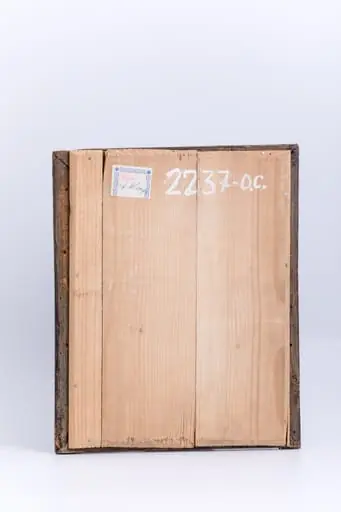 Sfântul Mare Mucenic Gheorghe este așezat călare pe un cal alb-gri, omorând balaurul verde-gri-antracit cu lancea, pe care o ține în amândouă mâinile. Fondul icoanei este cerul cobalt-senin, în registrul superior și alb-bej-bronziu în cel inferior, în centrul icoanei ușor întrepătrundu-se toate culorile. Tunica Sfântului Mucenic Purtător de Biruință este roșie vermillon, cu mânecile verzi, având pantalonii gri, cizme negre și tunică roșie-vermillon. Întreaga compoziție iconografică este încadrată de un chenar decorativ fitomorf, format dintr-o ghirlandă de 7 ruje - trandafiri sălbatici și bujori roșii și roz cu petale și pistil alternativ colorate cu albastru cobalt, roz și roșu vermillon. Ghirlanda excelează prin delicatețea desenului și bogăția cromatică armonioasă. Ziua de praznic a Sfântului Gheorghe este în 23 aprilie, primăvara, justificându-se pentru încă o dată prezența ghirlandei înflorite. Inscripția din româno-chirilică se traduce S. Georgie. Cromatica este armonioasă; roșu vermillon, roz, albastru cobalt, ceruleum, cobalt, gri antracit, ocru, bronziu, brun, crem, alb și negru. Icoana este din Nordul Transilvaniei, Nicula.
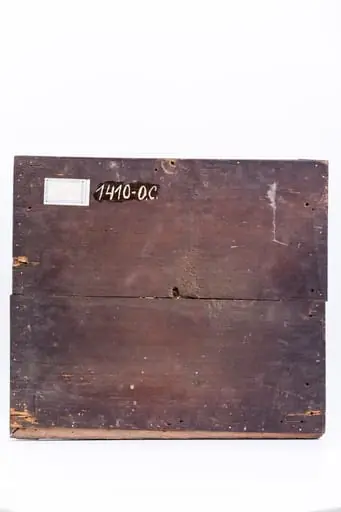 Icoana este împărțită în două ferestre: Mântuitorul Iisus Hristos Pantocrator Binecuvântând cu mâna dreaptă și având în mâna stângă globul pământesc cu cruce, asemenea unui chivot și în cea de-a doua parte este Sfântul Mare Ierarh Nicolae făcător de minuni, Binecuvântând cu mâna dreaptă și ținând în mâna stângă Sfânta Scriptură închisă. Mântuitorul și Sfântul Ierarh sunt îmbrăcați în veșminte asemănătoare: sacos verde și felon-mantie-omofor gri-petrol. Sfântul Nicolae este după Chipul și Asemănarea Mântuitorului Iisus Hristos. Chipurile sunt expresive și trăsăturile fețelor au finețea privirilor pătrunzătoare. Cromatica, specifică Văi Sebeșului, este discretă și armonios-austeră: verde, kaki, gri, brun, petrol, acajou, brun, negru, alb. Icoana este de Laz, Valea Sebeșului. Inscripția din româno-chirilică se traduce IC XC Iisus Hristos Sf Nicolae.
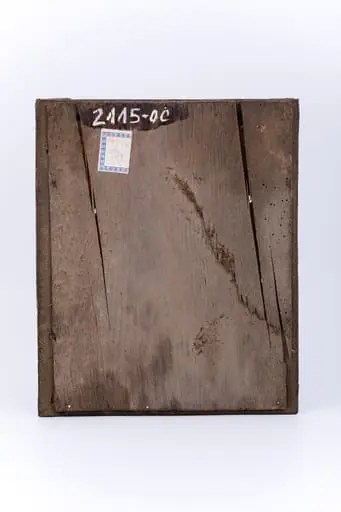 Sfântul Mare Mucenic Gheorghe este așezat călare pe un cal alb, cu șaua ocru-galbenă, omorând balaurul gri-verzui cu lancea, pe care o ține cu amândouă mâinile. Fondul icoanei este roșu vermillon, cu un spațiu luminos de galben-chihlimbar în împrejurul Sfântului Gheorghe, în centrul icoanei ușor întrepătrundu-se toate culorile. Mantia Sfântului Mucenic Purtător de Biruință este roșie vermillon cu liniuțe albe, având tunica ocru-galbenă, cu mânecile verzi-olive înspre gri, pantalonii cărămizii și cizmele negre. Întreaga compoziție iconografică este încadrată de un chenar decorativ geometrizant alb-zinc și de un chenar decorativ fitomorf, format dintr-o ghirlandă din 5 ruje roșii-cărămizii, cu motivul linii albe șerpuite în interior, cu frunze gri-verzui, alungite. Cromatica este armonioasă: roșu vermillon, cărămiziu, corai, vernil, olive, gri-verzui, kaki, galben-chihlimbar, bronziu, brun, crem, alb și negru. Icoana excelează prin cromatica armonioasă-pastelată și prin desenul fin. Icoana este din Nordul Transilvaniei, Nicula.