Artwork
Sfântul Mare Ierarh Nicolae Făcătorul de minuni este redat central, așezat pe tron arhieresc, ținând în mâna stângă Sfânta Evanghelie deschisă și binecuvântează cu mâna dreaptă. Veșmintele arhierești liturgice ale sfântului ierarh sunt într-o alternanță cromatică de roșu vermillon-verde-ocru și alb și negru. Epitrahilul, patrafirul este verde, cu patru cruci pe el, sacosul roșu vermillon. Poartă mithră și are aureolă. În registrul inferior în colțul din stânga Sfântului Nicolae este tatăl celor trei fete, salvate de sărăcie și desfrânare, îngenuncheat, mulțumind prin ajutor. În colțul din dreapta Sfântului sunt cele trei fete cu coronițe pe cap, coronițele simbolizând atât bogăția materialnică, cât și cumințenia și curățenia sufletească. În registrul superior, dreapta sfântului, este Mântuitorul Dumnezeu-Fiul binecuvântând și în partea stângă este Maica Domnului ocrotind. Inscripția din româno-chirilică se traduce Sf Nicolae ICXC MP Iisus Hristos Maica Domnului. Cromatica este specifică Țării Oltului: roșu vermillon, verde de China, galben chihlimbar, ocru, albastru ceruleum, alb, negru.
Sfântul Mare Ierarh Nicolae Făcătorul de minuni este redat central, așezat pe tron arhieresc, ținând în mâna stângă Sfânta Evanghelie deschisă și binecuvântează cu mâna dreaptă. Veșmintele arhierești liturgice ale sfântului ierarh sunt într-o alternanță cromatică de roșu vermillon-verde-ocru și alb și negru. Epitrahilul, patrafirul este verde, cu patru cruci pe el, sacosul roșu vermillon. Poartă mithră și are aureolă. În registrul inferior în colțul din stânga Sfântului Nicolae este tatăl celor trei fete, salvate de sărăcie și desfrânare, îngenuncheat, mulțumind prin ajutor. În colțul din dreapta Sfântului sunt cele trei fete cu coronițe pe cap, coronițele simbolizând atât bogăția materialnică, cât și cumințenia și curățenia sufletească. În registrul superior, dreapta sfântului, este Mântuitorul Dumnezeu-Fiul binecuvântând și în partea stângă este Maica Domnului ocrotind. Inscripția din româno-chirilică se traduce Sf Nicolae ICXC MP Iisus Hristos Maica Domnului. Cromatica este specifică Țării Oltului: roșu vermillon, verde de China, galben chihlimbar, ocru, albastru ceruleum, alb, negru. is a drawing by Unknown. It dates from 1850 and is held in the collection of the ASTRA National Museum Complex. This wooden panel depicts Saint Nicholas, Archbishop of Myra, seated on an episcopal throne, flanked by divine and human figures.
About this work
The wood is weathered, with visible grain and patches where the paint or finish has worn off.
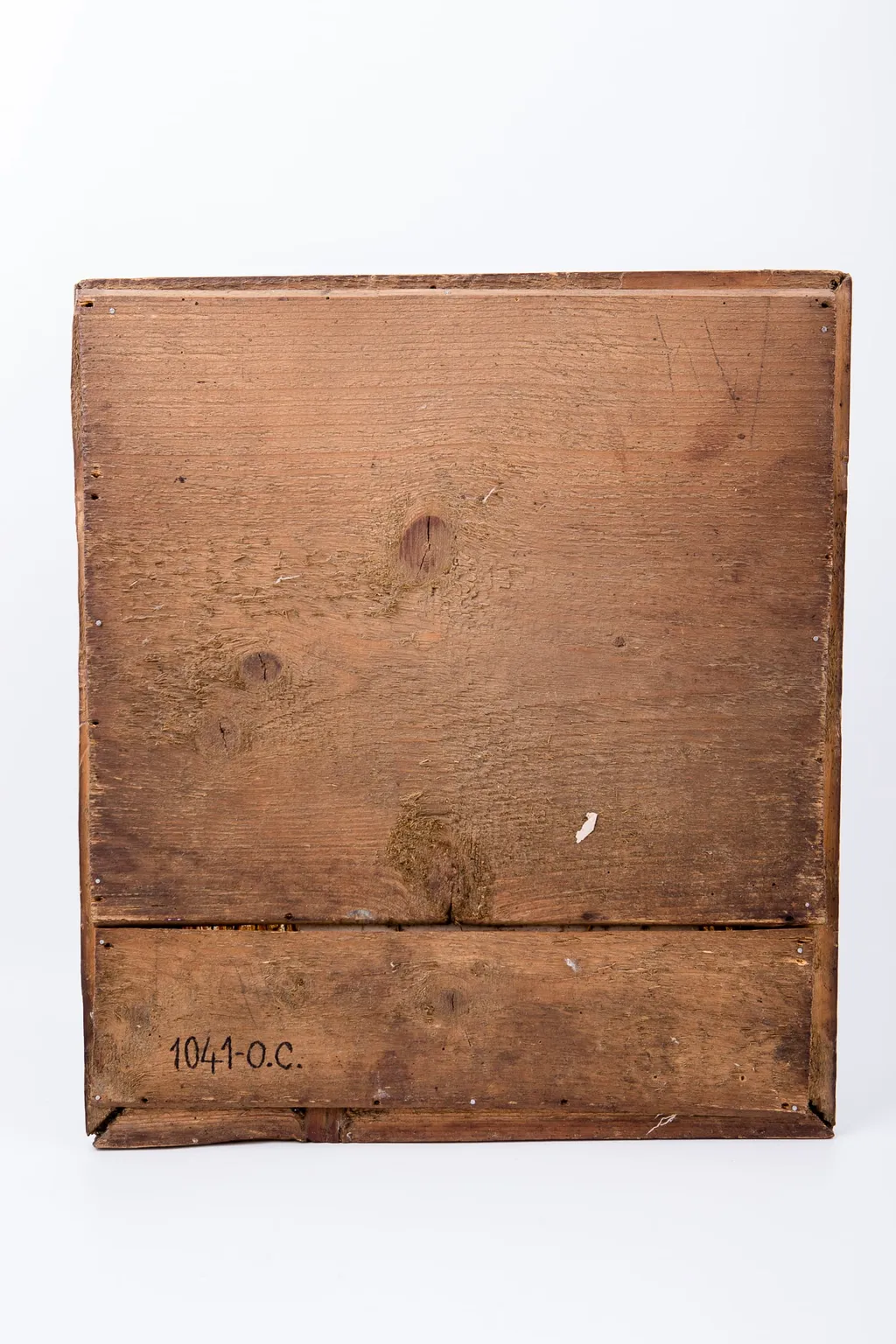
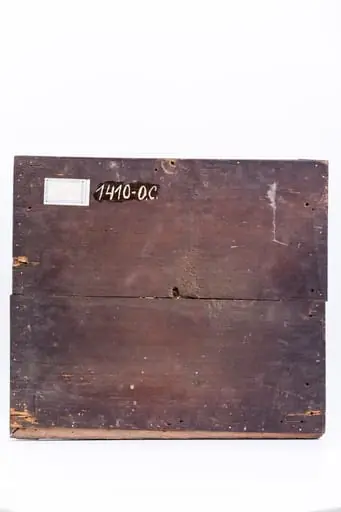
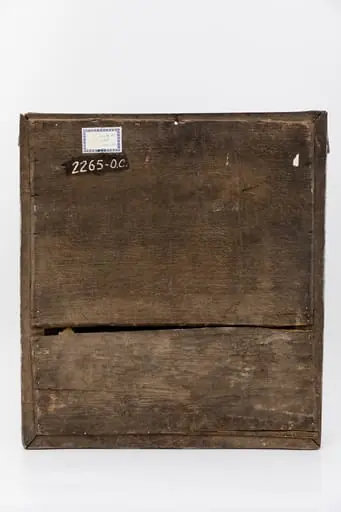
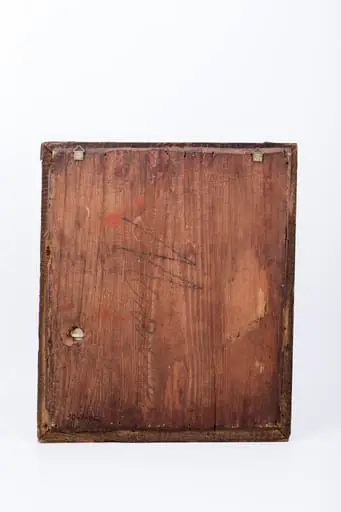
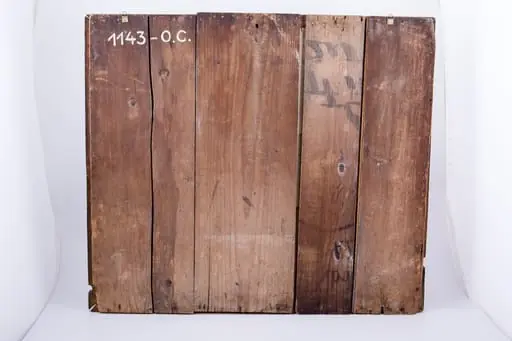
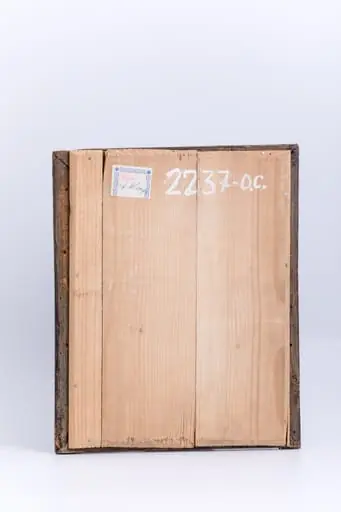
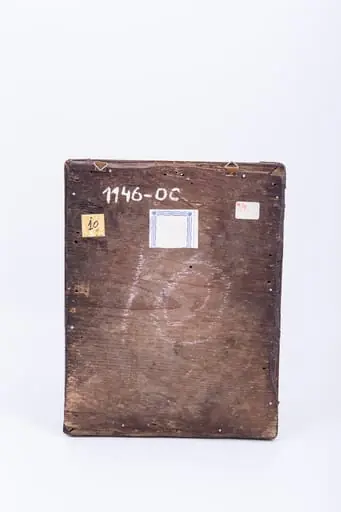
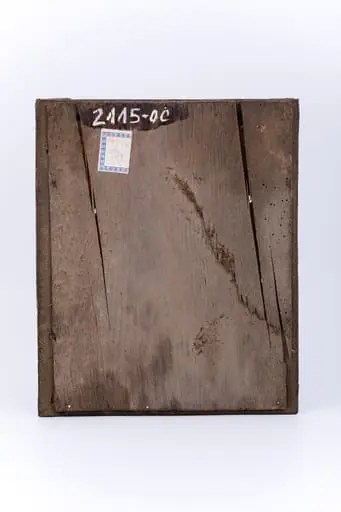
This is the back of a wooden panel. The wood is weathered, with visible grain and patches where the paint or finish has worn off. There’s a small label in the bottom left corner with numbers and letters: "1041-O.C."
The panel looks old, with signs of use and age. The wood has scratches and some small holes, like it’s been handled a lot.
Next, look up thron to see how this kind of seating was used in religious art.
Overview
This wooden panel depicts Saint Nicholas, Archbishop of Myra, seated on an episcopal throne, flanked by divine and human figures. The image, painted in traditional chromatic tones of vermilion, Chinese green, amber, and ochre, reflects the liturgical iconography of the Oltenia region. The reverse side shows signs of age—weathered wood, scratches, and wear—suggesting prolonged use in a devotional context.
Subject & Meaning
Saint Nicholas is portrayed as a miracle-working hierarch, holding the open Gospel and bestowing a blessing. Below him, the father of three daughters kneels in gratitude for their rescue from poverty and forced prostitution. The daughters, crowned, symbolize restored virtue and material deliverance. Above, Christ and the Virgin Mary flank the saint, affirming his intercessory role within the divine hierarchy.
Technique & Style
The painting employs flat, symbolic forms typical of Byzantine-derived iconography, with no attempt at naturalistic depth. Liturgical vestments are rendered in distinct color bands: vermilion, green, ochre, white, and black, following regional conventions. The four-cross pattern on the epitrahil and the miter’s form adhere to Orthodox ecclesiastical tradition. Inscriptions in Romanian Cyrillic identify the figures and reinforce theological meaning.
History & Provenance
The panel’s reverse bears physical evidence of handling: worn surfaces, small holes, and scratches, indicating it was likely mounted in a church or private chapel and frequently venerated. The label '1041-O.C.' suggests cataloging by a collector or institution, though its origin remains unverified. The wood’s condition implies exposure to humidity, temperature shifts, and ritual use over decades or centuries.
Context
The palette and iconographic arrangement align with 18th- to early 19th-century religious art from Oltenia, where local workshops maintained conservative Byzantine models. Saint Nicholas was especially venerated in Romanian communities for his protection of the vulnerable. The inclusion of Christ and the Virgin above the saint reflects the standard hierarchy of Orthodox iconostases, positioning him as a mediator between heaven and earth.
Legacy
This panel exemplifies the enduring regional tradition of Orthodox icon painting in rural Romania, where liturgical imagery served both spiritual and communal functions. Its survival, despite physical degradation, underscores the resilience of devotional practices. Though unattributed to a known master, it preserves the visual language through which faith was transmitted across generations in the Danubian provinces.
Artist & collection

 Domestic Scene
 Giacomo and Cardinal Marco, investing Andrea, Abbot of San Zeno, with his Benefice
 The Nymph of Fontainebleau
 Portrait of a Woman
 Madonna and Child with Saints in the Enclosed Garden
 Venus and Minerva
 Family Group of Four on Sofa
 Wall painting from Room H of the Villa of P. Fannius Synistor at Boscoreale
 Sfântul Mare Ierarh Nicolae Făcătorul de minuni este redat central, șezând pe tron arhieresc, ținând în mâna stângă Sfânta Evanghelie închisă și binecuvântează cu mâna dreaptă. Veșmintele arhierești liturgice ale sfântului ierarh sunt într-o alternanță cromatică de stacojiu-acajou-brun închis-kaki-bronziu și alb și negru. Epitrahilul, patrafirul este verde de China și brun-bronziu, cu patru cruci pe el, sacosul maro-stacojiu-acajou. Poartă mithră și are aureolă. În registrul superior îndepărtat sunt Dumnezeu-Tatăl și Maica Domnului, care Binecuvântează și Ocrotește pe Sfântului Nicolae. Pe fondul verde, Mântuitorul și Maica Domnului au veșminte brun-verzi-bronzii. În registrul inferior, în dreapta sfântului ierarh este tatăl fetelor, mulțumind îngenucheat fiind și în stânga sfântului, în raport cu Maica Domnului deasupra sunt cele trei fete salvate. În registrul inferior fondul este predominant roz somon, iar în cel superior albastru ceruleum. Inscripția din româno-chirilică se traduce Sf Nicolae ICXC MP Iisus Hristos Maica Domnului. Icoana are cromatică spcifică Mărginimii Sibiului: stacojiu-acajou-brun închis-kaki-bronziu și alb și negru, verde de China, albastru ceruleum, alb, negru.
 Sfântul Mare Ierarh Nicolae Făcătorul de minuni este redat central, pe tron arhieresc, ținând în mâna stângă Sfânta Evanghelie deschisă și binecuvântează cu mâna dreaptă. Veșmintele arhierești liturgice ale sfântului ierarh sunt într-o alternanță cromatică de orange-verde-albastru-ocru-brun-bronziu și alb și negru. Epitrahilul, patrafirul este brun-bronziu, cu patru cruci pe el, sacosul orange-roșu vermillon. Poartă mithră și are aureolă. În registrul superior îndepărtat sunt Dumnezeu-Tatăl și Maica Domnului, care ating aureola Sfântului Nicolae. Pe fondul verde, Mântuitorul și Maica Domnului au veșminte brune și roșii și sunt așezați pe mandorle de nouri albi-albaștri. Inscripția din româno-chirilică se traduce Sf Nicolae ICXC MP Iisus Hristos Maica Domnului. În registrul inferior, la picioarele Sfântului Ierarh sunt tatăl mulțumitor și îngenuncheat și cele trei fete salvate, prin minune, de sărăcie și păcat. Icoana are o cromatică puternic-vie, spcifică Țării Oltului: roșu vermillon, orange, verde spanac-avocado, albastru ceruleum și bleu-ciel, bru, gri, alb, negru.
 Sfântul Mare Ierarh Grigorie Cuvântătorul de Dumnezeu, sau Sfântul Grigorie Teologul sau de Nazianz. Este unul din cei Trei Sfinți Ierarhi, alături de Sfântul Vasile cel Mare și Sfântul Ioan Gură-de-Aur. Sfântul Grigorie are Sfânta Liturghie a Darurilor înainte Sfințite, care se săvârșește în timpul Postului Mare. Este îmbrăcat în veșminte liturgice arhierești, sacos roșu vermillon, epitrahil verde, nuanță de spanac-avocado, cu patru cruci. Poartă mithră și aureolă. Ține în mâna stângă Sfânta Evanghelie deschisă și binecuvintează cu mâna dreaptă. Fondul este albastru ceruleum cu stele albe. Icoana este de Țara Oltului. Cromatica este armonioasă: roșu vermillon, verde spanac-avocado, albastru ceruleum, nergu, alb. Inscripția din româno-chirilică se traduce Sf Grigorie.
 Icoana este împărțită în două ferestre: Mântuitorul Iisus Hristos Pantocrator Binecuvântând cu mâna dreaptă și având în mâna stângă globul pământesc cu cruce, asemenea unui chivot și în cea de-a doua parte este Sfântul Mare Ierarh Nicolae făcător de minuni, Binecuvântând cu mâna dreaptă și ținând în mâna stângă Sfânta Scriptură închisă. Mântuitorul și Sfântul Ierarh sunt îmbrăcați în veșminte asemănătoare: sacos verde și felon-mantie-omofor gri-petrol. Sfântul Nicolae este după Chipul și Asemănarea Mântuitorului Iisus Hristos. Chipurile sunt expresive și trăsăturile fețelor au finețea privirilor pătrunzătoare. Cromatica, specifică Văi Sebeșului, este discretă și armonios-austeră: verde, kaki, gri, brun, petrol, acajou, brun, negru, alb. Icoana este de Laz, Valea Sebeșului. Inscripția din româno-chirilică se traduce IC XC Iisus Hristos Sf Nicolae.
 Cei Trei Sfinți Ierarhi Vasile cel Mare, Ioan Gură-de-Aur și Sfântul Grigorie Cuvântătorul de Dumnezeu slujesc și săvârșesc Sfânta Liturghie împreună. Sunt înveșmântați în veșminte liturgice: sacos, felon și epitrahil. Sfântul Vasile cel Mare binecuvântează cu crucea în mâna stângă și ține în mâna dreaptă Sfânta Evanghelie. Sfântul Ioan Gură-de-Aur și Sfântul Grigorie binecuvântează cu mâna stângă și ține în mâna dreaptă Sfânta Evanghelie. Fondul este văzduhul verde văratic, bogat ornamentat cu elemente astrale albe și roșii, în registrul superior, în registrul inferior este un câmp galben-chihlimbar. Inscripția din româno-chirilică se traduce Sf Vasile Sf Ioan Sf Grigorie. Cromatica este armonioasă și luminos-pastelată: roșu vermillon, roz, corai, gri, albastru ceruleum, cobalt, verde văratic, galben chihlimbar, alb, negru. Icoana este din Țara Oltului, Șcheii Brașovului.
 În centrul icoanei este Crucea, iar în stânga crucii este Sfântul Împărat Constantin, și în dreapta este Împărăteasa Elena, mama sa. Deasupra fiecăruia este inscripționat numele inversat. Veșmintele sfinților împărați sunt pictate cu roșu vermillon, roz, brun, bej, verde kaki. Poartă coroane împărătești și aureole de sfinți, mantiiile de împărați le au prinse la gât cu fibulă. În spatele fiecăruia este câte un înger păzitor. În registrul superior, deasupra crucii, sunt ramuri de finic. Fondul este verde, culoarea Sfântului Duh, la Pogorâre, cu stele albe și roșii, reprezentând cerul și văzduhul de Duh Sfânt. În registrul inferior este o alternanță de câmpuri paralele, cromatizate cu albastru și alb, cu pete și tușe de roșu. Cromatica este armonioasă și puternic vie și pastelată: roșu vermillon, verde spanac-avocado, kaki, roz, brun, bej, albastru, alb, negru. Inscripția dn româno-chirilică se traduce IC XC Iisus Hristos Sf Constantin Sf Elena. Icoana reprezintă pictura Țării Oltului.
 Icoana este împărțită pe două tematici iconografice: Sfântul Mare Ierarh Vasile și Sfânta Treime. Sfântul Vasile cel Mare este îmbrăcat în veșminte arhierești în combinația de roșu-zmeuriu, albastru cobalt, verde și alb. Are barba și părul lungi. Poartă mitrhră arhierească și aureolă. Binecuvântează cu mâna dreaptă și ține în mâna stângă Sfânta Evanghelie închisă. Dumnezeu-Fiul ține Crucea pe umărul stâng, Dumnezeu-Tatăl are globul pământesc și dimpreună susțin coroana Împărăției Cerești. Dumnezeu-Tatăl și Dumnezeu-Fiul sunt înveșmântați în roșu vermillon-zmeuriu, albastru cobalt și verde, cu bogăție de detalii decorativ-ornamentale fine și minuscule pe veșmintele împărătești, dungi albe. În registrul îndepărtat superior este cerul auriu cu o mandorlă de nouri rotunzi albaștri.
 Sfântul Mare Mucenic Gheorghe este așezat călare pe un cal alb-gri, omorând balaurul verde-gri-antracit cu lancea, pe care o ține în amândouă mâinile. Fondul icoanei este cerul cobalt-senin, în registrul superior și alb-bej-bronziu în cel inferior, în centrul icoanei ușor întrepătrundu-se toate culorile. Tunica Sfântului Mucenic Purtător de Biruință este roșie vermillon, cu mânecile verzi, având pantalonii gri, cizme negre și tunică roșie-vermillon. Întreaga compoziție iconografică este încadrată de un chenar decorativ fitomorf, format dintr-o ghirlandă de 7 ruje - trandafiri sălbatici și bujori roșii și roz cu petale și pistil alternativ colorate cu albastru cobalt, roz și roșu vermillon. Ghirlanda excelează prin delicatețea desenului și bogăția cromatică armonioasă. Ziua de praznic a Sfântului Gheorghe este în 23 aprilie, primăvara, justificându-se pentru încă o dată prezența ghirlandei înflorite. Inscripția din româno-chirilică se traduce S. Georgie. Cromatica este armonioasă; roșu vermillon, roz, albastru cobalt, ceruleum, cobalt, gri antracit, ocru, bronziu, brun, crem, alb și negru. Icoana este din Nordul Transilvaniei, Nicula.
 Sfântul Mare Mucenic Teodor Tiron este așezat călare pe un cal alb, ținând Crucea în mâna dreaptă. Mantia Sfântulu Mucenic Teodor este roșie-vermillon, pantalonii verzi, cămașa de cavaler verde, cu năsturei și găetane. Fondul este albastru ceruleum și în registrul inferior este roșu vermillon, cărămiziu. Întreaga compoziție iconografică este presărată de elemente fitomorfe-geometrizante, formate din petale albe. Cromatica este armonioasă; roșu vermillon, cărămiziu, ocru, verde spanac-avocado, albastru ceruleum, alb și ngru. Icoana este de Nicula. Inscripția din româno-chirilică se traduce Sf Teodor.
 Sfântul Mare Mucenic Gheorghe este așezat călare pe un cal alb, cu șaua ocru-galbenă, omorând balaurul gri-verzui cu lancea, pe care o ține cu amândouă mâinile. Fondul icoanei este roșu vermillon, cu un spațiu luminos de galben-chihlimbar în împrejurul Sfântului Gheorghe, în centrul icoanei ușor întrepătrundu-se toate culorile. Mantia Sfântului Mucenic Purtător de Biruință este roșie vermillon cu liniuțe albe, având tunica ocru-galbenă, cu mânecile verzi-olive înspre gri, pantalonii cărămizii și cizmele negre. Întreaga compoziție iconografică este încadrată de un chenar decorativ geometrizant alb-zinc și de un chenar decorativ fitomorf, format dintr-o ghirlandă din 5 ruje roșii-cărămizii, cu motivul linii albe șerpuite în interior, cu frunze gri-verzui, alungite. Cromatica este armonioasă: roșu vermillon, cărămiziu, corai, vernil, olive, gri-verzui, kaki, galben-chihlimbar, bronziu, brun, crem, alb și negru. Icoana excelează prin cromatica armonioasă-pastelată și prin desenul fin. Icoana este din Nordul Transilvaniei, Nicula.