Artwork
Sfântul Mare Ierarh Nicolae Făcătorul de minuni este redat central, ținând în mâna stângă Sfânta Evanghelie închisă și binecuvântează cu mâna dreaptă. Veșmintele arhierești liturgice ale sfântului ierarh sunt într-o alternanță cromatică de orange- verde-albastru-galben citronne și alb și negru. Epitrahilul, patrafirul este brun-bronziu, cu patru cruci pe el, sacosul orange-roșu vermillon. Poartă mithră și are aureolă. Ține în mâna stângă Sfânta Evanghelie închisă și binecuvântează. În registrul superior îndepărtat sunt Dumnezeu-Tatăl și Maica Domnului, care ating aureola Sfântului Nicolae. Pe fondul verde, Mântuitorul și Maica Domnului au veșminte gri, crem, orange. Inscripția din româno-chirilică se traduce Sf Nicolae ICXC MP Iisus Hristos Maica Domnului. Icoana are o cromatică puternic-vie, specifică Țării Oltului: verde, albastru ceruleum, orange, gri, galben citronne, alb, negru.
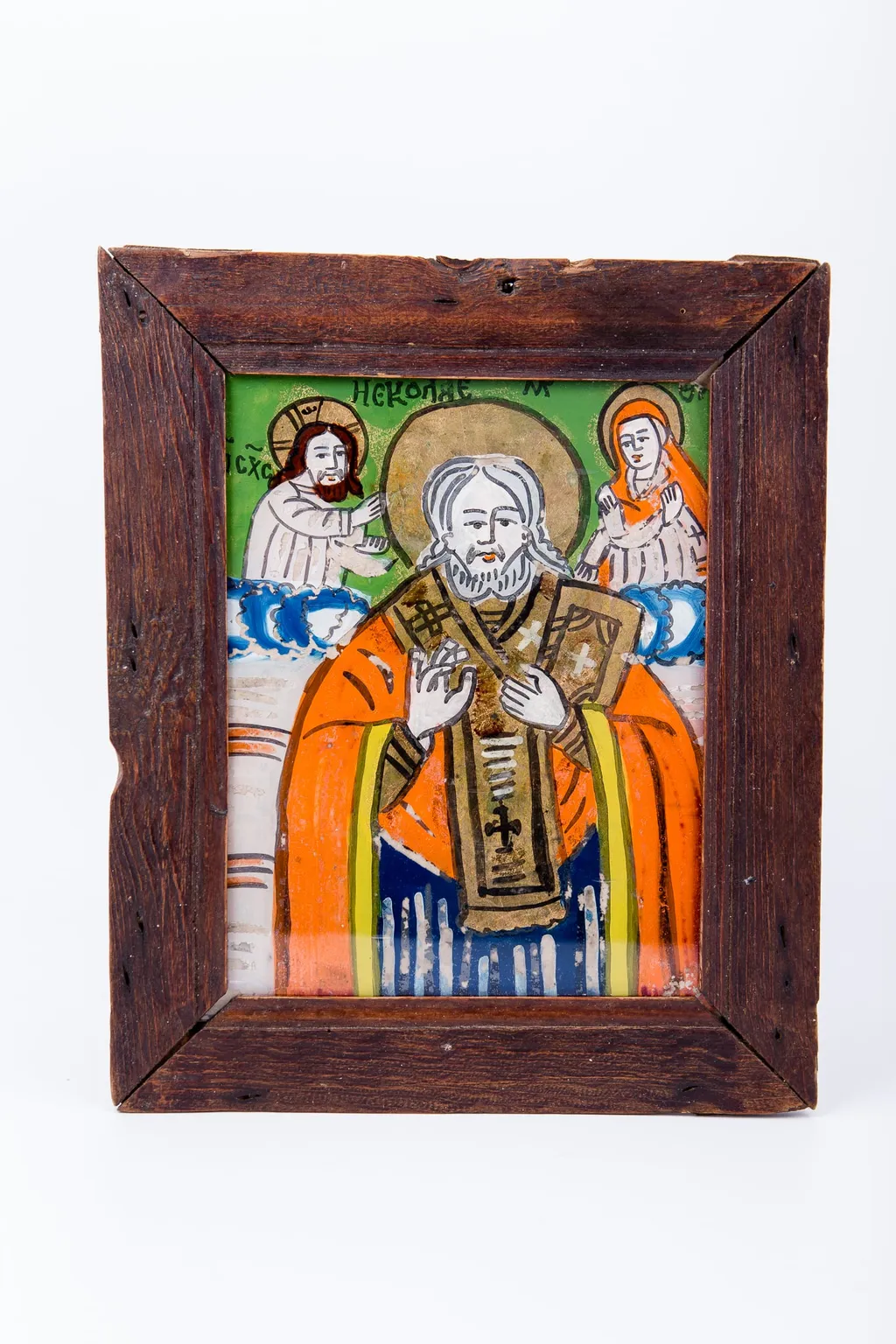
Sfântul Mare Ierarh Nicolae Făcătorul de minuni este redat central, ținând în mâna stângă Sfânta Evanghelie închisă și binecuvântează cu mâna dreaptă. Veșmintele arhierești liturgice ale sfântului ierarh sunt într-o alternanță cromatică de orange- verde-albastru-galben citronne și alb și negru. Epitrahilul, patrafirul este brun-bronziu, cu patru cruci pe el, sacosul orange-roșu vermillon. Poartă mithră și are aureolă. Ține în mâna stângă Sfânta Evanghelie închisă și binecuvântează. În registrul superior îndepărtat sunt Dumnezeu-Tatăl și Maica Domnului, care ating aureola Sfântului Nicolae. Pe fondul verde, Mântuitorul și Maica Domnului au veșminte gri, crem, orange. Inscripția din româno-chirilică se traduce Sf Nicolae ICXC MP Iisus Hristos Maica Domnului. Icoana are o cromatică puternic-vie, specifică Țării Oltului: verde, albastru ceruleum, orange, gri, galben citronne, alb, negru. is a drawing by Unknown. It dates from 1850 and is held in the collection of the ASTRA National Museum Complex. This icon depicts Saint Nicholas, the archbishop and miracle-worker, centered against a vivid green background.
About this work
Overview
Above him, God the Father and the Virgin Mary hover in the upper register, their hands gently touching his halo, signifying divine sanction.
This icon depicts Saint Nicholas, the archbishop and miracle-worker, centered against a vivid green background. He is shown in full liturgical vestments, holding a closed Gospel in his left hand while bestowing a blessing with his right. Above him, God the Father and the Virgin Mary hover in the upper register, their hands gently touching his halo, signifying divine sanction. The composition follows traditional Byzantine hieratic structure, emphasizing spiritual authority through scale and positioning.
Subject & Meaning
Saint Nicholas is portrayed as both bishop and intercessor, his closed Gospel symbolizing divine wisdom and his blessing gesture conveying grace. The presence of God the Father and the Virgin Mary above him reinforces his role as a mediator between heaven and earth. Their proximity to his halo suggests divine approval of his sanctity and episcopal authority. The inscription in Romanian Cyrillic identifies him and invokes Christ and the Mother of God, anchoring the image in Orthodox devotional practice.
Technique & Style
The icon employs a bold, saturated palette typical of the Oltenia region: luminous oranges, cerulean blues, citron yellows, and deep blacks contrast against cream and grey tones. Pigments are applied with flat, even brushwork, minimizing modeling to emphasize symbolic clarity. The brown-bronze epitrahil, marked with four crosses, and the vermilion sacos add texture and hierarchical detail. The halo, rendered in gold, separates the saint from the earthly plane without naturalistic depth.
History & Provenance
This icon originates from the 18th or early 19th century, likely produced in a monastic or regional workshop in Oltenia, Romania. Its stylistic features align with local traditions that preserved Byzantine models while incorporating regional color preferences. The use of Romanian Cyrillic script and the specific chromatic scheme suggest it was created for a parish church or private chapel within the Orthodox communities of southern Romania, where such icons served as focal points for veneration.
Context
In Orthodox liturgical practice, icons like this one functioned as windows to the divine, used in prayer and feast-day celebrations. Saint Nicholas, revered as a protector of sailors, children, and the poor, was a popular subject in Romanian ecclesiastical art. The inclusion of God the Father and the Virgin Mary above him reflects theological emphasis on the Trinity and Marian intercession, common in post-Byzantine iconography of the Danubian Principalities.
Legacy
The icon exemplifies the enduring regional style of Oltenia, where vibrant color and symbolic clarity took precedence over naturalism. Its preservation offers insight into how local communities interpreted and transmitted Orthodox theology through visual means. Similar icons from this period continue to be studied for their role in shaping religious identity and artistic continuity in Romanian Orthodoxy during the Ottoman era and beyond.
Artist & collection

 Domestic Scene
 Giacomo and Cardinal Marco, investing Andrea, Abbot of San Zeno, with his Benefice
 The Nymph of Fontainebleau
 Portrait of a Woman
 Madonna and Child with Saints in the Enclosed Garden
 Venus and Minerva
 Family Group of Four on Sofa
 Wall painting from Room H of the Villa of P. Fannius Synistor at Boscoreale
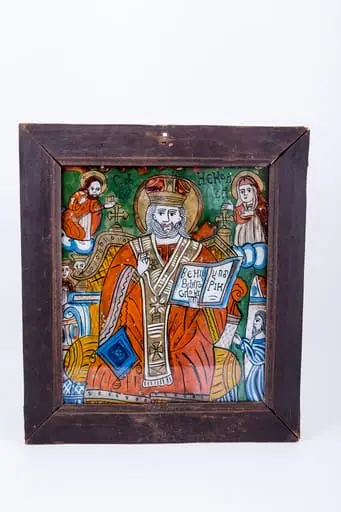 Sfântul Mare Ierarh Nicolae Făcătorul de minuni este redat central, fiind așezat pe un tron arhieresc, ținând în mâna stângă Sfânta Evanghelie deschisă și binecuvântează cu mâna dreaptă. Veșmintele arhierești liturgice ale sfântului ierarh sunt într-o alternanță cromatică de orange-albastru regal-brun-bronziu și alb și negru. Epitrahilul, patrafirul este brun-bronziu, cu patru cruci pe el, sacosul orange-roșu vermillon. Poartă mithră și are aureolă. În registrul superior îndepărtat sunt Dumnezeu-Tatăl și Maica Domnului, care binecuvântează și ocrotesc întreaga narațiune iconografică. Pe fondul verde, Mântuitorul și Maica Domnului au veșminte brune-crem și roșu-vermillon-orange. În registrul inferior sunt cele trei fete salvate de la sărăcie și păcat și tatăl fetelor mulțumind, în genunchi, pentru ajutorul primit. Inscripția din româno-chirilică se traduce Sf Nicolae ICXC MP Iisus Hristos Maica Domnului. Icoana are o cromatică puternic-vie, specifică Țării Oltului: roșu vermillon-orange, verde spanac-avocado, albastru regal, brun, gri,bronziu, alb, negru.
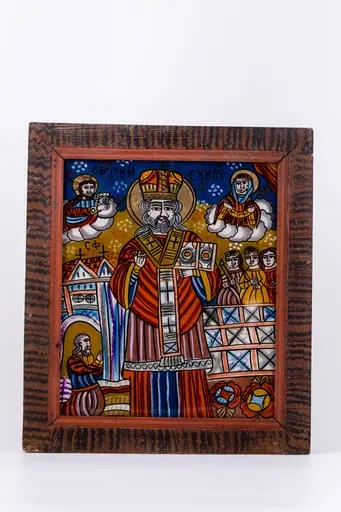 Sfântul Mare Ierarh Nicolae, făcător de minuni, îmbrăcat în veșminte liturgice, de ierarh, sacos roz-stacojiu, felon roșu vermillon-stacojiu, cu interiorul albastru și epitrahil-patrafir gri-bronziu, cu patru cruci negre brodate. Ține în mâna stângă Sfânta Evanghelie și cu mâna dreaptă Binecuvântează. Este unul dintre cei mai populari și iubiți sfinți, ocrotitor al caselor, familiilor și copiilor. Are barbă sură și mithră arhierească și aureolă. În registrul superior, sunt Dumnezeu-Tatăl Binecuvântând și Maica Domnului Ocrotind. Fondul este cerul albastru cobalt-ceruleum, împodobit cu elemente astrale - punctiflorale roșii și albe și un câmp luminos galben-auriu, în registrul mediu. În registrul mediu și inferior, sunt cele trei fete salvate și ajutate de Sfântul Nicolae și tatăl lor îngenuncheat, mulțumind pentru minunea săvârșită. Desenul este fin conturat. Cromatica este armonioasă: roșu vermillon, stacojiu-roz putred, albastru ceruleum și cobalt, galben muștar ocru, bronz, brun, bej, crem, auriu, alb, negru. Inscripția în chirilică se traduce Sfântul Nicolae. Icoana este de Țara Oltului.
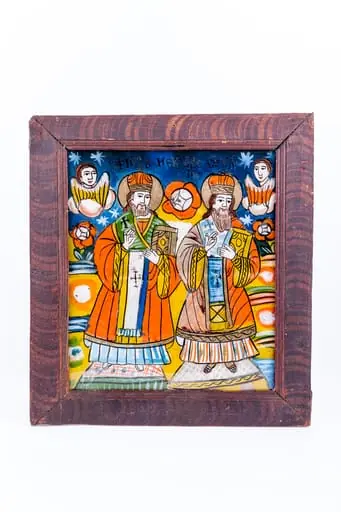 Sfinții Ierarhi Nicolae făcătorul de minuni și Vasile cel Mare sunt reprezentați împreună, binecuvântând cu mâna dreaptă și ținând în mâna stângă Sfânta Evanghelie. Sunt îmbrăcați în veșmânt-sacos și cu felon roșu vermillon și epitrahil albastru, verde, galben-ocru. Împreună slujesc și săvârșesc Sfânta Liturghie. În registrul îndepărtat superior, este pictat cerul albastru cu stele albe și ruje mari roșii. În registrul superior, în colțurile din stânga și din dreapta, este câte un înger pe o mandorlă. Cromatica este armonioasă: roșu vermillon, verde, albastru, galben-ocru, alb. Sfinții arhierei poartă și mithră arhierească. Amândoi Sfinții Ierarhi au aureole aurii. Rama este pictată cu tușe negre pe maro-roșcat, alternanță de brunuri. Este o icoană specifică picturii de Țara Oltului, din centrul Șcheii Brașovului. Din inscripția româno-chirilică se traduce Sf Nicolae Sf Vasile. În registrul inferior, fondul este format din câmpuri alternative de galben, albastru și verde.
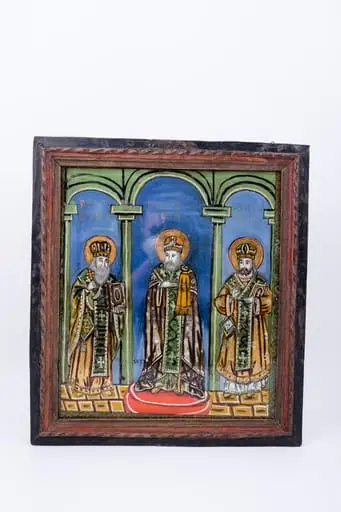 Cei Trei Sfinți Ierarhi Vasile cel Mare, Grigorie de Dumnezeu Cuvântătorul și Ioan Gură-de-Aur slujesc și săvârșesc Sfânta Liturghie împreună. Sunt înveșmântați în veșminte liturgice: sacos, felon și epitrahil verde, brun-ocru, kaki, brun-bronziu cu câte patru cruci pe mijlocul patrafirului. Sfântul Vasile cel Mare binecuvântează cu crucea în mâna dreaptă și ține în mâna stângă Sfânta Evanghelie. Sfântul Ioan Gură-de-Aur este în mijloc, așezat cu picioarele pe o pernă rotundă roșie, are mâna dreaptă lipită la piept, în semn de evlavie și cu mâna stângă ține cârja arhierească, Sfântul Grigorie binecuvântează cu mâna dreaptă și ține în mâna stângă Sfânta Evanghelie. Fondul este albastru ceruleum în registrul superior, în registrul inferior este un caroiaj brun-ocru-galben chihlimbar. Cromatica este armonioasă și săracă în nuanțe: verde smarald, absint, kaki, alb, roșu vermillon, albastru, alb, negru. Este o icoană specifică picturii de Valea Sebeșului, cu un desen fin cu conturul negru și cromatica pastelată. Inscripția din româno-chirilică se traduce Sfântul Vasile Sfântul Ioan Sfântul Grigorie.
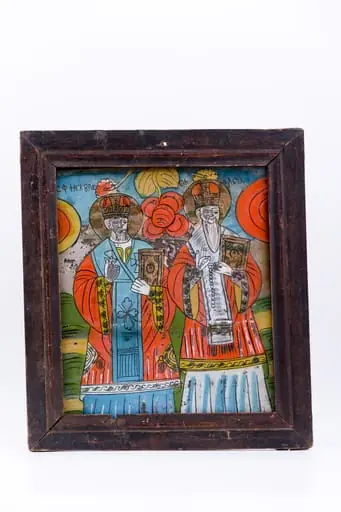 Icoana îi reprezintă pe Sfântul Ierarh Nicolae și Sfântul Vasile cel Mare, amândoi ierarhi, în veșminte liturgice arhierești, binecuvântând. Sfântul Mare Ierarh Nicolae, făcător de minuni, este îmbrăcat în veșminte liturgice, de ierarh, sacos roșu-vermillon, cu epitrahil-patrafir albastru bleu-ciel. Sfântul Nicolae are în mâna stângă Sfânta Evanghelie închisă și cu mâna dreaptă Binecuvântează. Este unul dintre cei mai populari și iubiți sfinți, ocrotitor al caselor, familiilor și copiilor. Are barbă sură, mithră arhierească și aureolă. Alături este Sfântul Ierarh Vasile cel Mare, în veșminte roșii vermillon, cu interiorul galben, sacos gri-albăstrui și epitrahil gri. Fondul este albastru bleu-ciel cu elemente decorative fitomorfe ruje galbene și roșii. Cromatica este armonioasă și pastelată: roșu vermillon, albastru bleu-ciel, verde, galben-ocru, negru, alb. Icoana este de Țara Oltului. Inscripția din româno-chirilică se traduce Sf Nicolae Sf Vasile.
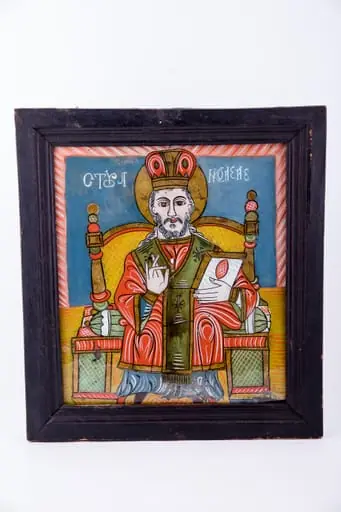 Sfântul Mare Ierarh Nicolae Făcătorul de minuni este redat central, șezând pe tron arhieresc, ținând în mâna stângă Sfânta Evanghelie și binecuvintează cu mâna dreaptă. Veșmintele arhierești liturgice ale sfântului ierarh sunt într-o alternanță cromatică de roșu vermillon-verde-albastru-alb. Epitrahilul, patrafirul este verde, cu patru cruci pe el, sacosul albastru. Poartă mithră și are aureolă. Sfântul ierarh este așezat pe un tron foarte frumos și bogat ornamentat decorativ geometric, în nuanțe de verde olive, gri și galben muștar și ocru. Pe tron este și o pernă rulou. Icoana are cu o combinație cromatică mai deosebită, cizelată: albastru, portocaliu-orange, galben citrone, brun roșcat, verde olive, alb, negru. Fondul este albastru și întreaga tematică iconografică este încadrată de un semi-chenar decorativ-geometrizant, din liniuțe delicate de alb și roșu, alternativ expuse, asemenea unui fir de mărțișor. Inscripția în româno-chirilică de pe albastrul cerului se traduce Sfântul Nicolae. În desenul trăsăturilor chipului și minuțiozitatea detaliilor se observă stilul pictorului zugrav Ioan Pop de Făgăraș, presupus autorul icoanei.
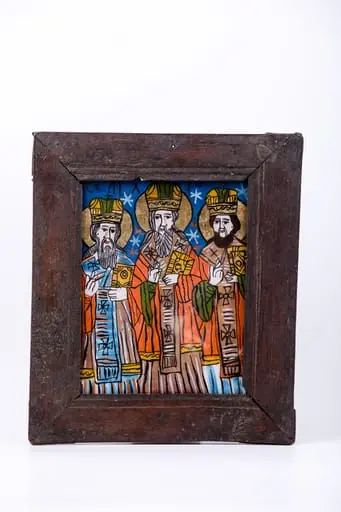 Cei Trei Sfinți Ierarhi Vasile cel Mare, Grigorie de Dumnezeu Cuvântătorul și Ioan Gură-de-Aur slujesc și săvârșesc Sfânta Liturghie împreună. Sunt înveșmântați în veșminte liturgice: sacos crem-albastru-alb-crem, felon roșu vermillon, epitrahil albastru-verde cu câte patru cruci negre. Sfântul Vasile cel Mare are Sfânta Evanghelie în mâna dreaptă. Sfântul Ierarh Grigorie de Dumnezeu Cuvântătorul Binecuvântează. Fondul registrului superior este cerul albastru-regal, bogat ornamentat cu elemente astrale - stele roșii și albe. Cromatica este luminoasă și armonioasă: verde văratic, alb, roșu vermillon, galben-ocru, bej, crem, albastru regal și bleu-ciel, negru. Este o icoană specifică picturii de Țara Oltului, cu un desen fin cu conturul negru și cromatica pastelată. Inscripția din româno-chirilică se traduce Vasile Grigorie Ioan.
 Sfântul Mare Ierarh Nicolae Făcătorul de minuni ține în mâna stângă Sfânta Evanghelie închisă și binecuvântează cu mâna dreaptă. Veșmintele arhierești liturgice ale sfântului ierarh sunt într-o alternanță cromatică de roșu vermillon, verde, ocru și gri-cenușiu antracit, cu broderie galbenă pe margini. Epitrahilul-patrafirul este gri-alburiu cu marginile verzi și trei cruci galben-aurii. Fondul icoanei este albastru bleu-ciel foarte senin. Întreaga compoziție este încadrată în spațiul cerului senin de o ghirlandă de ruje - elemente decorative fitomorfe, 6 trandafiri roșii, cu bobocei și frunze verzi. Icoana este de Nicula, Nordul Transilvaniei. Cromatica este armonioasă, specifică centrului de la Nicula: roșu vermillon, albastru bleu-ciel, galben-ocru-muștar, verde de China, alb, brun, negru, gri. Inscripția din româno-chirilică se traduce Sfântul Nicolae.
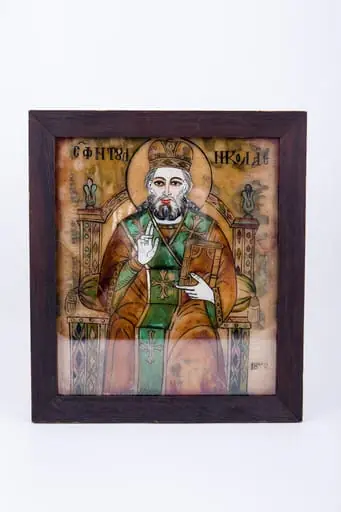 Sfântul Mare Ierarh Nicolae Făcătorul de minuni este redat central, așezat fiind pe un tron arhieresc, ținând în mâna stângă Sfânta Evanghelie închisă și binecuvântează cu mâna dreaptă. Veșmintele arhierești liturgice ale sfântului ierarh sunt într-o alternanță cromatică de brun cafeniu și verde spanac-avocado, kaki și negru. Epitrahilul, patrafirul este verde, cu patru cruci gri pe el, sacosul brun-maron. Poartă mithră și are aureolă. Fondul este brun-gri-bronziu. Inscripția din româno-chirilică se traduce Sfântul Nicolae. Icoana are o cromatică armonioasă și sobră: gri, brun, verde spanac-avocado, verde kaki, alb, negru, roșu. Icoana este de Laz, Valea Sebeșului și datată 1872.
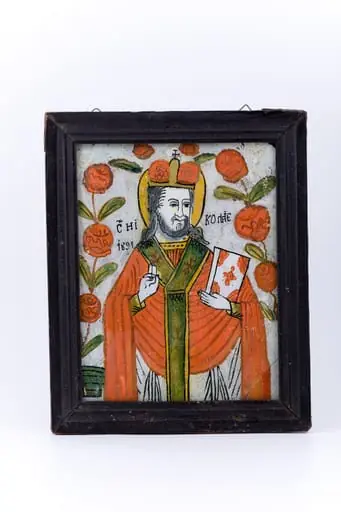 Sfântul Mare Ierarh Nicolae, făcător de minuni, îmbrăcat în veșminte liturgice, de ierarh, sacos alb cu dungi subțiri negre și epitrahil-patrafir verde văratic, cu marginea galbenă și cu trei cruci roșii-acajou. Ține în mâna stângă Sfânta Evanghelie închisă și cu mâna dreaptă Binecuvintează. Este unul dintre cei mai populari și iubiți sfinți, ocrotitor al caselor, familiilor și copiilor. Are barbă sură, părul lung și mithră arhierească bej-brună și aureolă. Fondul icoanei este cerul bleu-ciel senin alburiu, încadrat de un chenar decorativ fitomorf, format dintr-o ghirlandă de 8 ruje roșii-orange. Întreaga tematică iconografică este încadrată de un chenar decorativ geometrizant alb. Inscripția din româno-chirilică se traduce Sf Nicolae. Icoana este datată 1891. Cromatica este armonioasă: roșu-vermillon-orange, albastru bleu-ciel-alburiu, galben-chihlimbar, crem, bej, crem, bronziu, alb zinc, negru. Icoana este din Nordul Transilvaniei, Nicula.
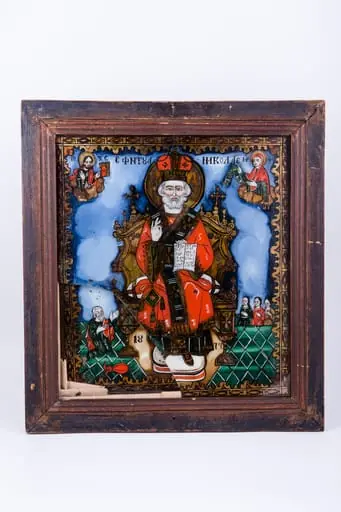 Sfântul Mare Ierarh Nicolae Făcătorul de minuni este redat central, fiind așezat pe un tron arhieresc, bogat ornamentat cu detalii arhitecturale, ținând în mâna stângă Sfânta Evanghelie închisă și binecuvântează cu mâna dreaptă. Veșmintele arhierești liturgice ale sfântului ierarh sunt într-o alternanță cromatică de roșu vermillon - verde - kaki - brun- bronziu. Epitrahilul, patrafirul este brun-kaki, cu patru cruci pe el, sacosul roșu vermillon. Poartă mithră și are aureolă. Ține în mâna stângă Sfânta Evanghelie deschisă și binecuvântează. În registrul superior îndepărtat sunt Dumnezeu-Tatăl și Maica Domnului, care binecuvântează și ocrotesc. Pe fondul albastru ceruleum în degrade cu albastru regal și alb, Mântuitorul și Maica Domnului au veșminte roșii și verzi. În registrul inferior sunt cele trei fete salvate de sfântul ierarh de la sărăcie și păcat și tatăl fetelor, care îngenuncheat, mulțumește pentru minunea și binefacerile primite. Inscripția din româno-chirilică se traduce Sf Nicolae ICXC Iisus Hristos MP Maica Domnului. Icoana are o cromatică puternic-vie, specifică Țării Oltului: roșu vermillon, verde, albastru ceruleum, gri, galben chihlimbar, alb, negru. Icoana este încadrată de un chenar decorativ geometrizant, format dintr-o dantelărie aurie. Icoana aparține lui Savu Moga, din Arpașu de Sus, Țara Făgărașului. Icoana este datată 1877.
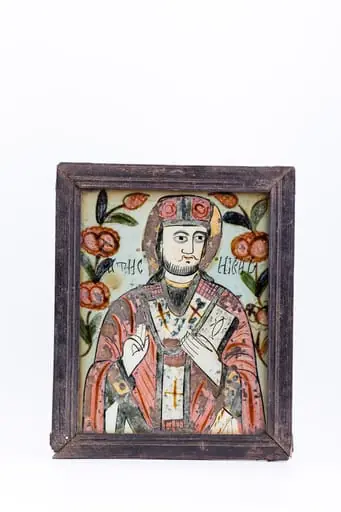
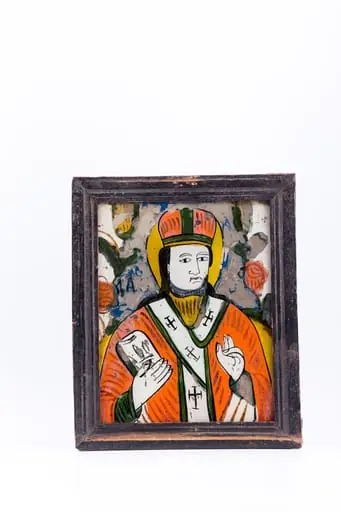 Sfântul Mare Ierarh Nicolae Făcătorul de minuni ține în mâna dreaptă Sfânta Evanghelie închisă și binecuvântează cu mâna stângă. Veșmintele arhierești liturgice ale sfântului ierarh sunt într-o alternanță cromatică de roșu vermillon, galben și verde. Epitrahilul-patrafirul este alb cu marginile verzi și patru cruci brune. Fondul icoanei este alb-albăstrui-gri în registrul superior și un câmp galben-solar în registrul inferior. Întreaga compoziție este încadrată în spațiul cerului senin de o ghirlandă de ruje - elemente decorative fitomorfe, patru trandafiri roșii-galbeni, cu frunze verzi. Inscripția din româno-chirilică se traduce Sf Nicolae. Icoana este de Nicula, Nordul Transilvaniei.