Artwork
Cei Trei Sfinți Ierarhi Vasile cel Mare, Grigorie de Dumnezeu Cuvântătorul și Ioan Gură-de-Aur slujesc și săvârșesc Sfânta Liturghie împreună. Sunt înveșmântați în veșminte liturgice: sacos, felon și epitrahil verde, brun-ocru, kaki, brun-bronziu cu câte patru cruci pe mijlocul patrafirului. Sfântul Vasile cel Mare binecuvântează cu crucea în mâna dreaptă și ține în mâna stângă Sfânta Evanghelie. Sfântul Ioan Gură-de-Aur este în mijloc, așezat cu picioarele pe o pernă rotundă roșie, are mâna dreaptă lipită la piept, în semn de evlavie și cu mâna stângă ține cârja arhierească, Sfântul Grigorie binecuvântează cu mâna dreaptă și ține în mâna stângă Sfânta Evanghelie. Fondul este albastru ceruleum în registrul superior, în registrul inferior este un caroiaj brun-ocru-galben chihlimbar. Cromatica este armonioasă și săracă în nuanțe: verde smarald, absint, kaki, alb, roșu vermillon, albastru, alb, negru. Este o icoană specifică picturii de Valea Sebeșului, cu un desen fin cu conturul negru și cromatica pastelată. Inscripția din româno-chirilică se traduce Sfântul Vasile Sfântul Ioan Sfântul Grigorie.
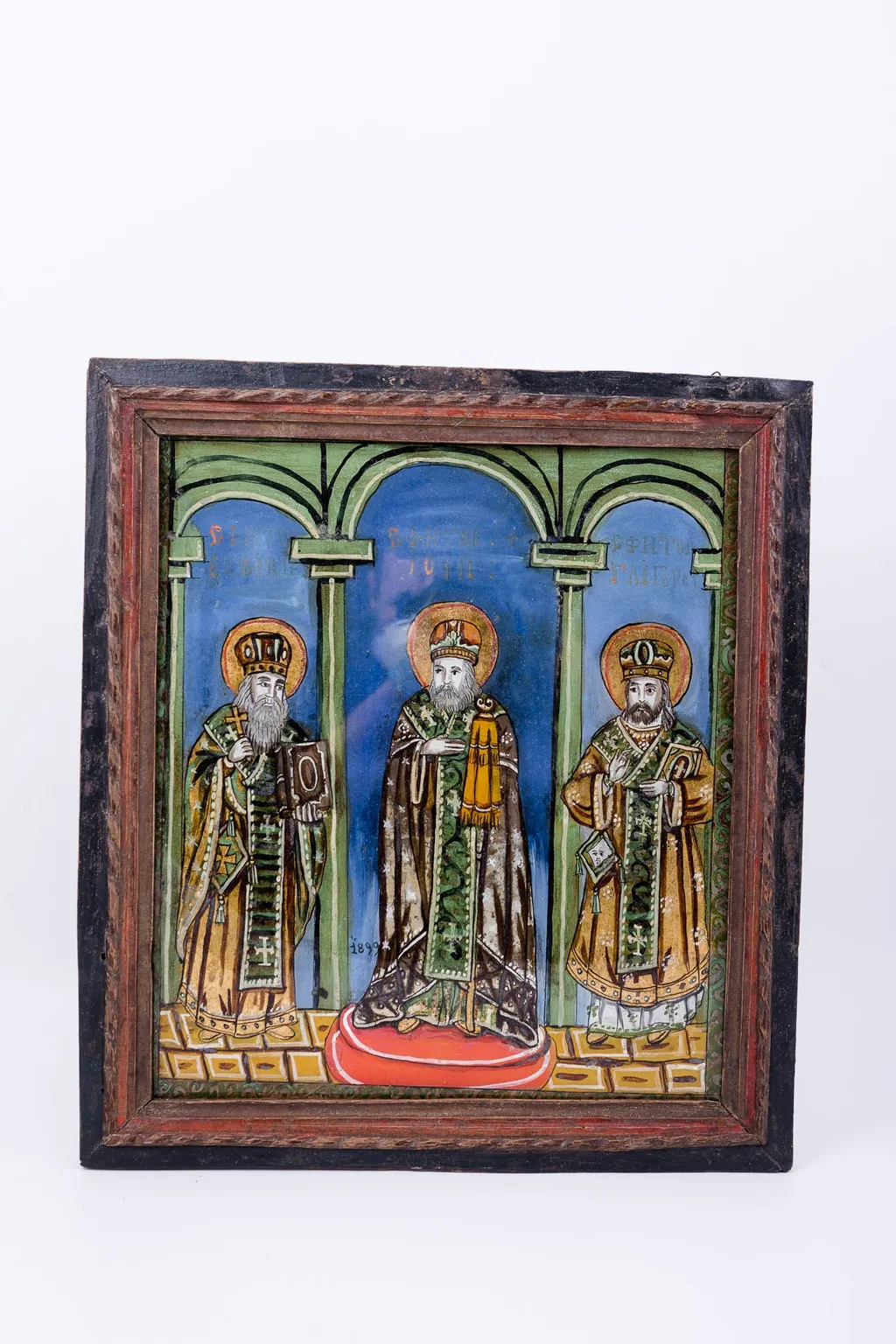
Cei Trei Sfinți Ierarhi Vasile cel Mare, Grigorie de Dumnezeu Cuvântătorul și Ioan Gură-de-Aur slujesc și săvârșesc Sfânta Liturghie împreună. Sunt înveșmântați în veșminte liturgice: sacos, felon și epitrahil verde, brun-ocru, kaki, brun-bronziu cu câte patru cruci pe mijlocul patrafirului. Sfântul Vasile cel Mare binecuvântează cu crucea în mâna dreaptă și ține în mâna stângă Sfânta Evanghelie. Sfântul Ioan Gură-de-Aur este în mijloc, așezat cu picioarele pe o pernă rotundă roșie, are mâna dreaptă lipită la piept, în semn de evlavie și cu mâna stângă ține cârja arhierească, Sfântul Grigorie binecuvântează cu mâna dreaptă și ține în mâna stângă Sfânta Evanghelie. Fondul este albastru ceruleum în registrul superior, în registrul inferior este un caroiaj brun-ocru-galben chihlimbar. Cromatica este armonioasă și săracă în nuanțe: verde smarald, absint, kaki, alb, roșu vermillon, albastru, alb, negru. Este o icoană specifică picturii de Valea Sebeșului, cu un desen fin cu conturul negru și cromatica pastelată. Inscripția din româno-chirilică se traduce Sfântul Vasile Sfântul Ioan Sfântul Grigorie. is a drawing by the Impressionist artist Unknown. It dates from 1899 and is held in the collection of the ASTRA National Museum Complex.
About this work
The background of the painting is a deep blue color, which provides a striking contrast to the warm tones of the saints' robes.
This painting shows three saints standing in front of a blue background. They are wearing long robes and holding various objects, including a book and a staff. The saints are surrounded by intricate details and patterns, including a red and gold border around the edges of the painting.
The saints are depicted in a formal, dignified manner, with serious expressions on their faces. They are arranged in a triangular formation, with the central saint standing slightly forward of the other two. The background of the painting is a deep blue color, which provides a striking contrast to the warm tones of the saints' robes.
The painting is a beautiful example of religious art from the 19th century. If you're interested in learning more about this style of art, you might want to explore the Impressionism movement.
Overview
The icon presents three hierarchs—Saint Basil the Great, Saint Gregory the Theologian, and Saint John the Golden‑Mouth—engaged in the liturgical rite. They stand before a deep cerulean sky, their solemn faces and dignified postures arranged in a tight triangular composition, with John positioned centrally and slightly forward.
Subject & Meaning
Each saint is depicted in full liturgical vestments, holding symbols of their office: Basil blesses with a cross while clutching the Gospel, Gregory mirrors this gesture, and John rests his right hand on his chest in reverence, holding an episcopal staff. The arrangement underscores their collective role in celebrating the Holy Liturgy.
Technique & Style
Executed in the Valea Sebeș school, the work features fine, black‑outlined drawing and a restrained pastel palette of emerald, absinthe, khaki, vermilion, and blue. The background divides into an upper blue field and a lower amber‑brown‑gold lattice, while a red‑and‑gold ornamental border frames the composition.
Context
Typical of 19th‑century Romanian Orthodox iconography, the piece reflects the regional emphasis on clear outlines and harmonious, muted colors. Its formal composition and detailed vestments align with the devotional standards of the period, serving both liturgical and instructional functions.
Artist & collection

 Domestic Scene
 Giacomo and Cardinal Marco, investing Andrea, Abbot of San Zeno, with his Benefice
 The Nymph of Fontainebleau
 Portrait of a Woman
 Madonna and Child with Saints in the Enclosed Garden
 Venus and Minerva
 Family Group of Four on Sofa
 Wall painting from Room H of the Villa of P. Fannius Synistor at Boscoreale
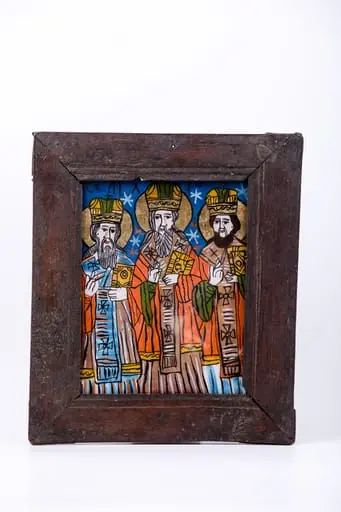 Cei Trei Sfinți Ierarhi Vasile cel Mare, Grigorie de Dumnezeu Cuvântătorul și Ioan Gură-de-Aur slujesc și săvârșesc Sfânta Liturghie împreună. Sunt înveșmântați în veșminte liturgice: sacos crem-albastru-alb-crem, felon roșu vermillon, epitrahil albastru-verde cu câte patru cruci negre. Sfântul Vasile cel Mare are Sfânta Evanghelie în mâna dreaptă. Sfântul Ierarh Grigorie de Dumnezeu Cuvântătorul Binecuvântează. Fondul registrului superior este cerul albastru-regal, bogat ornamentat cu elemente astrale - stele roșii și albe. Cromatica este luminoasă și armonioasă: verde văratic, alb, roșu vermillon, galben-ocru, bej, crem, albastru regal și bleu-ciel, negru. Este o icoană specifică picturii de Țara Oltului, cu un desen fin cu conturul negru și cromatica pastelată. Inscripția din româno-chirilică se traduce Vasile Grigorie Ioan.
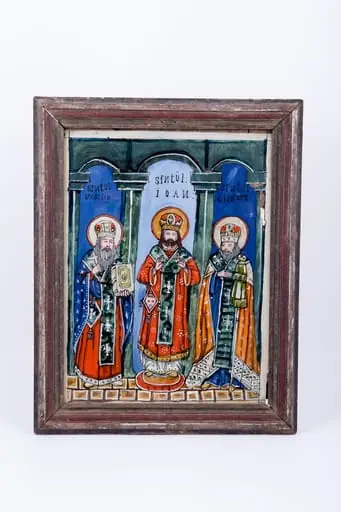 Cei Sfinți Trei Ierarhi Vasile cel Mare, Grigorie de Dumnezeu Cuvântătorul și Ioan Gură-de-Aur slujesc și săvârșesc Sfânta Liturghie împreună. Sunt înveșmântați în veșminte liturgice: sacos, felon și epitrahil mithră și aureolă. Cromatica veșmintelor este vie și luminoasă: roșu vermillon, orange-cărămiziu, galben-ocru și albastru ceruleum și bleu-ciel, verde și alb. Sfântul Vasile cel Mare are crucea în mâna dreaptă și binecuvântează și în mâna stângă ține Sfânta Evanghelie închisă. Sfântul Ioan Gură-de-Aur, central, tânăr cu barba brunetă, binecuvântează cu ambele mâini și are pe bedernița romboidală un chip de sfânt, element antrpomorf. Alături este Sfântul Grigorie care ține în mâna stângă cârja-sceptrul arhiepiscopală și binecuvântează. Fondul întregii tematici iconografice este albastru ceruleum în exterior și central bleu-ciel. Sfinții trei ierarhi sunt încadrați de coloane și arcade-bolți, schițându-se astfel structura arhitecturală de biserică. În registrul inferior este un un caroiaj alb-ocru, o lespede de fundație puternică - reprezentând credința creștin-ortodoxă. Cromatica este luminoasă și armonioasă: roșu vermillon, orange, verde spanac-avocado, galben-ocru, brun, albastru ceruleum și bleu-ciel, gri, alb și negru. Este o icoană de Valea Sebeșului. Inscripiția din româno-chirilică se traduce: Sfântul Vasilie Sfântul Ioan Sfântul Grigorie. Icoana este datată 1908.
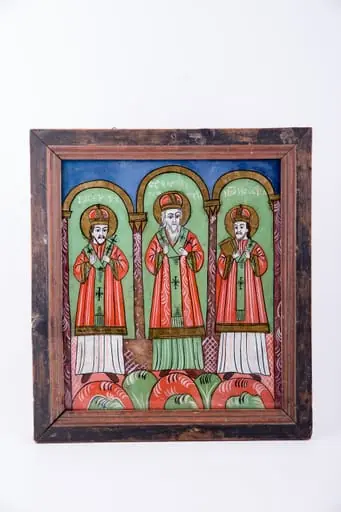 Cei Trei Sfinți Ierarhi Vasile cel Mare, Grigorie de Dumnezeu Cuvântătorul și Ioan Gură-de-Aur slujesc și săvârșesc Sfânta Liturghie împreună. Sunt înveșmântați în veșminte liturgice: sacos verde-alb-verde, felon roșu vermillon, epitrahil verde cu câte patru cruci. Sfântul Vasile cel Mare are Sfânta Evanghelie în mâna dreaptă. Sfântul Ierarh Grigorie de Dumnezeu Cuvântătorul Binecuvintează. Cei trei Sfinți Ierarhi stau cu picioarele pe perinițe rotunde de culori alternative: roșu, verde, alb. Fiecare sfânt ierarh este încadrat de două coloane și o boltă de biserică. Sunt prezente elemente arhitectură bisericească. Fondul registrului superior este albastru. Cromatica este luminoasă și armonioasă: verde, alb, roșu vermillon, roșu, albastru, negru. Este o icoană specifică picturii de Țara Făgărașului, cu un desen fin cu conturul negru și cromatica pastelată. După stilul picturii întregii compoziții, icoane poate să aparțină lui Matei Țimforea.
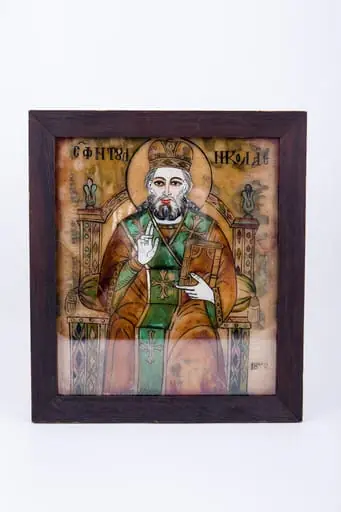 Sfântul Mare Ierarh Nicolae Făcătorul de minuni este redat central, așezat fiind pe un tron arhieresc, ținând în mâna stângă Sfânta Evanghelie închisă și binecuvântează cu mâna dreaptă. Veșmintele arhierești liturgice ale sfântului ierarh sunt într-o alternanță cromatică de brun cafeniu și verde spanac-avocado, kaki și negru. Epitrahilul, patrafirul este verde, cu patru cruci gri pe el, sacosul brun-maron. Poartă mithră și are aureolă. Fondul este brun-gri-bronziu. Inscripția din româno-chirilică se traduce Sfântul Nicolae. Icoana are o cromatică armonioasă și sobră: gri, brun, verde spanac-avocado, verde kaki, alb, negru, roșu. Icoana este de Laz, Valea Sebeșului și datată 1872.
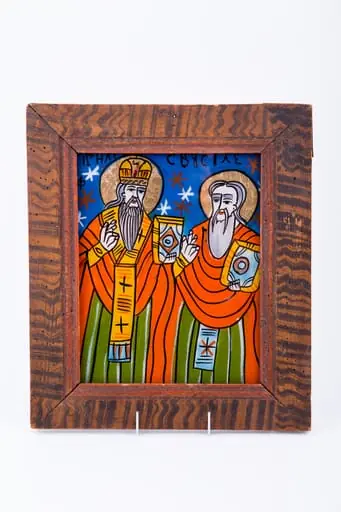 Sfinții Ierarhi Ioan Gură-de-Aur și Vasile cel Mare sunt reprezentați împreună, binecuvântând cu mâna dreaptă și ținând în mâna stângă Sfânta Evanghelie. Sunt îmbrăcați în veșmânt-sacos verde, cu felon roșu vermillon și epitrahil galben-ocru. Împreună slujesc și săvârșesc Sfânta Liturghie. În registrul îndepărtat superior, este pictat cerul albastru cu stele albe și roșii. Cromatica este armonioasă: roșu vermillon, verde, albastru, galben-ocru, alb. Sfântul Ierarh Ioan Gură-de-Aur poartă și mithră arhierească. Amândoi Sfinții Ierarhi au aureole aurii. Rama este pictată cu tușe negre pe maro-roșcat, alternanță de brunuri. Este o icoană specifică picturii de Țara Oltului, din centrul Șcheii Brașovului. Tematica este rară.
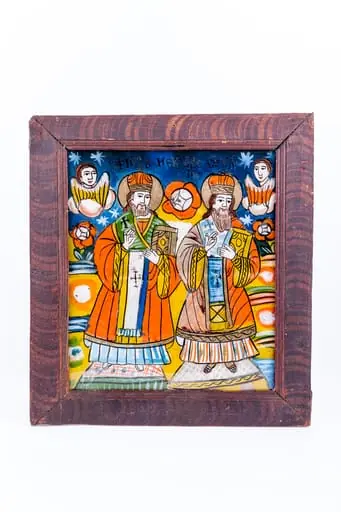 Sfinții Ierarhi Nicolae făcătorul de minuni și Vasile cel Mare sunt reprezentați împreună, binecuvântând cu mâna dreaptă și ținând în mâna stângă Sfânta Evanghelie. Sunt îmbrăcați în veșmânt-sacos și cu felon roșu vermillon și epitrahil albastru, verde, galben-ocru. Împreună slujesc și săvârșesc Sfânta Liturghie. În registrul îndepărtat superior, este pictat cerul albastru cu stele albe și ruje mari roșii. În registrul superior, în colțurile din stânga și din dreapta, este câte un înger pe o mandorlă. Cromatica este armonioasă: roșu vermillon, verde, albastru, galben-ocru, alb. Sfinții arhierei poartă și mithră arhierească. Amândoi Sfinții Ierarhi au aureole aurii. Rama este pictată cu tușe negre pe maro-roșcat, alternanță de brunuri. Este o icoană specifică picturii de Țara Oltului, din centrul Șcheii Brașovului. Din inscripția româno-chirilică se traduce Sf Nicolae Sf Vasile. În registrul inferior, fondul este format din câmpuri alternative de galben, albastru și verde.
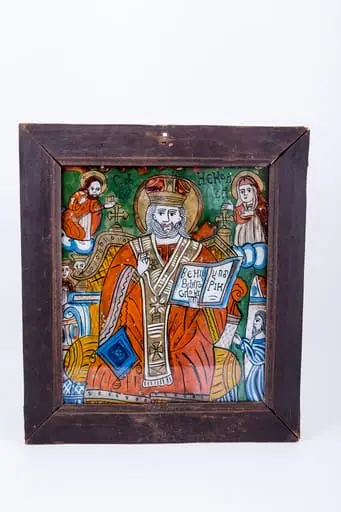 Sfântul Mare Ierarh Nicolae Făcătorul de minuni este redat central, fiind așezat pe un tron arhieresc, ținând în mâna stângă Sfânta Evanghelie deschisă și binecuvântează cu mâna dreaptă. Veșmintele arhierești liturgice ale sfântului ierarh sunt într-o alternanță cromatică de orange-albastru regal-brun-bronziu și alb și negru. Epitrahilul, patrafirul este brun-bronziu, cu patru cruci pe el, sacosul orange-roșu vermillon. Poartă mithră și are aureolă. În registrul superior îndepărtat sunt Dumnezeu-Tatăl și Maica Domnului, care binecuvântează și ocrotesc întreaga narațiune iconografică. Pe fondul verde, Mântuitorul și Maica Domnului au veșminte brune-crem și roșu-vermillon-orange. În registrul inferior sunt cele trei fete salvate de la sărăcie și păcat și tatăl fetelor mulțumind, în genunchi, pentru ajutorul primit. Inscripția din româno-chirilică se traduce Sf Nicolae ICXC MP Iisus Hristos Maica Domnului. Icoana are o cromatică puternic-vie, specifică Țării Oltului: roșu vermillon-orange, verde spanac-avocado, albastru regal, brun, gri,bronziu, alb, negru.
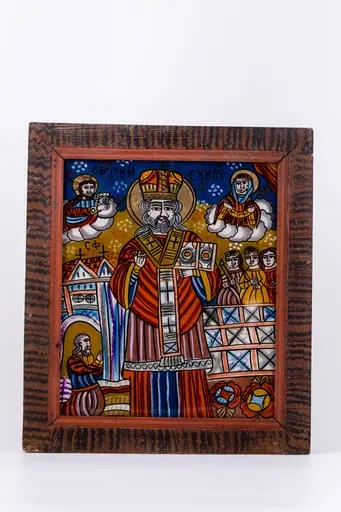 Sfântul Mare Ierarh Nicolae, făcător de minuni, îmbrăcat în veșminte liturgice, de ierarh, sacos roz-stacojiu, felon roșu vermillon-stacojiu, cu interiorul albastru și epitrahil-patrafir gri-bronziu, cu patru cruci negre brodate. Ține în mâna stângă Sfânta Evanghelie și cu mâna dreaptă Binecuvântează. Este unul dintre cei mai populari și iubiți sfinți, ocrotitor al caselor, familiilor și copiilor. Are barbă sură și mithră arhierească și aureolă. În registrul superior, sunt Dumnezeu-Tatăl Binecuvântând și Maica Domnului Ocrotind. Fondul este cerul albastru cobalt-ceruleum, împodobit cu elemente astrale - punctiflorale roșii și albe și un câmp luminos galben-auriu, în registrul mediu. În registrul mediu și inferior, sunt cele trei fete salvate și ajutate de Sfântul Nicolae și tatăl lor îngenuncheat, mulțumind pentru minunea săvârșită. Desenul este fin conturat. Cromatica este armonioasă: roșu vermillon, stacojiu-roz putred, albastru ceruleum și cobalt, galben muștar ocru, bronz, brun, bej, crem, auriu, alb, negru. Inscripția în chirilică se traduce Sfântul Nicolae. Icoana este de Țara Oltului.
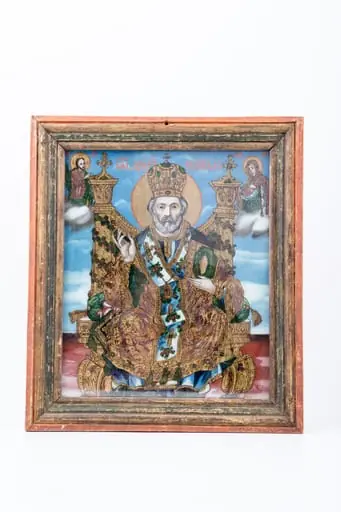 Sfântul Mare Ierarh Nicolae Făcătorul de minuni este redat central, pe un tron arhiresc, ținând în mâna stângă Sfânta Evanghelie închisă și binecuvântează cu mâna dreaptă. Veșmintele arhierești liturgice ale sfântului ierarh sunt într-o alternanță cromatică de brun, bronziu, verde-albastru-ocru, absint, smarald și alb și negru. Epitrahilul, patrafirul este albastru-verde, turcoaz-smarald cu opt cruci pe el, sacosul brun-bronziu. Poartă mithră și are aureolă. Tronul este bogat ornamentat cu detalii de elemente arhitectonice, reprezentând simbolic Împărăția Cerurilor. Este pictat tronul asemenea unui munte, supradimensionat. În registrul superior, sunt Mântuitorul Iisus Hristos în colțul din dreapta sfântului ierarh și Maica Domnului în colțul din stânga Sfântului Nicolae, din ambele părți primind binecuvântare și ocrotire. Fondul este deosebit, Cerul ca o mare nemărginită, un albastru turcoaz-smarald ca de ape vălurite. Inscripția din româno-chirilică se traduce IC XC Iisus Hristos Sfântul Nicolae MP Maica Domnului. Rama este bicromă și reliefată: brun cafeniu și roșu acajou.
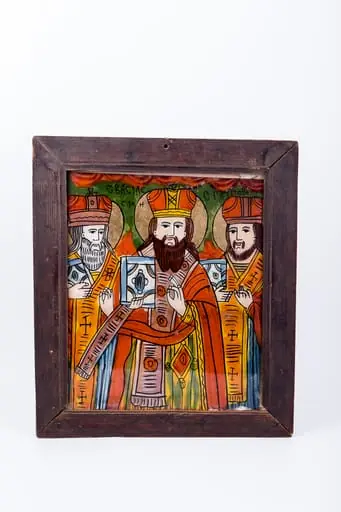 Cei Sfinți Trei Ierarhi Vasile cel Mare, Grigorie de Dumnezeu Cuvântătorul și Ioan Gură-de-Aur slujesc și săvârșesc Sfânta Liturghie împreună. Sunt înveșmântați în veșminte liturgice: sacos, felon și epitrahil mithră și aureolă. Cromatica veșmintelor este vie și luminoasă: roșu vermillon, verde spanac-avocado, galben-ocru și albastru bleu-ciel. Ceea ce este inedit este că în această icoană, cei trei sfinți ierarhi binecuvântează cu mâna stângă. Este o licență poetică picturală - pictura pe sticlă se realizează în oglindă. Fondul întregii tematici iconografice este format din alternanța de verde și roșu vermillon. Cromatica este luminoasă și armonioasă, vie și luminoasă: roșu vermillon, orange, verde spanac-avocado, galben-ocru, albastru bleu-ciel, alb și negru. Este o icoană specifică picturii de Țara Oltului, din centrul Șcheii Brașovului. Inscripiția din româno-chirilică se traduce: Vasile Ioan Grigorie
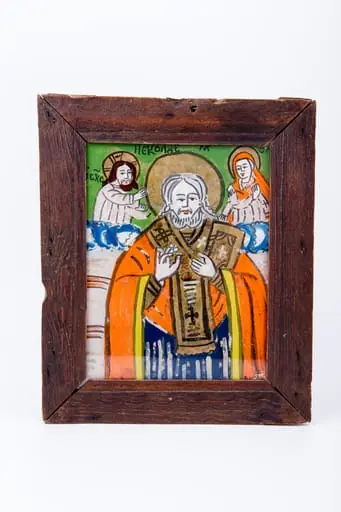 Sfântul Mare Ierarh Nicolae Făcătorul de minuni este redat central, ținând în mâna stângă Sfânta Evanghelie închisă și binecuvântează cu mâna dreaptă. Veșmintele arhierești liturgice ale sfântului ierarh sunt într-o alternanță cromatică de orange- verde-albastru-galben citronne și alb și negru. Epitrahilul, patrafirul este brun-bronziu, cu patru cruci pe el, sacosul orange-roșu vermillon. Poartă mithră și are aureolă. Ține în mâna stângă Sfânta Evanghelie închisă și binecuvântează. În registrul superior îndepărtat sunt Dumnezeu-Tatăl și Maica Domnului, care ating aureola Sfântului Nicolae. Pe fondul verde, Mântuitorul și Maica Domnului au veșminte gri, crem, orange. Inscripția din româno-chirilică se traduce Sf Nicolae ICXC MP Iisus Hristos Maica Domnului. Icoana are o cromatică puternic-vie, specifică Țării Oltului: verde, albastru ceruleum, orange, gri, galben citronne, alb, negru.