Artwork
Sfinții Arhangheli
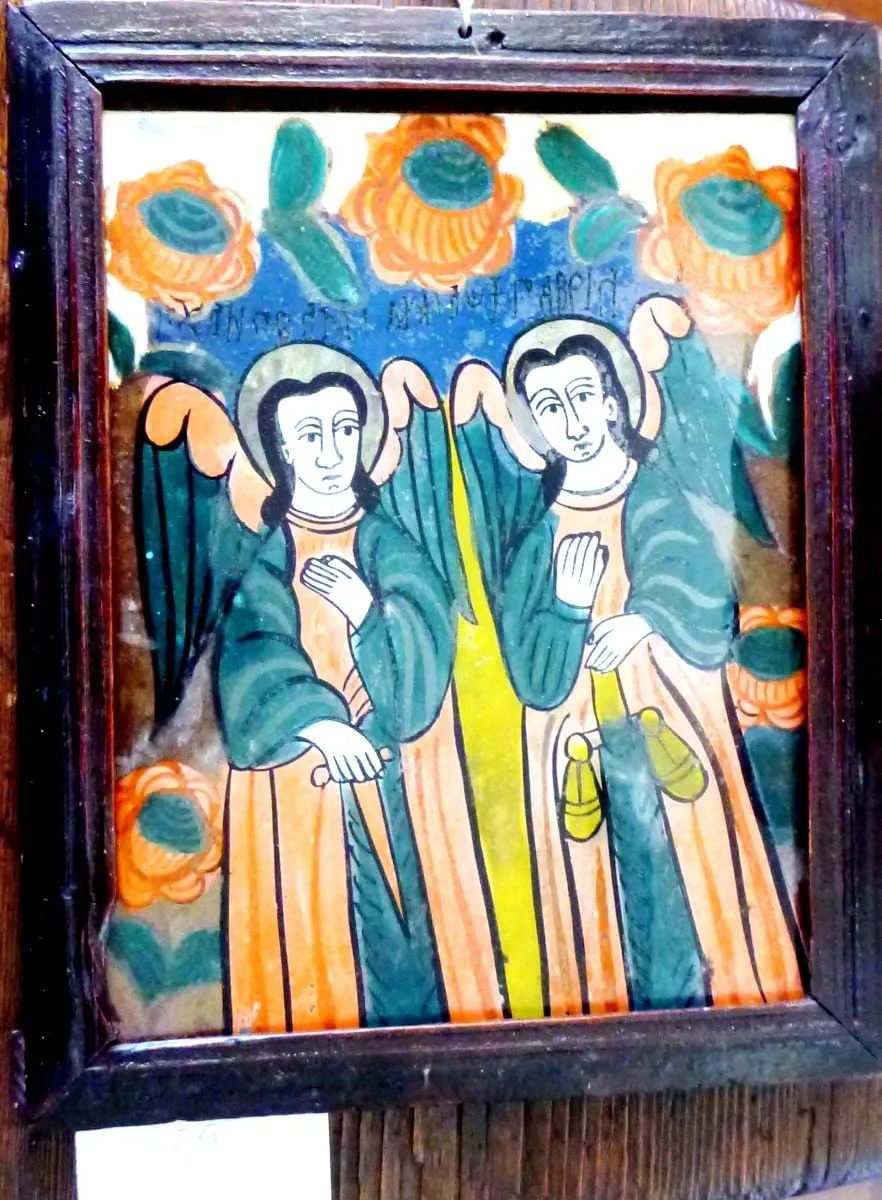
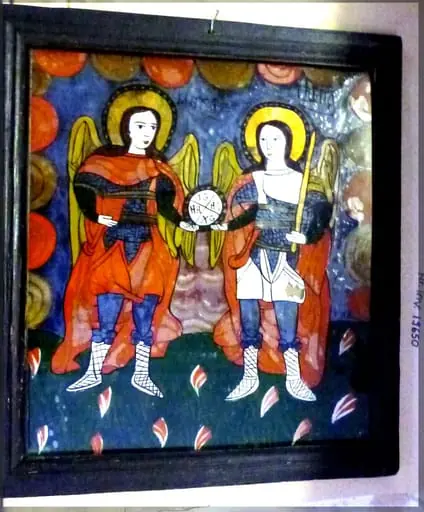
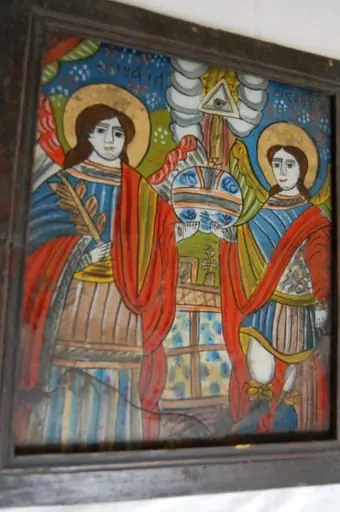
Sfinții Arhangheli is a drawing by Unknown. It dates from 1850 and is held in the collection of the Bistrita-Năsăud Museum Complex. This painting portrays two archangels in a tranquil composition, rendered in a traditional style.
About this work
Overview
The background consists of a soft blue sky adorned with stylized orange blossoms and green foliage, creating a harmonious, otherworldly setting.
This painting portrays two archangels in a tranquil composition, rendered in a traditional style. Both figures stand upright with hands raised in a gesture of reverence, their expressions serene and still. The background consists of a soft blue sky adorned with stylized orange blossoms and green foliage, creating a harmonious, otherworldly setting. The work is part of the collection at the Museum of Ethnography, where it is preserved as an example of devotional imagery.
Subject & Meaning
The two figures represent archangels, likely intended as celestial messengers or protectors. Their raised hands suggest prayer, blessing, or divine intercession. The calmness of their faces and the peaceful environment imply a spiritual stillness, reflecting a devotional ideal of heavenly harmony. The absence of narrative action emphasizes their role as eternal, contemplative beings rather than actors in a story.
Technique & Style
The angels are depicted in elongated, flowing robes with layered colors: green over orange and yellow, respectively. The fabric is rendered with minimal shading, favoring flat planes of color that enhance symbolic clarity over naturalism. The background’s floral motifs are simplified, with bold outlines and limited detail, aligning with folk or liturgical artistic conventions rather than Renaissance realism.
History & Provenance
The painting resides in the Museum of Ethnography, suggesting it was collected as part of a cultural or religious tradition rather than as fine art. Its origins are likely regional, possibly from a rural church or private devotional setting. No documented artist or precise date is known, but its stylistic features point to a 19th- or early 20th-century Eastern European source.
Context
This image fits within a broader tradition of Eastern Christian iconography, where archangels are frequently depicted as intermediaries between the divine and human realms. The use of symbolic color and static posture reflects liturgical aesthetics common in Orthodox communities. Its preservation in an ethnographic museum indicates its value as a cultural artifact tied to local religious practice.
Legacy
Though not widely known outside regional collections, the painting contributes to the understanding of how spiritual ideals were visually expressed in everyday religious life. Its preservation underscores the importance of folk devotional art in maintaining cultural continuity. It remains a quiet testament to the enduring presence of sacred imagery in communal memory.
Artist & collection

 Domestic Scene
 Giacomo and Cardinal Marco, investing Andrea, Abbot of San Zeno, with his Benefice
 The Nymph of Fontainebleau
 Portrait of a Woman
 Madonna and Child with Saints in the Enclosed Garden
 Venus and Minerva
 Family Group of Four on Sofa
 Wall painting from Room H of the Villa of P. Fannius Synistor at Boscoreale