Artwork
Shah Jahan
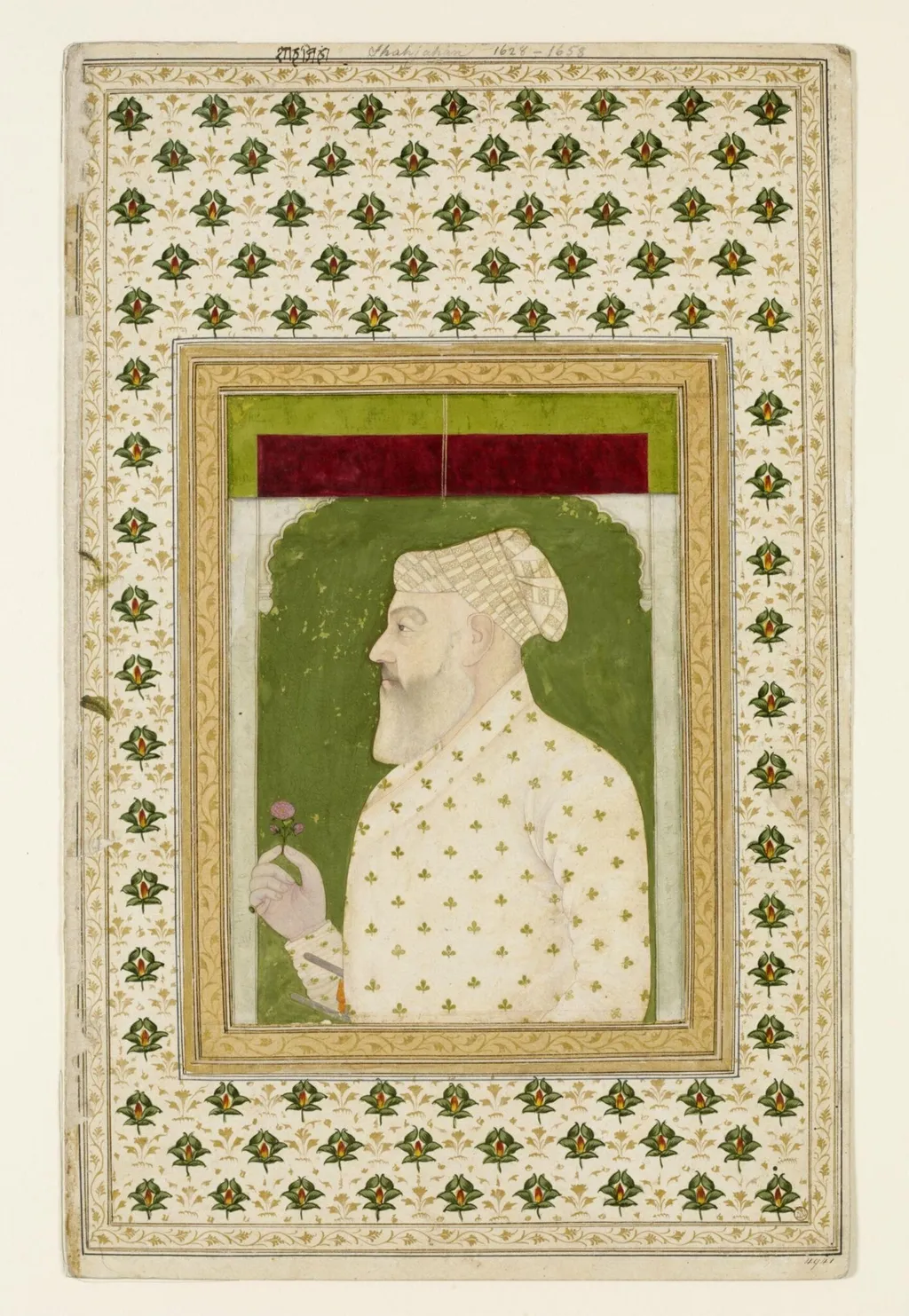
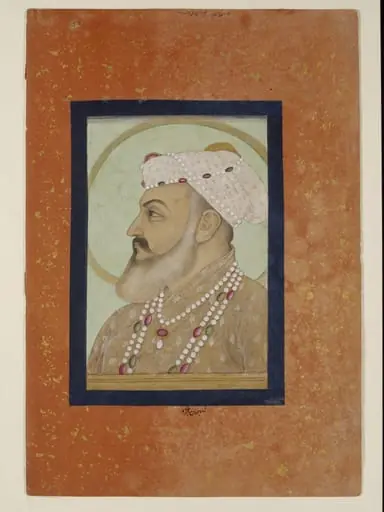
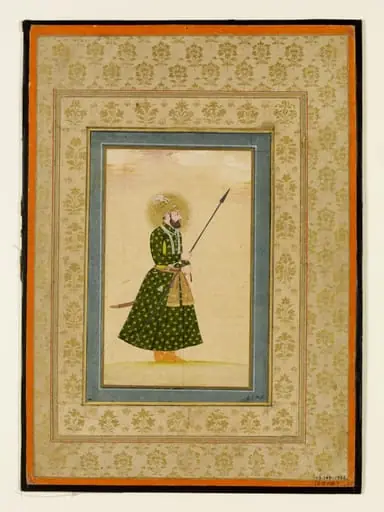
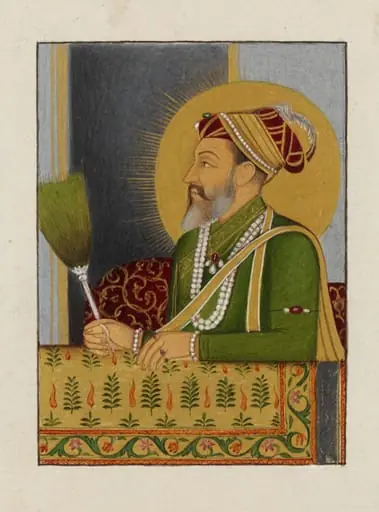
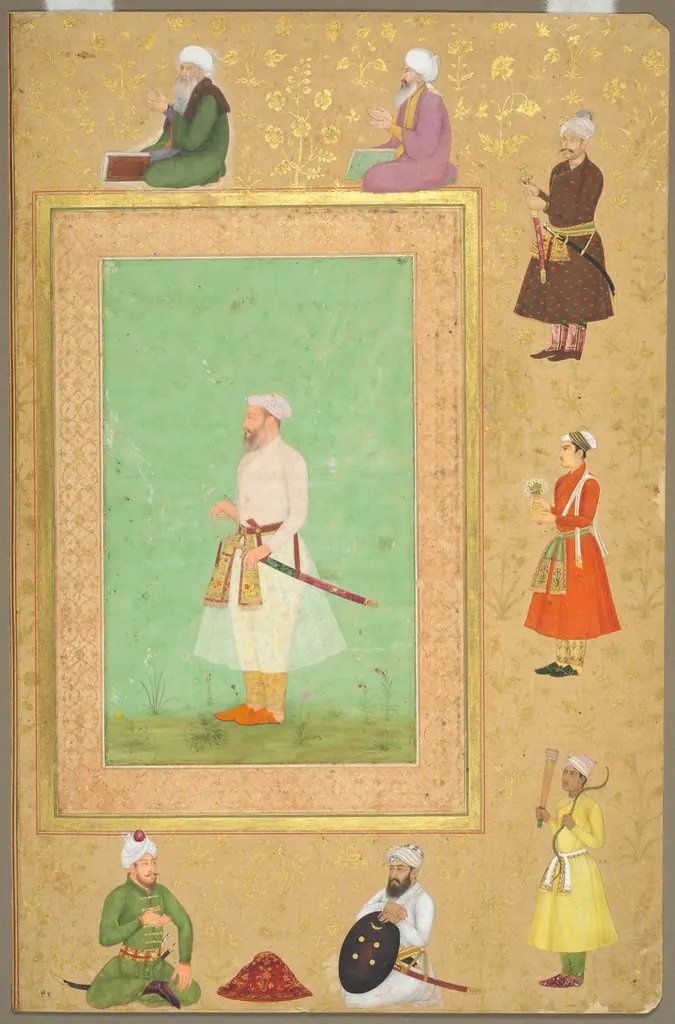
Shah Jahan is a paint painting by Unknown. It dates from 1750 and is held in the collection of the Victoria and Albert Museum.
About this work
Overview
The work belongs to a later phase of Mughal painting, long after the emperor’s death, suggesting a revival or commemorative intent.
This portrait of Shah Jahan, dated to 1750, is executed in opaque watercolour on paper. Though attributed to an unnamed artist, it reflects the enduring visual language of Mughal court portraiture. The composition presents the emperor in profile, framed by an ornate border and set against a richly coloured background. The work belongs to a later phase of Mughal painting, long after the emperor’s death, suggesting a revival or commemorative intent.
Subject & Meaning
Shah Jahan is depicted with regal stillness, holding a flower—a symbol of refinement and transient beauty common in Mughal iconography. His white robe, edged in gold, and matching turban signify imperial status, while the absence of weapons or throne reinforces an idealized, contemplative ruler. The layered border and vivid background elevate him beyond mere likeness, positioning him as a timeless figure of authority and elegance.
Technique & Style
The painting employs fine brushwork and layered opaque watercolours to achieve luminous detail, particularly in the gold embellishments on fabric and turban. The border features a repetitive floral motif rendered in green, red, and gold, demonstrating meticulous handwork. Contrary to the misattribution, the technique is not impasto; instead, it relies on delicate pigment application and burnishing to create metallic sheen, typical of Mughal manuscript illumination traditions.
History & Provenance
Created nearly a century after Shah Jahan’s death, this portrait likely originated in a regional Mughal atelier, possibly in the Deccan or Punjab, where imperial imagery persisted after Delhi’s decline. Its survival suggests continued reverence for the emperor’s legacy. The painting’s condition and style indicate it was preserved within a collector’s circle, possibly as a devotional or aristocratic keepsake rather than an official state image.
Context
By 1750, the Mughal Empire was fragmented, yet artistic traditions endured in provincial courts. This portrait reflects a nostalgic adherence to earlier imperial aesthetics, blending Akbari precision with later decorative excess. The use of gold and floral borders aligns with late 17th- to 18th-century manuscript traditions, where symbolic richness compensated for political decline, sustaining cultural memory through visual form.
Legacy
This work stands as an example of how Mughal visual culture outlived its political structure. It influenced later regional styles and collections, preserving the emperor’s image through generations. Though not created during his reign, its craftsmanship and symbolism contributed to the enduring iconography of Shah Jahan in South Asian art, serving as a bridge between imperial memory and evolving artistic practice.
Artist & collection

 Domestic Scene
 Giacomo and Cardinal Marco, investing Andrea, Abbot of San Zeno, with his Benefice
 The Nymph of Fontainebleau
 Portrait of a Woman
 Madonna and Child with Saints in the Enclosed Garden
 Venus and Minerva
 Family Group of Four on Sofa
 Wall painting from Room H of the Villa of P. Fannius Synistor at Boscoreale