Artwork
Jahandar Shah
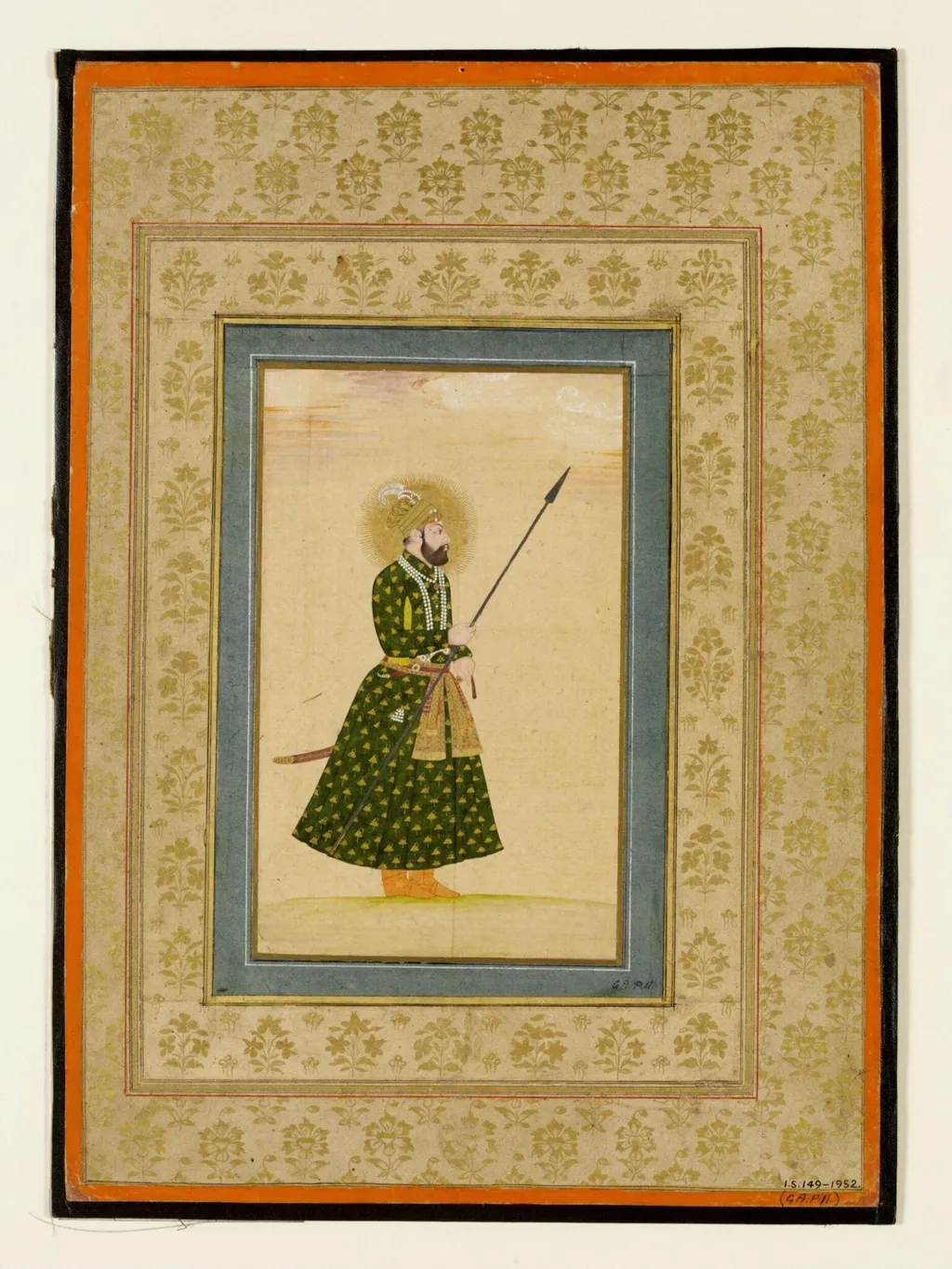
Jahandar Shah is a paint painting by the Baroque artist Unknown. It dates from 1712 and is held in the collection of the Victoria and Albert Museum.
About this work
Overview
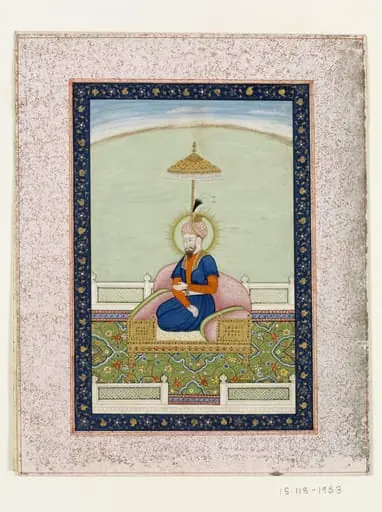
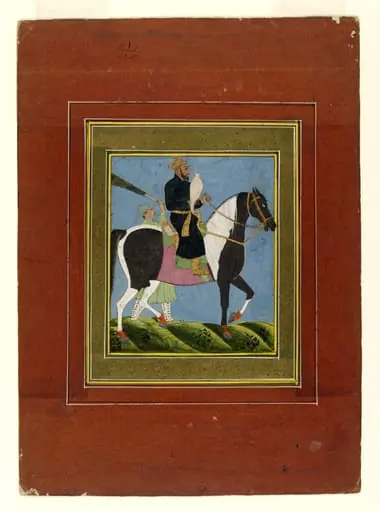
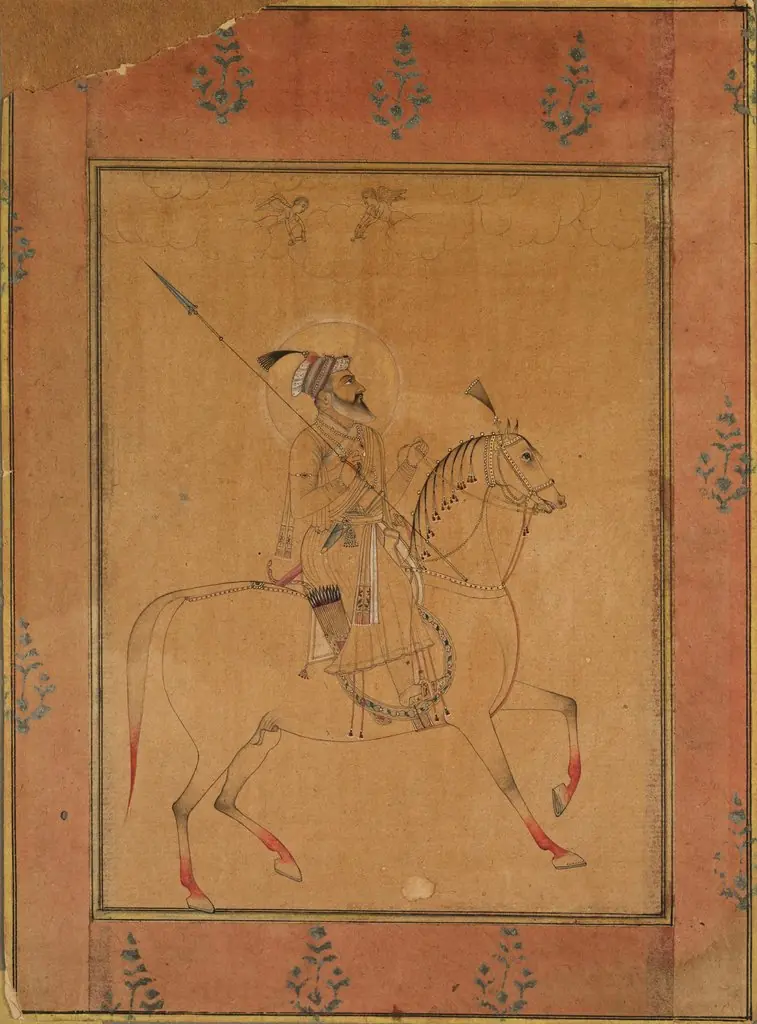
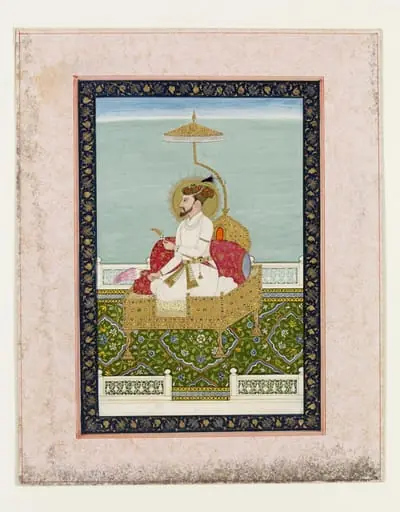
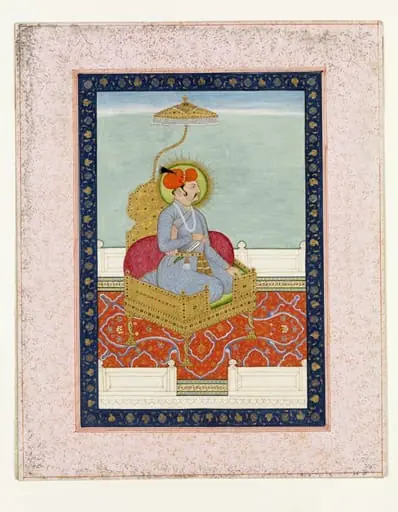
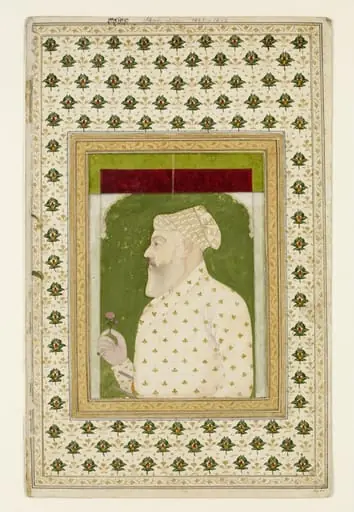
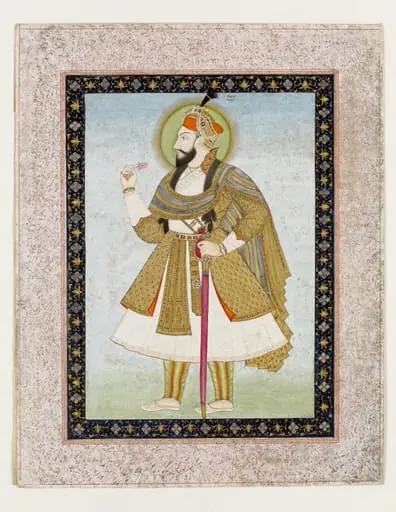
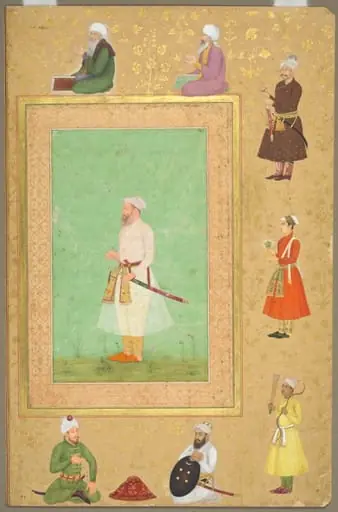
This opaque watercolour on paper depicts Mughal Emperor Jahandar Shah (r. 1712-1713) in a straightforward, symbolic portrait. The emperor is shown standing, wearing a long, green robe adorned with gold patterns and a halo, holding a spear and accompanied by a sword at his side. The simple background contrasts with the ornate, gold and orange leaf-patterned frame.
Subject & Meaning
Jahandar Shah is portrayed with regal and sacred attributes: the green robe signifies royalty, the gold patterns denote wealth and power, the spear and sword symbolize military authority, and the halo implies divine legitimacy or imperial majesty. Together, these elements convey the emperor's dual role as a powerful ruler and a symbol of divine sovereignty.
Technique & Style
Executed in opaque watercolour on paper, the painting reflects the characteristic flatness and two-dimensionality common in Mughal miniature traditions, yet the bold, solid forms and the emphasis on symbolic detail (halo, regalia) suggest a blend of courtly precision and religious iconography.
History & Provenance
Originally in the collection of B.M. Phadanavis of Poona, the portrait later belonged to the Gayer-Anderson collection before being donated to its current institution by twin brothers, though the exact dates of these transactions are not specified.
Context
Created during or shortly after Jahandar Shah's brief reign (1712-1713), this portrait may have served as a visual affirmation of his legitimacy amidst the political turmoil of the late Mughal Empire. The artwork's style and symbolism align with the traditional representations of Mughal emperors, emphasizing continuity despite the empire's declining power.
Legacy
While not widely renowned on its own, this portrait contributes to the broader understanding of late Mughal artistic practices and the evolving representation of imperial authority in the early 18th century. Its style and themes are comparable to works found in collections like the Victoria and Albert Museum, reflecting a shared aesthetic of the time.
Artist & collection

 Domestic Scene
 Giacomo and Cardinal Marco, investing Andrea, Abbot of San Zeno, with his Benefice
 The Nymph of Fontainebleau
 Portrait of a Woman
 Madonna and Child with Saints in the Enclosed Garden
 Venus and Minerva
 Family Group of Four on Sofa
 Wall painting from Room H of the Villa of P. Fannius Synistor at Boscoreale