Artwork
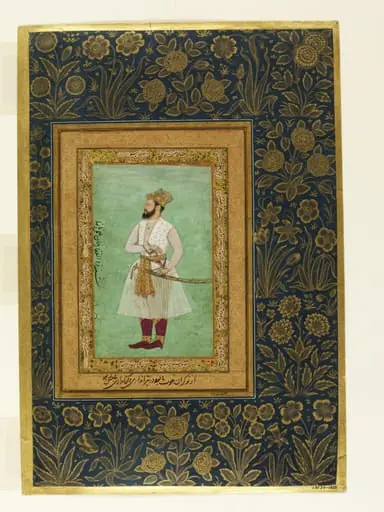
Portrait of Asaf Khan (1569–1641), from the Late Shah Jahan Album
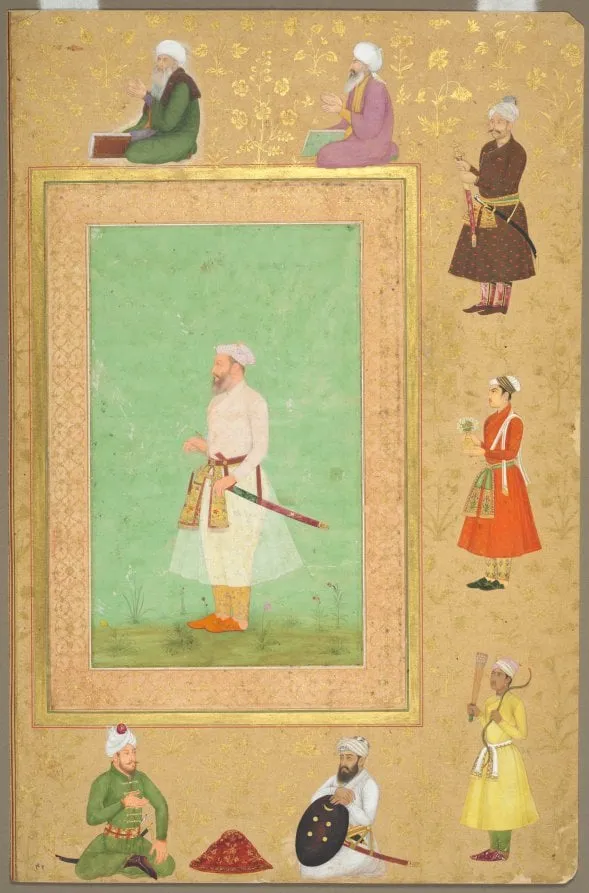
Portrait of Asaf Khan (1569–1641), from the Late Shah Jahan Album is an unspecified painting by the Baroque artist Unknown. It dates from 1653 and is held in the collection of the Cleveland Museum of Art.
About this work
This painting comes from a royal album made for Shah Jahan, the Mughal emperor who built the Taj Mahal.
A man in a white turban and gold-trimmed robe sits on a low carpet, holding prayer beads. Around him, tiny figures in the border show scholars with books and soldiers with weapons.
This painting comes from a royal album made for Shah Jahan, the Mughal emperor who built the Taj Mahal. The border scenes tell us the man was both a warrior and a thinker—rare for portraits of the time.
Look up Mughal India, court of Shah Jahan (1627–58) to see more works like this.
Overview
The portrait depicts Asaf Khan, a high‑ranking official of the Mughal court, seated in a white turban and a gold‑trimmed robe while holding prayer beads. He is positioned on a low carpet, his attire accented by an embroidered floral sash that holds a sheathed sword, a dagger and a book, indicating his dual role as a military leader and a scholar.
Subject & Meaning
Asaf Khan, originally from Iran, served as a general and trusted counsellor to Emperors Jahangir and Shah Jahan, and was linked to the imperial family through marriage. The surrounding miniature scenes reinforce his composite identity: clerics discussing texts above, soldiers conversing below, and attendants presenting weapons and a vase of narcissus, underscoring the balance of intellectual and martial virtues expected of a court dignitary.
Technique & Style
Executed in the refined Mughal miniature tradition, the painting combines delicate brushwork with rich pigments, especially the gold trim on the robe and the intricate floral patterns of the sash. The border figures are rendered in a smaller scale, a typical compositional device that provides narrative context without detracting from the central portrait.
History & Provenance
The work originates from a royal album compiled for Shah Jahan, the emperor famed for commissioning the Taj Mahal. Such albums, known as muraqqas, collected portraits and court scenes to celebrate the ruler’s lineage and the stature of his officials, placing Asaf Khan among the most esteemed members of the imperial entourage.
Context
During Shah Jahan’s reign (1627–1658), Mughal portraiture increasingly emphasized the synthesis of scholarly refinement and military prowess. This duality reflects broader courtly ideals that valued both administrative acumen and martial capability, a theme visually encoded in the miniature’s border motifs.
Artist & collection

 Domestic Scene
 Giacomo and Cardinal Marco, investing Andrea, Abbot of San Zeno, with his Benefice
 The Nymph of Fontainebleau
 Portrait of a Woman
 Madonna and Child with Saints in the Enclosed Garden
 Venus and Minerva
 Family Group of Four on Sofa
 Wall painting from Room H of the Villa of P. Fannius Synistor at Boscoreale
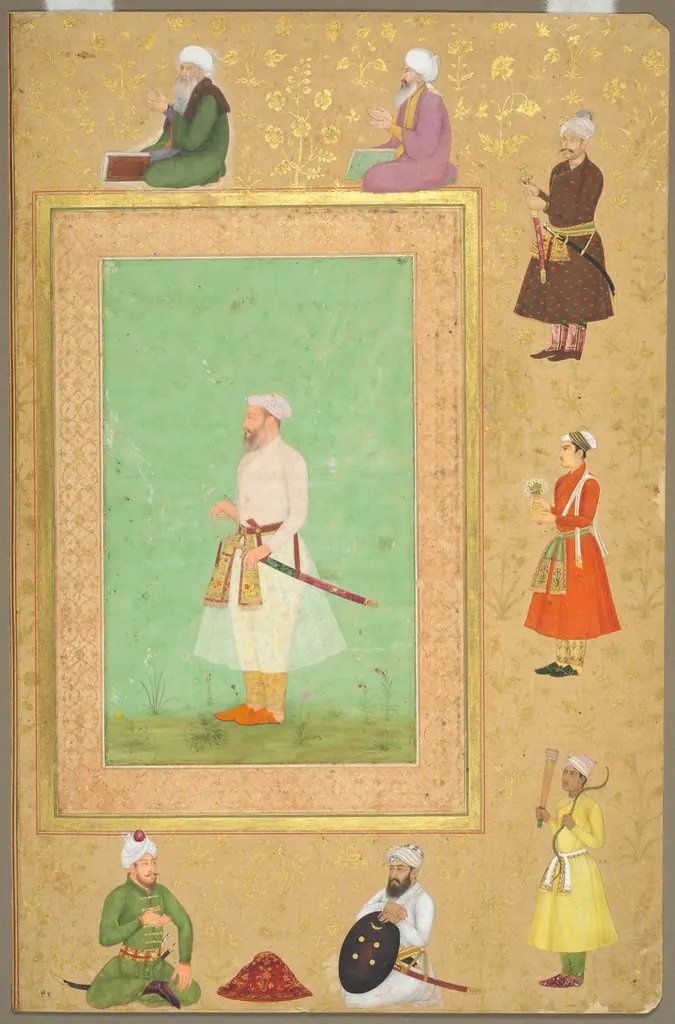 Portrait of Asaf Khan (1569–1641), from the Late Shah Jahan Album
 Untitled
 Shah Jahan holding a spinel and a long Deccan sword, from the Late Shah Jahan Album
 Portrait of Raja Ram Singh of Amber (r. 1667-1688) with a Deccan Sword (recto)
 Portrait of Prince Murad Baksh (1624–1661)
 Zain Khan Koka
 Untitled
 Zu'lfiqar Khan
 Portrait of Emperor Jahangir