Artwork
Narasimha, the fourth avatara of Vishnu.
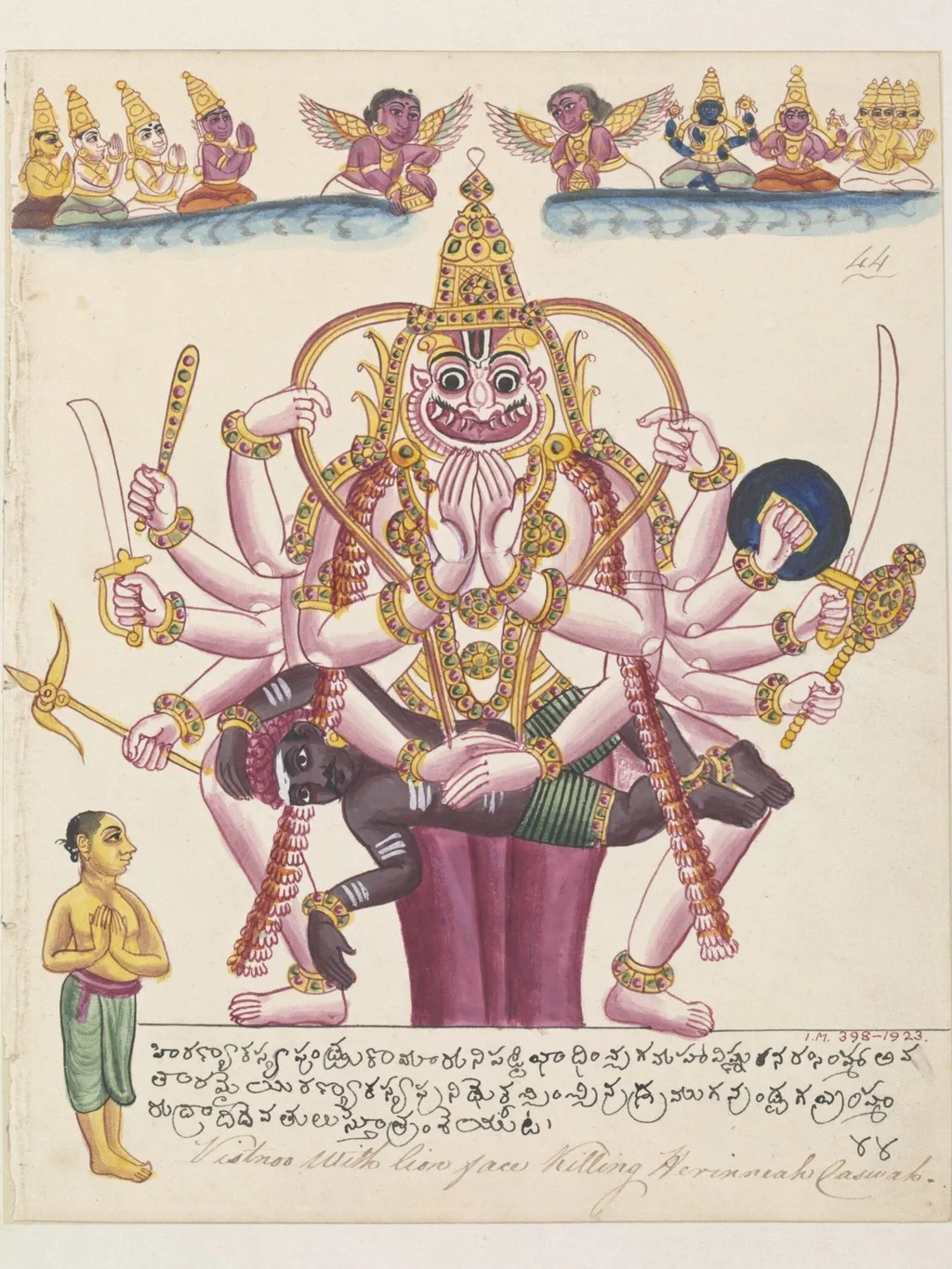
Narasimha, the fourth avatara of Vishnu. is a paint painting by the Patna School of Painting artist Unknown. It dates from 1820 and is held in the collection of the Victoria and Albert Museum. This painting portrays Narasimha, the fourth incarnation of the Hindu deity Vishnu, in the act of slaying the demon king Hiranyakasipu.
About this work
Overview
This painting portrays Narasimha, the fourth incarnation of the Hindu deity Vishnu, in the act of slaying the demon king Hiranyakasipu.
This painting portrays Narasimha, the fourth incarnation of the Hindu deity Vishnu, in the act of slaying the demon king Hiranyakasipu. The scene is rendered with vivid color and dynamic composition, reflecting a regional style that blends classical iconography with emerging artistic innovations. The figure’s hybrid form—lion head and human torso—emphasizes divine power and intervention in cosmic order.
Subject & Meaning
Narasimha appears as a ferocious yet divine force, embodying Vishnu’s role as protector of dharma. The demon, seated across his lap, represents arrogance and defiance of divine law. By tearing open the demon’s body, Narasimha fulfills a cosmic promise: to destroy evil without violating the conditions of the demon’s boon. Prahlada, the demon’s devout son, watches nearby, symbolizing unwavering faith rewarded.
Technique & Style
The artist employs bold outlines and saturated pigments to heighten emotional intensity. Gold leaf accents highlight jewelry and crown, while the pinkish skin tone contrasts with the demon’s darker hue. The background features ethereal, winged figures floating above water, suggesting celestial presence. The composition balances chaos in the foreground with serene stillness above, reinforcing spiritual hierarchy.
History & Provenance
The painting originates from a North Indian atelier, likely produced in the 18th or early 19th century during a period of flourishing devotional art. It was likely created for private worship or courtly display, reflecting regional interpretations of Puranic narratives. Its survival and preservation suggest it was valued within a devotional or aristocratic context, later entering institutional collections.
Context
This work emerged amid a broader revival of Vaishnavite devotion in northern India, where visual storytelling of Vishnu’s avatars became central to religious practice. Artists adapted traditional iconographic rules to suit local tastes, incorporating expressive gestures and ornate detail. Such images served both devotional and didactic purposes, reinforcing theological narratives for lay audiences.
Legacy
The painting contributes to a visual tradition that continues to influence Hindu devotional art today. Its synthesis of mythic drama and regional aesthetics reflects how sacred stories were localized across India. While stylistically distinct from earlier medieval examples, it preserves core symbolic language, ensuring the enduring presence of Narasimha’s narrative in religious and artistic culture.
Artist & collection

 Domestic Scene
 Giacomo and Cardinal Marco, investing Andrea, Abbot of San Zeno, with his Benefice
 The Nymph of Fontainebleau
 Portrait of a Woman
 Madonna and Child with Saints in the Enclosed Garden
 Venus and Minerva
 Family Group of Four on Sofa
 Wall painting from Room H of the Villa of P. Fannius Synistor at Boscoreale
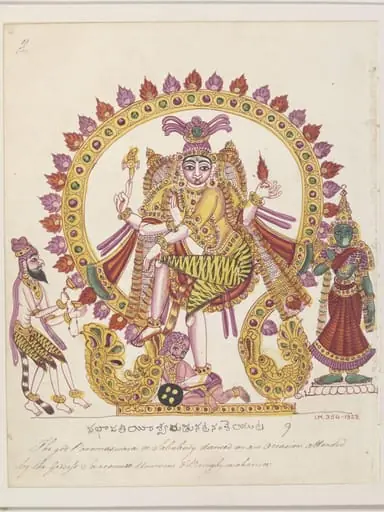 Nataraja (Shiva as lord of the dance)
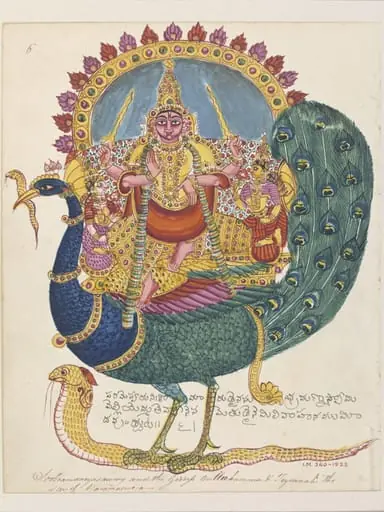 The god Subrahmanya, the god of war.
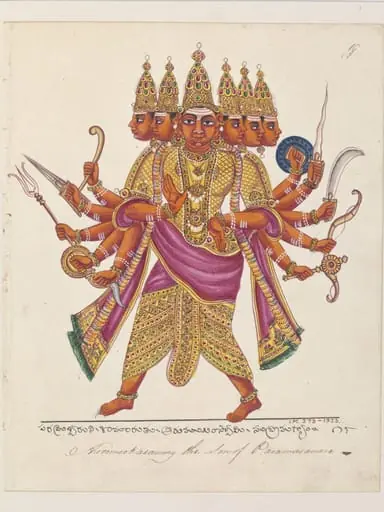 Subrahmanya, with six heads, in his form as Shanmukha (Arumukha)
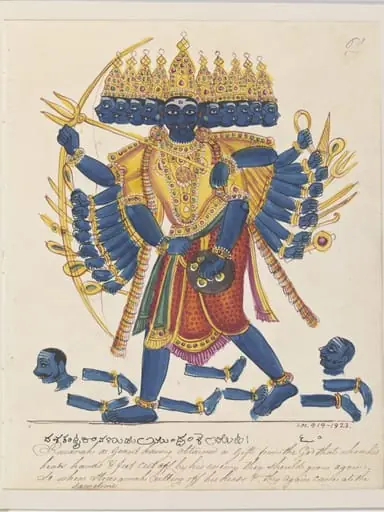 Ravana, King of Lanka, with bow
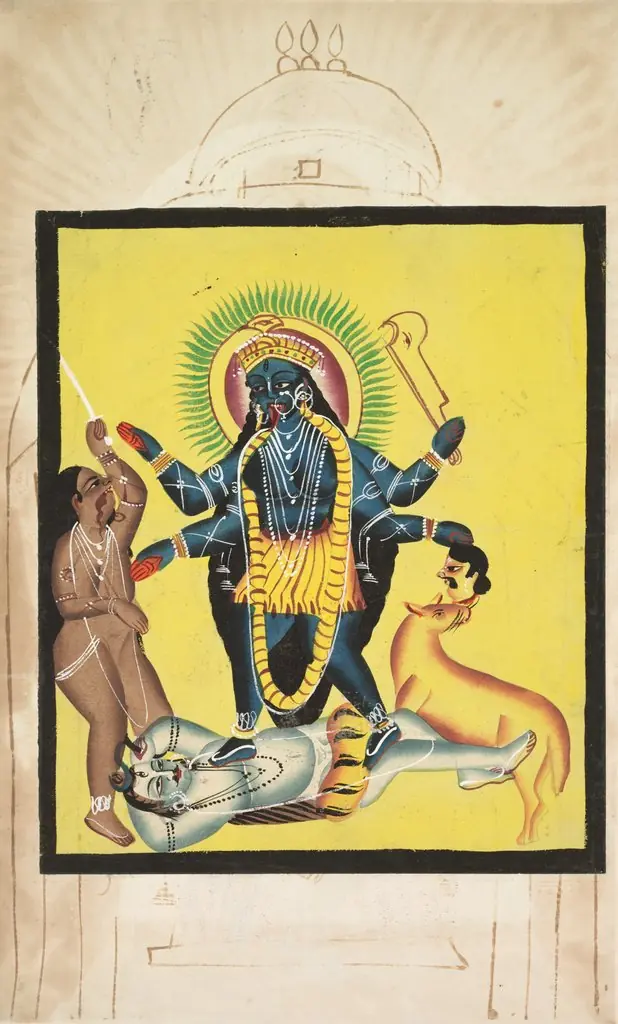 Kali Standing on Shiva (verso), from a Kalighat album
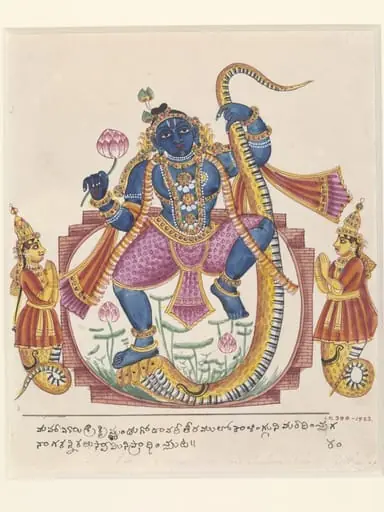 Krishna dancing on the serpent Kaliya.
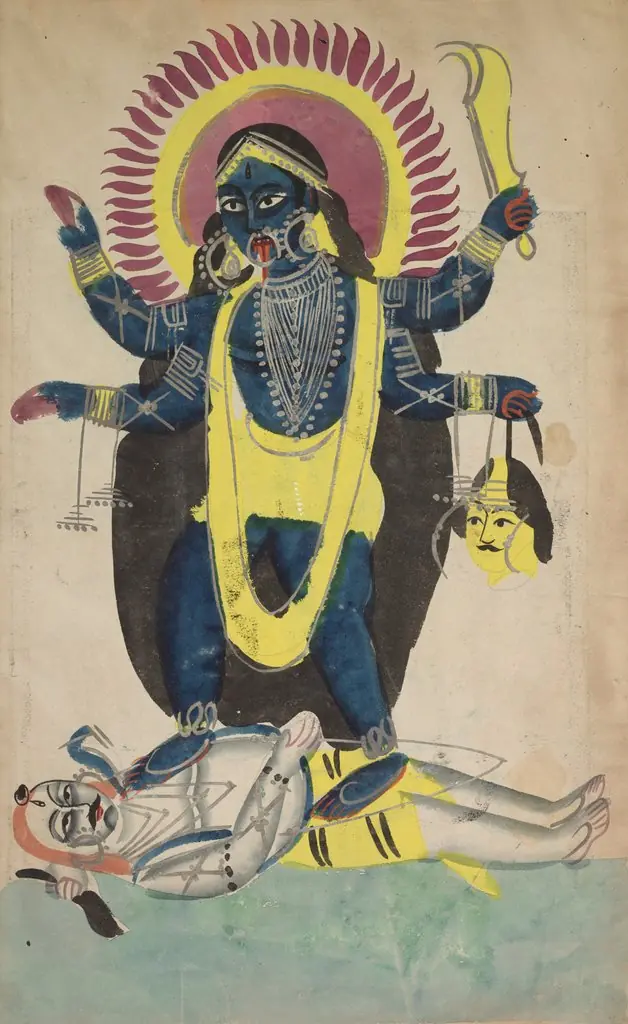 Leaf from a Kalighat album: Two Aspects of Kali
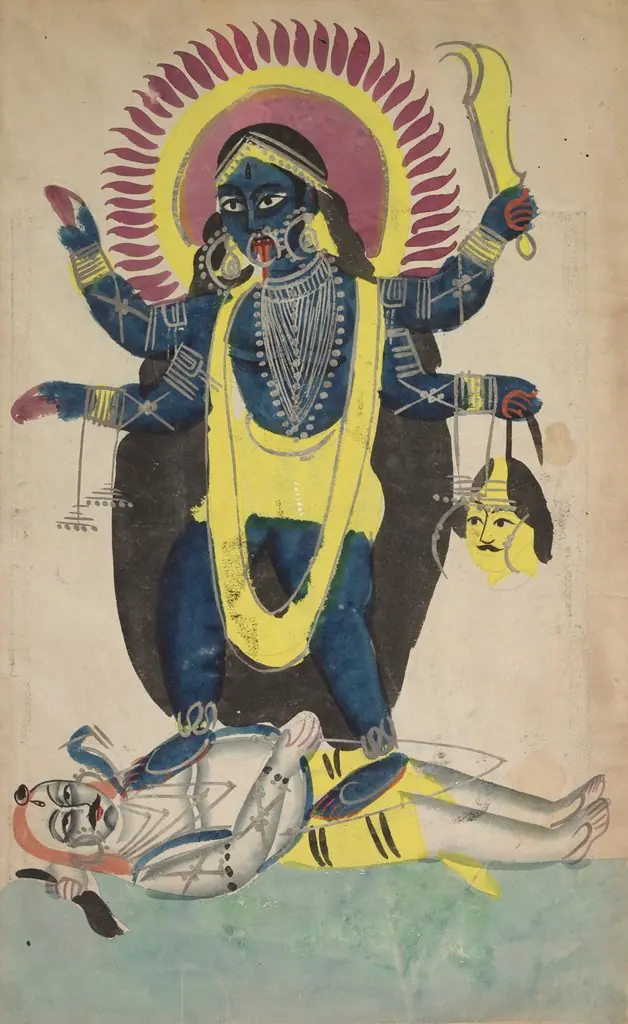 Kali Dancing on Shiva (recto), from a Kalighat album
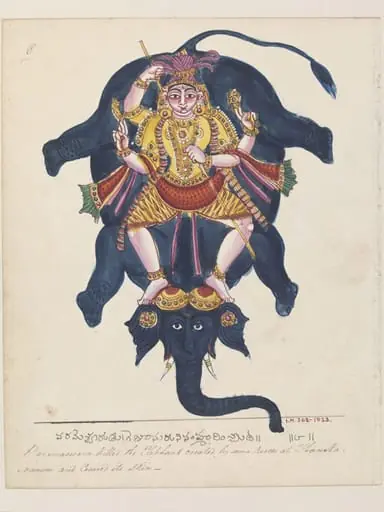 Shiva as the slayer of the elephant demon, Gajasura.