Artwork
Shiva, Parvati, Ganesh and Karttikeya
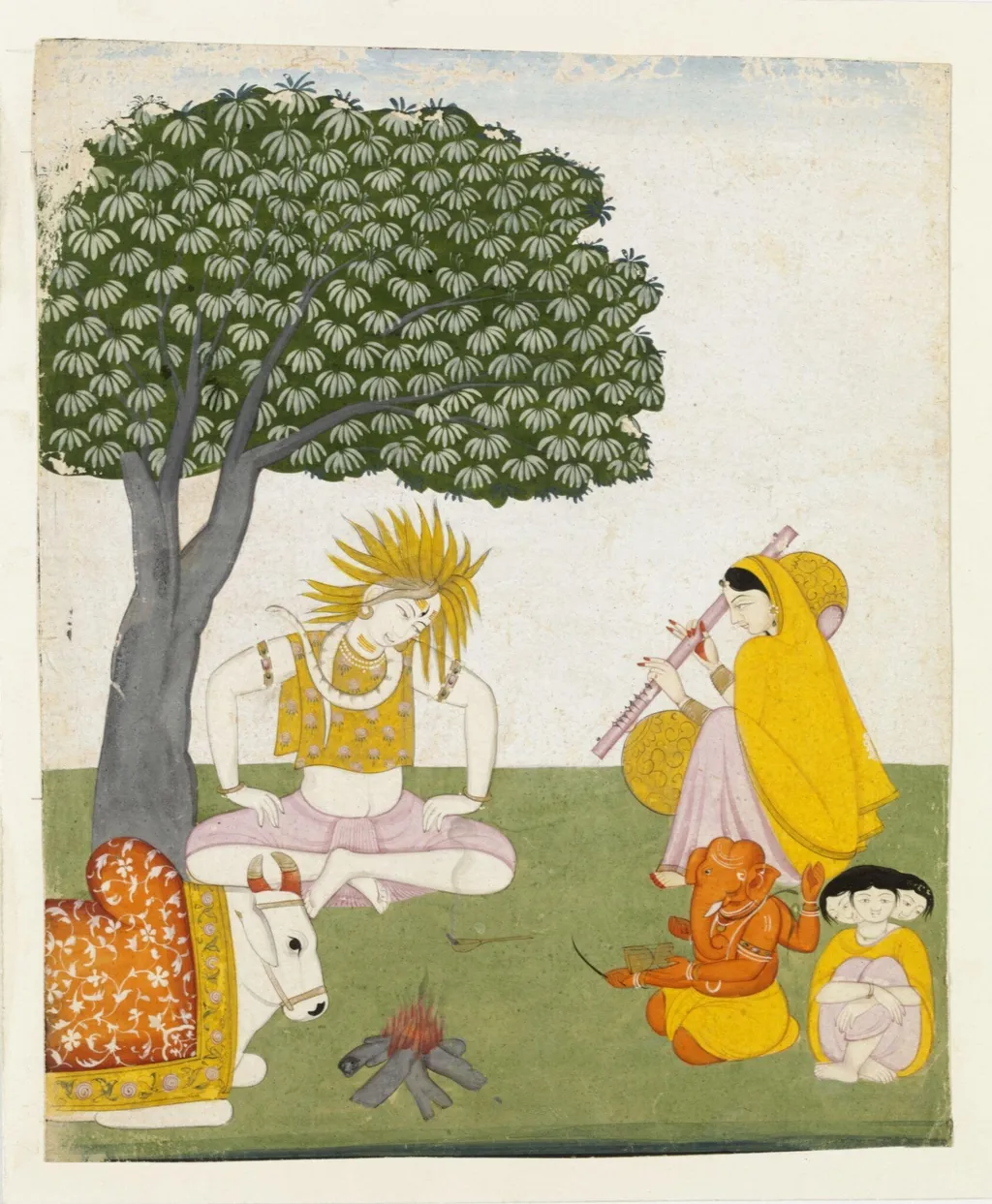
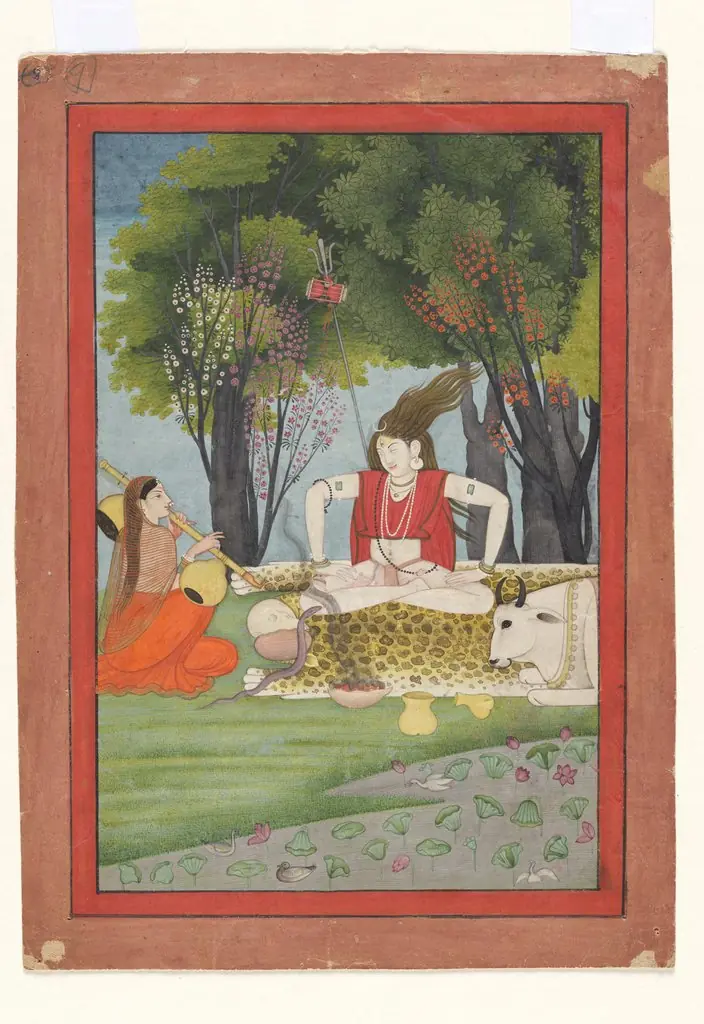
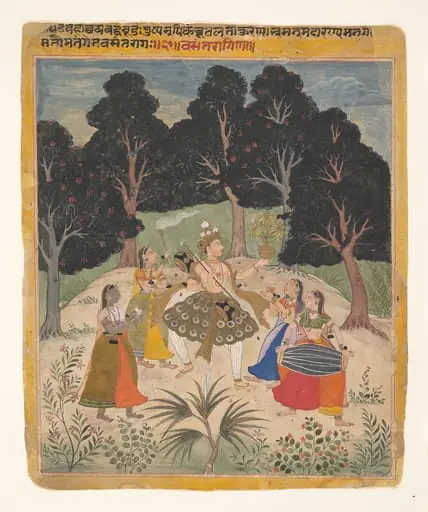
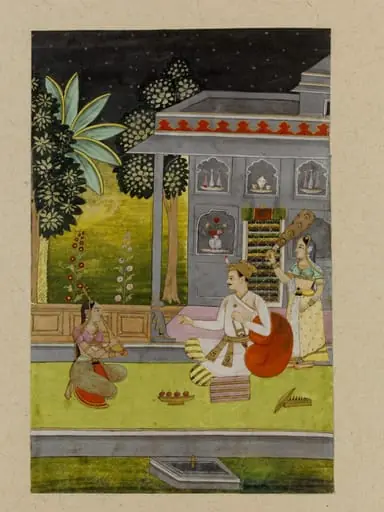
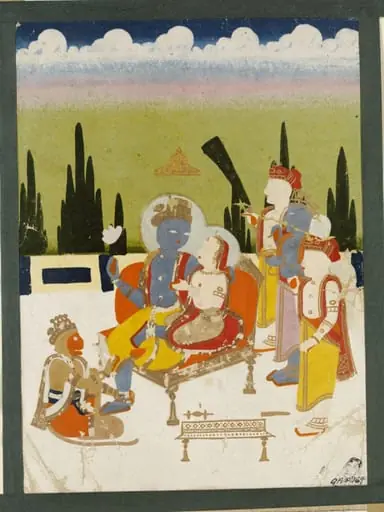
Shiva, Parvati, Ganesh and Karttikeya is a paint painting by the Rococo painting artist Unknown. It dates from 1760 and is held in the collection of the Victoria and Albert Museum. This painting, executed in opaque watercolor on paper, portrays a domesticated divine gathering centered on Shiva and Parvati.
About this work
Overview
The figures are arranged on a flat green plane, surrounded by symbolic elements: a mango tree overhead, a log fire at their feet, and Nandi the bull nearby.
This painting, executed in opaque watercolor on paper, portrays a domesticated divine gathering centered on Shiva and Parvati. The figures are arranged on a flat green plane, surrounded by symbolic elements: a mango tree overhead, a log fire at their feet, and Nandi the bull nearby. The composition avoids spatial depth, emphasizing symbolic presence over naturalism, typical of Pahari court painting traditions.
Subject & Meaning
The scene depicts Shiva, Parvati, and their children Ganesha and Karttikeya in an intimate familial setting, reflecting the Hindu ideal of divine harmony. Ganesha, with his elephant head, plays a drum, embodying wisdom and auspiciousness, while Karttikeya, shown as a youth, holds a flute. The presence of Nandi and the fire suggests ritual devotion, transforming the moment into both a family portrait and a sacred tableau.
Technique & Style
The work employs opaque watercolor with bold, flat areas of color—pinks, yellows, and oranges—against a uniform green background. Details are rendered with fine brushwork, particularly in the textiles and jewelry. The figures are stylized, with elongated eyes and minimal modeling, characteristic of 18th-century Pahari miniatures. The lack of perspective and decorative patterning enhance the symbolic, rather than narrative, intent.
History & Provenance
Created in the Pahari region of northern India during the late 18th century, the painting likely originated in a royal atelier, possibly from Basohli or Kangra. It was acquired by the Victoria and Albert Museum in the 19th century as part of a broader collection of Indian miniature paintings, reflecting colonial-era interest in South Asian artistic traditions.
Context
This painting reflects the devotional and courtly culture of the Himalayan hill states, where Hindu mythology was frequently illustrated in intimate formats. The depiction of deities in familial roles aligns with Bhakti movement ideals, emphasizing personal devotion. Such works were often kept in royal libraries or used in private worship, bridging spiritual practice and artistic patronage.
Legacy
The painting contributes to the enduring visual language of Hindu iconography in miniature art. Its preservation in the Victoria and Albert Museum allows ongoing scholarly and public engagement with Pahari aesthetics. It remains a reference for understanding how divine narratives were rendered in domestic, human terms within pre-modern Indian art.
Artist & collection

 Domestic Scene
 Giacomo and Cardinal Marco, investing Andrea, Abbot of San Zeno, with his Benefice
 The Nymph of Fontainebleau
 Portrait of a Woman
 Madonna and Child with Saints in the Enclosed Garden
 Venus and Minerva
 Family Group of Four on Sofa
 Wall painting from Room H of the Villa of P. Fannius Synistor at Boscoreale