Artwork
Soborul Sfinților Arhangheli
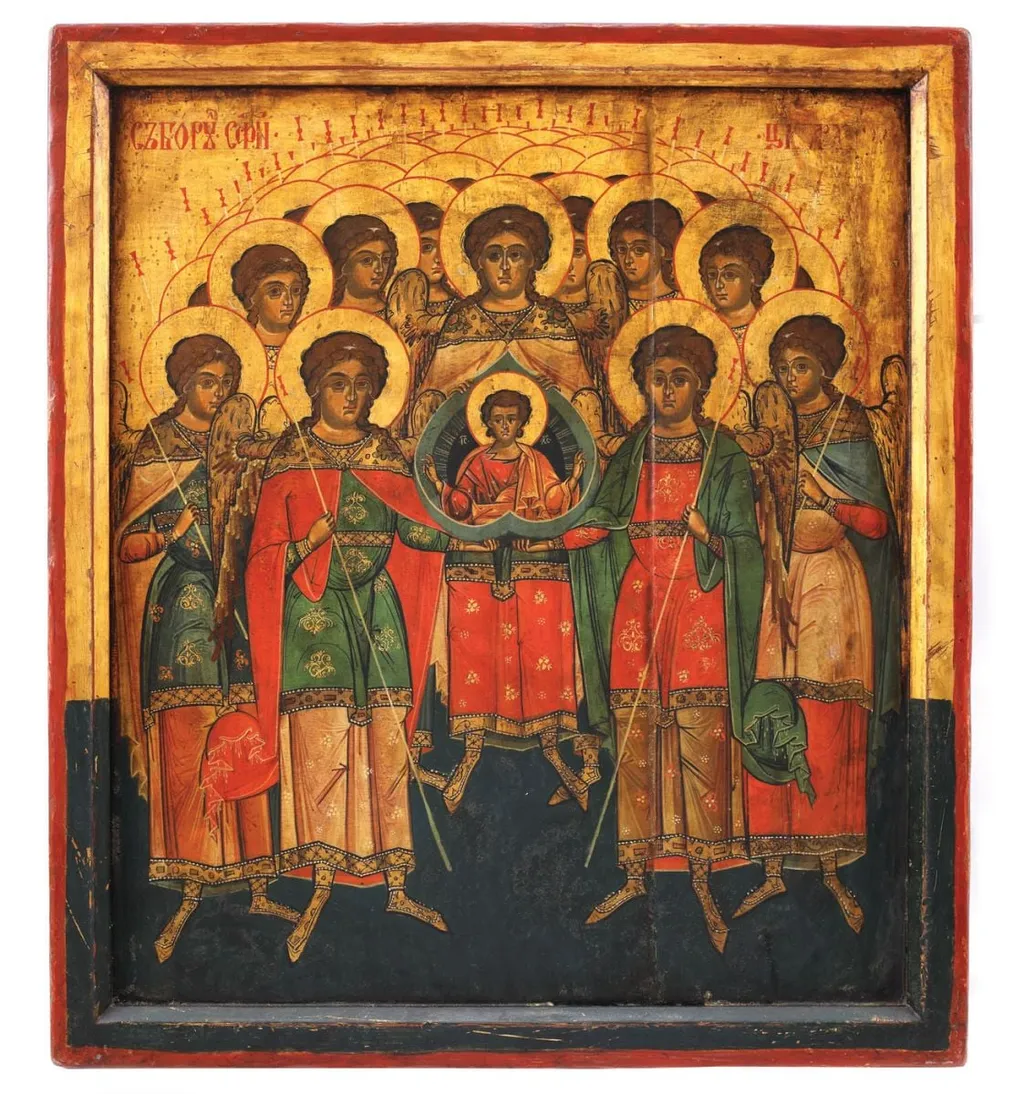
Soborul Sfinților Arhangheli is a drawing by Unknown. It dates from 1850 and is held in the collection of the Colecție particulară - București. This painted panel depicts a row of archangels arranged in a formal, frontal composition.
About this work
Overview
The work is held in the collection of the Museum of Ethnography, suggesting its cultural or liturgical significance beyond purely religious context.
This painted panel depicts a row of archangels arranged in a formal, frontal composition. Each figure is rendered with a distinct robe color—green, red, or white—and bears a radiant halo. They stand before a gold field marked with red inscriptions, creating a hierarchical, sacred space. The work is held in the collection of the Museum of Ethnography, suggesting its cultural or liturgical significance beyond purely religious context.
Subject & Meaning
The figures represent archangels, celestial beings traditionally associated with divine messages and protection. Their uniform gaze and orderly alignment convey solemnity and divine authority. Objects held—staffs, books—likely symbolize their roles as messengers or guardians of sacred knowledge. The gold background and inscriptions reinforce a liturgical function, possibly intended for veneration or ritual use in a religious setting.
Technique & Style
The painting employs flat, stylized forms typical of medieval iconographic traditions. Figures are rendered with minimal modeling, emphasizing symbolic presence over naturalism. Robes are differentiated by color but not by texture or shadow; halos are rendered as simple, luminous circles. The gold ground and red lettering suggest the use of tempera or egg-based paint, common in Eastern European religious art of the period.
History & Provenance
The work entered the Museum of Ethnography’s collection through documented acquisition, likely from a regional ecclesiastical source. Its preservation indicates it was valued as a cultural artifact, possibly removed from a church or monastery during periods of secularization. Exact origins remain unrecorded, but its stylistic features align with late medieval or early modern Orthodox traditions in Eastern Europe.
Context
This image reflects the enduring tradition of angelic iconography in Orthodox Christian communities, where archangels were invoked for protection and divine intercession. Its presence in an ethnographic museum, rather than an art or religious institution, signals its role as a marker of folk or regional piety, bridging spiritual practice and cultural identity in a specific historical context.
Legacy
Though not widely known outside regional collections, the painting contributes to the understanding of how celestial imagery was localized in Eastern European devotional practices. Its preservation in an ethnographic setting highlights how religious art, once functional, became a subject of cultural study, offering insight into the visual language of faith in pre-modern communities.
Artist & collection
 Domestic Scene
 Giacomo and Cardinal Marco, investing Andrea, Abbot of San Zeno, with his Benefice
 The Nymph of Fontainebleau
 Portrait of a Woman
 Madonna and Child with Saints in the Enclosed Garden
 Venus and Minerva
 Family Group of Four on Sofa
 Wall painting from Room H of the Villa of P. Fannius Synistor at Boscoreale
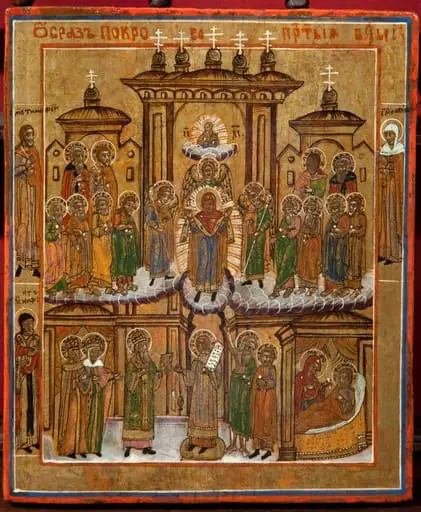 Acoperământul Maicii Domnului; Pocrovul
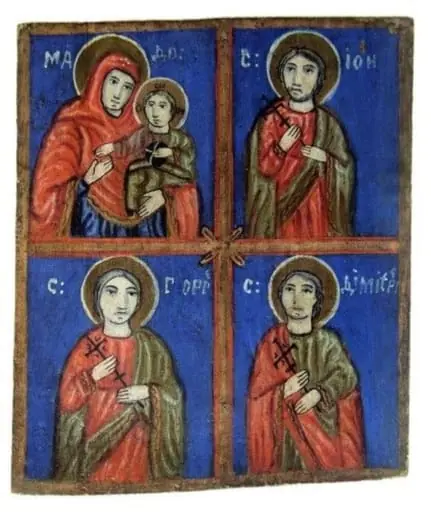 Maica Domnului și Sfinții
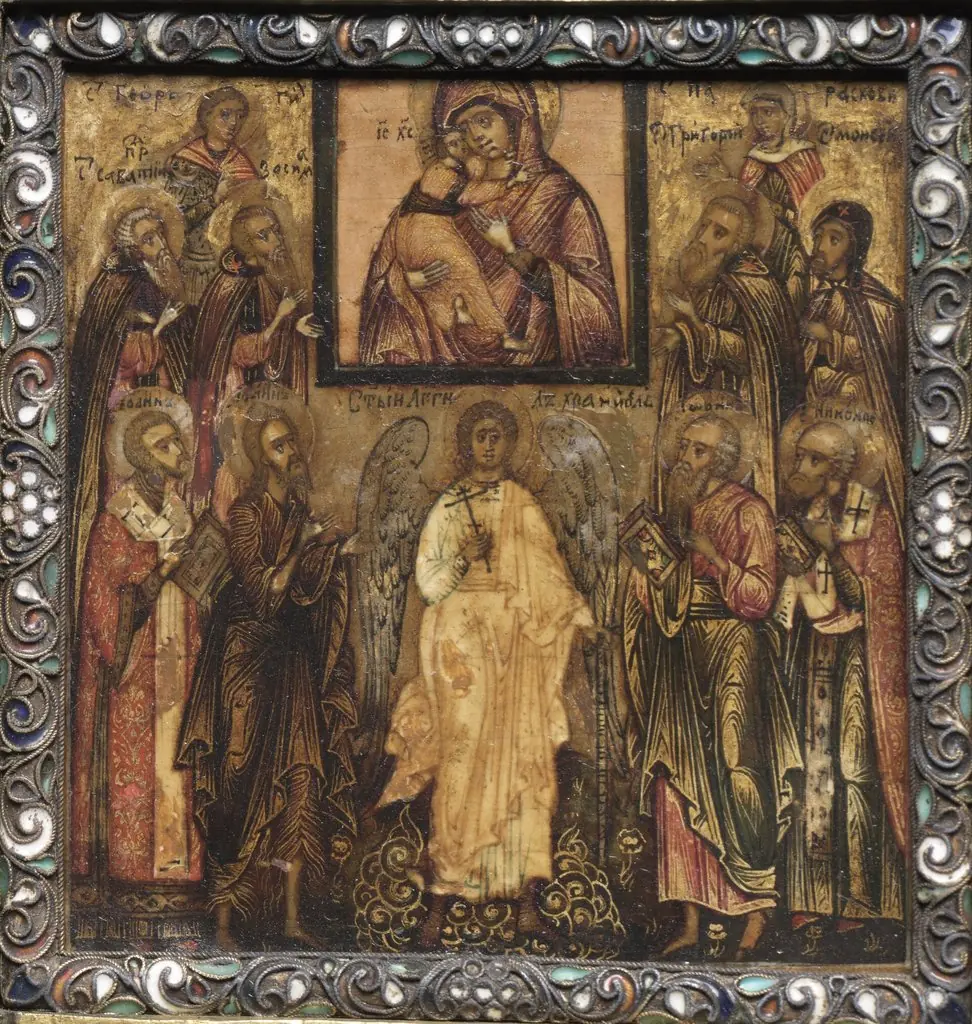 Portable Triptych Icon: Adoration of the Miracle-Working Icon of the Vladimir Mother of God
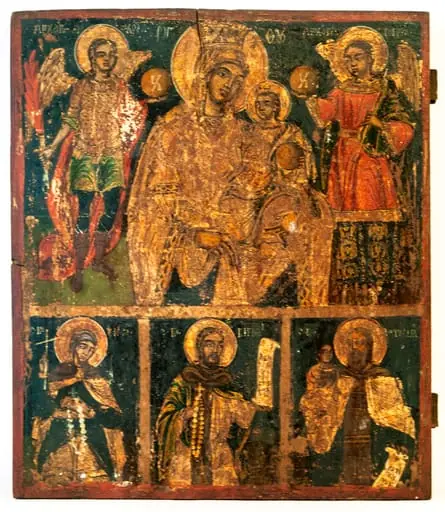 Icoașat
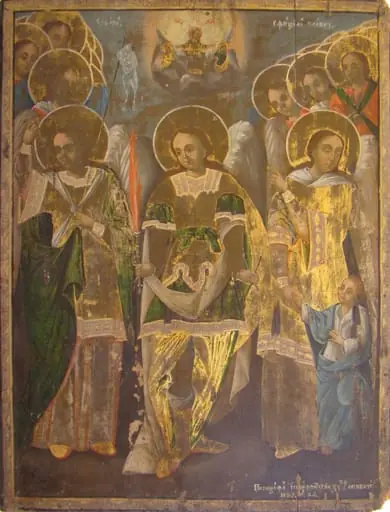 Soborul Arhanghelilor
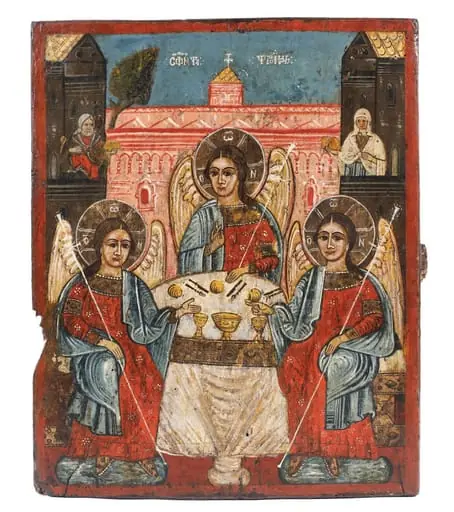 Sfânta Treime (Cina de la Mamvri)
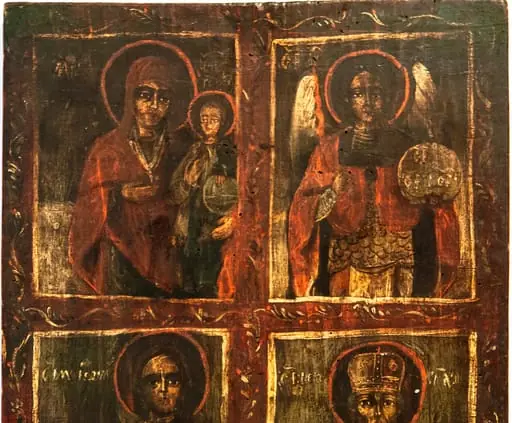 Icoaoziț
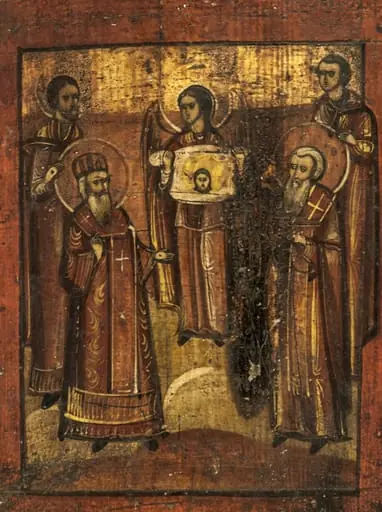 Sfânta Mahramă este, conform sfintei Tradiții, cea mai veche icoană a lui Hristos, nefăcută de mâna omului. Sfântul Ioan Damaschin(filozof, teolog și iconograf din sec VIII) descrie originea acesteia în Dogmatica ortodoxă: Se știe din tradiție că pe când Avgar era regele Edessei, a trimnis un pictor să picteze chipul Domnului, dar din pricină că pictorul nu a putut să -l picteze din cauza luminii strălucitoare a feței, Domnul Însuși , punând haina pe obrazul Lui dumnezeiesc și de viață făcător, s-a imprimat pe haină chipul Lui și astfel a trimis-o lui Avgar, care îl dorea. Deși inscripțiile nu mai ajută la identificarea exactă a momentului ilustrat, icoana ilustrează momentul în care sfânta Mahramă este adusă regelui Avgar. Un înger plasat în centrul compoziției arată mahrama cu chipul lui Iisus înconjurat de nimbul cruciger. De o parte și de alta, plasați simetric, un episcop și un preot în vârstă, binecuvântând, în spatele lor regele, în pandant un personaj fără nimb, toți privind către chipul lui Hristos imprimat pe țesătură. Conform unei legende, chipul lui Hristos s-a imprimat și pe mahrama cu care Veronica i-a șters chipul în timpul patimilor. Compoziția este narativă, echilibrată, chipurile expresive. Cromatica specifică icoanelor de tip krasnushka, tonuri de pământ în combinație cu fondul foiței aurii(fond -1/4 superior). Bordura brun roșcată, lată, delimitat prin linii negre.Icoana prezintă urme de arsură.
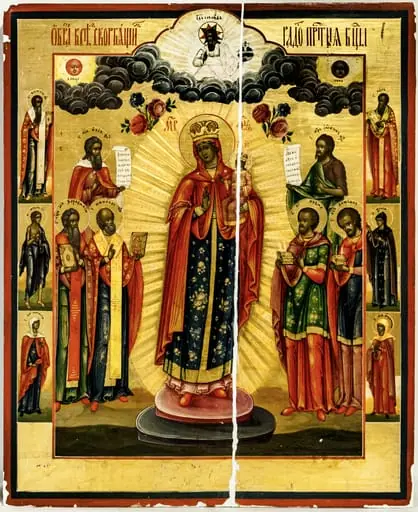 Central, Maica Domnului cu Pruncul ambii încoronați. Fecioara stă cu picioarele pe scabellum fiind înconjurată de o mandorlă din assist auriu. Cu dreapta binecuvintează, în stânga îl ține pe Iisus care binecuvintează la rândul său cu mâna dreaptă, în stânga ținând Cartea Sfântă. Veșminte împărătești cu borduri aurite, nimb cruciger. Maria înveșmântată cu stola albastră, decorată cu motive florale, maforion roșu, stelele întreitei Feciorii pe umeri și pe frunte. În jur, grupuri de sfinți: în dreapta Sfinții Haralambie și Nicolae, ambii având câte o Carte Sfântă, în planul superior, Sf. Proroc Ilie, cu un rotulus desfășurat. În stânga Sfinții Kosma și Damian și Ioan Botezătorul, acesta în pandant cu Ilie. Pe chenar, dispuși vertical, câte trei Sfinți (stânga, de jos în sus Sf. Muceniță Natalia, Sf. Maria Egipteanca, Sf. Vasile, și dreapta: Sfântul Karp, sfânta Xenia, și sfânta muceniță Agrepina (Agripina). În partea superioară a icoanei, Dumnezeu Savaot, în veșminte albe, înconjurat cu raze de assist, cu globul cruciger în stânga, cu dreapta binecuvântând.În jurul capului stea cu 8 colțuri proiectată pe nimbul circular. Registrul de nori negri cu margini luminate pune în evidență strălucirea zonei superioare și potențează cromatic compoziția. Pe nori, în stânga soarele, în dreapta luna, antropomorfizate. Chenar lat cu motive florale stilizate, obținute prin ștanțare (la fel si razele și zig-zagurile la asist), și două chenare mai înguste cu albastru și roșu. Cromatica: Fond auriu (foiță de aur), roșu aprins, vișiniu, albastru, verde, galben, nuanțe de roșu, alb. Inscripții cu roșu și negru.
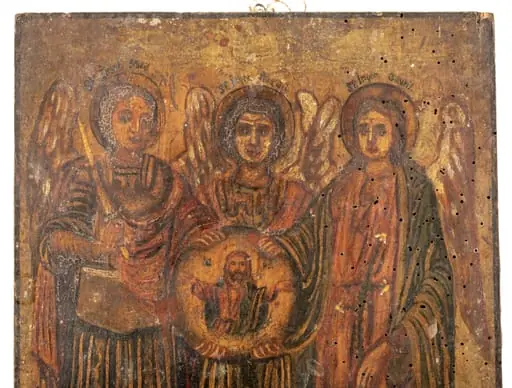 Sfinții îngeri: Mihail, Rafael, Gavril
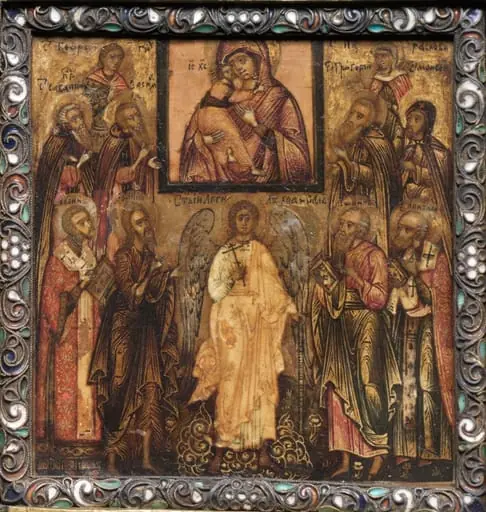 Portable Triptych Icon: Adoration of the Miracle-Working Icon of the Vladimir Mother of God
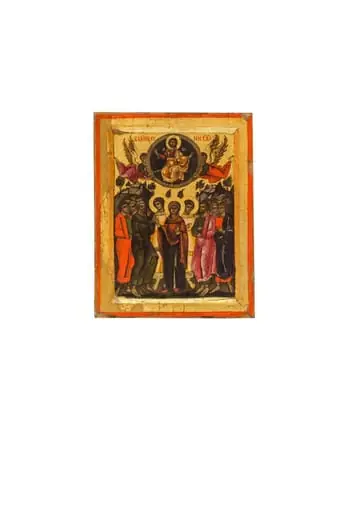 INALTAREA