Artwork
Soborul Sfinților voievozi
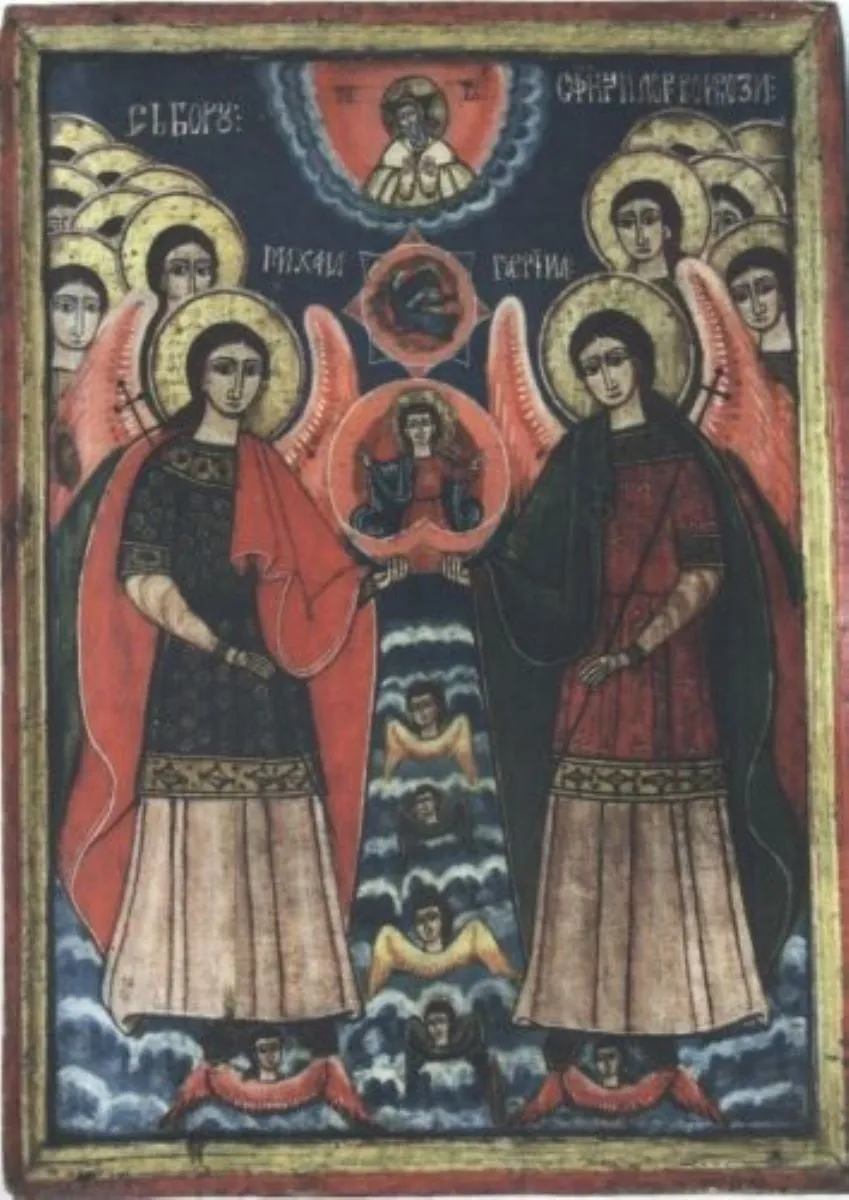
Soborul Sfinților voievozi is a drawing by the Romanticist artist Unknown. It dates from 1825 and is held in the collection of the Romanian Peasant Museum.
About this work
Overview
The work titled “Soborul Sfinților voievozi” presents a pair of winged, robed figures standing side by side beneath a deep blue sky. Both figures wear gold‑trimmed garments, bear halos, and clutch staffs, their expressions serene. The background is populated by numerous small circular motifs that contain glowing or floating faces and forms.
Subject & Meaning
The central pair likely represent celestial beings—perhaps angels or saintly patrons—identified by their wings, halos, and staffs. The surrounding roundels, a traditional device in religious imagery, typically convey additional holy personages or narrative scenes, suggesting a broader liturgical context that expands the central theme of divine intercession.
Technique & Style
The composition relies on a flat, iconic visual language, with clear outlines and a limited palette dominated by deep blues and gold accents. The use of roundels as miniature vignettes reflects a medieval manuscript aesthetic, while the winged figures are rendered in a stylized, non‑naturalistic manner that emphasizes their spiritual status over anatomical realism.
History & Provenance
No specific dates, artists, or ownership records accompany the image, and the work is identified only by its title. The title, rendered in Romanian, hints at an Eastern Orthodox cultural setting, possibly linking the piece to a liturgical or ecclesiastical commission within that tradition.
Context
Roundel motifs are common in Eastern Christian iconography, where they often frame saints, biblical episodes, or theological concepts. Their inclusion here situates the painting within a visual vocabulary that would have been familiar to worshippers, reinforcing doctrinal messages through repeated symbolic forms.
Legacy
While the piece’s influence on later art is not documented, its adherence to established iconographic conventions illustrates the continuity of Eastern Orthodox visual practice, offering contemporary viewers a window into the symbolic language that shaped devotional art across centuries.
Artist & collection

 Domestic Scene
 Giacomo and Cardinal Marco, investing Andrea, Abbot of San Zeno, with his Benefice
 The Nymph of Fontainebleau
 Portrait of a Woman
 Madonna and Child with Saints in the Enclosed Garden
 Venus and Minerva
 Family Group of Four on Sofa
 Wall painting from Room H of the Villa of P. Fannius Synistor at Boscoreale
 Sfinții militari
 Sfinții Arhangheli Mihail și Gavriil
 Botezul lui Iisus
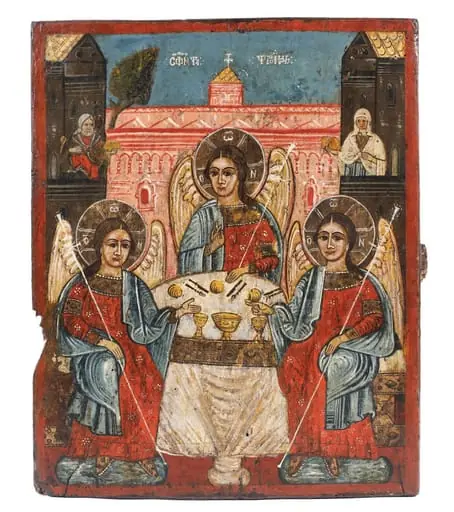 Sfânta Treime (Cina de la Mamvri)
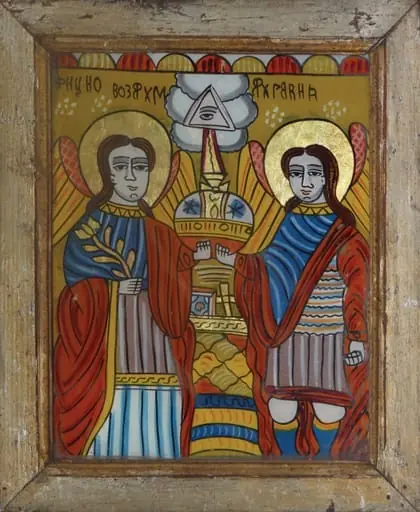
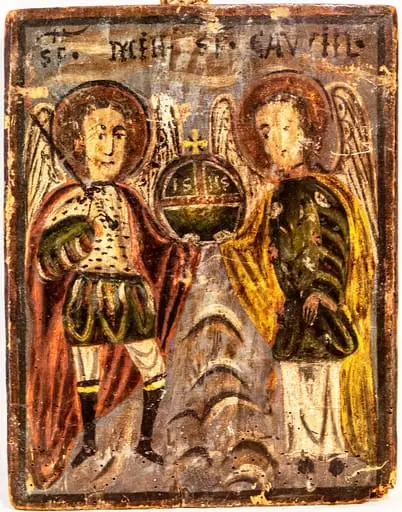 Icoana îi reprezintă pe Arhanghelii Mihail și Gavriil în picioare, din semiprofil,cu aripile strânse, ținând globul pământesc cruciger cu inițialele lui Isus Hristos. . Pictură de factură populară, naivă, stângace. Cei doi arhangheli redați conform erminiilor , Mihail în veșmânt militar, cu o sabie ridicată în mâna dreaptă(sabia de foc), Gavriil cu un crin în mâna stângă. Faldurile redate prin tușe groase de desn și culoare.Fețele sunt mari, ovale, corpurile disproporționate. Membrele mici. Cromatica dominată de contrastul dintre nuanțele pale de gri cu cele tari de verde, roșu și galben. Aureolele cu chenar accentuat. Fundalul gri, cu elemente de relief schițate în partea de jos, nori sus. Inscripție în română, scrisă stângaci cu majuscule negre. Chenar negru.
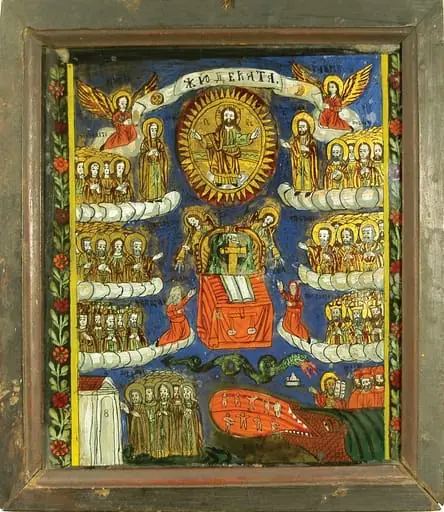 Judecata de Apoi
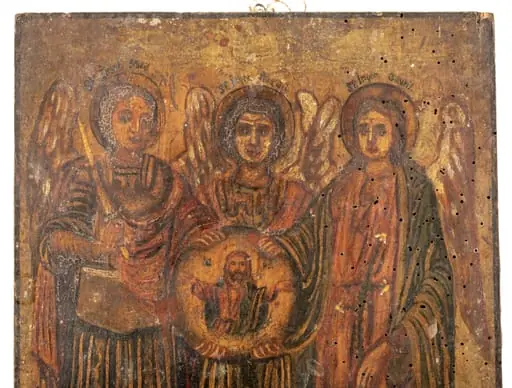 Sfinții îngeri: Mihail, Rafael, Gavril
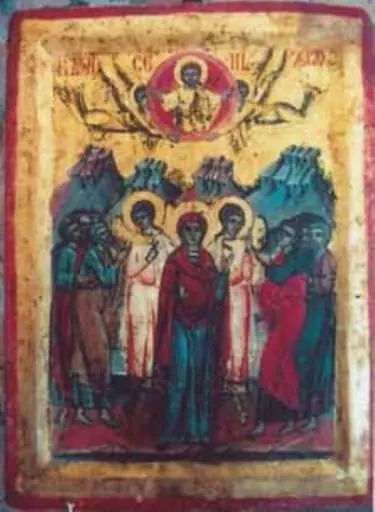 Înălțarea Domnului
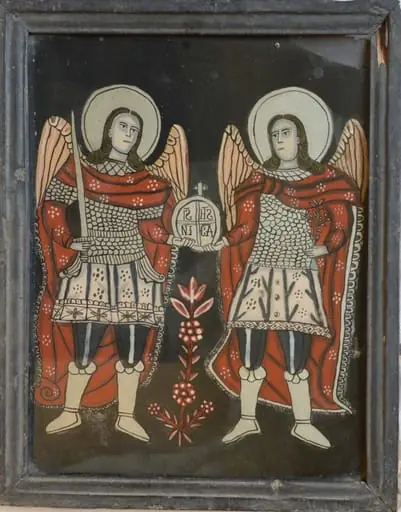 Arhanghelii Mihail și Gavriil