Artwork
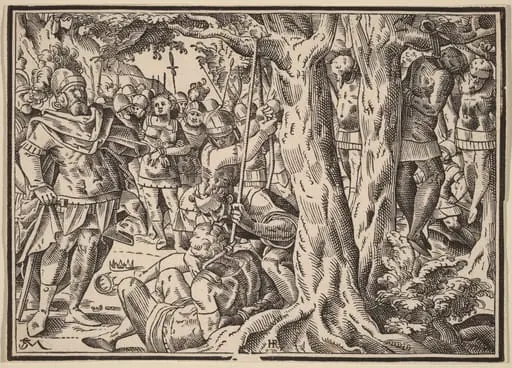
Speculum Romanae Magnificentiae: Trajan Between City of Victory and Rome (The Emperor Trajan)
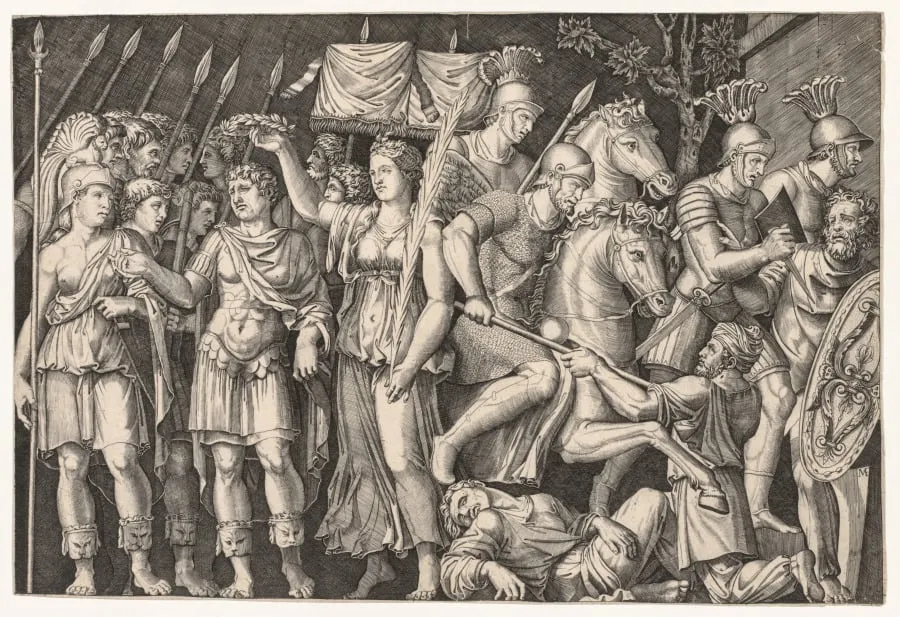
Speculum Romanae Magnificentiae: Trajan Between City of Victory and Rome (The Emperor Trajan) is a print by the Renaissance artist Unknown. It dates from 1532 and is held in the collection of the Cleveland Museum of Art.
About this work
Overview
This print is part of the Speculum Romanae Magnificentiae, a 16th-century collection of engravings depicting ancient Roman monuments and scenes.
This print is part of the Speculum Romanae Magnificentiae, a 16th-century collection of engravings depicting ancient Roman monuments and scenes. It portrays Emperor Trajan on horseback amid a military procession, surrounded by soldiers and civilians. The composition emphasizes his leadership through dynamic positioning and dramatic lighting, aligning with the collection’s goal of idealizing Rome’s imperial past.
Subject & Meaning
The scene illustrates Trajan leading Roman forces in a campaign, likely referencing his victories in Dacia. The fallen figure at his feet suggests the cost of conquest, while the surrounding figures represent both military might and civic order. Trajan’s central role underscores his image as a warrior-emperor, reinforcing the print’s function as propaganda for Roman authority and imperial virtue.
Technique & Style
The print employs chiaroscuro to model forms and heighten emotional tension, with strong contrasts between light and shadow guiding attention to the mounted emperor. Linear precision defines armor, shields, and architecture, reflecting Renaissance engraving traditions. The background merges natural elements with idealized urban structures, creating a staged historical tableau rather than a topographically accurate view.
History & Provenance
Created in the 1580s by Antonio Lafreri and his workshop, this print was produced as part of a commercial series aimed at collectors and scholars interested in Roman antiquities. It was not an original painting but an engraved reproduction, often bound into albums. These prints circulated widely across Europe, shaping contemporary perceptions of ancient Rome’s grandeur.
Context
During the late Renaissance, interest in Roman history surged among humanists and patrons. The Speculum Romanae Magnificentiae responded to this by compiling imagined reconstructions of ancient sites and events, blending archaeological fragments with artistic invention. Trajan, admired for his military success and public works, became a symbolic figure of ideal rulership in this context.
Legacy
The print contributed to the enduring visual language of Roman imperial imagery in early modern Europe. Though not historically accurate, its compositions influenced later depictions of emperors in art and architecture. As part of a broader publishing trend, it helped transform antiquity into a digestible, marketable ideal for educated audiences beyond Rome itself.
Artist & collection

 Domestic Scene
 Giacomo and Cardinal Marco, investing Andrea, Abbot of San Zeno, with his Benefice
 The Nymph of Fontainebleau
 Portrait of a Woman
 Madonna and Child with Saints in the Enclosed Garden
 Venus and Minerva
 Family Group of Four on Sofa
 Wall painting from Room H of the Villa of P. Fannius Synistor at Boscoreale
 Victory Surrounded by Prisoners and Trophies
 Combats and Triumphs No. 9
 Combats and Triumphs No. 11
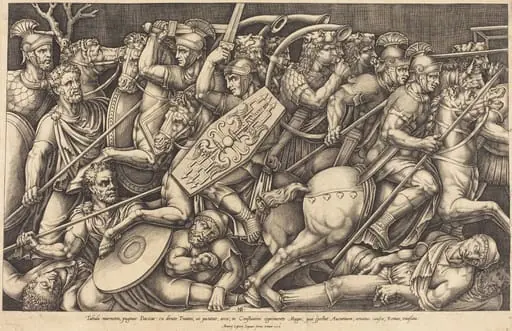 Roman Soldiers Fighting the Dacians
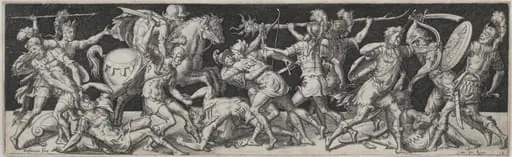 Combats and Triumphs No. 10
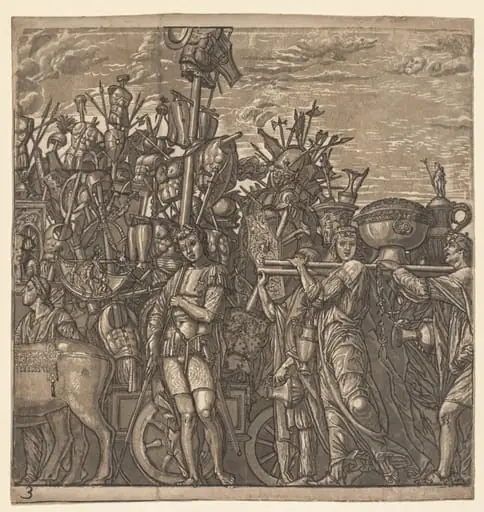 The Triumph of Julius Caesar: Soldiers Marching with Trophies of War
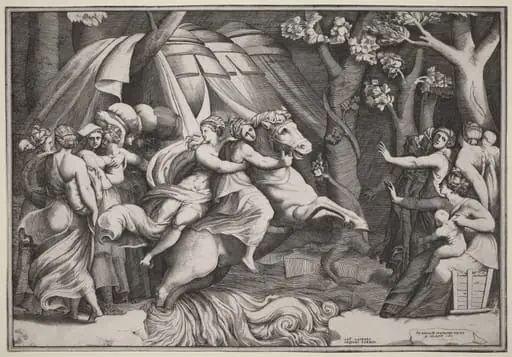 Clelia Crossing the Tiber
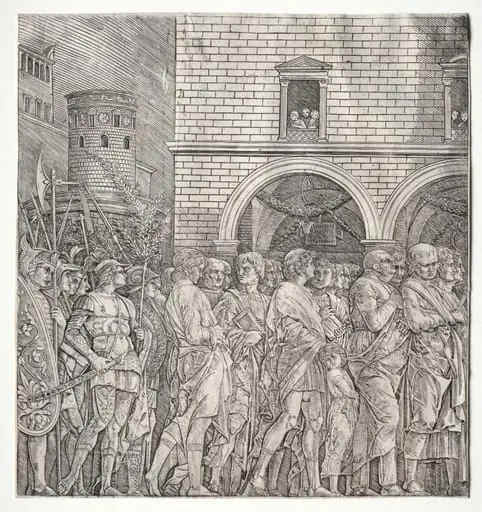 The Triumphs of Caesar: The Senators
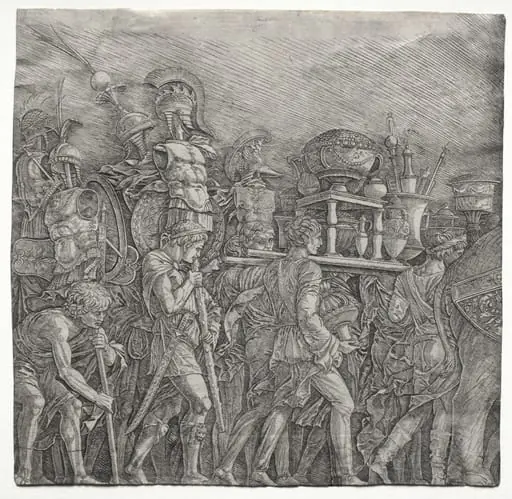 The Triumphs of Caesar: The Corselet Bearers
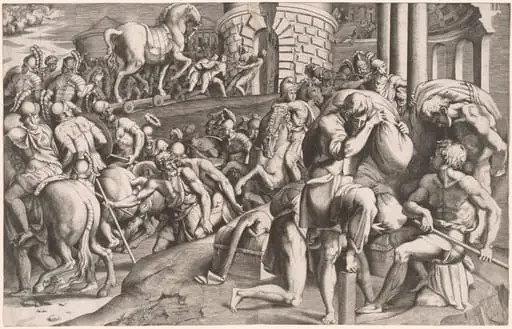 The Trojans Hauling the Wooden Horse into Troy
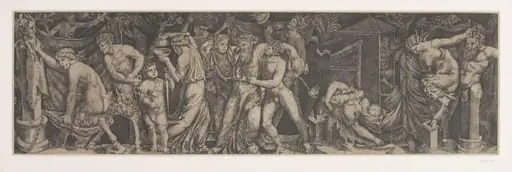 Untitled
 Christ Tells His Disciples of the Last Judgment